 United States
  Australia
  United Kingdom
  Canada
  France
  Germany
  Belgium
  Netherlands
  New Zealand
  Poland
  Portugal

In today’s competitive business world, your marketing budget isn’t simply a financial spreadsheet – it’s your game plan for growth. It becomes a strategic lever that fuels visibility, customer acquisition, and your long-term success.
In 2024, global marketing spend hit approximately $985 billion, highlighting the importance of having a structured plan in place if you want to stand out in a crowded market.
Whether you’re a startup looking to make an impact or an established business aiming to scale, learning how to build an effective marketing budget is one of the smartest moves you can make.
What is a marketing budget, and why is it important?
A marketing budget is the financial roadmap for all your promotional efforts – from digital ads and SEO to flyers and event sponsorships. It helps you allocate resources wisely, reach the right people, and achieve measurable business goals. Without a clear budget, businesses risk either overspending on low-impact activities or underfunding high-ROI strategies.
In fact, 75% of small businesses report having a marketing plan, and 87% of those rate their marketing as successful. Having a structured plan for your marketing budget is often the difference between guesswork and growth. Every business needs one, no matter the industry, whether it’s a real estate agency or a law firm.
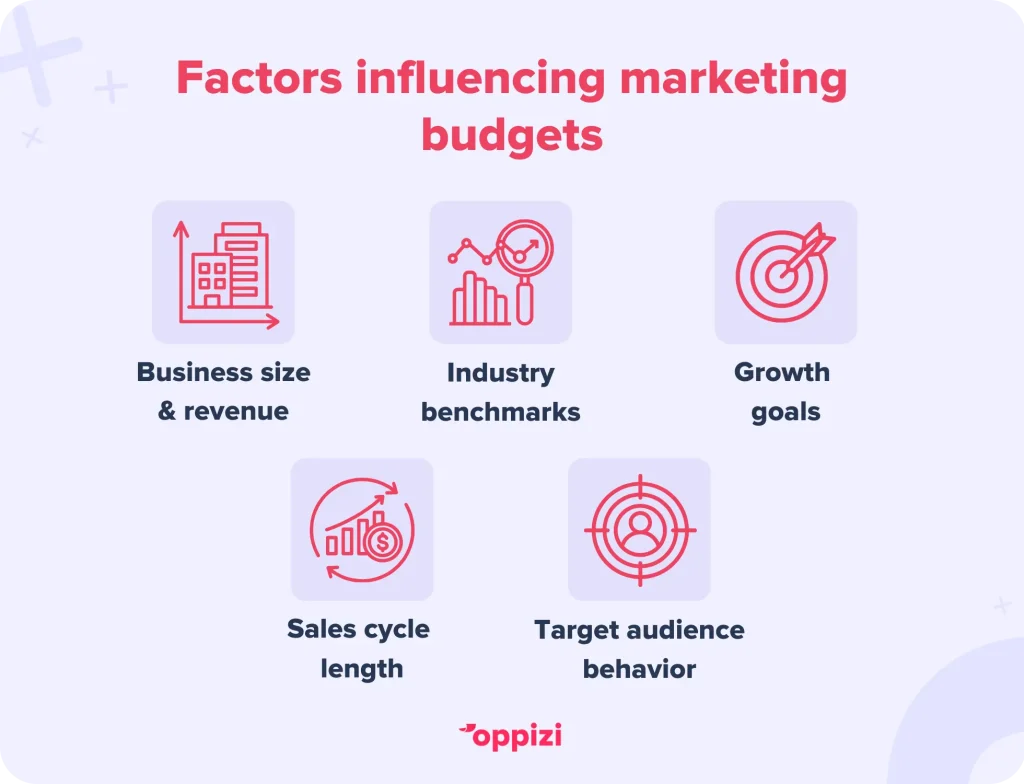
Factors that influence a marketing budget
Before you start crunching numbers, it’s important to understand the various factors that influence your budget. These include:
Business size and revenue
For a startup to gain initial traction, a marketing budget of 10–20% of revenue may be necessary. For a mature company, 5–10% may be sufficient to sustain momentum.
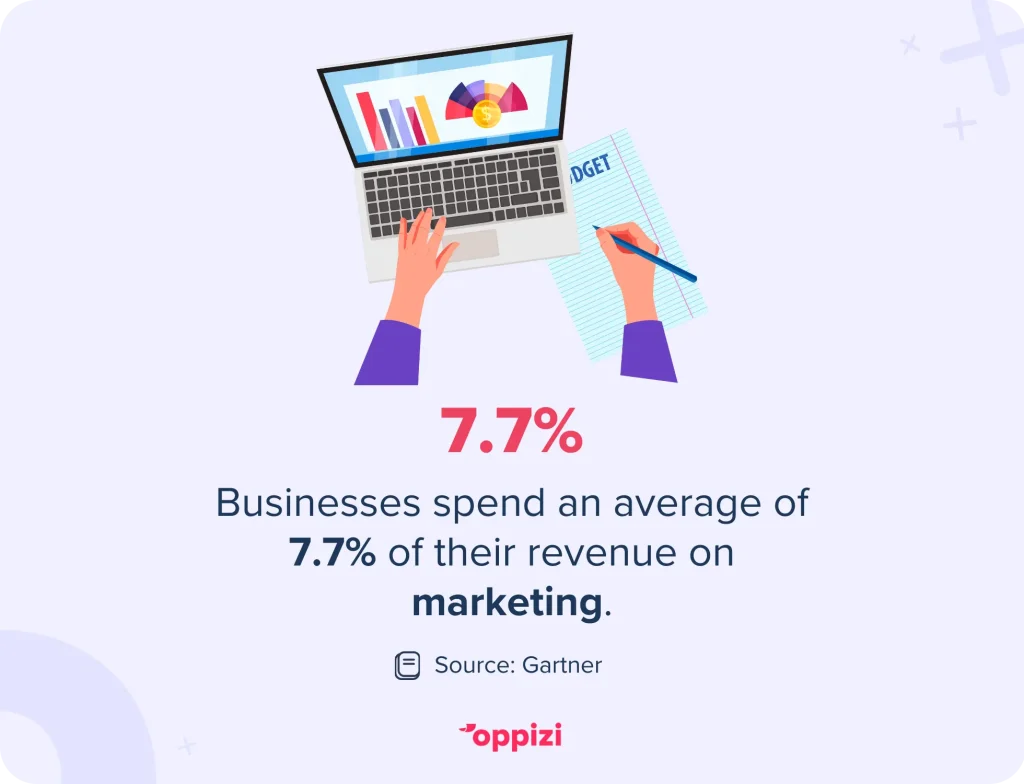
On average, businesses spend about 7.7% of their revenue on marketing, though this can vary depending on industry, business size, and growth phase.
Industry benchmarks
Businesses in niche service industries typically require a smaller marketing budget than those in highly competitive sectors, such as tech and e-commerce.
Growth goals
Planning to expand into a new market? Launch a new product? Aggressive growth goals typically require higher ad spend and more diversified campaigns. In fact, 61% of marketers worldwide said they expected their marketing spend to increase over the next two years.
Sales cycle length
If your product has a longer sales cycle (like a B2B SaaS company), you’ll likely need a higher content and nurturing budget to keep leads engaged over time.
Target audience behavior
The marketing strategies that work best for your business will depend on your target audience and industry. For example, a Gen Z fashion brand will likely find success focusing on social media and influencer marketing. On the other hand, a local plumbing service would be better served by Google Ads and local SEO.
How to set a marketing budget
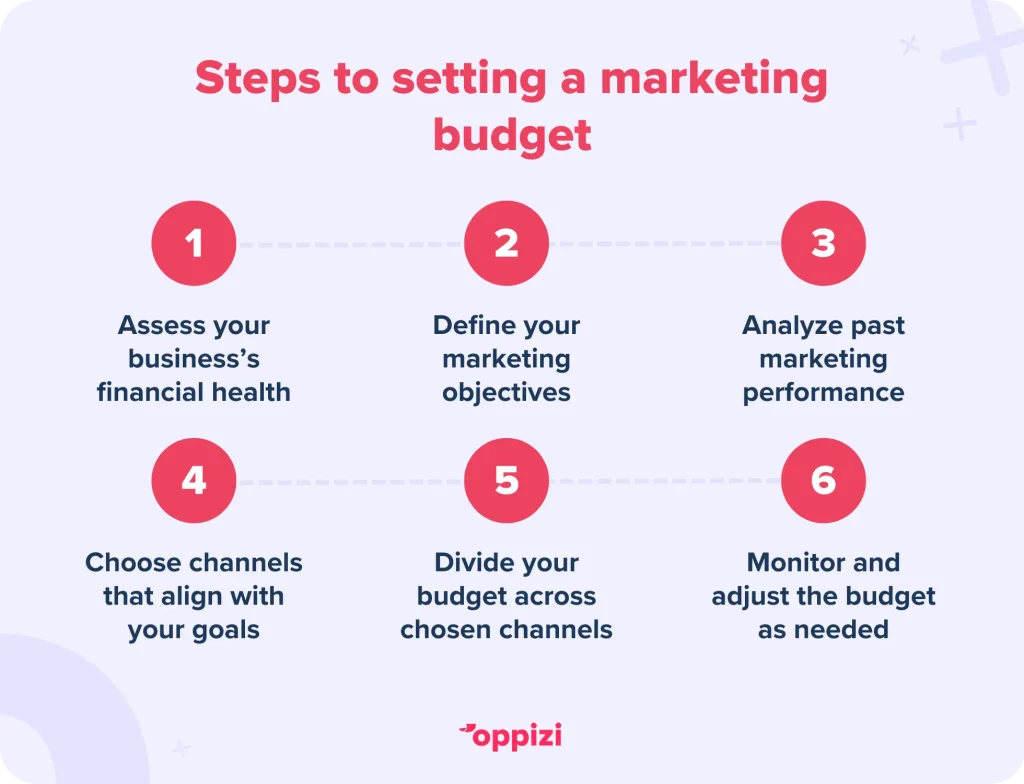
Step 1: Assess your business’s financial health
To determine a reasonable marketing budget, examine your cash flow, revenue, and profit margins to see how much you can allocate without negatively impacting other areas. A common guideline is to allocate 7-8% of revenue to marketing, but startups experiencing rapid growth may allocate up to 20%.
Example: A SaaS startup aiming to grow 3x in the next year might allocate 15–20% of revenue to paid acquisition channels and content marketing.
Step 2: Define clear marketing objectives
Set goals that are SMART (Specific, Measurable, Achievable, Relevant, and Time-bound). Want to grow your email list by 25%? Increase website traffic by 40%? Your budget should reflect the cost required for achieving these goals.
Step 3: Analyze past performance
If you’ve run campaigns before, dig into the data. What was your ROI across channels? Which activities drove the most engagement or conversions? Focus the majority of your resources on what’s working.
Example: If your last Facebook ad campaign generated a 5x ROI, it may be worth increasing that budget while trimming spend on underperforming Google Ads.
Step 4: Choose the right channels and strategies
Select the marketing tactics that best align with your goals and audience. Each channel has different costs and potential returns.
Below are examples of different types of marketing channels you could consider:
- Digital marketing: SEO, PPC, content marketing, email, social media.
- Traditional marketing: Print ads, flyers, direct mail or EDDM, TV, radio.
- Offline guerrilla marketing: Street teams, local events, branded merchandise.
- Partnerships and sponsorships: Collaborations with influencers or local businesses.
Example: A salon might invest in Instagram ads and promotions on booking platforms like Fresha or Treatwell, while a local gym might use direct mail and organize community events.

Step 5: Allocate the budget across channels
Allocate your budget based on past performance and scalability. Invest more in high-performing channels that have the potential to scale.
Example: You might allocate:
- 40% to digital (SEO, PPC, email)
- 30% to content and social media
- 15% to traditional channels (flyers, print ads)
- 10% to experimentation (new platforms, influencer trials)
- 5% to contingency
Step 6: Monitor and adjust the budget
Track your KPIs weekly or monthly. Metrics like cost per lead, conversion rate, and ROAS (return on ad spend) should guide ongoing adjustments. Flexibility is key here. Make sure you double down on what’s working, and cut back on what’s not.
Frequently asked questions about marketing budgets
How do I know how much to spend on marketing?
As mentioned, businesses typically spend 7-8% of their revenue on marketing. Start with a percentage of revenue that works for you and adjust it based on your goals, growth stage, and market conditions.
Is it better to spend on offline or online marketing channels?
The ideal marketing strategy will vary based on your company’s goals and target audience. Online retailers aiming to expand their reach may find success with digital channels such as paid advertisements and content marketing. Local businesses, however, might benefit more from tangible efforts like direct mail, flyers, and community events to raise local awareness. For optimal results, consider using a combination of both online and offline marketing channels for a broader impact.
How often should I adjust my budget?
Marketing is an ever-changing industry. Make sure your budget keeps up by reviewing it every month or quarter.
How much should I spend on marketing if I’m just starting out?
To build brand awareness and capture market share, expect to invest up to 20% of revenue in marketing initially. Prioritize high-ROI and trackable channels like paid search advertising, social media, content marketing, and email marketing.

Final thoughts
Creating a marketing budget isn’t solely about finances – it’s your roadmap to business growth. To give your brand the best chance of success, take the time to understand the factors that influence your strategy, set SMART goals, analyze past performance, and allocate your budget intentionally.
If you’re exploring ways to boost visibility beyond digital channels, consider working with Oppizi. Our tailored offline marketing campaigns, like flyer distribution and direct mail, are designed to drive targeted, local engagement without breaking the bank.
Ready to start a marketing campaign with a guaranteed impact? Start your next offline campaign with Oppizi today!