Mis à jour le 16 octobre 2026
Pour les marques B2C qui veulent se démarquer dans un espace saturé où les consommateurs sont las de cliquer, le marketing hors ligne peut être la solution. Il rejoint les consommateurs là où les algorithmes ne peuvent pas aller : dans la rue, à la maison ou lors d’événements locaux. Il crée une résonance émotionnelle. Et il s’accompagne souvent d’une concurrence moindre et d’un effet plus durable que les publicités numériques.
Que vous soyez gestionnaire de marque, franchisé ou spécialiste du marketing de détail las de courir après un RSI en ligne qui s’effrite, ce guide du marketing hors ligne B2C vous présente des tactiques éprouvées, leurs avantages et la façon de les jumeler à vos campagnes actuelles.
Qu’est-ce que le marketing hors ligne B2C?
Le marketing hors ligne B2C désigne toute stratégie marketing qui cible les consommateurs par des canaux physiques. Contrairement au marketing numérique, qui se déroule sur des écrans, le marketing hors ligne joint son public dans le monde réel : par sa boîte aux lettres, un prospectus remis main à main, une démonstration de produit lors d’un événement ou un panneau d’affichage frappant.
Les stratégies hors ligne sont particulièrement utiles dans des secteurs comme :
- les marques de détail ayant des magasins physiques
- la restauration et les boissons
- les marques de santé, de mieux-être et de beauté
- les lieux de divertissement ou les lancements de produits qui doivent faire jaser
Les meilleures stratégies de marketing hors ligne B2C
Passons en revue quelques-unes des tactiques de marketing hors ligne les plus efficaces pour les marques B2C, avec des exemples et des cas d’utilisation.
1. La distribution de prospectus
Les prospectus sont abordables, relativement rapides à produire et idéaux pour un ciblage hyperlocal, notamment pour les ouvertures de magasin, les promotions à durée limitée ou les événements locaux.
Idéal pour : commerces de détail, restaurants, salons de coiffure, studios de conditionnement physique et salles d’événements.
Conseil de pro : utilisez des codes QR pour diriger les gens vers des pages d’atterrissage, des plateformes de réservation ou des coupons à utiliser.
Une étude de la DMA a révélé que 73 % des imprimés distribués en porte-à-porte sont lues ou conservées pour plus tard, et qu’on interagit en moyenne 3,1 fois par mois avec un même imprimé distribué à domicile : un seul prospectus peut donc générer plusieurs impressions.
2. Les campagnes de publipostage
Le publipostage perce le bruit numérique en livrant un message physique directement au domicile du consommateur. Il est mesurable, hautement personnalisable et idéal pour le reciblage ou la fidélisation.
Idéal pour : services d’abonnement, fournisseurs de soins de santé, cabinets dentaires, ainsi que services financiers.
Formats à essayer : cartes postales, catalogues, échantillons, codes de rabais ou offres personnalisées.
3. Expériences et événements en magasin
Le commerce de détail physique n’est pas mort : il évolue. Organiser des démonstrations, des ateliers ou des événements communautaires en magasin peut accroître l’achalandage, prolonger le temps passé sur place et augmenter les conversions.
Idéal pour : marques de beauté, de mieux-être, de mode et de style de vie.
Exemple : une marque de beauté pourrait organiser un événement soins de la peau en magasin, distribuer des miniéchantillons et inviter les participants à partager photos et vidéos de l’événement sur les réseaux sociaux.
4. Le marketing de guérilla
Cette approche à fort impact et à petit budget mise sur la créativité et la surprise pour attirer l’attention dans les lieux publics : murales, boutiques éphémères ou placements de produits dans des environnements du quotidien.
Idéal pour : marques qui ciblent la génération Z, les créatifs ou les marchés axés sur les tendances.
Exemple : une marque de produits de nettoyage peut créer une œuvre sur les murs ou les rues de la ville à l’aide d’un nettoyeur à pression, en dégageant des zones propres en forme de logo accompagnées d’un slogan astucieux. C’est accrocheur, peu coûteux et parfait pour faire jaser sur les réseaux sociaux.
5. Les campagnes d’échantillonnage
Laisser les gens essayer votre produit eux-mêmes est l’un des outils de persuasion les plus puissants en marketing. En marketing de la restauration et des boissons, faire goûter des aliments ou des boissons bâtit la confiance envers la marque, encourage l’essai et fournit une rétroaction immédiate.
Idéal pour : aliments et boissons, cosmétiques, suppléments, produits ménagers.
Idées de distribution : jumelez l’échantillonnage au Flyering, aux envois postaux ou à la commandite d’événements.
6. Les partenariats avec des entreprises locales
Associez-vous à des entreprises complémentaires pour des activations hors ligne conjointes. Par exemple, une entreprise de boissons santé pourrait s’associer à un studio de yoga pour glisser des échantillons dans ses trousses de bienvenue.
Pourquoi ça marche : les partenariats locaux étendent votre portée à des publics déjà réceptifs et aident à bâtir la confiance de la communauté.
Pourquoi les marques B2C reviennent aux tactiques hors ligne
1. La lassitude numérique est bien réelle
Les consommateurs sont exposés à une multitude de publicités chaque jour, surtout en ligne. Cette exposition constante les amène à ignorer complètement les publicités numériques. De plus, les bloqueurs de publicité et les mises à jour de confidentialité d’iOS rendent les utilisateurs beaucoup plus difficiles à joindre en ligne.
Selon Forrester Research, 90 % des consommateurs disent voir des publicités sur les réseaux sociaux, mais seulement 37 % prêtent attention à leur message.
2. La hausse du coût d’acquisition client (CAC)
La concurrence accrue sur les réseaux sociaux payants et dans les moteurs de recherche a fait grimper le coût de la publicité numérique, souvent encore davantage pour les petites marques B2C. Les tactiques hors ligne comme le Flyering ou le marketing événementiel offrent des moyens plus rentables et évolutifs de générer des prospects ou de l’achalandage.
3. Le hors ligne crée des liens émotionnels
Contrairement aux points de contact numériques qu’on fait défiler sans s’arrêter, les expériences hors ligne peuvent surprendre et ravir, ce qui rend la marque encore plus mémorable. Un envoi postal créatif ou une boutique éphémère en magasin crée un moment tangible qui reste en mémoire.
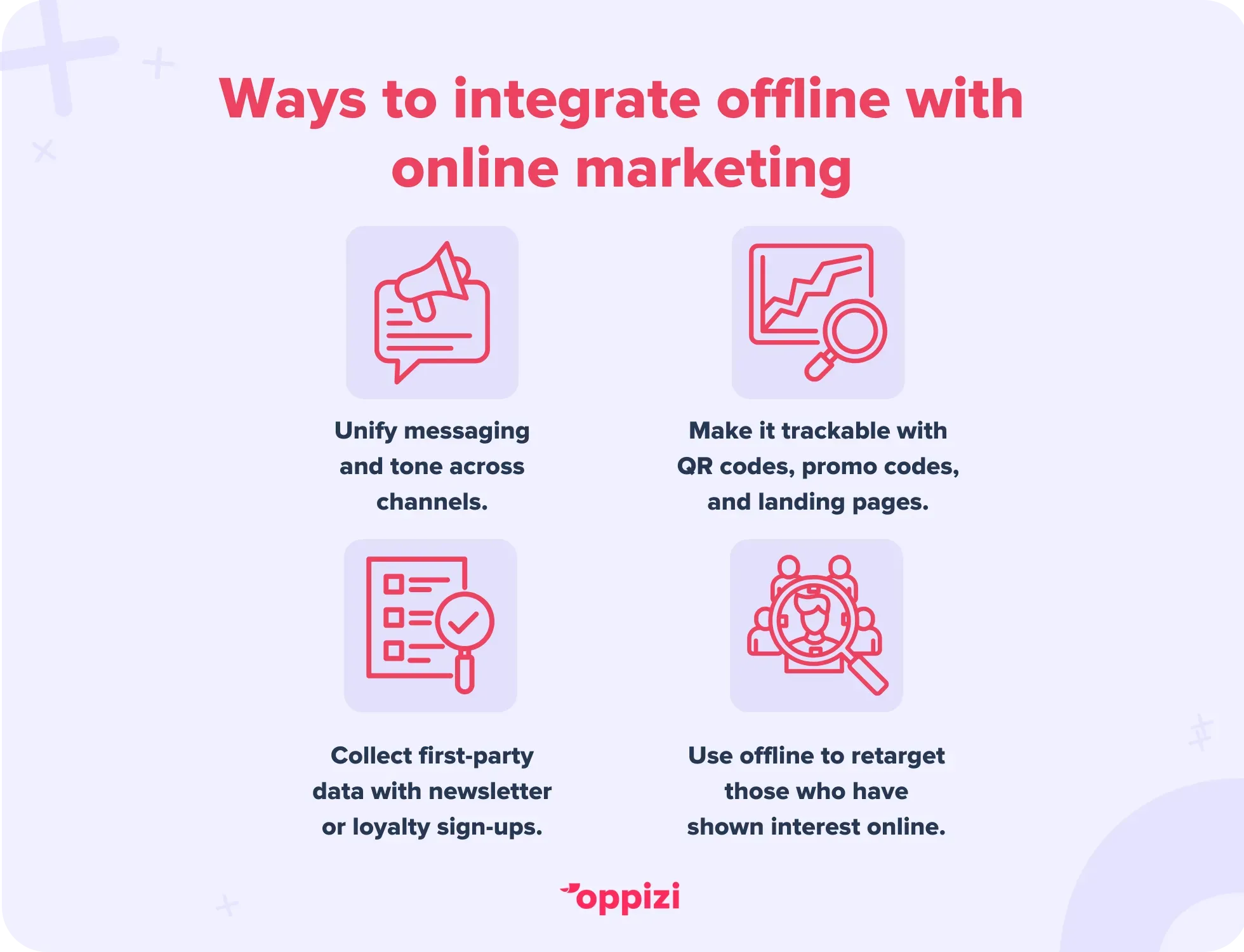
Comment intégrer le hors ligne à votre stratégie marketing actuelle
Le marketing hors ligne donne les meilleurs résultats lorsqu’il complète vos efforts numériques. Voici comment intégrer les deux:
Unifiez votre message sur tous les canaux
Assurez-vous que vos imprimés hors ligne (prospectus, affichage, événements) reflètent le même ton et la même image de marque que vos canaux numériques.
Rendez-le mesurable
Utilisez des codes QR personnalisés, des codes de rabais uniques ou des pages d’atterrissage dédiées pour chaque campagne hors ligne afin d’en suivre la performance.
Recueillez des données internes
Incitez vos clients à s’abonner à votre infolettre ou à votre programme de fidélité à partir de vos points de contact hors ligne pour enrichir vos propres données.
Misez sur le reciblage
Envoyez du publipostage aux personnes qui ont abandonné leur panier ou montré de l’intérêt en magasin. À l’inverse, utilisez des publicités numériques pour recibler les gens qui ont reçu un prospectus ou assisté à votre événement.
Comment mesurer le succès des campagnes hors ligne
C’est un mythe de croire que le marketing hors ligne n’est pas mesurable. Il suffit d’avoir les bons outils :
- Taux de réponse – par la lecture de codes QR, l’utilisation de bons de réduction ou l’abonnement par texto
- Achalandage – suivi au moyen de balises Wi-Fi ou des données de point de vente
- Attribution des ventes – utilisation de codes UGS ou de codes propres à la campagne
- Hausse de notoriété – sondages avant et après la campagne
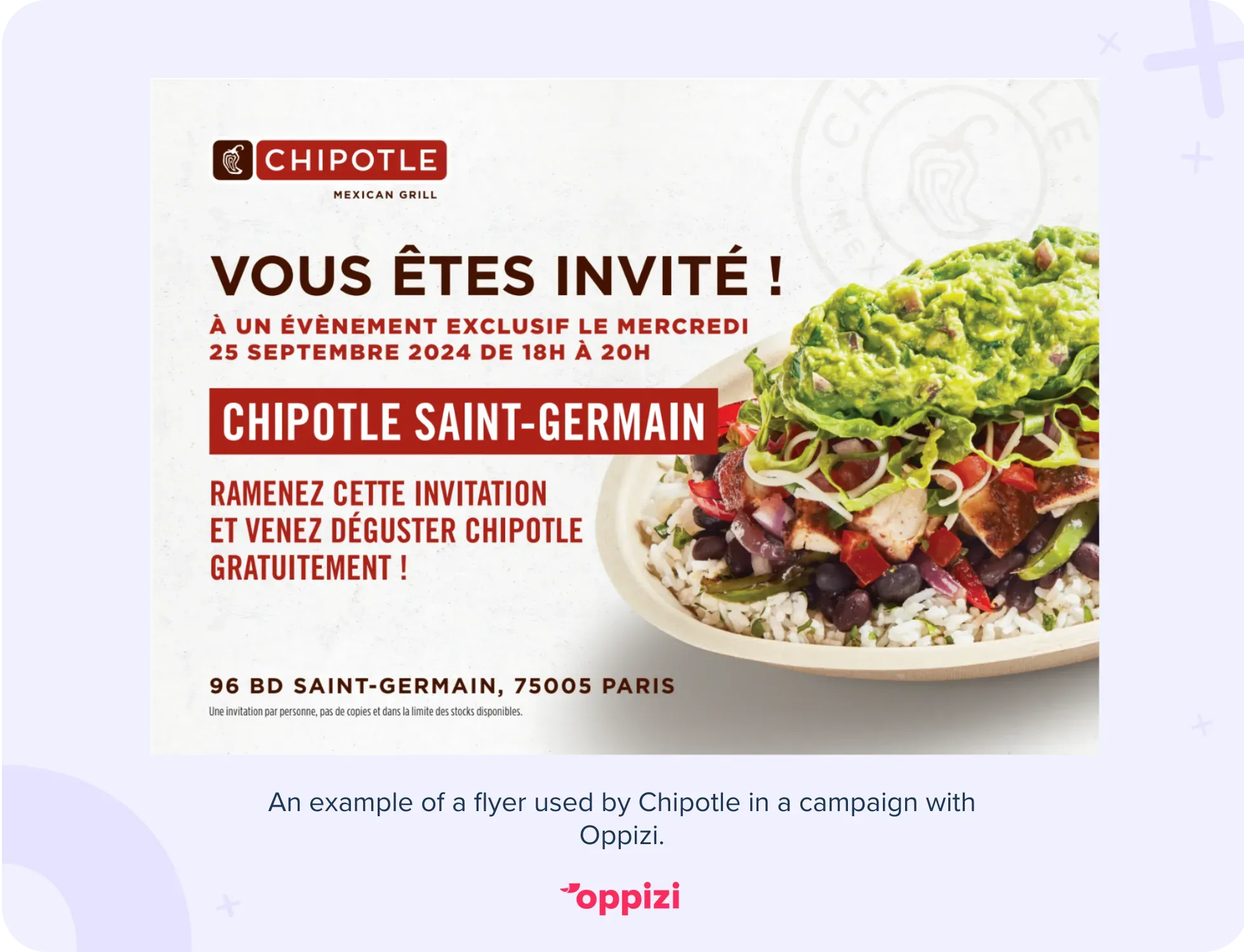
Comment Oppizi a aidé Chipotle à acquérir des clients grâce au Flyering
Pour accroître l’achalandage et sa notoriété locale, Chipotle a fait équipe avec Oppizi pour lancer une campagne de Flyering ciblée à Paris et à Lyon. Au total, 10 000 prospectus ont été distribués main à main et 19 000 livrés en porte-à-porte, couvrant stratégiquement des secteurs très achalandés et résidentiels. Résultat : 550 achats en magasin en seulement 4 semaines, un solide taux de conversion pour un restaurant présent dans des marchés urbains concurrentiels.
Cette campagne montre à quel point les entreprises B2C, surtout celles qui ont des établissements physiques, peuvent profiter d’une approche hyperlocale et tangible. Pour des marques comme Chipotle, il ne s’agit pas seulement d’impressions, mais d’achalandage, de conversions en magasin et de notoriété au sein de la communauté. Que vous ouvriez un nouvel établissement, fassiez la promotion d’une offre ou cherchiez à rester bien présent à l’esprit dans un marché encombré, le marketing hors ligne peut livrer des résultats mesurables qui complètent vos efforts en ligne.
Questions fréquemment posées
1. Quel est le canal de marketing hors ligne le plus rentable en B2C?
La distribution de prospectus est souvent la solution hors ligne la plus abordable et la plus évolutive, surtout pour les entreprises locales. Elle permet un ciblage géographique précis et peut être jumelée à des outils numériques (comme les codes QR) pour mesurer le RSI.
2. Le marketing hors ligne peut-il fonctionner pour les marques de commerce électronique ou axées sur le numérique?
Absolument. Bien des marques de vente directe aux consommateurs utilisent le publipostage, l’échantillonnage ou des activations expérientielles pour accroître leur notoriété et l’engagement hors ligne. Ces efforts peuvent générer de l’achalandage en ligne tout en créant des liens émotionnels que les publicités purement numériques ne peuvent pas créer.
3. Comment savoir si ma campagne hors ligne fonctionne?
Suivez la performance au moyen de codes promo personnalisés, de liens par code QR, de l’achalandage et des données de votre CRM. Vous pouvez aussi mener des sondages ou mesurer la hausse des ventes dans les secteurs ciblés.
Dernières réflexions
Le marketing hors ligne pour les marques B2C ne vise pas à remplacer le numérique : il s’agit de bâtir une stratégie qui combine les deux pour un impact plus profond et plus durable auprès des consommateurs.
Que vous lanciez un produit, ouvriez un nouveau magasin ou cherchiez à renforcer la fidélité à votre marque, les tactiques hors ligne comme la distribution de prospectus, le publipostage, les événements et l’échantillonnage offrent des moyens très engageants et peu concurrentiels de rejoindre de vraies personnes.
Intégrés de façon réfléchie, ces canaux ne font pas que soutenir vos efforts numériques : ils les décuplent.
Prêt à mettre le hors ligne au service de votre marque? Lancez une campagne avec Oppizi dès aujourd'hui et tissez des liens plus solides et plus significatifs avec vos clients idéaux.