Mis à jour le 8 octobre 2026
La lassitude envers la publicité numérique gagne du terrain et, comme spécialiste du marketing, vous cherchez sans doute d’autres stratégies pour vous démarquer. Résultat : les stratégies de marketing hors ligne, comme le publipostage, sont en pleine résurgence. En effet, 61 % des spécialistes du marketing ont augmenté leurs investissements dans le publipostage en 2024.
Toutefois, à mesure que le marketing direct gagne en popularité, il en va de même pour les préoccupations relatives à son impact sur l'environnement. Les entreprises doivent tenir compte de l'empreinte carbone associée à ces campagnes et prendre des mesures pour en minimiser les effets. En mettant en œuvre des pratiques durables, les entreprises peuvent réduire et compenser les émissions de carbone tout en maintenant l'efficacité de leurs efforts de publipostage.
Dans cet article, nous examinerons comment le publipostage contribue aux émissions de carbone et nous partagerons des stratégies concrètes pour aider les spécialistes du marketing à créer des campagnes plus respectueuses de l'environnement.
Comprendre l'empreinte carbone du publipostage
Le publipostage peut avoir un impact sur l'environnement de plusieurs manières. En voici quelques exemples :
Production de matériaux
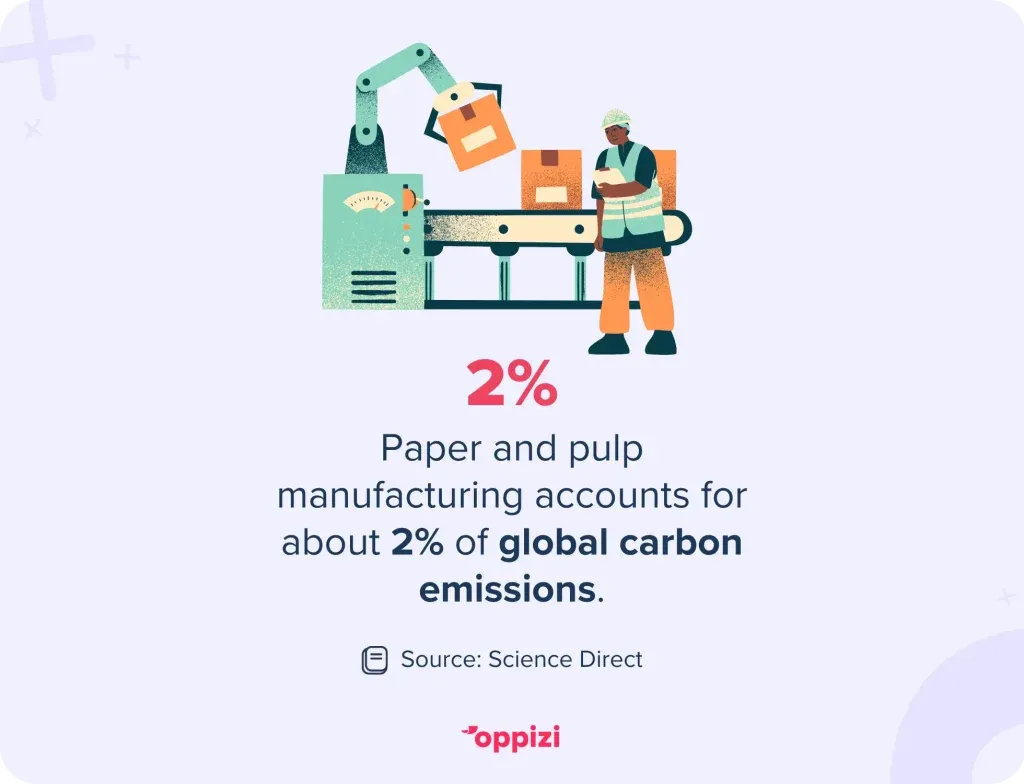
La production de papier, d'enveloppes et d'autres matériaux d'expédition nécessite d'importantes ressources naturelles, notamment des arbres, de l'eau et de l'énergie. La fabrication de papier et de pâte à papier représente environ 2 % des émissions mondiales de carbone. Le papier non recyclé ou issu de sources non durables a un impact environnemental supplémentaire dû à la déforestation et au traitement chimique. Le choix d'un papier recyclé ou provenant de sources durables peut contribuer à atténuer ces effets.
Processus d'impression
L'impression du publipostage implique l'utilisation d'encres, d'adhésifs et de revêtements, dont beaucoup contiennent des composés organiques volatils (COV) qui contribuent à la pollution de l'air. En outre, l'exploitation de presses d'impression à grande échelle consomme de l'électricité, qui provient souvent de combustibles fossiles, ce qui accroît encore l'empreinte carbone de la campagne. L'utilisation d'encres végétales et d'installations d'impression à haut rendement énergétique permet de réduire considérablement les émissions.

Distribution du courrier
Une fois imprimés, les documents de publipostage doivent être transportés. Chaque étape du transport, des imprimeries aux centres de distribution et enfin aux destinataires, nécessite du carburant, ce qui contribue aux émissions de CO₂. Des itinéraires de livraison optimisés, des véhicules électriques et des options d'expédition neutres en carbone peuvent contribuer à compenser cet impact.
Stratégies de compensation des émissions de carbone dans les campagnes de publipostage
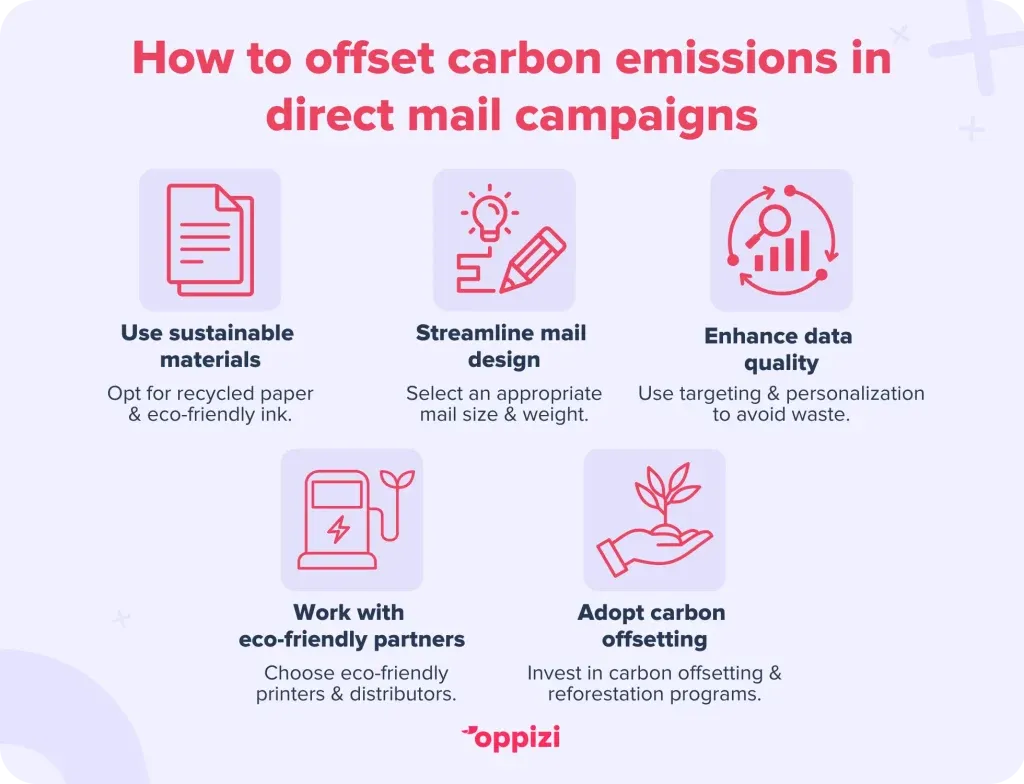
1. Opter pour des matériaux durables
- Papier recyclé : L'utilisation de papier recyclé réduit la demande de matériaux non recyclés et la consommation d'énergie.
- Encres écologiques : Le choix d'encres végétales ou à base d'eau permet de réduire les émissions nocives lors de l'impression.
2. Rationaliser la conception du courrier
- Taille du courrier : Choisissez un format de publipostage qui ne soit pas plus grand que nécessaire, afin d'économiser les matériaux.
- Matériaux légers : L'utilisation de papier plus léger permet de réduire le poids des envois, ce qui se traduit par une diminution des émissions liées au transport.
3. Améliorer la qualité des données
- Un ciblage précis : Veillez à ce que vos listes de publipostage soient à jour afin d'éviter l'envoi de courrier à des adresses incorrectes ou obsolètes, ce qui permet de réduire les déchets.
- Personnalisation : Personnalisez le contenu de votre courrier pour l’adapter aux intérêts des destinataires. Un contenu sur mesure peut accroître l’engagement et réduire le risque que le courrier finisse à la poubelle. 75 % des spécialistes du marketing affirment que la personnalisation augmente l'engagement.
4. Collaborer avec des partenaires soucieux de l'environnement
- Imprimeurs écologiques : Associez-vous à des imprimeries qui privilégient le développement durable, comme celles qui proposent des services d'impression neutres en carbone.
- Logistique durable : Choisissez des partenaires de distribution qui s'engagent à réduire leur empreinte carbone par des mesures telles que des véhicules de livraison électriques ou des itinéraires optimisés.
5. Mettre en œuvre la compensation des émissions de carbone
- Programmes de compensation : Investissez dans des projets de compensation carbone certifiés pour compenser les émissions générées par votre campagne.
- Initiatives de reboisement : Soutenez des projets de reforestation qui absorbent le CO2, compensant ainsi les émissions de vos courriers.
Le rôle des solutions de rechange numériques
Le marketing numérique est souvent perçu comme une solution plus verte que l'imprimé, mais il a lui aussi une empreinte carbone. Chaque interaction en ligne, qu'il s'agisse d'un courriel ou d'une visite sur un site, consomme de l'énergie pour être traitée et stockée dans des centres de données, dont beaucoup fonctionnent encore aux énergies fossiles.
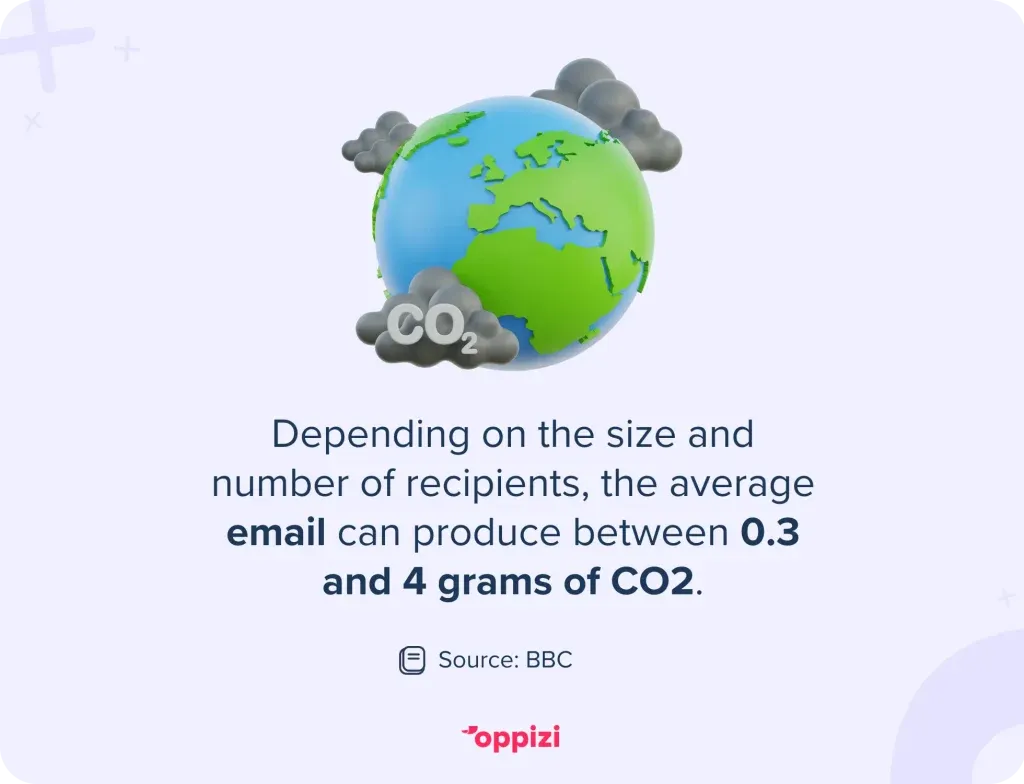
Par exemple, un courriel moyen génère entre 0,3 et 4 grammes de CO2. La quantité de CO2 émise dépend de facteurs tels que la taille du message et le nombre de destinataires. Les courriels contenant des pièces jointes volumineuses ou envoyés en masse produisent des quantités de CO2 encore plus importantes. Une étude étonnante réalisée par OVO Energy a estimé que si chaque adulte au Royaume-Uni envoyait un courriel de remerciement de moins par jour, cela permettrait d'économiser 16 433 tonnes de carbone par an, ce qui équivaut à retirer 3 334 voitures diesel de la circulation pendant un an.

Plutôt que de considérer le publipostage et le marketing numérique comme des forces concurrentes, les entreprises peuvent adopter une approche hybride qui exploite les points forts des deux méthodes tout en minimisant leur impact sur l'environnement. Par exemple, les spécialistes du marketing peuvent utiliser des campagnes numériques ciblées pour affiner leurs segments de public avant d'envoyer du publipostage à un public plus engagé et plus pertinent, ce qui permet de réduire les déchets. En outre, l'intégration de codes QR ou d'URL personnalisées dans la publicité imprimée peut faire le lien entre les interactions en ligne et hors ligne afin de maximiser l'engagement tout en réduisant la consommation excessive d'énergie numérique.
Grâce à l'intégration des efforts de marketing hors ligne et numérique, les entreprises peuvent créer une stratégie plus durable et plus efficace qui réduit les émissions de carbone inutiles sur les deux canaux.
Dernières réflexions
En adoptant des pratiques durables dans les campagnes de publipostage, les entreprises peuvent réduire de manière significative leur impact sur l'environnement tout en obtenant un succès marketing. Chez Oppizi, nous nous engageons à fournir des solutions respectueuses de l'environnement aux marques qui cherchent à attirer leur public par le biais du marketing hors ligne. Grâce à la plateforme d'action climatique Ecologi, nous avons réussi à éviter 100 tonnes d'émissions de CO₂.
Prêt à lancer une campagne de publipostage à la fois percutante et durable? Devenez partenaire d'Oppizi dès aujourd'hui et communiquez avec votre public d'une manière qui profite à la fois à votre marque et à la planète.