Last updated July 23, 2026
While digital marketing strategies often take center stage, direct mail campaigns in Australia and New Zealand continue to offer a tangible and effective means of reaching target audiences. Understanding the costs associated with these campaigns is crucial for businesses aiming to optimize their marketing budgets and achieve a favorable return on investment (ROI).
Factors influencing direct mail campaign costs
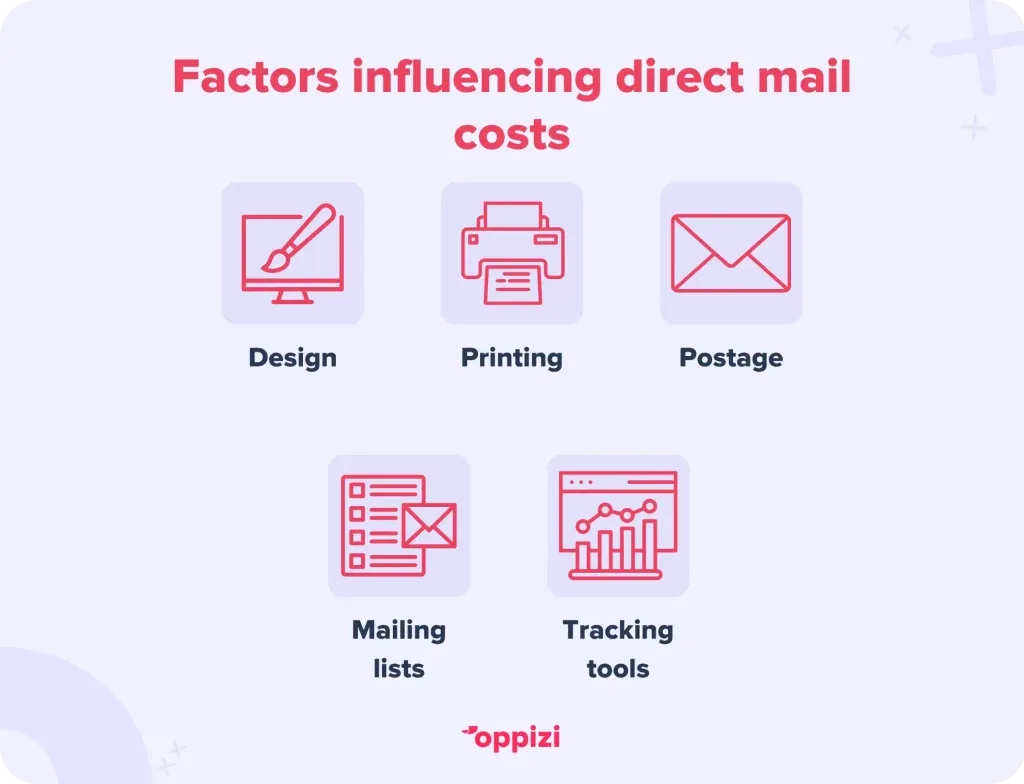
There are several key elements that contribute to the overall expense of a direct mail campaign:
Design costs
The visual design and messaging of your mail piece are important to ensure you stand out from the crowd. Businesses can choose to design in-house or hire professional graphic designers and copywriters.
In Australia and New Zealand, graphic design rates can vary significantly, typically ranging from AU$50 to AU$150 or NZ$20 to NZ$82 per hour, depending on the designer's experience and the project's complexity. Copywriting services may add additional costs, especially if the content requires specialized knowledge or creativity.

Printing costs
Direct mail printing can take up a significant part of the budget. Several factors influence costs, including the type of mailer (postcards, brochures, catalogs), paper quality, size, and color usage. Below are some estimated printing costs:
Postcards:
- Australia: AUD $0.10 to $0.30 per piece
- New Zealand: NZD $0.15 to $0.50 per piece
Brochures/Catalogs:
- Australia: AUD $1.00 to $3.00 each
- New Zealand: NZD $1.50 to $4.00 each
Incorporating variable data printing, which enables personalized content such as unique names, offers, or images, can further increase costs due to the need for specialized software and more complex printing processes. However, bulk printing often reduces the per-unit cost, making it a cost-effective strategy for larger campaigns.
Mailing lists and data
Acquiring a targeted mailing list is essential for reaching the desired audience. Purchasing or renting mailing lists in Australia and New Zealand can cost approximately AU$200 to AU$500 or NZ$100 to NZ$400 per 1,000 contacts, depending on the specificity and quality of the data.
Alternatively, businesses can leverage their own customer databases, which is often more cost-effective and tends to yield higher response rates. In fact, 68% of North American marketers use customer data for personalization, highlighting the value of first-party data in direct mail campaigns.
Postage costs
Postage is a substantial component of direct mail expenses. In Australia, standard letter postage rates start at AUD $1.10 for letters up to 250 grams, with discounts available for bulk mailings that meet specific preparation requirements.
In New Zealand, standard postage rates begin at NZD $1.50 for medium letters up to 500 grams, with bulk mailing options offering reduced rates. Utilizing services like Australia Post's Print Post for regular publications can also lead to significant savings.
Tracking tools
Investing in tracking mechanisms, like QR codes or personalized URLs, can enhance the effectiveness of a campaign but may incur extra costs. These tools enable businesses to monitor response rates and gather valuable data for future campaigns.
Strategies to optimize direct mail campaign costs
Here are a number of tips you can consider to maximize the ROI of your direct mail marketing campaigns:
1. Define and segment your target audience
Clearly identifying your target audience allows for more personalized and effective messaging. Segmenting your mailing list based on demographics, purchasing behavior, or other relevant criteria can lead to higher response rates and reduced costs by eliminating less promising prospects.
2. Leverage bulk printing and mailing discounts
Printing and mailing in larger quantities often result in lower per-unit costs. Plan your campaigns to take advantage of bulk rates can lead to substantial savings. Ensure that your mail pieces meet the postal service's requirements for bulk discounts, which may include specific sizing and formatting.
3. Choose cost-effective materials
Selecting materials that balance quality and cost is crucial. Opt for standard sizes and finishes to avoid additional expenses. While high-quality materials can enhance the recipient's perception of your brand, you should align material choices with the campaign's goals and budget.
4. Utilize templates and automation tools
Using direct mail templates and automation tools can reduce design and production costs. Many printing services offer customizable templates that maintain a professional appearance while saving time and money. Automation tools can also streamline the process of personalizing mail pieces, further enhancing efficiency.
5. Test and measure campaigns
Conducting A/B testing with different designs, messages, or offers can provide insights into what resonates best with your audience. Start with smaller test batches to evaluate effectiveness before scaling up. Monitoring response rates and other key metrics allows for data-driven decision making, improving future campaign performance.

Benefits of direct mail in Australia and New Zealand
Despite the prevalence of digital marketing, direct mail offers unique advantages:
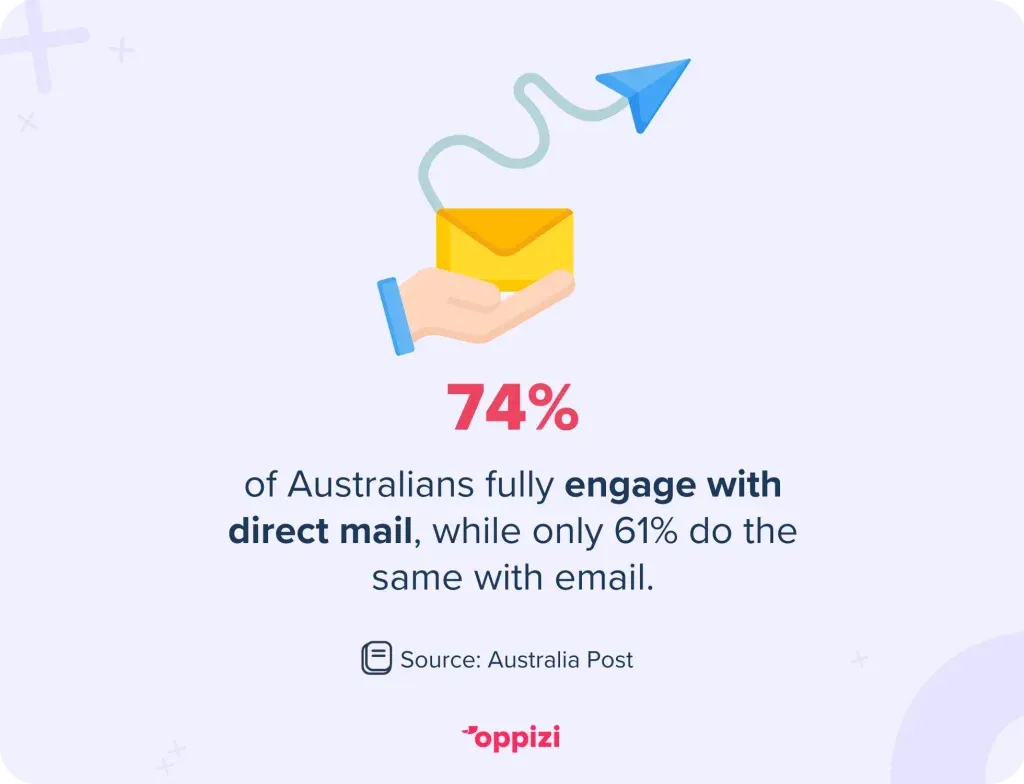
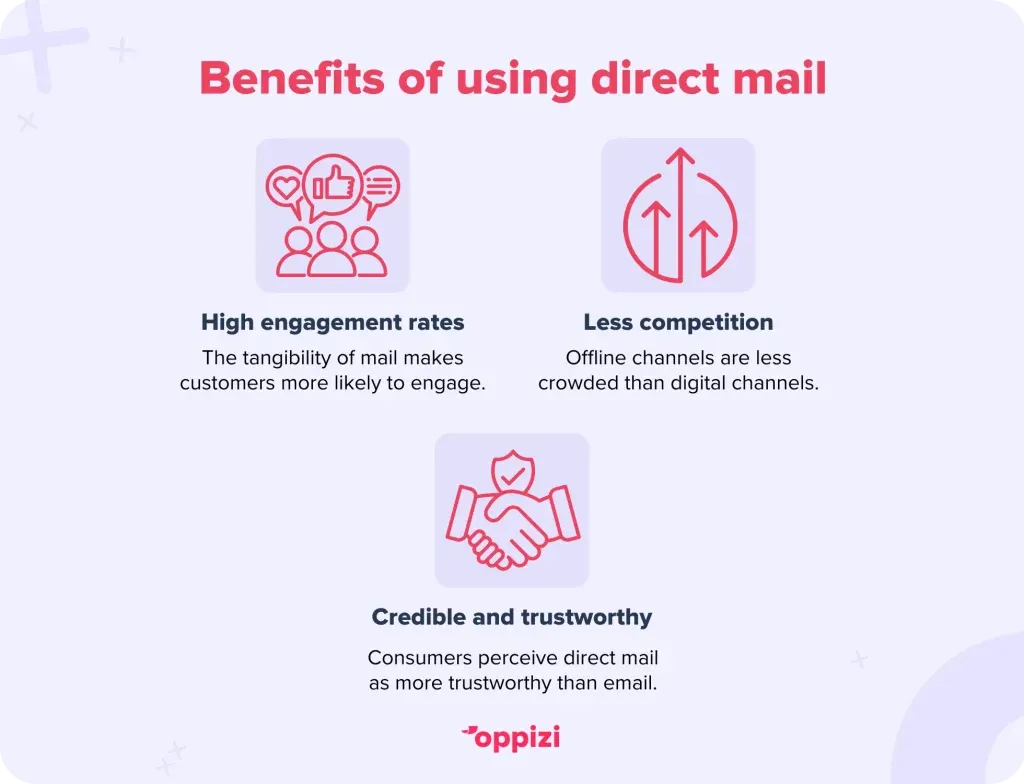
- High engagement rates: Physical mail often achieves higher engagement rates compared to digital channels. Recipients are more likely to open and read tangible mail, leading to increased brand awareness and potential conversions. In fact, 74% of Australians give their full attention when reading a direct mail piece, compared to only 61% for email, highlighting the effectiveness of direct mail in capturing consumer focus.
- Credibility and trust: Receiving physical mail can enhance the perceived credibility of a brand. Consumers may view direct mail as more trustworthy compared to digital advertisements, which are often associated with spam. 56% of Australians aged 18-34 said they trusted direct mail and 46% said they have made a purchase as a a result of receiving direct mail.
- Less competition: With many businesses prioritizing digital marketing, offline marketing channels are less crowded, giving your message a greater opportunity to stand out.
FAQs about direct mail in Australia & New Zealand
1. Is direct mail worth the money?
Yes, direct mail can be a worthwhile investment, especially when targeting specific audiences. Unlike digital ads, physical mail has higher engagement rates and is more likely to be opened and read. It builds brand trust, reduces digital noise competition, and can deliver strong ROI when well-executed. To maximize value, businesses should focus on targeting, personalization, and cost-efficient production strategies.
Final thoughts
Direct mail campaigns in Australia and New Zealand remain an effective marketing strategy. By carefully considering the factors that influence costs to optimize expenses, businesses can achieve increased customer engagement and a strong ROI. Balancing design, printing and posting within your budget is key to a successful direct mail campaign.
Ready to launch your own campaign? Start a direct mail campaign with Oppizi today and maximize your offline marketing impact.