Last updated July 23, 2026
Direct Mail cost (DM) can vary based on factors like the mailing list size, design and printing costs, postage fees, and additional services or materials. On average, advertisers spend between $0.30 to $1 or more per piece for a campaign.
Understanding Direct Mail cost
When planning a DM campaign, it is crucial to have a clear understanding of the expenses involved. From design and printing to postage and mailing lists, each aspect of a DM campaign contributes to the overall cost. By understanding the main factors affecting direct mail cost, advertisers can make informed decisions and effectively manage their DM marketing budget.
Why Direct Mail Marketing?
DM marketing offers a tangible and personal connection with the audience, allowing businesses to stand out in a digital-focused world. Unlike digital marketing channels, DM marketing allows for targeted, personalized marketing to specific demographics or locations. Direct mail cost is very often offset by its ROI. This level of personalization increases the relevance of DM marketing, leading to higher response rates. Additionally, direct mail marketing can be tailored to various customer segments, ensuring that the message resonates with the intended audience. By utilizing direct mail as a marketing channel, advertisers have the opportunity to reach potential customers who may prefer physical mail over digital advertising.
Main factors affecting Direct Mail cost
Various factors contribute to direct mail cost, ranging from design and printing to postage and mailing lists. The size, weight, and complexity of the mail piece can significantly impact printing cost and therefore the total direct mail cost.
Utilizing variable data printing, which allows for personalization, may also influence the direct mail cost. In addition to printing cost, postage cost are determined by factors such as the size and weight of the mail piece, as well as the mailing class and bulk discounts.
Mailing lists, which are crucial for targeted marketing, also contribute to direct mail cost. The complexity of the mailing list, such as the level of segmentation, can influence postage cost. Lastly, design expenses, such as graphic designer services, can impact the overall cost of a DM campaign.

Design, a component of the Direct Mail costs
Another part of the direct mail cost is design. In-house design for small postcard campaigns provides cost-saving benefits. Professional design enhances DM advertising expenses, elevating campaign impact and response rates. The influence of design extends to printing cost which eventually increases the direct mail cost. Graphic designers play a crucial role in improving DM marketing copy and, subsequently, response rates. Additionally, variable data printing significantly impacts the direct mail cost and personalization requirements, making it the best option for marketing mail.
Designing in-house vs. outsourcing design
The decision between in-house design and outsourcing professional design services is an important consideration when it comes to evaluation of the direct mail cost. In-house design often allows small businesses to save on design expenses, as they can utilize their internal resources. However, it is essential to consider the expertise of graphic designers and the quality of design output.
Professional design services may entail additional expenses, but they provide their clients with access to experienced professionals who can create visually compelling DM pieces. These professionals understand the nuances of design, ensuring that messages are effectively conveyed to target audiences.
Ultimately, the cost difference between in-house design and professional services can significantly impact the overall impact and response rates of a DM campaign. In summary, design impacts the output more than the direct mail cost.
Could AI be used as a copywriter for a DM campaign?
The advancements in artificial intelligence (AI) have sparked interest in its potential use as a copywriter for DM campaigns. AI copywriting tools can generate personalized content based on data and algorithms, which can be beneficial for DM marketing. These tools can analyze target audience data and create marketing copy that is tailored to specific segments.
However, it is important to consider the quality of the content generated by AI. While AI can automate the copywriting process, it may not match the creativity and emotional appeal of human copywriters. Therefore, it is crucial to carefully review and edit the content generated by AI before incorporating it into a DM campaign. While AI copywriting has the potential to reduce direct mail cost, advertisers must strike a balance between automation and human creativity to achieve optimal results.
Cost differences
The cost of design has a direct impact on the overall effectiveness of a DM marketing campaign. While in-house design may save on direct mail cost in the short term, professional design services can significantly enhance the campaign's impact.
Well-designed DM pieces can grab the attention of recipients, convey the intended message effectively, and drive response rates. In contrast, poorly designed mail pieces may be overlooked or fail to engage the audience, resulting in lower response rates and decreased campaign success.
By investing in professional design services, advertisers can optimize the design of their DM campaign, ultimately increasing the chances of success and achieving a higher ROI. Carefully evaluating design cost in relation to the total cost of a DM campaign is essential for making informed decisions and maximizing the campaign's effectiveness.

Copywriting, its impact on Direct Mail expenses
In direct mail marketing, copywriting plays a crucial role in conveying the message and engaging the target audience. The quality of the copy can significantly impact the success of a DM campaign. Whether advertisers choose professional copywriting services or opt for in-house copywriting, it is important to consider the cost and the potential impact on campaign expenses.
In this section, we will explore the cost of professional copywriting, the expenses associated with in-house copywriting, and how advertisers can align their messaging throughout their marketing mix with the help of a copywriter.
Cost of professional copywriting
Professional copywriting services offer advertisers the expertise of skilled writers who specialize in creating persuasive marketing copy. However, these services come at a cost, and it is crucial to understand the potential expenses involved.
The cost of professional copywriting can vary depending on factors such as the scope and complexity of the project. Factors such as the level of research required, market analysis, and revision processes can also impact the overall cost.
Despite the costs, hiring professional copywriting services can provide advertisers with copy that resonates with the target audience, drives engagement, and ultimately leads to a higher response rate. Carefully evaluating the benefits of professional copywriting against the associated costs can help advertisers make informed decisions about their DM marketing budget.
In-house copywriting costs
For small businesses, in-house copywriting can be an attractive option due to cost savings and the ability to maintain control over the messaging. However, it is important to consider the true cost of in-house copywriting. In-house copywriting costs encompass the time, resources, and salaries of internal copywriters, as well as the opportunity cost of staff time that could be spent on other business activities.
It is also crucial to factor in costs associated with revisions, editing, and proofreading processes. Additionally, advertisers need to evaluate the quality of the copy generated in-house compared to professional copywriting services. Outsourcing copywriting to professionals can ensure high-quality copy that effectively conveys the desired message and resonates with the target audience, ultimately leading to higher response rates.
A copywriter to unify messaging across channels
Consistency in messaging is key when it comes to a successful marketing campaign, and direct mail is no exception. By working with a copywriter, advertisers can align their messaging throughout their marketing mix, ensuring a cohesive and seamless experience for the target audience.
A copywriter can help reinforce brand identity, devise compelling marketing copy, and synchronize DM campaigns with other marketing materials. Whether it's digital marketing or direct mailing, having consistent messaging across various channels enhances brand recognition, engagement, and response rates.
Collaborating with a copywriter allows advertisers to leverage their expertise, industry knowledge, and creativity, ensuring that DM copy is optimized for impact and aligns with broader marketing objectives.
AI-powered, personalized content for Direct Mail
As Artificial Intelligence continues to gain traction around the world, its potential applications in content creation are becoming apparent. Companies such as Phrasee utilize AI technology to create personalized content that resonates with recipients and can be used in Direct Mail campaigns.
With AI's ability to analyze vast amounts of data and generate insights on consumer behavior, it can help marketers tailor their messaging to specific audiences and increase engagement rates. As AI technology advances, its role in content creation is likely to become even more significant in the future.
Mail piece formats impact Direct Mail cost
The format of a mail piece is an important consideration in DM marketing. Different formats can impact the cost of a campaign, as well as the effectiveness of the message. In this section, we will explore how advertisers can choose the right format, whether size matters, and what drives the price of the print.
By understanding these factors, advertisers can make informed decisions to optimize the cost and impact of their DM campaigns.
How to choose the right format?
Choosing the right format for a mailpiece is crucial for direct mail success. The format should align with the target audience's preferences, campaign objectives, and marketing channels. Small postcard formats, for example, can be cost-effective options, reducing printing and postage costs.
Depending on the campaign goals, advertisers may opt for different mailpiece formats, such as brochures, catalogs, or letters. It is also important to consider the direct mail services available, as they often provide templates and guidance on choosing the right mailpiece format for a particular campaign.
By selecting the appropriate mailpiece format, advertisers can optimize printing and postage costs, enhance campaign effectiveness, and increase response rates.
Does the size matter?
The size of a mailpiece can significantly impact the cost of a DM campaign. Consider the following factors when evaluating the size of your mailpiece:
- Printing cost: Larger mailpieces cost more to mail due to increased weight and size. It is important to factor in postage costs when determining the size of your direct mail piece.
- Shipping cost: When it comes to mailing larger items, shipping costs can increase along with printing fees. This is because larger mailpieces tend to be heavier and bulkier, which leads to higher freight costs. The exact amount of the increase will depend on factors such as size, weight, and destination. It's important to consider these additional costs when planning to mail larger items and factor them into your budget accordingly.
What drives the print cost?
Printing cost for DM campaigns can vary depending on various factors, including design complexity and printing techniques. By understanding what drives the price of the print, advertisers can make informed decisions regarding their printing budget. Consider the following factors when evaluating printing cost:
- Design complexity: The more complex the design, the higher the printing cost are likely to be. Intricate graphics, color printing, and special printing techniques can all contribute to increased printing expenses. Keep it simple, a 6 x 9 postcard Oppizi best seller, would do perfectly.
- Bulk discounts: Printing in bulk will lead to cost savings, as printing providers may offer discounts for larger quantities. advertisers should consider bulk printing options to optimize their printing cost.
- Variable data printing: Personalized DM pieces, utilizing variable data printing, can result in higher printing cost up to 30% more. However, the potential increase in response rates may outweigh the additional cost.
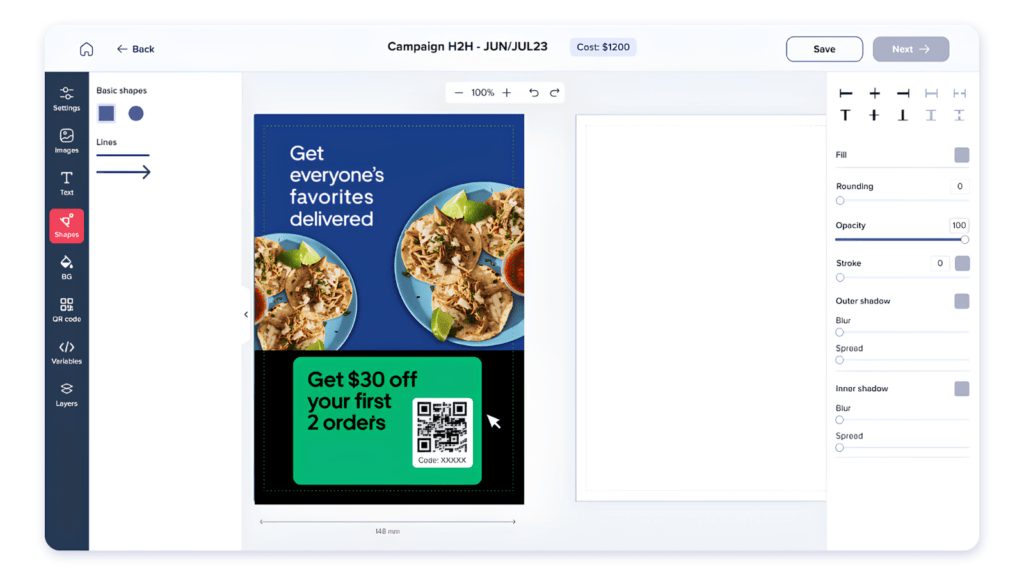
Oppizi has created a design tool to lead you through the various stages of crafting your artwork. A wide template gallery is available to assist you in selecting the most suitable template for your business needs. The builder enables you to insert QR codes and variable data to monitor and customize your campaign effectively.
Everything to know about mailing lists
The effectiveness of a DM campaign heavily relies on the mailing list used. In this section, we will explore the cost implications of mailing lists and the different options available to businesses. Understanding the cost of mailing lists is crucial for budgeting and ensuring that the target audience is reached effectively.
What is a mailing list?
A mailing list is a collection of contact information, such as names and addresses, used for DM marketing. Mailing lists allow advertisers to target specific audience segments, ensuring that marketing materials reach the intended recipients.
The cost of a mailing list can vary depending on factors such as the size of the list, the level of segmentation, and the data accuracy. The data within a mailing list is the key to reaching the target audience, thereby impacting the overall success of a DM campaign.
Advertisers should carefully consider the cost of mailing lists when budgeting for their DM marketing efforts, understanding that the quality of the list directly influences the response rates and campaign outcomes.
Where to procure a mailing list?
There are various options available for advertisers looking to procure a mailing list. Consider the following sources when searching for mailing lists:
- Specialized mailing list providers: These providers offer mailing lists specifically tailored to various industries and target audience profiles. They ensure data accuracy and provide high-quality lists that align with marketing needs. Examples of mailing list providers include Data Axle, Acxiom, Experian, and directmail.com, among others.

- Marketing automation platforms: Marketing automation software often includes mailing list services, allowing advertisers to build and manage targeted lists based on specific criteria. These platforms provide additional features such as data analysis, segmentation, and campaign tracking.
- Direct mail service providers: Some DM service providers offer mailing list rental services, providing advertisers with access to targeted lists based on industry, geographical location, or other parameters. These providers can help advertisers reach cold leads and expand their marketing reach.
Can you create a mailing list?
Building your mailing list can be a cost-effective option, particularly for small businesses on a limited budget. However, advertisers need to consider the cost and effort required to create and maintain their mailing list. Creating your mailing list involves time-consuming data collection, verification, and ongoing data management.
Advertisers must also consider the distribution costs associated with managing and maintaining their mailing list data. While building an own mailing list gives advertisers complete control over target audience selection, it is important to weigh the costs and benefits against other options, such as purchasing or renting mailing lists.
Assessing the available marketing channels, target audience size, and the level of data accuracy required can guide the decision-making process.
Presorting, what is it? How does this impact the cost?
Presorting the mailing list involves organizing addresses according to postal service requirements, such as ZIP codes and sorting codes. Presorting mailing lists has several benefits, including potential cost savings. Presorted mail typically qualifies for bulk mailing discounts, reducing overall postage costs.
The United States Postal Service (USPS) offers various incentives and discounts for presorted mail, making it a cost-efficient option for DM distribution. The presorting process ensures that mailpieces are accurately sorted before being delivered to USPS facilities, streamlining the mailing process. By presorting the mailing list, advertisers can optimize their DM distribution costs, improving the cost-effectiveness of their campaign.
USPS, postage cost, and Direct Mail
Postage costs are a significant consideration when it comes to direct mail marketing. Understanding the different postage options and their cost implications is crucial for budgeting and optimizing postage costs. In this section, we will explore the differences between first class and standard class mail, as well as saturation mailing, and how advertisers can reduce postage costs.
First-class vs. standard mail cost vs. saturation mailing
There are different postage options available for DM campaigns, each with its own cost structure and service level. Consider the following options:
- First-class mail: First-class mail offers faster delivery times but generally comes at a higher postage rate compared to standard mail. Advertisers should consider the importance of service speed and delivery in relation to their campaign objectives when choosing first class mail.
- Standard mail: Standard mail, while generally slower, offers more economical postage rates for DM pieces. advertisers looking to optimize postage costs may find standard mail to be a cost-effective option, particularly for non-time-sensitive campaigns.
- Saturation mailing: Saturation mailing provides discounted postage rates for reaching specific geographic areas. This option is often used when advertisers want to target a particular region or neighborhood, enabling cost-efficient distribution.
- Carefully evaluating postage options in relation to campaign goals, budget, and service requirements allows advertisers to make informed decisions and achieve optimal postage cost savings.
How to reduce postage costs
Reducing postage expenses is a priority for many advertisers engaged in DM marketing. Consider the following strategies to optimize postage costs:
- Utilize bulk mailing discounts: Targeting all and almost all the households in a zipcode will unlock cheaper postage rates, called Saturation Rates. Many postal services offer bulk mailing discounts based on the quantity of mailpieces being sent. By taking advantage of bulk mailing discounts, advertisers can achieve cost savings in postage expenses.
- Consider postage rates: Different postage rates apply based on mailing class, size, weight, and other factors. Choosing the appropriate mailing class and optimizing mailpiece sizes can help maximize postage cost efficiency.
- Leverage postal service automation: Utilizing postal service automation, such as barcoding (Intelligent Mail® Barcode by USPS), can streamline processing and reduce postage expenses. Automating the direct mail mailing process ensures compliance with postal service requirements and can result in further postage cost savings.
- By implementing these cost-saving strategies and working closely with postal service providers, advertisers can optimize their direct mail postage costs, resulting in a more cost-effective CM campaign.
How to qualify for saturation rates?
To qualify for saturation rates for a mailing, at least one of the two conditions must be true.
- The mailing must target at least 90% of the households in the designated zone (zip Code or postal routes).
- A minimum of 75% of the total addresses, including households, advertisers, and PO boxes, must receive the mailing.
Meeting these criteria can result in significant cost savings for businesses and organizations looking to distribute mailings to a large audience within a specific geographic area.
Personalization and automation in Direct Mail
Personalization and automation play significant roles in direct mail marketing. With advancements in digital technology, advertisers have the ability to personalize direct mail pieces based on individual recipient data, enhancing the effectiveness of their campaigns.
Additionally, marketing automation tools streamline the direct mail process, reducing manual effort and potentially lowering expenses. In this section, we will explore the expenses associated with personalization, as well as the costs and benefits of automation in direct mail marketing.
Costs associated with personalization
Personalization serves as a potent instrument within direct mail marketing, enabling companies to customize their marketing communications for each recipient. However, personalization does come with additional expenses.
Variable data printing, which enables the customization of direct mail pieces, requires data management and printing setup processes, contributing to printing expenses. The cost of personalization also varies depending on the target audience size and the level of data accuracy required.
Despite these expenses, personalization can significantly increase response rates and campaign effectiveness, leading to a higher return on investment. Advertisers must carefully consider the costs and potential benefits of personalization when planning their DM campaigns, ensuring that the investment aligns with their marketing goals.
Automation costs and benefits
The use of automation in direct mail marketing can streamline processes, reduce manual effort, and potentially lower costs. Streamlined processes facilitated by automation platforms could help lower design and printing costs by over 20%. On the other hand, automation can improve conversion rates of marketing campaigns.
While automation helps to reduce overall costs, it's important to remember that marketing automation tools usually involve implementation and integrations, which generally requires a subscription and need to be considered in the DM campaign budget.
Cost samples from direct mail automation platforms
Evaluating the costs and potential benefits of automation can help advertisers make informed decisions regarding the level of automation that best fits their campaign needs and budget.
Managing shipping and printing cost
Effective management of shipping and printing costs is crucial for ensuring a cost-effective DM campaign. By carefully considering these costs, advertisers can optimize their direct mail marketing budget while maintaining the desired impact and response rates. In this section, we will explore various ways to save on print and shipping costs, helping advertisers maximize their return on investment.
Saving on print and shipping
Saving on printing and shipping costs is an important aspect of managing a cost-effective DM campaign. Consider the following strategies:
- Leverage bulk discounts: Many printing providers offer bulk discounts for larger printing quantities, helping advertisers save on their printing cost.
- Utilize mailing services: Working with professional mailing services can optimize printing, packaging, and distribution costs, resulting in cost savings. These services often offer expertise, bulk mailing discounts, and priority processing, optimizing the DM campaign's cost-effectiveness.
- Consider priority processing: Prioritizing printing and distribution processes can lead to time and cost savings, particularly for time-sensitive DM campaigns. Expedited processing may incur additional costs, so advertisers should weigh the benefits against the expense.
- By implementing these cost-saving strategies, advertisers can effectively manage their printing and shipping costs, ensuring a more cost-efficient DM campaign.
Are there bidden costs in Direct Mail marketing?
When budgeting for a DM campaign, it is important to consider all costs, including any hidden costs that may arise. Hidden costs are expenses that are often overlooked or not initially factored into the direct mail marketing cost, potentially leading to unexpected budget overruns.
Examples of hidden costs in direct mail marketing include mailing costs, distribution costs, design revisions, postage rate fluctuations, and data management costs. By taking the time to carefully assess and account for these hidden costs, advertisers can more accurately budget for their DM campaigns, ensuring that the total cost does not exceed expectations.
Understanding the total cost of a DM campaign is crucial for accurately measuring return on investment (ROI) and evaluating the success of the campaign.
Are Direct Mail advertising costs offset by high ROI?
Direct mail advertising costs are an investment that businesses make to reach and engage their target audience. In this section, we will explore how to measure revenue with direct mail, as well as the impact of target audience segmentation on direct mail advertising.
By understanding the factors that contribute to a high ROI, advertisers can assess the cost-effectiveness of their DM campaigns.
How to measure revenue with direct mail?
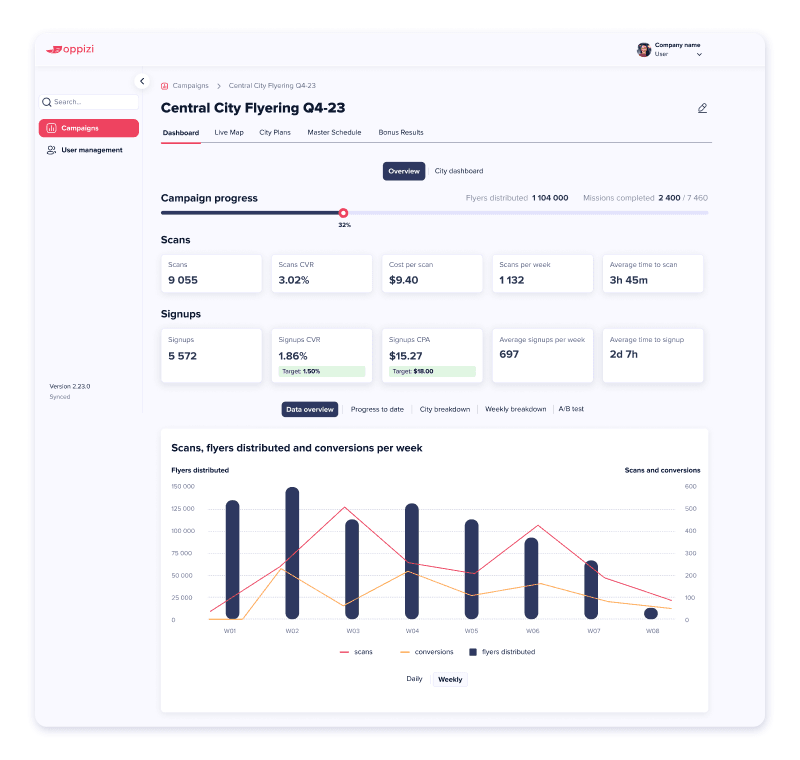
Evaluating the revenue generated by DM campaigns is crucial for determining their return on investment (ROI). Most of the direct mail software solutions include native integrations with platforms like Stripe, Shopify, and Salesforce, which are vital for campaign tracking.
These integrations not only facilitate the creation of custom coupon codes but also enable seamless revenue tracking, allowing advertisers to easily monitor the ROI of their campaigns directly from the software's dashboard.
Oppizi has designed integrations that enable customers to monitor their campaigns with ease. These integrations have been developed in such a way that they provide a seamless experience to the users, making it simple for them to track their campaign's performance.
By reducing manual efforts and automating tracking processes, Oppizi's integrations offer a more efficient solution for managing campaigns and measuring their effectiveness. Overall, Oppizi's campaign tracking integrations help advertisers save time and resources while optimizing their marketing efforts.
The more targeted the Direct Mail campaign is, the better
Targeting is a fundamental aspect of direct mail advertising, and the more precise the target audience, the better the campaign's effectiveness will be. By tailoring direct mail messages to specific target audience segments, advertisers can increase response rates, engagement, and overall campaign success. Direct mail offers the opportunity to deliver personalized, relevant content that resonates with recipients, increasing the likelihood of a response or conversion. Advertisers should analyze their marketing needs, understand their target audience's preferences, and utilize data-driven targeting methods to optimize direct mail advertising costs. By prioritizing target audience segmentation, advertisers can ensure that DM campaigns reach the right individuals, enhancing ROI, and achieving cost-effective marketing outcomes.
Conclusion
In conclusion, understanding the costs associated with direct mail marketing is crucial for planning and executing successful campaigns. Factors such as design, copywriting, mailpiece formats, mailing lists, postage, personalization, and automation all contribute to the overall expenses.
By carefully considering these factors and making strategic choices, you can optimize your direct mail cost and maximize your return on investment. Remember to align your messaging throughout your marketing mix and measure revenue to evaluate the effectiveness of your campaigns.
Looking to increase brand visibility? Launch an Oppizi campaign in minutes and connect with your audience offline. Create your campaign now!
Sources
- https://postalpro.usps.com
- https://thedma.org/marketing-insights/response-rate-report
- https://compu-mail.com/blog/2017/07/14/30-direct-mail-statistics-for-2017
- https://www.bls.gov/ooh/about/disclaimer.htm
- https://www.forbes.com/sites/forbescommunicationscouncil/2017/08/30/why-direct-mail-marketing-is-far-from-dead/#6cc4666f311d
- https://pe.usps.com/text/dmm300/602.htm
- https://pe.usps.com/text/dmm300/201.htm
- https://app.monstercampaigns.com/c/evknkqms8cwxwcywdycq