Last updated July 23, 2026
Generic direct mail marketing is a thing of the past - people want marketing content that feels personal and tailored to their pain points or personal experience. As such, achieving great return on investment (ROI) for your direct mail campaigns requires a nuanced approach between personalisation and deep understanding of your audience.
Consequently, data segmentation is a game-changer. This strategy not only delivers relevant content but also establishes a deeper connection with individual consumer experiences, enhancing engagement and conversion rates.
Understanding Data Segmentation
The marketing landscape is filled with diverse customer profiles, each possessing unique characteristics and preferences. This diversity calls for a strategy that can effectively cater to these differences - data segmentation. This approach allows marketers not only to deliver relevant content but also to resonate more deeply with individual consumer experiences, thereby improving engagement rates and conversion probabilities.
The Benefits of Data Segmentation in Direct Mail Advertising
Data segmentation, when applied to direct mail campaigns, can yield impressive results. By utilizing customer data and creating segments based on that information, you can craft more impactful and cost-effective direct mail marketing strategies.
Segmentation is a marketing strategy that focuses on identifying subgroups within your selected target audience to provide more tailored messages. For instance, if you are marketing fashion clothing, you will aim to appeal to both men and women across various age brackets.
Exploring Types of Customer Segmentation
There are several types of segmentation. Below is an insight into the four common types of audience segmentation for direct mail.
Understanding Your Audience with Demographic Segmentation
Demographic segmentation is a targeted marketing strategy that divides an audience into distinct groups based on demographic characteristics like age, income level, gender, or education status.
You can find demographic data through a number of means. One way is by utilizing your own audience data through CRM sites like HubSpot,Salesforce, or monday.com. Ecommerce platforms like Shopify and email marketing platforms such as Klaviyo provide businesses with the ability to segment their audience or customer list.
You can also access demographic data through Google Analytics; go to Reports, click Demographics, and choose Demographic details.
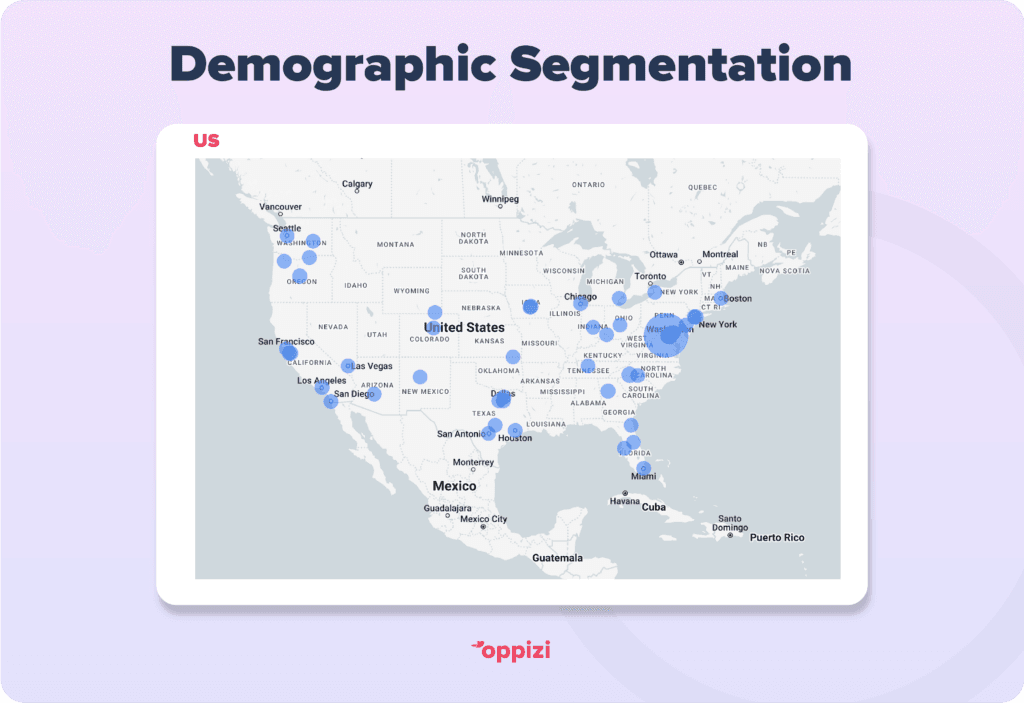
Additionally, you may find the demographic data you need through mailing and marketing lists. Data platforms like Data Axle USA and Experian maintain mailing lists based on location, income, age, gender, and more!
Taking It Local with Geographic Segmentation
Geographic segmentation revolves around dividing a target market based on locations. Whether broad regions or specific neighborhoods, this type of segmentation enables you to tailor your direct mail campaign to the unique characteristics of certain regions.
For instance, a local restaurant may target nearby customers for promotions, acknowledging the relevance of location in attracting customers.
Oppizi Ads (EDDM) Every Door Direct Mail is a powerful marketing tool that enables businesses to target specific audiences based on geographic locations based on postcodes. You can also access indicative demographics including average age, household income, number of apartments, and businesses within the targeted area, helping you make the right decision and reach the audience effectively.
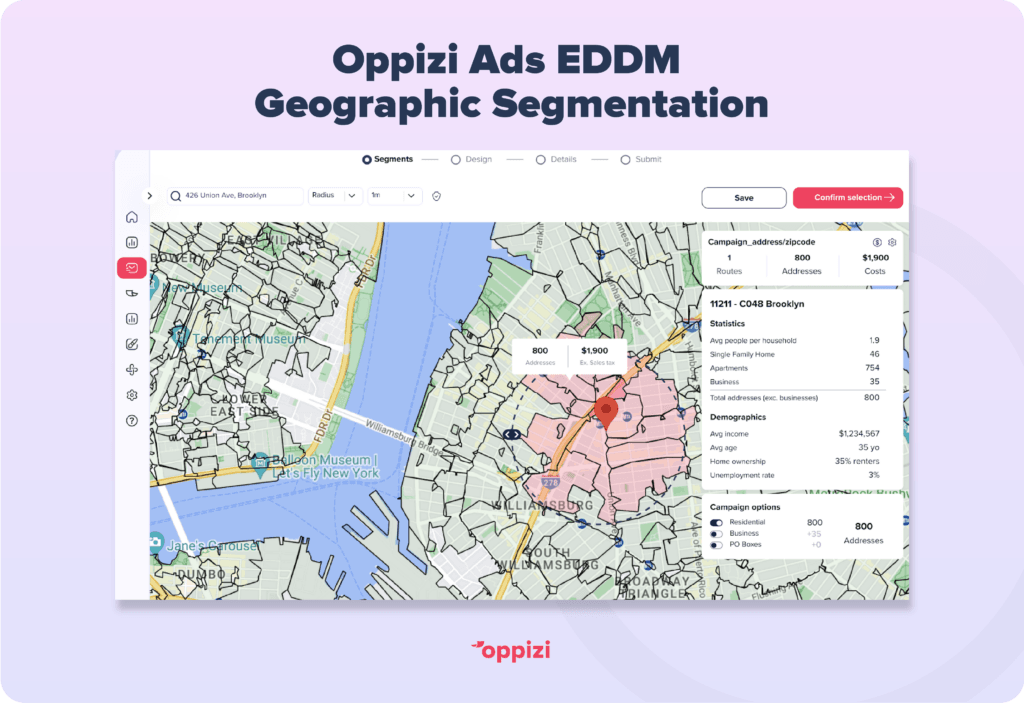
EDDM provides a cost-effective way to reach local customers and drive foot traffic to physical stores or businesses in the designated area.
Predicting Behavior with Behavioral Segmentation
Behavioral segmentation is a strategic marketing approach that involves dividing a target market based on observable consumer behaviors, including purchasing patterns and product preferences. This method delves deeper into understanding consumer preferences and decision-making processes compared to demographic segmentation. For instance, companies can customize their messaging differently for frequent buyers as opposed to occasional purchasers.
Analyzing consumer behavior such as brand loyalty, usage rates, benefits sought, and responses to marketing stimuli, businesses can tailor their marketing strategies more effectively. Behavioral segmentation allows companies to create targeted campaigns that resonate with specific consumer segments, leading to higher engagement and conversions.
Gaining Insights Through Psychographic Segmentation
Psychographic segmentation is a technique in market research that involves categorizing a market or customer group into segments according to their beliefs, values, lifestyle, social standing, activities, interests, opinions, and other psychological factors.
Understanding the psychographics of your audience can provide valuable insights into their purchasing behavior, brand preferences, and decision-making processes and marketing strategies that speak directly to these psychological and emotional drivers. Incorporating psychographic segmentation into your marketing efforts can also help you differentiate your brand in a competitive marketplace.
How to Segment Your Customer Data
Customer data segmentation involves dividing a diverse customer base into distinct groups based on specific criteria. Here's a step-by-step guide on how to segment customer data:
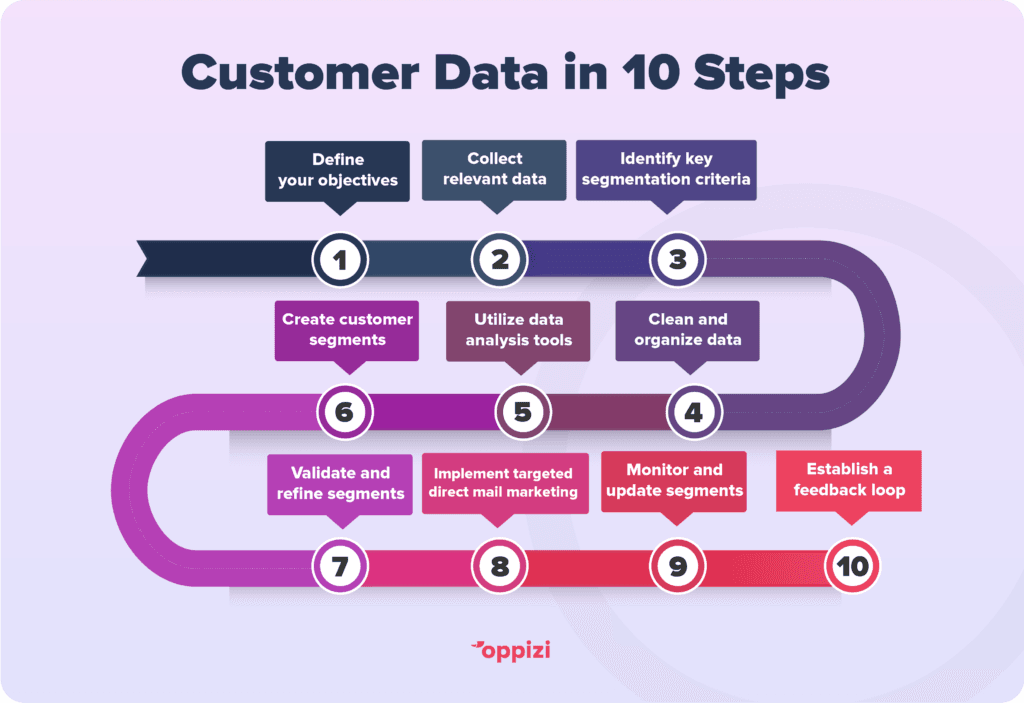
- Define your objectives: Clearly outline your direct mail objectives and goals. Understanding what you want to achieve with data segmentation will guide the criteria you choose for segmentation.
- Collect relevant data: Gather comprehensive customer data from various sources, including purchase history, demographics, website interactions, surveys, and social media engagement. All this data can be used to segment audiences based on your targeting prefrences. The more data you have, the more refined your segmentation can be.
- Identify key segmentation criteria: Determine the criteria that align with your objectives. As previously stated, common segmentation criteria include:
- Demographic: Age, gender, income, education.
- Geographic: Location, region, climate.
- Behavioral: Purchase history, frequency, loyalty.
- Psychographic: Interests, values, lifestyle.
One can gather this information using analytics tools, CRM, Shopify, Klaviyo etc that provide the ability to segment the data based on required criteria.
- Clean and organize data: Ensure that the collected data is accurate, up-to-date, and free from errors. Clean and organize the data to facilitate smooth segmentation processes.
- Utilize data analysis tools: Employ data analysis tools and software (like Google Analytics) to identify patterns, correlations, and insights within the collected data. This could involve using statistical analysis, machine learning algorithms, or customer relationship management (CRM) systems.
- Create customer segments: Based on your chosen criteria, group customers with similar characteristics into segments. Aim for homogeneity within segments. This ensures that each segment is distinct and meaningful.
- Validate and refine segments: Validate your segments by testing their effectiveness against your marketing objectives. Refine segments based on the results and feedback, adjusting criteria if needed.
- Implement targeted direct mail marketing: Tailor your direct mail strategy and messaging for each segment. Consider the unique needs, preferences, and behaviors of customers within each group.
- Monitor and update segments: Regularly monitor the performance of your segmented direct mail. As customer preferences and behaviors change, update your segments to ensure continued relevance.
- Feedback Loop: Establish a feedback loop where customer responses and interactions are continuously analyzed. Use this feedback to adjust and improve your segmentation strategy over time.
By following these steps, advertisers can effectively segment customer data and create targeted direct mail marketing initiatives that resonate with specific customer groups, ultimately enhancing customer engagement and satisfaction.
Enhanced Resource Management Through Segmentation
Segmented data in marketing revolutionizes resource management by enabling marketers to move away from generic, broad mailing lists that typically yield low response rates and waste resources. By strategically targeting specific segments with personalized direct mail campaigns, marketers can significantly enhance the effectiveness of their outreach efforts. Segmenting data allows for more tailored and relevant messaging, ultimately leading to higher engagement and conversion rates.
This approach not only maximizes the impact of marketing initiatives but also optimizes resource allocation by focusing efforts where they are most likely to yield results. Additionally, analyzing segmented data provides valuable insights into consumer behavior and preferences, enabling marketers to refine their strategies further for improved outcomes.
Rise in Conversion Rates with Personalized Messaging
Do you not favor reading a customized piece of mail? Not just with your name on it, but something that connects with your personal experience? Data segmentation stands as a proven catalyst for boosting conversion rates in your direct mail marketing campaign. When you meticulously segment your audience, tapping into demographic and behavioral characteristics, among others, the result is a laser focus on each individual's unique preferences. This precision allows for the creation of tailored messages that resonate profoundly with recipients, significantly enhancing the likelihood of conversion.
Segmented mailing lists help brands build stronger relationships with customers by creating targeted content based on demographics, purchasing history, and consumer behavior. This personalized approach enhances brand loyalty, promotes long-term engagement, and provides valuable data insights for businesses to refine their direct mail strategies. Overall, segmented mailing lists are a powerful tool for businesses to improve their marketing efforts and build stronger connections with their customers.
Maximizing Personalization Through Variable Data Printing (VDP)
In the world of direct mail marketing, it's important to create a personalized connection with your audience. One way to do this is by using Variable Data Printing (VDP). VDP is a digital printing method that allows for customized text and graphics in each printed piece, providing a tailored experience for each recipient.
To make the most of VDP, you need detailed customer information, such as demographics, behavior patterns, and other relevant details. This data should be organized through effective segmentation strategies. Once you have this information, you can integrate it into design software capable of handling variable inputs, ensuring a seamless fusion of personalization and creativity.
With these insights, you can create visually engaging designs and content tailored not only for segmented direct mail but also rooted in past interactions with your brand. By incorporating elements that resonate with your audience based on their history with your business, you create a sense of familiarity and relevance that significantly enhances engagement rates. The synergy of comprehensive customer data, advanced analytical tools, and creative design culminates in a direct mail strategy that not only captures attention but also forges lasting connections with your target audience.
Conclusion
It's important to understand the power of data segmentation to maximize the potential of your direct mail campaigns. There are various methods of customer segmentation, such as demographic, geographic, behavioral, and psychographic, that can help you to tailor your messages and ensure they resonate with your audience.
If you feel overwhelmed about handling all of this on your own or if you're looking for expert assistance in direct mail and offline marketing strategies, consider reaching out to Oppizi. We specialize in maximizing ROI through direct mail, and can help you connect with your desired demographic more efficiently than ever before.
Launch an Oppizi campaign in minutes and connect with your audience offline. Create your campaign now!