Last updated October 14, 2026
Summary
- Standard direct mail sizes are 4.25 x 6, 6 x 9, and 6 x 11 inch postcards, 8.5 x 11 inch letters, and 9 x 12 inch flats
- Retail stamped postcards max out at 4.25 x 6 inches, while commercial First-Class postcards can reach 6 x 9 inches at card prices
- Letters can be up to 6.125 x 11.5 x 0.25 inches, and anything bigger mails as a flat up to 12 x 15 x 0.75 inches
- EDDM only accepts flat-size pieces, so a 6.25 x 9 inch piece qualifies and a 6 x 9 inch postcard doesn't
- Oppizi runs addressed direct mail and EDDM from one platform, with campaign tracking and no monthly platform fee
Last updated: October 2026
When it comes to direct mail marketing, selecting the right size for your campaign is essential. The size of your direct mail affects the cost of printing and postage, and it plays a big role in the visibility and impact of your marketing.
In this guide, we'll break down the different direct mail sizes, the USPS limits behind them, and the factors to consider when choosing the right size for your campaign. Whether you're sending postcards, letters, self-mailers, or envelopes, understanding direct mail sizes is key to getting the most from your campaign.
What are the standard direct mail sizes?
The standard direct mail sizes are 4.25 x 6, 6 x 9, and 6 x 11 inch postcards, 8.5 x 11 inch letters in a #10 envelope, and 9 x 12 inch flats.
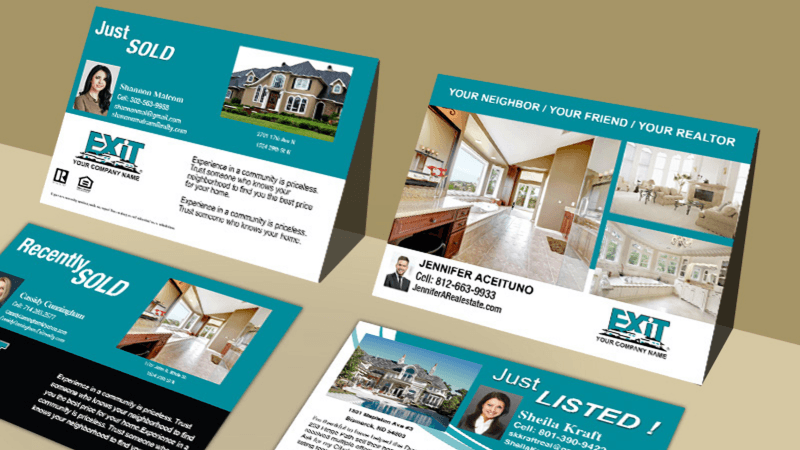
Postcards are the smallest format, letters offer versatility, and self-mailers sit between the two. Envelopes come in various sizes, allowing for different enclosure options. Here's a quick reference for every major format:
| Format | Common size (inches) | USPS shape | Best for |
|---|---|---|---|
| Small postcard | 4.25 x 6 | Postcard | Coupons, reminders, and announcements |
| Standard postcard | 6 x 9 | Postcard at commercial First-Class card prices, letter otherwise | Promotions and lead generation |
| Jumbo postcard | 6 x 11 | Letter | High-visibility campaigns |
| Extra large postcard | 9 x 12 | Flat | Premium offers and EDDM |
| Self-mailer | 5.5 x 8.5 or 6 x 9 folded | Letter | Service menus and event invitations |
| Standard letter | 8.5 x 11 sheet in a #10 envelope | Letter | Personalized offers and B2B sales |
| Large letter | 11 x 17 sheet, folded | Letter or flat, by folded size | Brochures and detailed promotions |
| Large envelope | 9 x 12 | Flat | Catalogs and multi-page packages |
USPS decides the postage shape from finished dimensions, thickness, weight, and shape, not from what you call the piece. Always confirm the applicable price before printing at scale.
What size is a direct mail postcard?
A direct mail postcard runs from 3.5 x 5 inches up to 6 x 9 inches. Retail stamped postcards max out at 4.25 x 6 inches, while commercial presorted or automation First-Class Mail postcards can go up to 6 x 9 inches and still pay card prices. Larger pieces mail as letters or flats, so check the USPS limits before you pick a size. Our postcard marketing guide covers design and offers.
Direct mail postcard sizes
- Small: 4.25 x 6 in
- Standard: 6 x 9 in
- Jumbo: 6 x 11 in
- Extra large: 9 x 12 in
Small and versatile: 4.25 x 6 in
The 4.25 x 6 inch postcard is usually the cheapest size to print, and it's the largest size that mails at the retail postcard stamp price. It works especially well for retention and loyalty campaigns, where the recipient already knows your brand and the piece's job is a familiar reminder rather than a first impression.
The standard direct mail size: 6 x 9 in
The 6 x 9 inch postcard is one of the most commonly used direct mail sizes for acquisition campaigns. It gives you room for a headline, offer, image, and call to action, and when it's mailed as presorted or automation First-Class Mail it still qualifies for card prices. Mailed any other way, it pays letter prices.
Jumbo: 6 x 11 in
Jumbo postcards suit campaigns that need more room for content and visuals. At 6 x 11 inches the piece is larger than the 6 x 9 inch postcard maximum, so it mails as a letter. It's a good fit in competitive markets where standing out in a crowded mailbox matters, or in categories where the quality of the piece reflects on the quality of the service.
Extra large: 9 x 12 in
At 9 x 12 inches, this size falls into the USPS flat category and gives you the most space for design, graphics, and detailed content. It's also a size that qualifies for Every Door Direct Mail (EDDM), which only accepts flat-size pieces.
Expect higher print and postage costs than a letter-size piece, so save extra large postcards for high-value campaigns where the customer lifetime value justifies the cost per piece. Note that First-Class Mail and USPS Marketing Mail are separate mail classes, each with its own prices for letters and flats.
What are direct mail letter dimensions?
A letter-size mailpiece can be no more than 6.125 inches high, 11.5 inches long, and 0.25 inches thick. The term "letter" can also refer to larger sheets, such as flyers or messages printed on branded letterhead, that are folded into a newsletter or self-mailer, or inserted into an envelope.
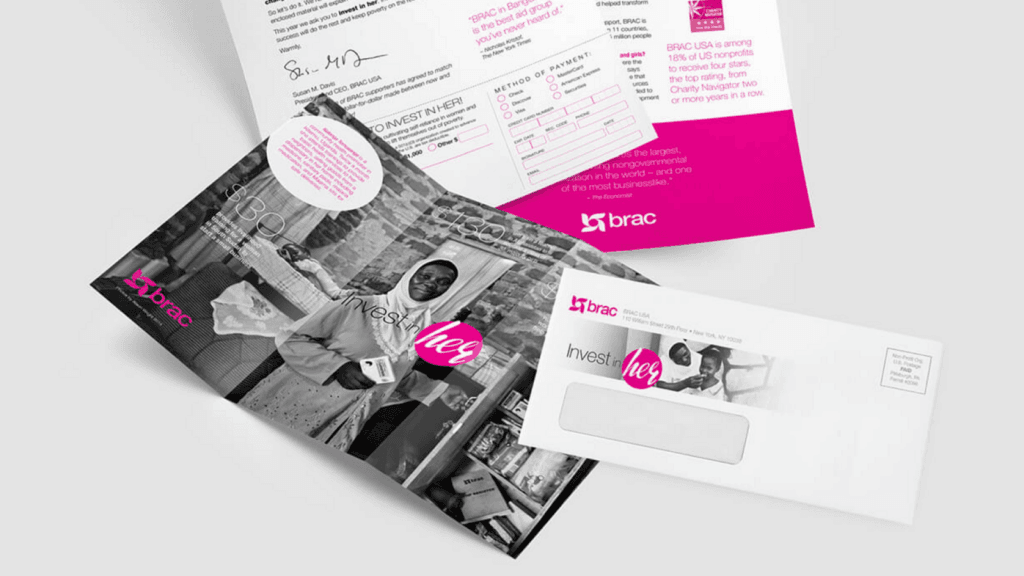
Commonly used direct mail letter sheet sizes are:
- 8.5 x 11 in letter
- 8.5 x 14 in letter
- 11 x 17 in letter
Direct mail letters can be made more effective by using Variable Data Printing (VDP) to include personalized elements such as names, images, or other text customized for each recipient. VDP lets you create unique, targeted messages for individual customers, and it works on postcards and self-mailers too, not just letters.
The standard letter (8.5 x 11 in)
The 8.5 x 11 inch sheet folded into a #10 envelope (4.125 x 9.5 inches) is the workhorse of letter mail. Understanding USPS size limits matters because the same physical piece can land in different postage categories, and that affects cost. Here are the key limits by shape:
| USPS shape | Minimum size | Maximum size | Thickness |
|---|---|---|---|
| Retail postcard (stamped) | 3.5 x 5 in | 4.25 x 6 in | 0.007 to 0.016 in |
| Commercial First-Class postcard (presorted or automation) | 3.5 x 5 in | 6 x 9 in | 0.007 to 0.016 in (0.009 in minimum above 4.25 x 6 in) |
| Letter | 3.5 x 5 in | 6.125 x 11.5 in | 0.007 to 0.25 in (0.009 in minimum above 4.25 x 6 in) |
| Flat (large envelope) | Exceeds any one letter maximum | 12 x 15 in | Up to 0.75 in |
Source: USPS Domestic Mail Manual 201 (letters, cards, and flats) and USPS PostalPro guidance on larger postcards.
The practical takeaway: a 9 x 12 inch piece is priced as a flat, which carries a higher postage price than a letter. Designing within letter-size limits (up to 6.125 x 11.5 inches) is usually the most cost-efficient choice for high-volume campaigns.
Large letters (11 x 17 in) and their advantages
Large letters give you more room for detailed information, strong visuals, or a premium brand impression. An 11 x 17 inch sheet is mailed folded: folded to letter size it pays letter prices, and folded to a larger finished size it mails as a flat. Unfolded, it's longer than the 15 inch flat maximum.
What sizes do self-mailers come in?
Self-mailers commonly come in 5.5 x 8.5, 3.67 x 8.5, 6 x 9, and 8.5 x 11 inch finished sizes. A self-mailer is a folded printed piece sealed with tabs or glue and mailed without an envelope, so it sits between a postcard and a letter package in both cost and creative space.
- Bi-fold: 5.5 x 8.5 in (letter-size when folded)
- Tri-fold: 3.67 x 8.5 in (letter-size when folded)
- Z-fold or accordion: 6 x 9 in (letter-size when folded)
- Large self-mailer: 8.5 x 11 in (flat-size when folded)
Self-mailers mail at letter or flat prices depending on their finished dimensions and weight. They work well for service menus, event invitations, multi-offer promotions, and any campaign that needs to tell a story across several panels. With no envelope to open, your headline is visible the moment the piece is picked up.
What envelope sizes work for direct mail?
Common direct mail envelope sizes run from 4 x 6 inches up to 9 x 12 inches. From standard envelopes to non-standard options, each size offers unique advantages for different types of content and objectives, and the envelope size you choose also sets your postage category.
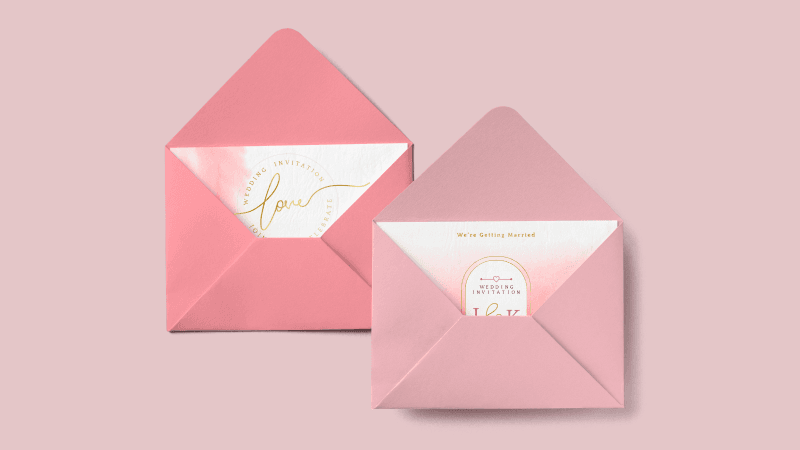
Below are common envelope sizes and their typical uses:
- 4 x 6 in envelope: compact promotional inserts and offer cards
- 4 x 8 in envelope: slim promotional mailers
- 4 x 9 in envelope: remittance and reply envelopes
- 6 x 9 in envelope: brochures, multi-page letters, and marketing inserts
- 9 x 12 in envelope (with vertical flap): catalogs, proposals, and unfolded documents
- 3 x 4 in envelope (with horizontal flap): gift cards and vouchers enclosed in a larger piece, since it's below the USPS 3.5 x 5 inch minimum and can't be mailed on its own
Which direct mail size gets the best response?
Bigger formats tend to earn a higher response, though offer, list, and creative matter too. JICMAIL's UK-measured data on retail mail sent to an existing customer list shows response rising with format: 3.5% for postcards, 6.6% for A5 (about 5.8 x 8.3 inches), and 9.6% for A4 (about 8.3 x 11.7 inches). Those are house-list figures. For cold prospect mail, the JICMAIL Response Rate Tracker measures a 1.0% average response, also UK-measured.
Larger formats cost more to print and mail, so the math matters: a bigger piece is only worth it if the extra response outweighs the extra cost per new customer. Our direct mail cost guide breaks down what drives price. Use this table to match your campaign goal to a format:
| Your primary goal | Format and size to test first |
|---|---|
| Generate local leads affordably | 6 x 9 in postcard |
| Reach every household in a neighborhood | 6.25 x 9 in or 8.5 x 11 in EDDM flat |
| Convert high-value B2B prospects | Personalized letter in a #10 envelope |
| Explain multiple services or benefits | 5.5 x 8.5 in or 6 x 9 in self-mailer |
| Showcase multiple products | 8.5 x 11 in or 9 x 12 in catalog or booklet |
| Win a high-value business account | Dimensional mailer (custom size) |
| Reactivate existing customers | 4.25 x 6 in personalized postcard |
EDDM only accepts flat-size pieces, which means more than 6.125 inches high, or more than 11.5 inches long, or more than 0.25 inches thick. A 6.25 x 9 inch piece qualifies because it's taller than 6.125 inches. See our EDDM size requirements for the full rules.
What makes any direct mail size perform?
Five elements make any size perform: a clear headline, one strong offer, a single call to action, relevant personalization, and a way to track response. Size affects how your piece enters the mailbox, but these elements drive conversion:
- A strong headline that communicates the main benefit in three seconds.
- One compelling offer: a discount, free consultation, or exclusive promotion.
- A single primary call to action: call, visit a landing page, or bring the card in store.
- Relevant personalization that reflects the recipient's needs, location, or purchase history.
- Trackable response mechanisms, such as a unique URL, phone number, or offer code, so you can measure cost per lead and scale what works.
Size earns attention. Your offer earns the response.
What factors should you consider when choosing direct mail sizes?
The main factors are budget, USPS postage category, and how much space your message needs. Larger dimensions offer more design flexibility and can carry thicker materials, such as coupons or inserts. Marketers should also account for USPS rules, which differ between First-Class Mail and USPS Marketing Mail.
Budget considerations
When choosing a size, factor in postage, design, and production costs together. USPS postage category (postcard, letter, or flat) is set by finished dimensions, not by what you call the piece. A 9 x 12 inch flat mails at a higher price than a letter-size piece. Confirm your postage category with your mail service provider before committing to a print run.
The message you want to convey
When crafting your direct mail piece, make sure the message aligns with your marketing objectives and resonates with your target audience. The message should be succinct, clear, and persuasive, built to get a response.
Is bigger always better in direct mail?
No, bigger isn't always better in direct mail. As a rule of thumb: if your offer fits on a billboard, a postcard will do. If your offer needs three paragraphs and a response device, a letter is the right format. If it needs product photos, feature comparisons, or a step-by-step explanation, a self-mailer or brochure gives you the space. Match the format to the complexity of the message, not the other way around.
Conclusion
Choosing the right size for your direct mail campaign shapes its cost, USPS postage category, visibility, and overall effectiveness. Understand the sizes available and weigh budget, message complexity, audience, and campaign goal. The 6 x 9 inch postcard is a common starting point for acquisition, larger formats are worth testing when offer value justifies the cost, and smaller formats suit retention programs.
Confirm your postage category before printing, measure what drives results, and scale what works. With Oppizi you can run addressed direct mail and EDDM from one platform, with campaign tracking and no monthly platform fee.
Ready to put the right size in the right mailboxes? Create your Oppizi campaign today.
Frequently asked questions
- What are the standard direct mail sizes?
The most common direct mail sizes are 4.25 x 6, 6 x 9, and 6 x 11 inch postcards, 8.5 x 11 inch letters in a #10 envelope, and 9 x 12 inch flats. Oppizi runs addressed direct mail and EDDM in any of these formats from one platform, with campaign tracking and no monthly platform fee.
- Does the size of direct mail affect the cost?
Yes. Larger sizes generally cost more to print and mail. Size also sets your USPS postage category (postcard, letter, or flat), and each carries a different price. A 9 x 12 inch flat costs more to mail than a letter-size piece. Confirm your postage category before finalizing dimensions to avoid budget surprises.
- Which direct mail size gets the best response?
Larger formats tend to earn more response. JICMAIL's UK-measured data on retail mail to an existing customer list shows 3.5% for postcards, 6.6% for A5, and 9.6% for A4. For cold prospect mail, JICMAIL's UK-measured average is 1.0%. Offer, list quality, and targeting shape results too.
- What size does EDDM require?
EDDM only accepts flat-size pieces: more than 6.125 inches high, or more than 11.5 inches long, or more than 0.25 inches thick. Pieces can be up to 12 x 15 inches, 0.75 inches thick, and 3.3 ounces. Popular EDDM sizes include 6.25 x 9, 6.25 x 11, 8.5 x 11, and 9 x 12 inches.
- What is a self-mailer and what sizes does it come in?
A self-mailer is a folded printed piece mailed without an envelope. Common finished sizes include 5.5 x 8.5 inch bi-folds, 3.67 x 8.5 inch tri-folds, and 6 x 9 inch Z-folds. Self-mailers give you more creative space than a postcard without the production cost of a full letter package.