Last updated September 28, 2026
When it comes to local marketing, few tools are as direct and tangible as door hangers and flyers. Both are proven ways to promote your business right where your target audience is. In fact, more marketers are leaning into physical strategies, with a 3% increase in the use of door drop marketing in 2024. But between door hangers and flyers, which delivers better ROI, and which is right for your goals?
In this blog, we’ll break down the differences between door hangers and flyers - from cost and size to effectiveness and ideal use cases. If you're a business looking to grow locally, this is your essential guide.

What is door hanger marketing?
Door hanger marketing involves printing promotional materials (usually card or thick paper stock) with a hook or a hole at the top, allowing them to be hung on doorknobs or door handles. This ensures your message gets seen, rather than getting lost in a pile of mail.
Common sizes for door hangers:
Door hangers come in a variety of sizes, each offering different design opportunities and cost considerations. Here are the most commonly used formats:
- 3.5” x 8.5”- Compact and cost-effective: Ideal for basic messaging (like an offer) or minimalist designs. Great when you're printing in bulk and want to keep costs low.
- 4.25” x 11”- Most popular size: This size offers a perfect balance of visibility and design space, making it the go-to for many standard campaigns.
- 5.5” x 17”- Oversized: Best for when you want to stand out or include multiple elements like coupons, maps, or multiple services on one hanger.
How door hangers are distributed
Door hangers are distributed manually and placed directly on residential or commercial doorknobs. This method allows for hyper-local targeting, especially in suburban neighborhoods. Businesses can manage this in-house or partner with a distribution service like Oppizi to handle logistics and ensure efficient coverage.
Cost
Door hanger marketing remains a budget-friendly offline option, especially when targeting a specific area. Here's a breakdown of the main costs involved:
- Printing: Usually ranges from $0.10 to $0.25 per unit when ordered in bulk. Pricing depends on size, paper quality, and finish (e.g. gloss or matte).
- Distribution: On average, distribution costs fall between $0.20 and $0.40 per hanger. Factors include location, campaign size, and whether you're hiring a professional distribution partner.
- Total average cost per unit: Expect to spend between $0.30 and $0.65 per door hanger for a full campaign, including both printing and delivery.
Advantages of door hanger marketing
Door hangers offer some unique benefits that make them especially effective for local, neighborhood-based campaigns:
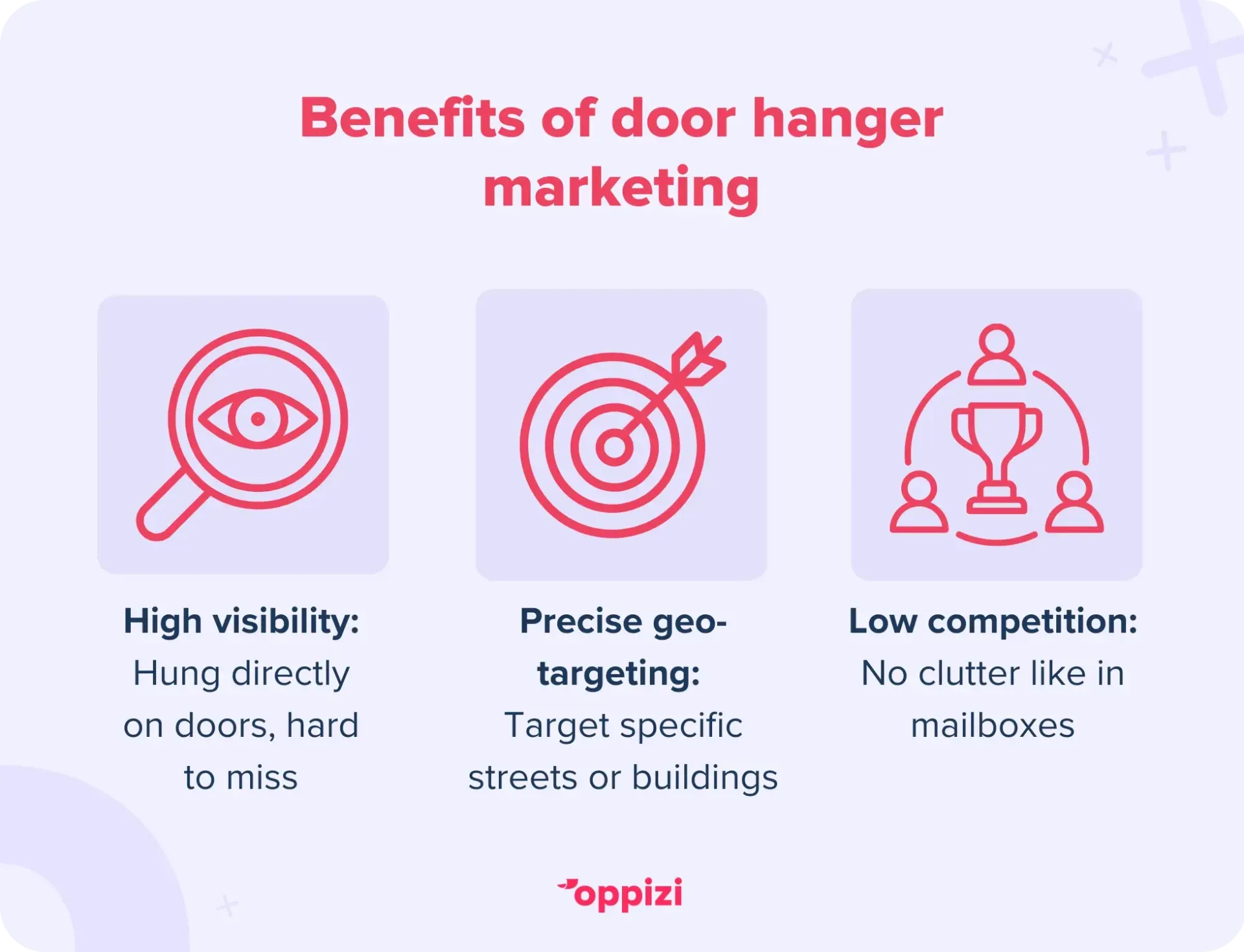
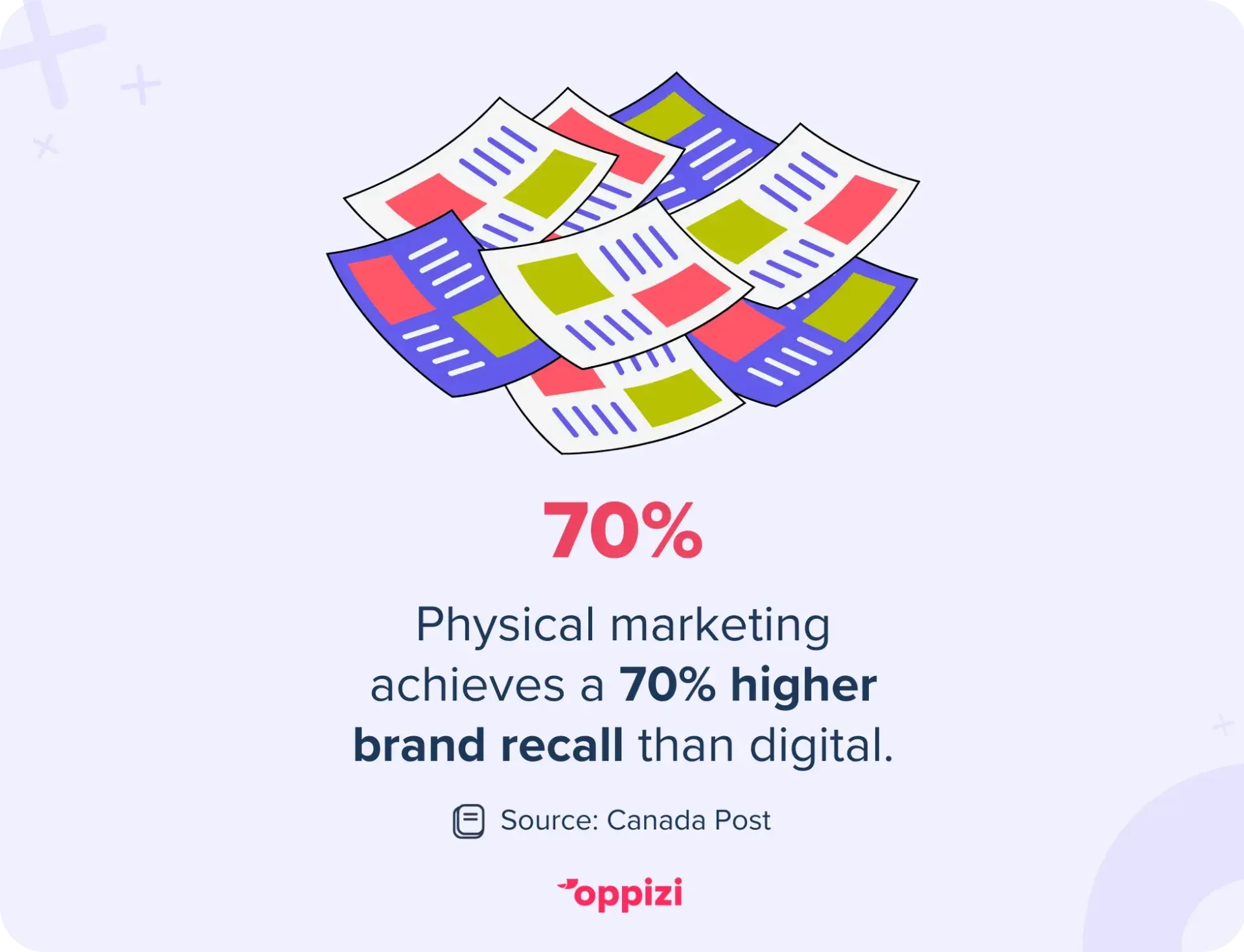
- High visibility: Placed directly on doorknobs, they're one of the few marketing tools that must be handled by the recipient, meaning your message won’t be missed. Plus, Canada Post found physical mail has a 70% higher brand recall than digital.
- Great for geo-targeting: Want to focus on a specific zip code, street, or building complex? Door hangers let you hyper-target with precision.
- Less competition: Mailboxes are often filled with ads, but a doorknob is a clean slate. That gives your marketing message a much better chance of standing out.
Disadvantages of door hanger marketing
Like all strategies, door hangers come with a few limitations to keep in mind:
- Legal restrictions in some areas: Some neighborhoods, apartment buildings, or cities have rules against door-to-door solicitation or placing materials on private property. Always check local regulations before launching a campaign.
- Weather-sensitive: Without a waterproof finish, door hangers can be damaged by rain, wind, or humidity. It’s important to plan your campaign around the weather or invest in weather-resistant materials.
- Less flexible placement: Unlike flyers, you can’t leave door hangers in cafés, pin them to community boards, or hand them out at events. Their use case is more narrowly focused.
What is flyer marketing?
Flyer marketing refers to distributing printed handouts that promote a business, offer, or event. Flyers are versatile and can be handed out on the street, posted in local businesses, or mailed directly.
Common sizes for flyers
Flyers come in a range of sizes to suit different goals - from quick promotions to detailed product or service information. Here are the most popular options:
- A6 (4.1” x 5.8”) - Handy and budget-friendly: Perfect for simple messages, discount codes, or event reminders. This postcard-like size is easy to distribute and affordable to print in bulk.
- A5 (5.8” x 8.3”) - Most commonly used: Offers enough room for a headline, key message, and visual without overwhelming the reader. Great for both handouts and inserts.
- A4 (8.3” x 11.7”) - Great for detailed info or vibrant designs: Ideal when you want to include more information, like service menus, schedules, or multiple offers.

How flyers are distributed
Flyers can be distributed in a variety of ways, making them one of the most flexible offline marketing tools. They can be handed out in high-traffic areas, left in local businesses, included in shopping bags, posted on community boards, or even mailed directly to homes through services like EDDM. This broad range of distribution options makes flyers ideal for events, openings, promotions, or general brand awareness. To get the best results, businesses should match distribution points with where their target audience spends time.
Cost of flyer campaigns
Flyers are one of the most cost-effective tools in offline marketing, especially when you're targeting high-traffic areas or broad audiences. Here's how the costs break down:
- Printing: You can expect to pay between $0.03 and $0.15 per flyer, depending on the size, paper stock, and finish. The smaller and simpler the design, the cheaper it gets.
- Distribution: Ranges from $0.15 to $0.30 per unit, depending on whether you're doing street handouts, event placements, or including them in direct mail.
- Total average cost per unit: Typically falls between $0.18 and $0.45 per flyer, making it an accessible option even for businesses with smaller budgets.
Advantages of flyer marketing
Flyers deliver several key advantages. They offer flexibility, scale, and solid reach for local marketing. Here's what makes them so useful:
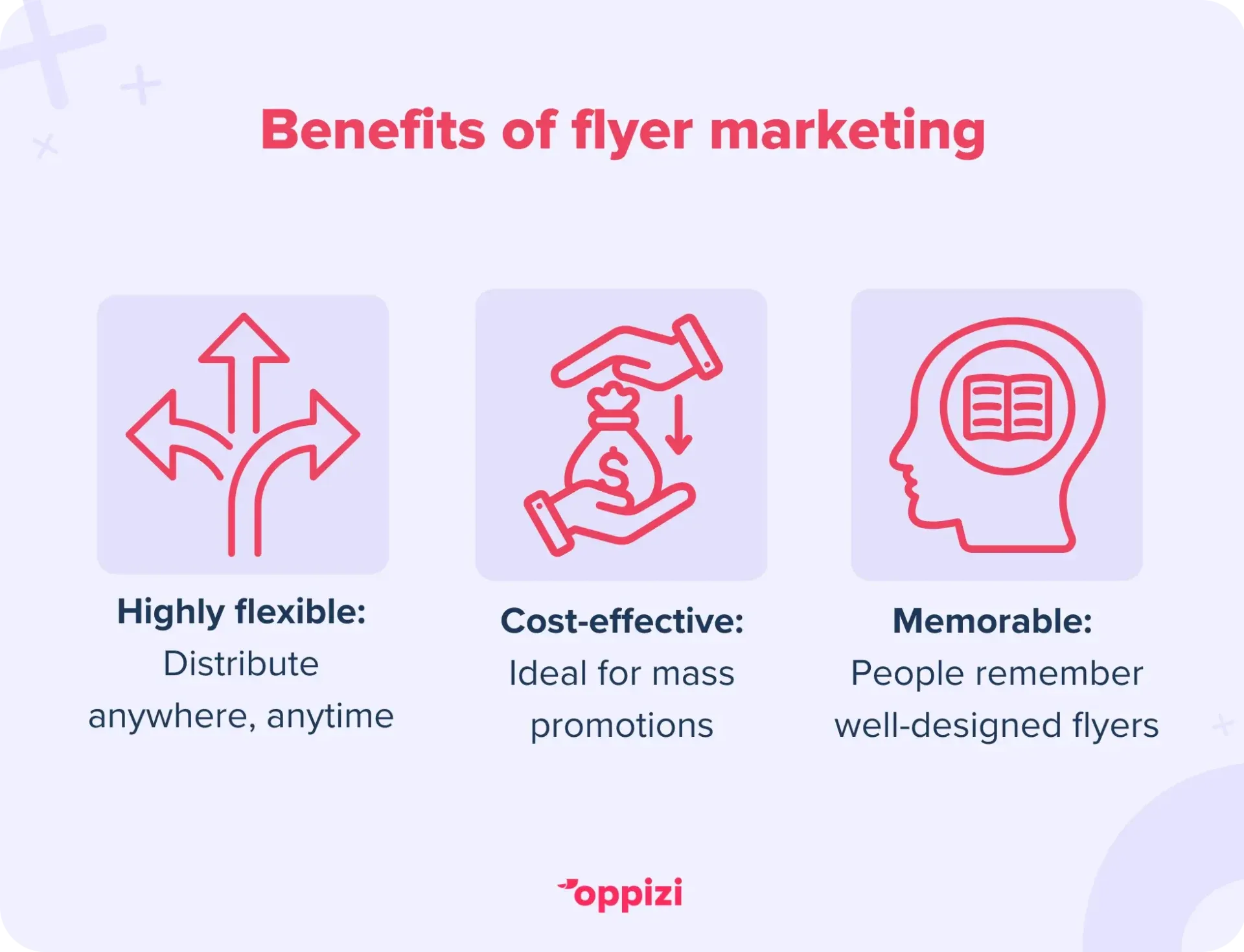
- Highly flexible: Flyers can be used in a variety of ways: handed out on the street, displayed in shops, included in mail drops, or left at events.
- Cost-effective: You can print large numbers of flyers without breaking the bank, making them perfect for mass awareness campaigns or time-sensitive promotions.
- Memorable: A well-designed flyer is easily remembered, with 89% of people stating that they remember receiving a flyer.
Disadvantages of flyer marketing
While flyers are versatile and affordable, they come with a few downsides worth considering before launch:
- Can be ignored: Let’s be honest, people sometimes toss flyers without reading them. If the design or message isn’t strong, they risk being overlooked.
- More clutter: Especially when handed out in public spaces or included in mailboxes, your flyer might have to fight for attention alongside competitors’ materials.
- Less targeting precision: Unless you're distributing them in carefully selected locations, flyer campaigns tend to cast a wider (and less targeted) net.
Comparison table: Door hangers vs flyers
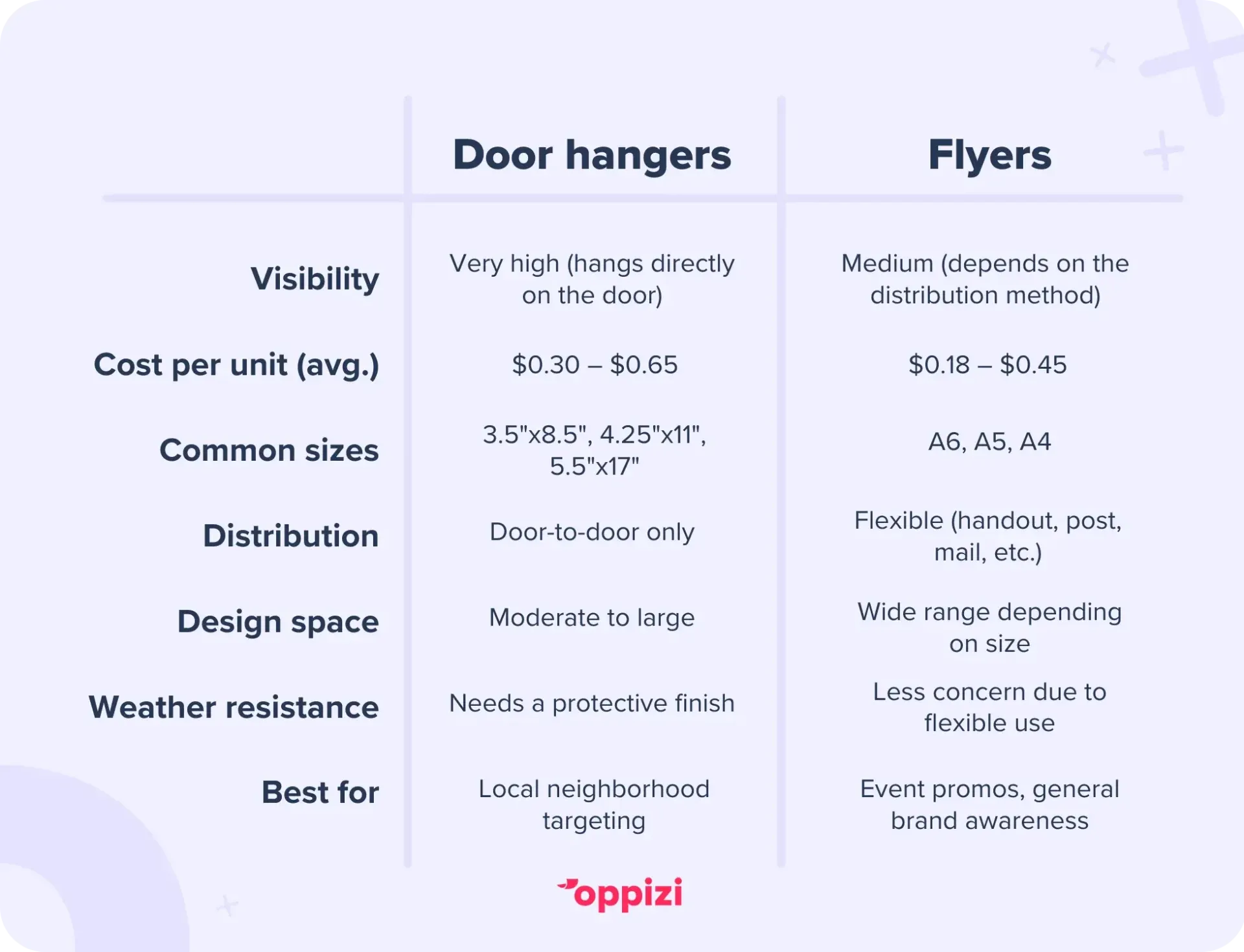
When should you use each?
Use door hangers when:
- You want hyper-local targeting (like a specific neighborhood or zip code)
- You’re promoting a limited-time offer or grand opening
- You need to stand out from mailbox clutter
Use flyers when:
- You want to distribute materials at events, stores, or public spaces
- You need a budget-friendly option for mass distribution
- You’re promoting brand awareness or informational content
Best practices for both
- Use strong visuals and a clear CTA - Grab attention quickly and tell readers what to do next.
- Add a discount code or QR code - Make it trackable and actionable.
- Keep it simple - Focus on one main offer or message.
- Use durable materials - Especially for door hangers exposed to weather.
- Consider professional distribution - To save time and target the right locations effectively.
Ready to get your message out there?
Both flyers and door hangers are powerful, affordable offline marketing tools — but the best choice depends on your goals, location, and audience. Whether you want to create buzz around town or drop an irresistible offer on someone’s doorstep, the key is execution.
Need help designing, printing, and delivering your materials? Oppizi takes the stress out of offline marketing with end-to-end campaign support.
Start your offline marketing campaign with Oppizi today and make a real impact in your local area.
Frequently asked questions
- Are door hangers legal to use everywhere?
While legal in most areas, some apartment complexes or cities may have restrictions. Always check local regulations before launching a campaign.
- Do I need permission to leave flyers in stores or public spaces?
Yes, you typically need permission from business owners or event organizers before leaving or handing out flyers on private property.
- Which performs better for service-based businesses?
Door hangers are often better for services like landscaping, cleaning, or real estate because they target specific homes directly.
- How do I track results from either campaign?
Include QR codes, custom discount codes, or dedicated landing page URLs to track engagement and conversions.
- Can I use both in one campaign?
Absolutely. Many businesses layer offline strategies, such as flyers for events and foot traffic, and door hangers for direct neighborhood impact.