Last updated September 28, 2026
With today’s marketplace being so highly competitive, building brand awareness is imperative for businesses seeking to stand out. A strong brand presence can lead to increased customer loyalty, higher conversion rates, and better overall profitability. This article explores ten actionable strategies to enhance brand awareness and discusses how to measure it, and why implementing these steps can make a difference.
What is brand awareness?
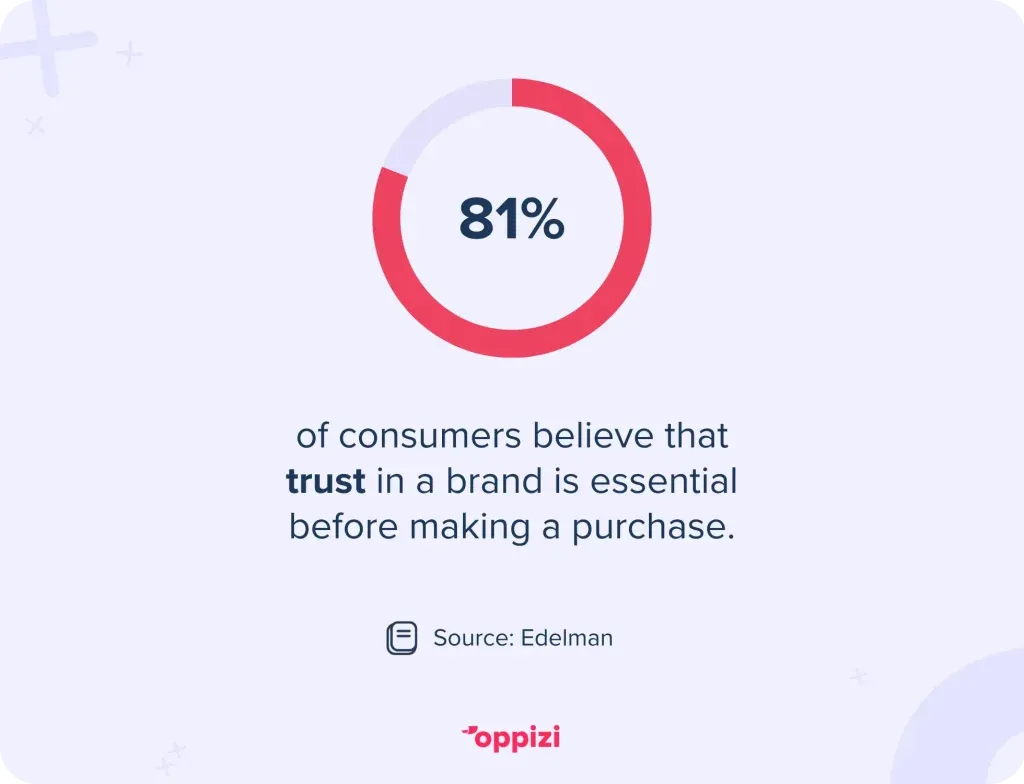
Brand awareness refers to the extent to which consumers recognize and remember your brand. It’s the foundation for customer trust, loyalty, and sales. A study by Edelman revealed that 81% of consumers feel they have to trust a brand to consider purchasing from them. High brand awareness increases the likelihood of being top-of-mind when customers are ready to make a purchase.
1. Use content marketing to reach a wider audience
Content marketing is a powerful tool for building brand awareness. By producing more content, such as blog posts, videos, infographics, and social media posts, you increase your chances of reaching diverse audiences.
One strategy is to recycle existing content. For instance, an old blog post can be repurposed into a short video or infographic. Consistently updating your content with fresh and up-to-date information also ensures relevance and value for your audience.
2. Develop a unique brand identity
In a crowded market, it’s crucial to stand out. A unique brand identity includes your logo, colors, tone, and messaging. Define your unique selling proposition (USP) to highlight what sets you apart from your competitors and use this in your messaging and branding. For example, brands like Apple focus on innovation and simplicity, creating an emotional connection with their audience. Find what resonates with your target audience and ensure it aligns with your branding.
3. Maintain consistency across platforms
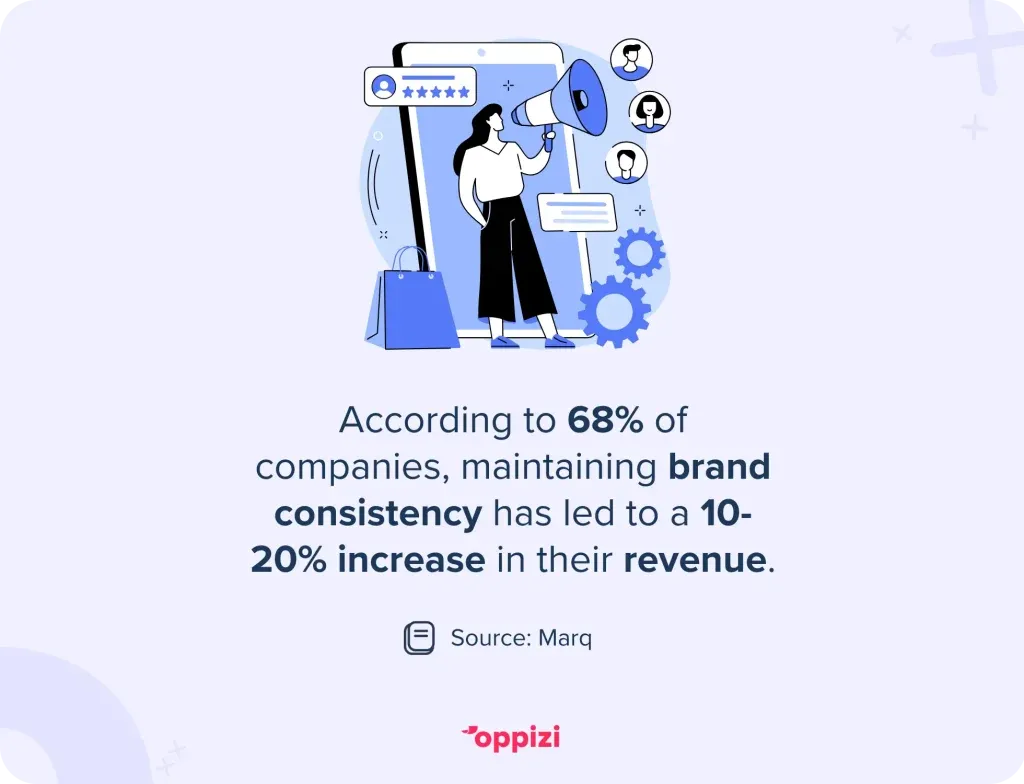
Consistency builds trust and reinforces brand recognition. 68% of companies state that brand consistency has helped them increase their revenue by 10-20%. Use the same logo, color schemes, and tone of voice across all platforms - from your website to social media. Establish a clear style guide to maintain uniformity.
A consistent posting schedule also helps. For example, posting on social media at regular intervals ensures that your audience knows when to expect content from you.

4. Optimize for search engines (SEO)
SEO enhances visibility by making your content appear in relevant search results. Websites appearing in the top three organic results of Google receive 68.7% of the total clicks, so optimizing your site and content can significantly increase brand awareness.
Key tactics include keyword research, on-page optimization, and building high-quality backlinks. SEO has a compounding effect, meaning the effort you invest today will continue to pay off over time.
5. Leverage social media
Social media marketing is indispensable for creating brand awareness. With 82% of the U.S. population using social media, platforms like Facebook, Instagram, LinkedIn, and TikTok provide vast opportunities to connect with potential customers.
To use social media to your advantage, you should:
- Post engaging content regularly.
- Use paid ads to target specific demographics.
- Collaborate with influencers to expand your reach.
Social media also allows for direct interaction with customers, fostering a sense of community around your brand.
6. Create a memorable logo or slogan
A strong visual identity helps customers recall your brand. According to color psychology, different colors evoke specific emotions - blue conveys trust, green represents health or wealth, and red signifies excitement. Incorporate these principles into your logo design according to the values or feelings you want to portray.
7. Partner with complementary brands
Co-branding partnerships can help you reach an existing audience. For instance, GoPro and Red Bull partnered on adventure sports campaigns, leveraging their shared target audience. To expand your reach, look for complementary brands that align with your values and goals.
8. Incentivize referrals
Word-of-mouth remains one of the most trusted forms of advertising. In fact, 77% of people are more likely to buy a product if it’s recommended by a family member or friend. Creating a referral program can encourage customers to share your product with others.
9. Invest in influencer marketing
Influencer marketing allows you to leverage the popularity of individuals with a strong social following. Micro-influencers (10,000 to 50,000 followers) are especially effective for niche markets, offering affordable options to promote your brand authentically.

10. Implement offline marketing
Despite the dominance of digital marketing, offline marketing strategies remain highly effective. Options include:
- Flyer distribution
- Billboards
- Direct mail or EDDM
- Event sponsorships
Offline marketing creates a tangible connection with your audience. For instance, distributing flyers in targeted locations can lead to real-time engagement. 89% of people remember receiving a flyer, which is more than any other form of advertising.
Jimmy Brings wanted a trackable way to reach new customers in key Australian cities beyond digital channels. With Oppizi, they ran targeted door-to-door campaigns distributing 875,000 flyers and magnets with real-time performance tracking. The campaign boosted brand awareness by 66% and helped Jimmy Brings gain 1,600 new customers.
How to measure brand awareness
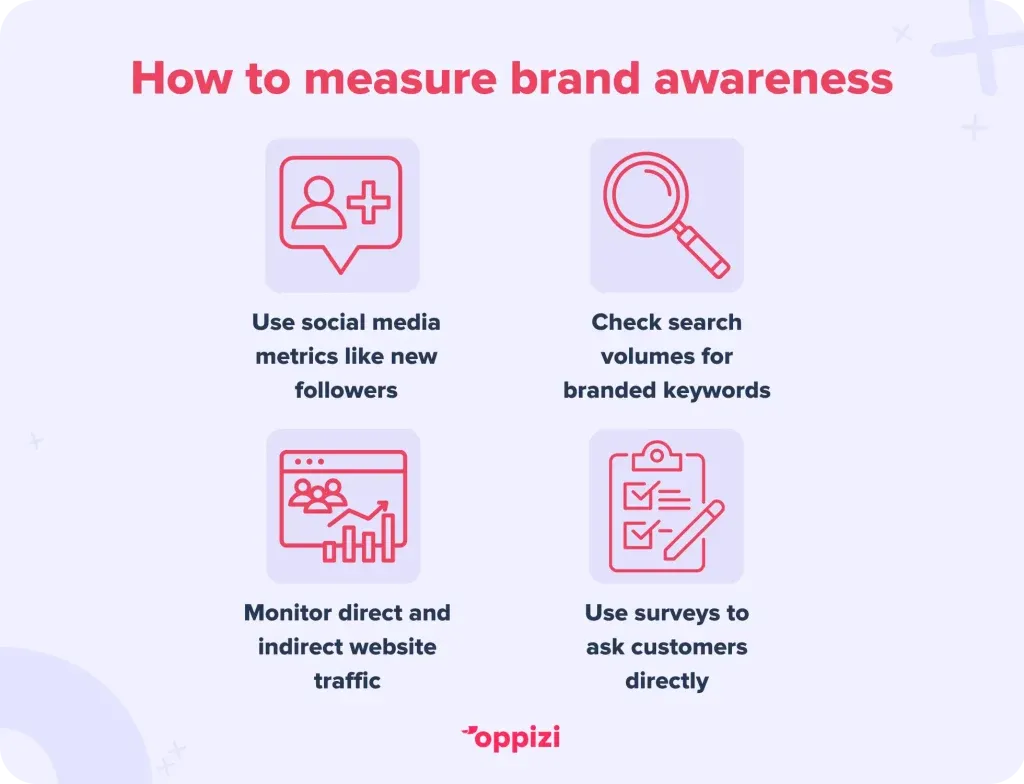
To evaluate the success of your brand awareness strategies, you should track the following metrics:
- Website traffic: Use tools like Google Analytics to monitor traffic volume and sources.
- Social media metrics: Measure likes, shares, comments, and follower growth.
- Search volume data: Analyze trends in branded search terms. You can use platforms like Semrush, Google Keyword Planner, or Ahrefs to check search volumes.
- Surveys and polls: Ask customers about their familiarity with your brand.
- Direct website traffic: Track the number of visitors who navigate directly to your website.
FAQs about brand awareness
1. Why is brand awareness important?
Brand awareness enables better trust in your brand, making it easier to attract and retain customers.
2. What’s the most cost-effective brand awareness strategy?
Social media and referral programs are affordable yet effective options for building awareness without a large budget.
Conclusion
Building brand awareness is an ongoing effort that requires consistency, creativity, and adaptability. By implementing the ten strategies outlined in this article, you can create a lasting impression and reach a broader audience. Remember, a multi-channel approach that combines online and offline strategies can deliver the best results.
Ready to elevate your brand awareness? Partner with Oppizi to create impactful offline marketing campaigns, such as flyer distribution or direct mailing. Start a campaign with Oppizi today, and make your brand unforgettable!