Last updated September 28, 2026
You could have an amazing product. But if people don’t understand what it does, why it matters, or how it helps them, they probably won’t buy it.
That’s where product education comes in. It’s not just about listing features. It’s about explaining your product in a way that makes sense to the people you're trying to reach. When done right, it builds trust, boosts interest, and helps you make more sales.
In this guide, we’ll go over what product education is, why it’s important, and how to do it—even if you’re starting from zero. We’ll also show how clear product messaging, combined with simple tools like flyer campaigns, can help you reach more people and get better results.
What is product education?
Product education is how you explain your product to people. You show them what it is, how it works, and how it helps them. It’s not just about the details. It’s about helping someone feel confident that your product is right for them.
Here are a few simple ways to do it:
- Write clear product pages with short descriptions and easy-to-understand specs
- Use flyers to explain the value in plain language
- Share videos or how-to tutorials
- Create guides to help new customers get started
- Send direct mail that introduces your product with a clear message
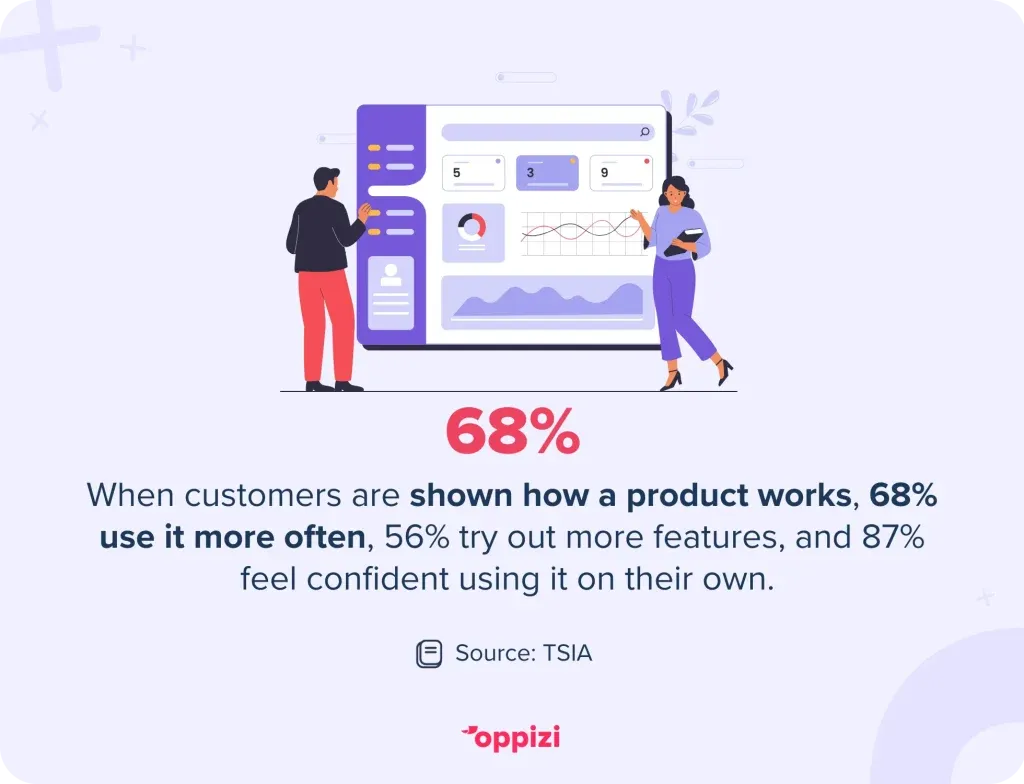
Most people get more out of a product when they know how to use it. One study found that 68% of customers use a product more after some training. Over half start using more features. And 87% feel more confident using it on their own.
When people understand your product, they’re more likely to buy it. Good product education clears up confusion, builds trust, and helps customers feel confident about their choice.
How product education helps your marketing
Marketing isn’t just about getting attention. It’s about helping people understand what you’re offering, so they feel ready to act. That’s where clear product information makes a big difference. Here’s what it can do:
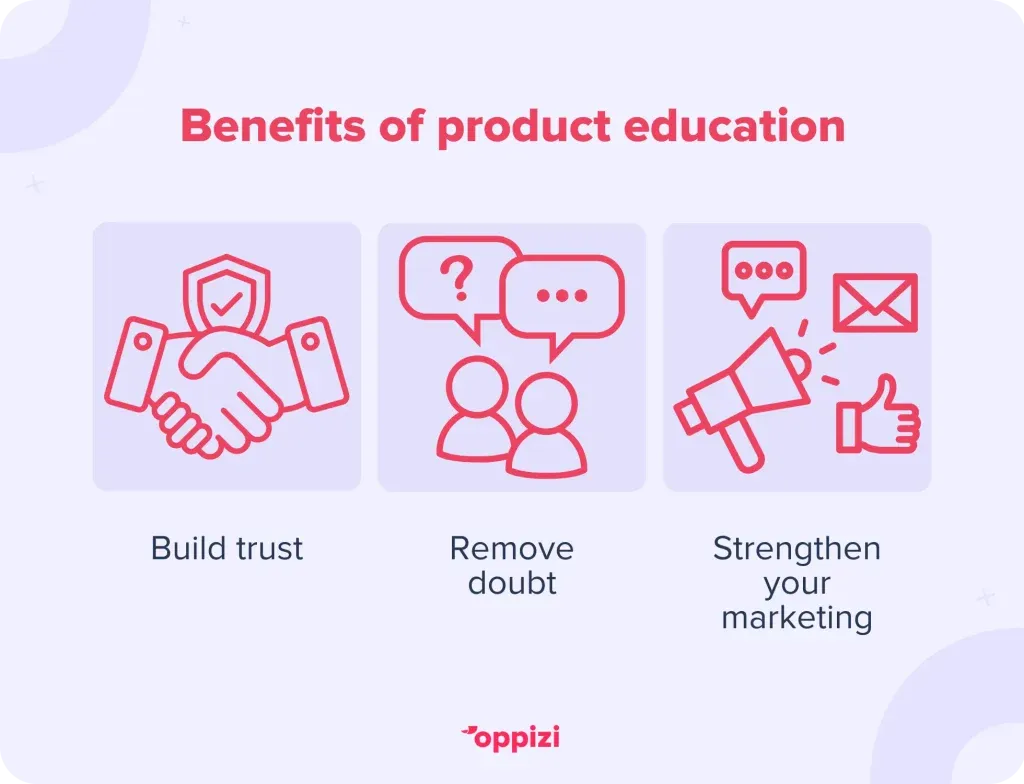
1. Build trust
People trust brands that explain things clearly. If your product info is simple, honest, and easy to follow, customers feel more comfortable buying from you.
2. Remove doubt
When someone doesn’t know what your product does or if it’s right for them, they hesitate. Good product education answers their questions early, so they don’t have to guess.
3. Strengthen your marketing
Whether it’s a digital ad or a flyer, every message works better when it’s clear and consistent. Strong product information not only supports every part of your marketing but also creates opportunities for persuasive advertising that encourages customers to take action.
How product education fits into the customer journey
Most customers go through four steps before and after buying:
1. Awareness
They hear about your product for the first time. At this point, you want to keep it simple. Use short messages that say what your product is and why it matters. An online or offline ad with a bold headline and one key benefit works well here.
2. Consideration
They want to know how it can help them. Now they’re looking for more detail. This could be a product page, a short video, or a helpful guide. But it’s not just online. Flyers or brochures handed out in the right place, like a local event or mailbox, can work too.
3. Decision
They’re ready to choose. Here’s where your product education can answer final questions. Show pricing, comparisons, real stories from other customers, or special offers. A short testimonial or a discount code can help seal the deal.
4. Retention
They’ve bought your product, and hopefully keep using it. Even after the sale, product education matters. A quick “how-to” guide or a mailer with simple tips can help new customers feel supported and stay engaged.
How to create a strong product education plan
If you’ve never worked with product information before, that’s okay. Here’s how to get started.
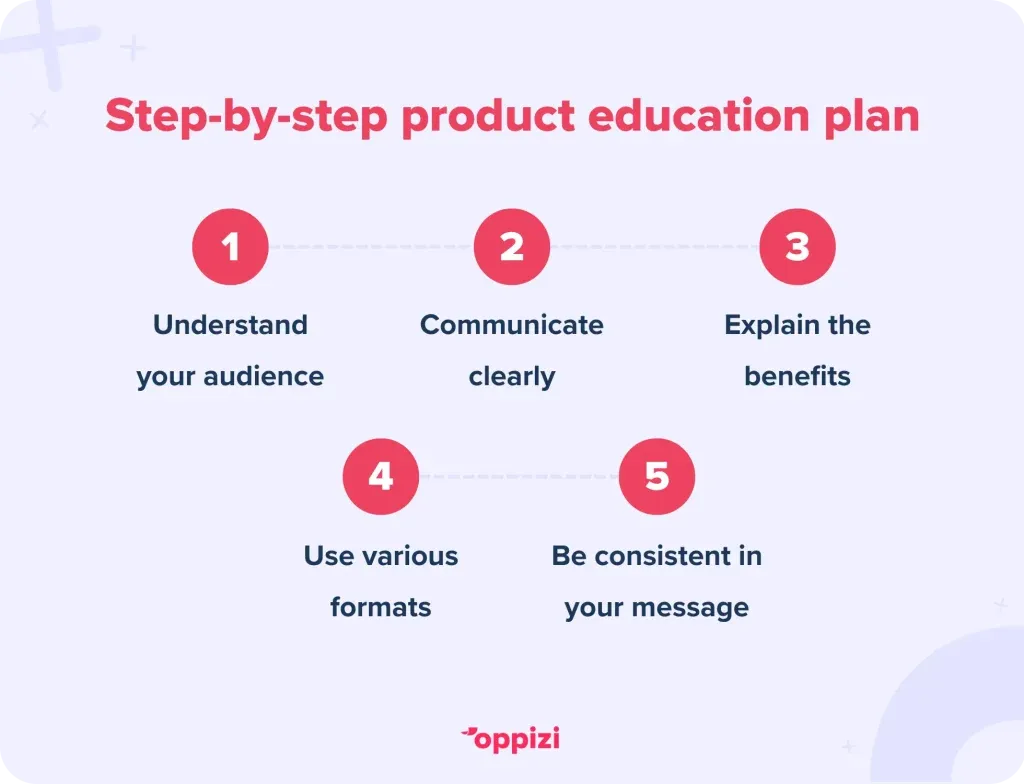
1. Know who you're talking to
Before you explain your product, you need to understand your audience. Ask yourself:
- What problem are they trying to solve?
- What do they already know?
- What might confuse them?
2. Keep your message simple
Skip the buzzwords. Use clear language. Break things down into small, easy steps. Instead of saying “cloud-based, end-to-end solution,” say “an online tool that helps you manage everything in one place.” It’s easier to understand.
3. Focus on benefits, not just features
People don’t just want to know what your product does. They want to know how it helps them. For every feature you mention, ask yourself: “Why does this matter to the customer?” Then write the answer.
Example:
- Feature: “Our budgeting app sends automatic spending alerts.”
- Benefit: “You’ll be notified when you’re close to your limit, so there are no surprise expenses.”
4. Use different formats
People learn in different ways. Use a mix of:
- Written content like flyers, brochures, or emails
- Visuals like diagrams and infographics
- Videos like short demos or how-tos
5. Stay consistent everywhere
Your message should sound the same whether it’s on your website, a flyer, or at an event. When your product info feels familiar across all channels, people trust your brand more.
How offline marketing helps people understand your product
Most marketing happens online. But offline tools still work. In fact, they can be a great way to explain your product and help you to stand out against competitors.
Here’s why offline marketing still matters:
Direct mail builds trust
When someone gets mail, it feels more personal and tangible. It’s real, not just another online ad. People tend to keep mail longer than they keep emails.
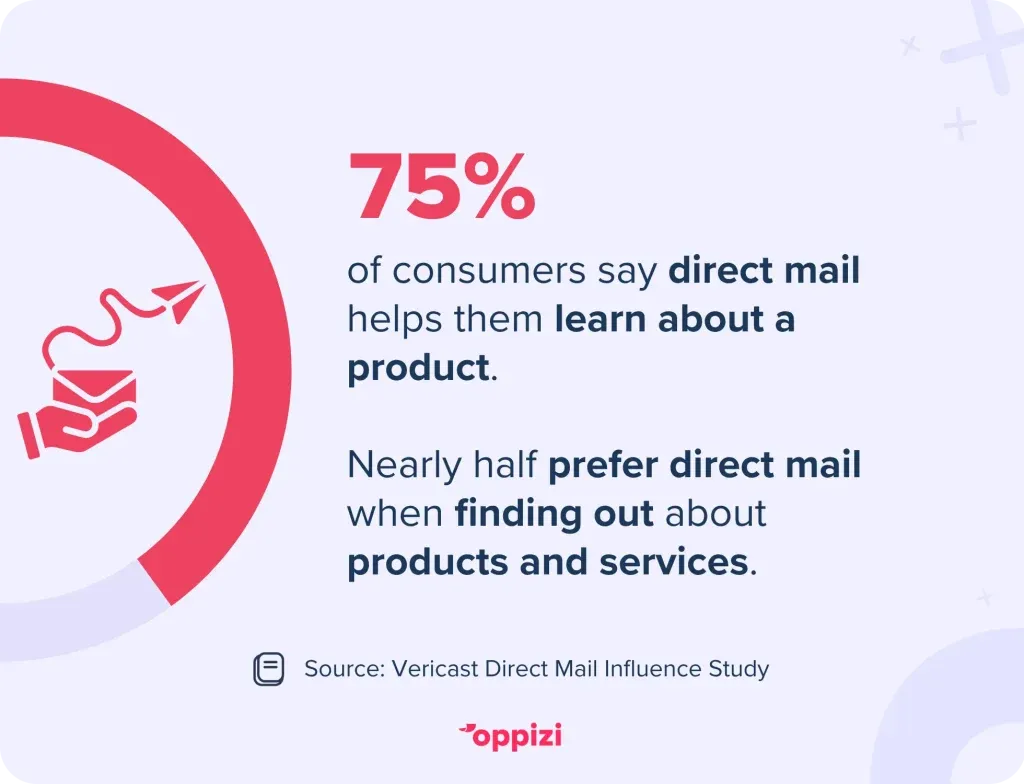
Three-quarters of consumers agree that direct mail raises their awareness of a product. Close to 50% prefer direct mail as their way to learn about products and services. What’s more, a personalized letter always gets seen, unlike digital ads people often scroll past.
Flyers get to the point
Flyers are great for quick messages. You can explain a product, share a benefit, or announce a launch. And if you hand them out in the right place, they reach the right people at the right time.
Offline and online work better together
You can add a QR code, a discount, or a short link to your flyer. That way, people can go from reading about your product to checking it out online in seconds.
At Oppizi, we help brands do this. You pick your audience. We print and deliver your flyers. We even track results. You focus on the message. We handle the rest.
Examples of product education
A local meal delivery service
A new meal delivery company launches in a city. They hand out flyers to explain how it works. The flyer also talks about their eco-friendly packaging and meal plans. There’s a QR code for a first-time discount. It’s clear, useful, and easy to follow.
A budgeting software startup
A budgeting tool wants to show how it helps. Instead of listing features, they send a short letter in the mail. It shares a customer story, a few screenshots, and three steps to get started. People quickly understand how it works and why it matters.
A fitness brand with a new product line
A fitness brand brings out new supplements and gear. They use handouts in stores to explain each product. Who it’s for. What it does. How to use it. The info is clear, the design is simple, and the tone is friendly.
Common mistakes to avoid
- Don’t use too much technical language. Keep it simple.
- Don’t just list features. Explain why they matter.
- Don’t send mixed messages across channels. Stay consistent.
- Don’t try to say everything at once. One message per ad is enough.
How to measure if your product education is working
Sharing product info is great, but how do you know if it’s actually helping? Here are a few simple ways to check:
1. See what people engage with
If you’re using flyers with QR codes or discount links, track how many people scan or click. It’s an easy way to see what grabs attention.
2. Watch how customers use your product
Are trained customers using more features? Are they logging in more often or sticking around longer? That’s a good sign your education is working.
3. Look at your support tickets
Are people asking fewer basic questions after receiving your materials? That usually means your content is clear and helpful.
4. Compare results
Try testing two different versions of the same ad. If one performs far better than the other, consider why and learn from it. The goal is simple: help people understand your product, then see if they’re more likely to buy or stick with it. Keep what works, tweak what doesn’t.
Final thoughts
Good product education isn’t just for software or complex tools. It works for anything. Food, fitness, services, you name it. When people understand what you offer, they’re more likely to buy. That’s why the right message, format, and delivery method matter.Want to get your product in front of the right people? Use Oppizi to run simple, high-impact offline marketing campaigns that do the heavy lifting for you. Try it today.