Last updated July 28, 2026
Email marketing is one of the best ways to connect with customers and grow your business. You land right in their inbox—no fighting for attention on social media or hoping they stumble across your website. But if you’re not sure where to start, you’re not alone.
This guide breaks down the basics so you can start using email marketing the right way.
What is email marketing?
Email marketing is when businesses send emails to people who are interested in what they offer. Think of it as the digital version of direct mail. It’s a simple way to promote products, share updates, and build relationships.
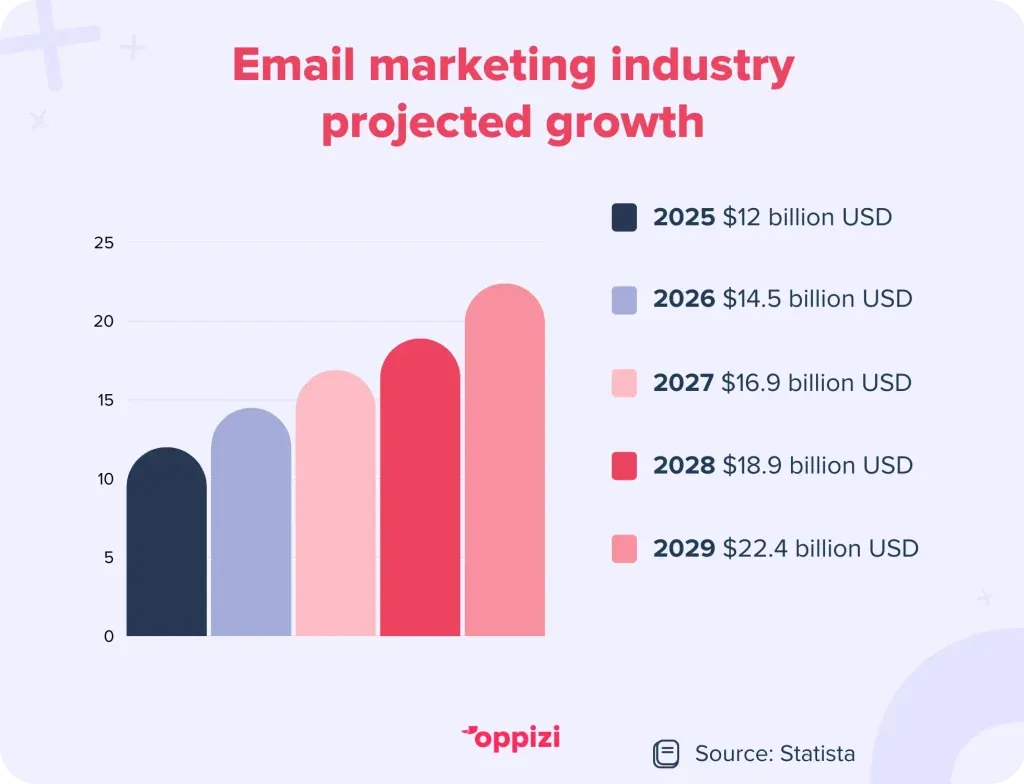
Even with all the marketing options out there—social media, influencers, SEO—email is still one of the most effective. And it’s not slowing down. Experts predict email marketing will grow from an $8.3 billion industry in 2023 to nearly $19 billion by 2028.
If you use it well, email marketing can help you:
- Build trust with potential customers
- Keep your audience engaged
- Offer discounts and deals to bring people back
Why email marketing works
Adding email to your marketing mix can make a big difference. Here’s why:
1. It’s cost-effective
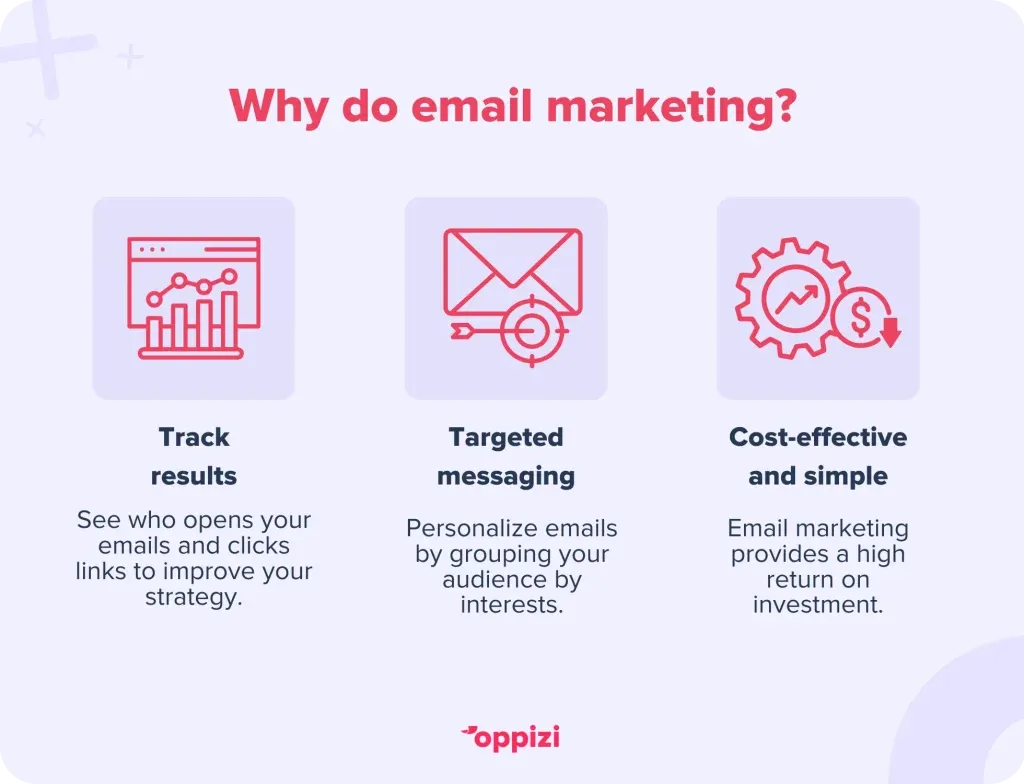
Email marketing gives you a high return on investment (ROI) without breaking the bank. On average, businesses make $36 for every $1 spent.
2. You can send the right message to the right people
With email, you don’t have to blast the same message to everyone. You can group your audience based on their interests and send personalized content they’ll actually care about.
3. You can track what works
Unlike traditional ads, email marketing lets you see who’s opening your messages, clicking links, and making purchases. That makes it easy to tweak your approach and improve results.
How to get started with email marketing
1. Set your goals
Before you start, know what you want to achieve. Are you launching a new product? Driving more sales? Keeping customers engaged? Defining your goal from the start makes everything else easier.
2. Know your audience
You can’t send great emails if you don’t know who you’re talking to. Think about your ideal customers. Who are they? What do they need? Look at your current customers and your competitors to get a clearer picture.
Creating customer personas can help. This gives you a clear idea of who you’re reaching and what kind of emails will interest them.
3. Pick an email marketing platform
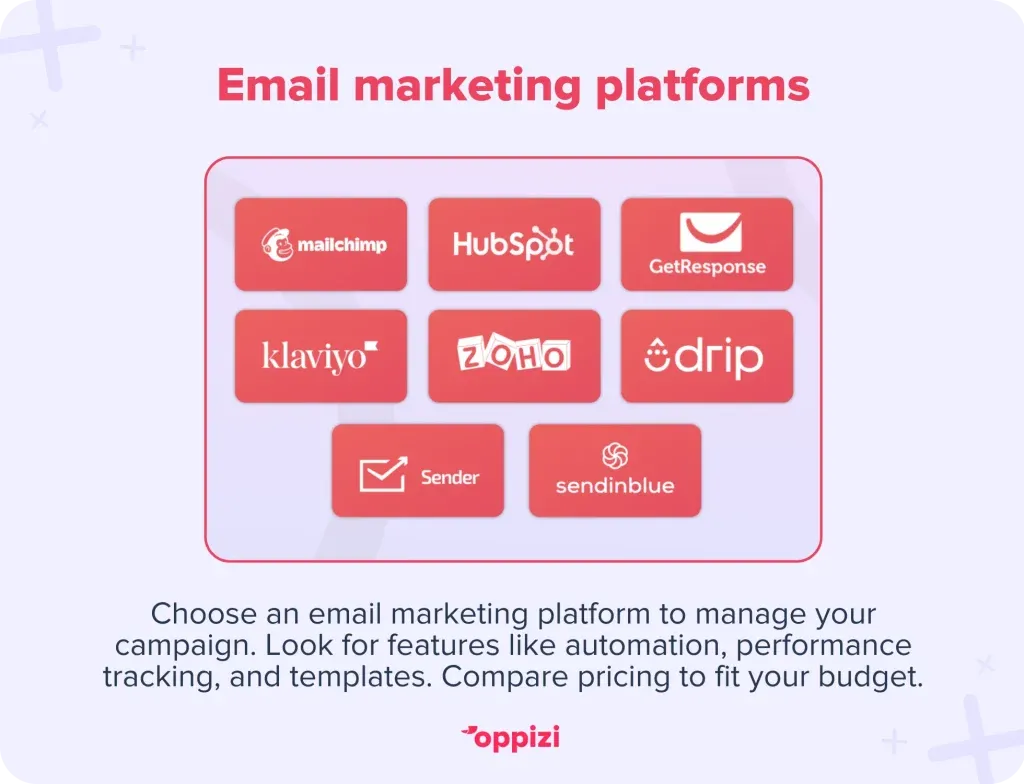
You’ll need an email service provider to manage and send your emails. There are plenty of options, like MailChimp, SendinBlue, and Constant Contact.
Look for features that match your needs, like:
- Automation tools
- Analytics to track performance
- Easy-to-use templates
Your budget also matters, so compare pricing before making a choice.
How to build an email list
A great email marketing campaign starts with the right audience. You need people who actually want to hear from you. But getting subscribers takes more than just adding a "Sign Up" button to your website.
Start by offering something valuable in exchange for an email address. This could be a helpful guide, a discount, or exclusive content. Promote these offers on social media to reach more people.
Most importantly, always provide value. If your emails are useful and interesting, people will stick around—and they might even tell their friends.
How to do email marketing for your business
1. Choose the right kind of email
Getting customers to open and read your emails is the key to success. Here are six types of emails to consider:
1.1 Welcome emails
Sent to new subscribers or first-time buyers to introduce your brand and encourage them to take the next step.
1.2 Newsletters
Keep customers updated on your business. These can include company news, blog posts, or featured products.
1.3 Product launch emails
Announce new products and explain why they’re worth checking out.
1.4 Promotional emails
Share special deals, discounts, or limited-time offers to drive sales.
1.5 Abandoned cart emails
Remind shoppers about items they left in their cart and encourage them to complete the purchase.
1.6 Post-purchase emails
Thank customers, ask for feedback, and keep them engaged for future purchases.
2. Writing subject lines that get opened
Your subject line is the first thing people see. A good one makes them want to open your email. A bad one? It could land you in the spam folder.
Here’s how to write subject lines that work:
- Keep it short. Most email apps cut off long subject lines. Stick to 50 characters or less.
- Make it personal. If you can, use the recipient’s name or something specific to them.
- Create urgency. Phrases like “limited time” or “ending soon” encourage people to act fast.
- Avoid spam triggers. Words like “free” or “guarantee” can send your email straight to junk.
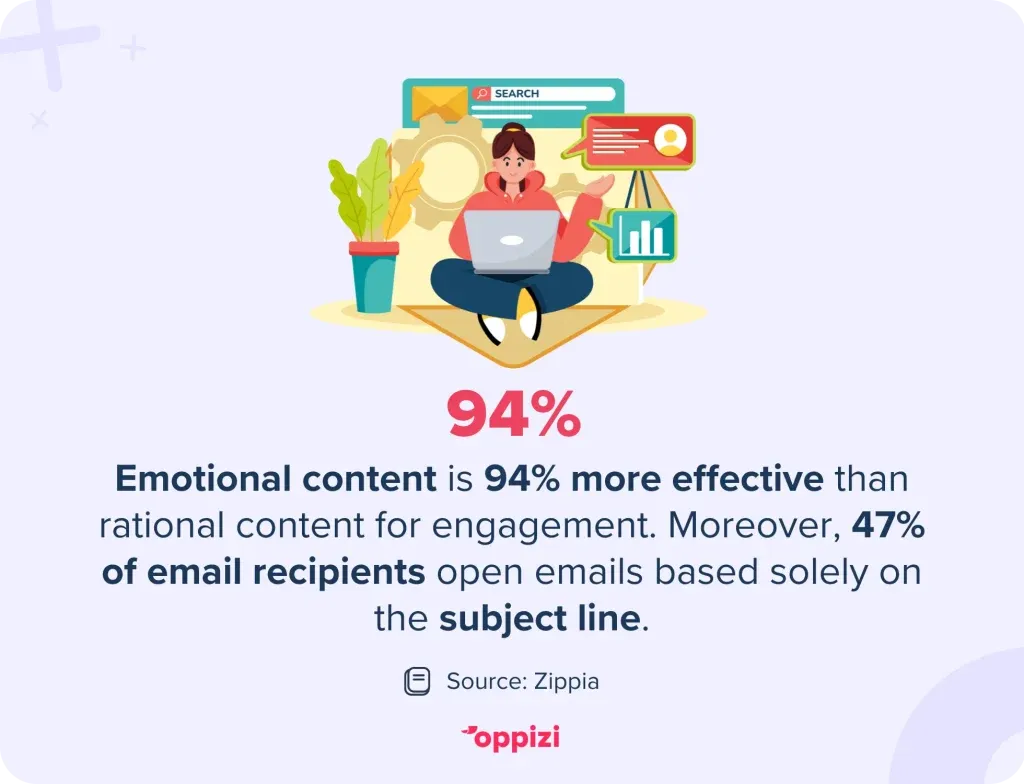
Studies show it’s better to appeal to emotion than logic in subject lines, with emotional content being 94% more effective than rational content. The best way to find out what works? Test different subject lines using A/B testing and see what gets the most opens.
47% of email recipients open an email based solely on the subject line. This highlights the importance of testing and customizing your subject lines, as they can significantly impact engagement with nearly half of your audience.
3. Writing emails people want to read
Once someone opens your email, your content needs to keep them interested. A great way to do that is with stories. People connect with stories more than sales pitches.
Here’s how to make your emails more engaging:
- Show real-life examples. Explain how your product helps people in everyday situations.
- Share personal experiences. A short story about your own journey or values makes your brand feel more human.
- Include testimonials. Happy customers help build trust and make others more likely to buy.
Keep it clear, keep it simple, and always focus on what’s in it for the reader.
4. Make your emails look good
A great subject line and strong message won’t matter if your email looks messy. If it’s hard to read or doesn’t work on different devices, people will delete it.
Keep your design clean and easy to scan. Use your brand colors and fonts so your emails feel like part of your business.
Many email platforms offer ready-made templates, so you don’t need design skills. Just don’t get carried away with fancy layouts—content matters more than looks. A simple, well-structured email that’s easy to read will always work best.
5. Send the right emails to the right people
Not everyone on your list wants the same thing. Sending one generic email to everyone means fewer opens and clicks. Segmenting your audience makes emails more relevant—and more effective.
In fact, research from HubSpot shows that segmented emails get 30% more opens and 50% more clicks than regular emails sent to everyone on your list. The question is, how do you segment your audience? It depends on your goals, but here are some key things to consider:
- Who they are – Age, job, income, location.
- What they do – What they’ve bought, what emails they’ve opened, what pages they’ve visited.
- What they like – Interests, lifestyle, values.
- How they signed up – Website, social media, in-store, or another source.
Even small personal touches help. Using someone’s name in the subject line can boost engagement. But today’s email tools can do much more—like recommending products based on past purchases or changing parts of an email based on different groups.
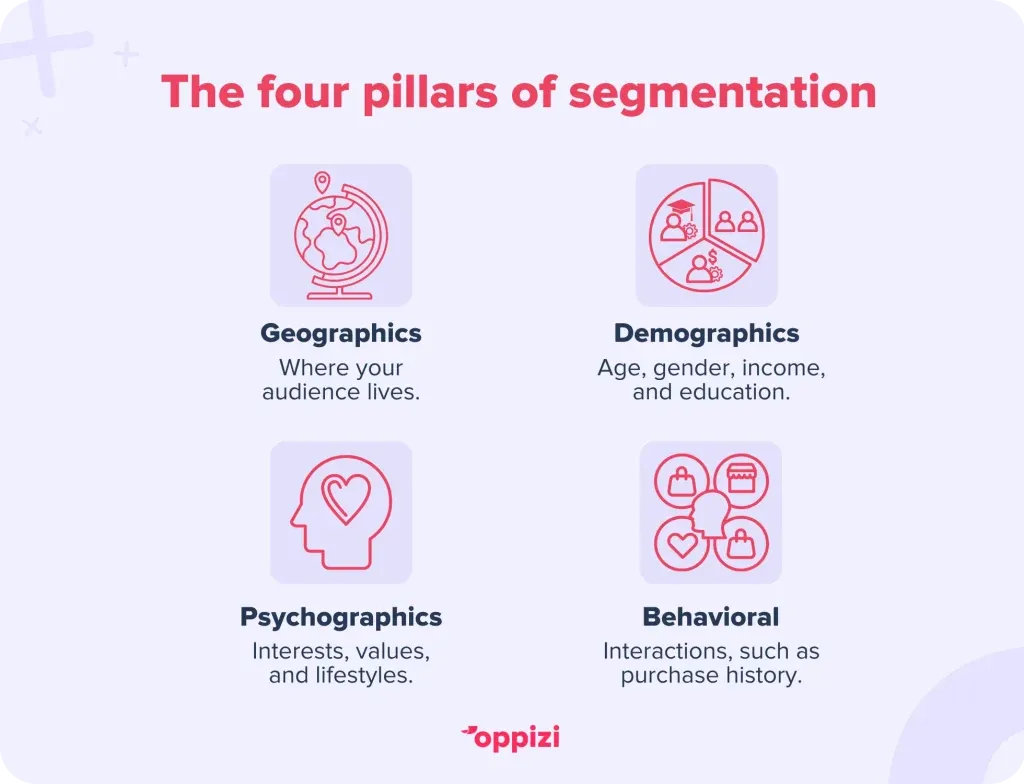
It's important to consider the four pillars of segmentation, which are geographics, demographics, psychographics, and behavioral factors. Understanding these categories helps you make your emails more relevant to your audience, leading to better results.
6. Track your results
One of the best things about email marketing is that you can see what’s working. Every time you send an email, you can track:
- Open rate – How many people opened it.
- Click rate – How many clicked a link.
- Conversion rate – How many took action, like making a purchase.
- Bounce rate – How many emails didn’t get delivered.
- Unsubscribes – How many people opted out.
This data helps you fine-tune your emails over time. You can test different subject lines, layouts, and offers to see what gets the best response. Instead of guessing, you make decisions based on real numbers.
Combining email marketing with offline marketing
Blending email marketing with offline strategies can make your efforts even stronger. This approach helps you connect with customers in different ways and reinforces your message.
Keep your brand message consistent
Using both email and offline marketing keeps your brand message steady. For example, if you promote a new product in an email, send direct mail with the same offer. This builds recognition and trust.
Reach different people
Email reaches your online audience, while offline marketing—like flyers or postcards—can catch the attention of those who aren’t as active online. This helps you expand your reach in your local community.
Build your email list
Encourage people to sign up for your emails through your flyers or direct mail. You can also gather email addresses at events to connect your offline and online efforts.
Run multi-channel campaigns
Mixing email with offline marketing makes your campaigns more engaging. For instance, invite customers to an in-store event via email, and then send a postcard reminder.
By combining email marketing with offline tactics, you create a well-rounded strategy that connects with customers and strengthens your brand.
FAQ: Email marketing basics
How do I start email marketing?
It’s easy to get started:
- Choose an email platform – Mailchimp, ConvertKit, and Constant Contact are popular options.
- Build your email list – Collect emails from your website, social media, or in-store sign-ups.
- Send engaging emails – Share promotions, helpful tips, or company updates.
- Track results – See what works and adjust to improve your emails over time.
How much is a 1,000-email list worth?
It depends on your audience and business. If your subscribers are engaged and interested, a 1,000-person list could be worth hundreds or even thousands of dollars. On average, email marketing brings in $36 for every $1 spent, so even a small list can be valuable.
Can you make money with email marketing?
Yes! Many businesses use email marketing to generate revenue. You can:
- Sell products or services
- Offer discounts and promotions
- Recommend affiliate products
- Upsell to existing customers
The key is to send useful, relevant content so people keep opening your emails.
How much does it cost to start email marketing?
You can start for free. Many email platforms offer free plans for small lists (usually under 1,000 subscribers). As your list grows, paid plans start at around $10–$30 per month. The biggest investment is your time—writing emails, growing your list, and analyzing results.
Is it legal to do email marketing?
Yes, but there are rules. Laws like CAN-SPAM (U.S.), GDPR (Europe), and CASL (Canada) require businesses to get permission before sending marketing emails. You also need to:
- Let people opt out easily
- Be clear about who you are
- Avoid misleading subject lines
If you follow these rules, email marketing is completely legal and a great way to connect with your audience.
Make email marketing even more powerful
Email works best when combined with other marketing efforts. Want to make a bigger impact? Pair your emails with offline marketing like direct mail and flyer distribution.
Oppizi’s offline solutions, like Every Door Direct Mail (EDDM), help you reach customers in their inbox and their mailbox. This boosts brand awareness and keeps your business top of mind.
A strong marketing strategy connects with people in different ways. When you combine online and offline tactics, you build better relationships—and grow your business faster.
Ready to get started?Launch your Oppizi campaign today and see the power of a multi-channel approach.