Last updated July 28, 2026
If you run an online store, you know how hard it is to stand out. Ad costs keep climbing, competition is fierce, and winning new customers takes more work than ever. That’s why having a smart e-commerce advertising strategy isn’t optional. It’s the difference between growing profitably and burning through your budget.
This guide breaks down proven advertising strategies for e-commerce. These are real tactics online retailers use today. Whether you’re just getting started or looking to improve return on ad spend (ROAS), you’ll find practical steps you can put to use right away.
1. Paid social advertising: Meta, TikTok, and beyond
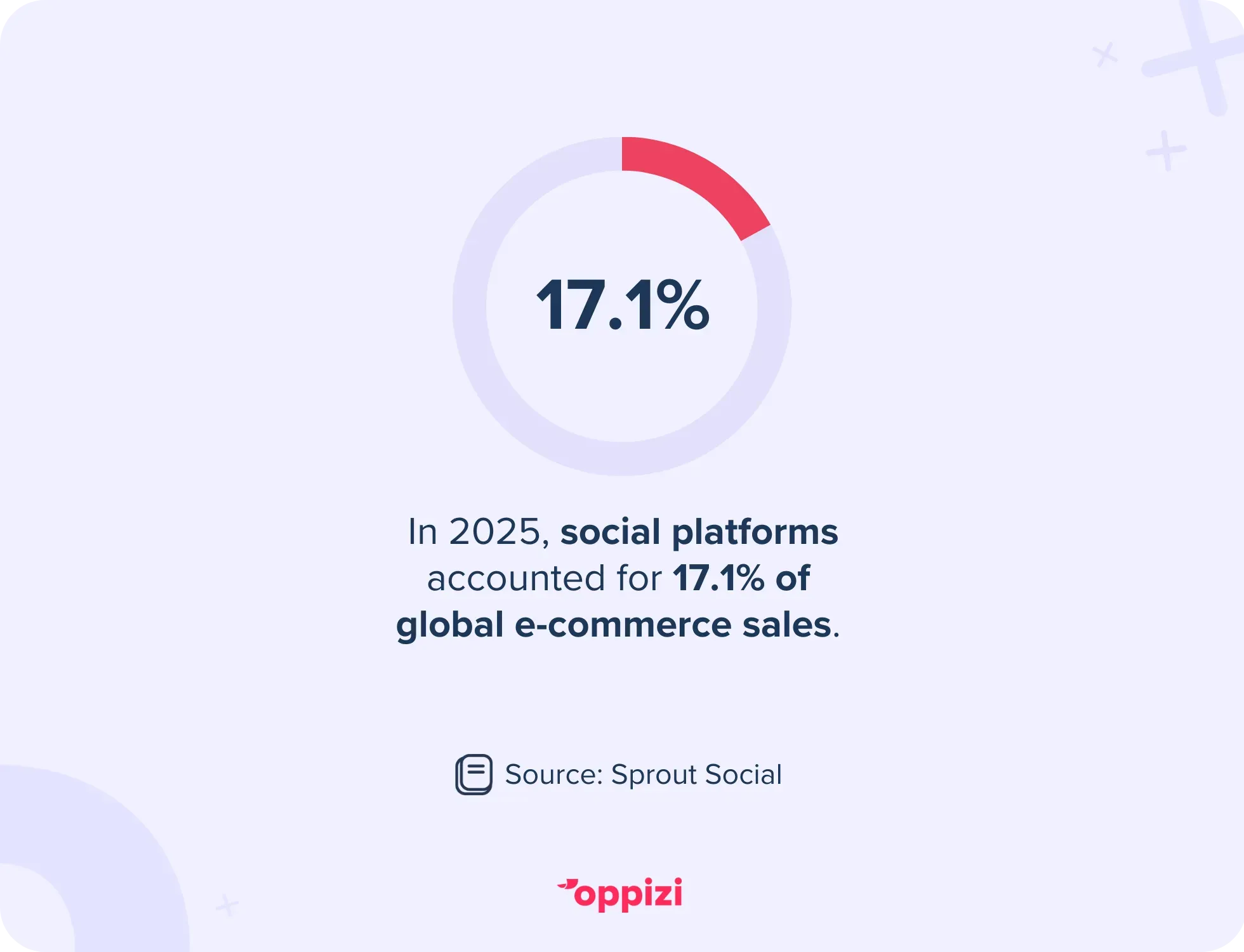
Social media is still the biggest space for e-commerce ads. It gives you huge reach and powerful targeting tools. In fact, social platforms drove 17.11% of all global e-commerce sales in 2025. With the right mix of data, engagement, and creative, you can run ads that not only build awareness but also convert into sales.
Meta (Facebook and Instagram) ads
Meta remains one of the strongest channels for e-commerce. Its targeting, lookalike audiences, and dynamic product ads let you put the right items in front of the right shoppers. The platform’s reach, engagement data, and analytics also make it easier to test and refine campaigns for stronger results.
Best practices:
- Use dynamic product ads to retarget visitors who didn’t buy.
- Test short videos that show product benefits in under 15 seconds.
- Build lookalike audiences from your best customers.
- Try Advantage+ shopping campaigns (ASC) to automate placements and optimization.
TikTok ads
TikTok’s growth makes it a key channel for reaching younger buyers. Ads often look more like content than marketing, which is why they convert so well. The algorithm also helps brands reach people most likely to engage and purchase.
Best practices:
- Use user-generated content (UGC) style ads that feel authentic.
- Keep videos short, ideally between 6–15 seconds.
- Boost organic content with TikTok Spark Ads.
- Target by interests and behaviors to catch trend-driven shoppers.
How a scrunchie brand turned TikTok into 90% of its sales
Enchanted Scrunch, a hair accessories brand, went viral on TikTok. Orders jumped from about 2 per week to nearly 500 per week, and now 90% of their sales come through TikTok. This shows how even small DTC brands can scale quickly with TikTok ads and viral content.
Pinterest ads
Pinterest often gets overlooked, but it’s a strong option for fashion, home décor, beauty, and lifestyle brands. Users come to Pinterest for ideas and products, which makes them open to shopping-focused ads.
Best practices:
- Run shopping ads that link straight to product pages.
- Optimize pins for seasonal trends and shopping events.
- Use collections ads to highlight multiple products at once.

2. Search engine advertising: Google and Bing
Search ads are one of the strongest ways for e-commerce brands to reach customers. They connect you with people already searching for your products. One analysis shows about 18% of all e-commerce sales come directly from Google Ads.
Google dominates search, which makes it the top choice for most campaigns. Its Shopping ads appear at the very top of results, giving your products maximum visibility when buyers are ready to purchase.
Google Shopping ads
- Optimize product feeds with clear titles, high-quality images, and accurate pricing.
- Use negative keywords to cut wasted spend and sharpen targeting.
- Test Performance Max campaigns to automatically run across search, YouTube, Gmail, and display.
- Segment campaigns by category or profit margin so more budget goes to your most profitable items.
How a skincare brand turned $250K in ads into $1M in sales
A premium skincare brand used Google Ads with SEO and generated over $1 million in three months from a $250K ad spend, about 400% ROI. By focusing spend on best-sellers and high-intent keywords, they significantly boosted sales.
Bing ads
- Target less competitive audiences, especially older, higher-income demographics.
- Import campaigns from Google Ads to save time and keep messaging consistent.
- Use the Microsoft Audience Network to reach people beyond search, including Outlook, Edge, and native placements.
Bing’s audience may be smaller than Google’s, but it can still deliver strong ROI. Running both platforms together helps expand reach and balance ad spend.
3. Retargeting campaigns for higher conversions
Most shoppers don’t buy the first time they visit. Retargeting brings them back. Research shows it can lift conversions by more than 150% compared to standard ads. It works because it keeps your brand visible and reminds visitors to finish what they started. Moreover, combining retargeting with remarketing across multiple channels can drive even stronger results.
Key strategies
- Website retargeting: Show ads to visitors who browsed but left without buying.
- Cart abandonment retargeting: Target shoppers who added products but didn’t check out.
- Dynamic retargeting: Serve ads with the exact products they viewed.
Best practices
- Set frequency caps so customers don’t feel overwhelmed.
- Offer incentives like free shipping or limited-time discounts.
- Segment audiences by behavior: browsers, cart abandoners, repeat buyers—and tailor messages to each.
Retargeting works best because it reaches warm audiences who already know your products, making them much more likely to buy.
4. Influencer and creator partnerships
Influencer marketing works well for e-commerce because it combines authentic storytelling with paid promotion. About 69% of consumers say they trust influencer recommendations more than brand ads. Shoppers connect with people more than companies, and creators can reach niche audiences that traditional ads often miss.
Best practices
- Partner with micro-influencers. Their smaller but engaged followings often lead to stronger conversions.
- Repurpose influencer content for paid social ads. UGC-style ads usually perform best.
- Track campaigns with unique promo codes or landing pages to measure ROI clearly.
- Keep the balance between authenticity and promotion. Content that feels too polished often loses trust.
Influencer campaigns are most effective when they go beyond awareness. Use creators to launch products, run seasonal pushes, or build content libraries you can scale with paid ads.
How micro-influencers helped a skincare brand hit 38% conversion rates on Amazon
Digital Beauty Group (skincare) worked with micro-influencers to boost Amazon listings. In six months, they produced 100+ short videos at about $67 each. The result was a 38% conversion rate on those listing pages, far above typical benchmarks (Insense). This shows how influencer content can directly drive sales.
5. Content-driven advertising
Content-driven advertising gives value before asking for a purchase. Data shows that businesses with blogs see 13× higher ROI than those without. Video content performs even stronger, driving ROI 49% faster than text alone.
This approach builds trust, educates shoppers, and positions your brand as an expert while still guiding people toward a purchase.
Examples
- Sponsored blog posts on niche or industry sites to drive referral traffic.
- Native ads that blend into feeds and spark curiosity.
- Video tutorials or how-to guides promoted on YouTube or TikTok.
Best practices
- Always link ads to a landing page designed for conversions, not your homepage.
- Use long-tail keywords to capture specific buying intent.
- Test different formats like listicles, comparisons, and case studies. These often outperform brand-focused content.
When combined with retargeting and email follow-up, content-driven ads can nurture leads and shorten the path to purchase.
6. Email and SMS advertising
Email and SMS are often seen as retention tools, but they can be just as effective for advertising. When combined with paid campaigns, they become powerful growth drivers. About 60% of US shoppers say marketing emails influence their purchases. SMS is even stronger, with open rates around 98%.
These channels deliver direct and personal communication. They work best when they are part of a broader ad strategy.
Best practices
- Capture emails with pop-ups, exit-intent offers, or lead magnets like discounts or free guides.
- Build automated flows such as welcome sequences, post-purchase follow-ups, and abandoned cart reminders.
- Use SMS for time-sensitive promotions like flash sales or shipping updates.
- Segment lists by purchase history and engagement to send relevant offers.
- Sync email lists with Facebook Custom Audiences and Google Customer Match to reach existing customers with paid ads.
- Add QR codes for SMS to make it easy for customers to opt in directly from print materials or in-store displays.
- Always follow GDPR, CAN-SPAM, and TCPA rules to protect trust and avoid penalties.
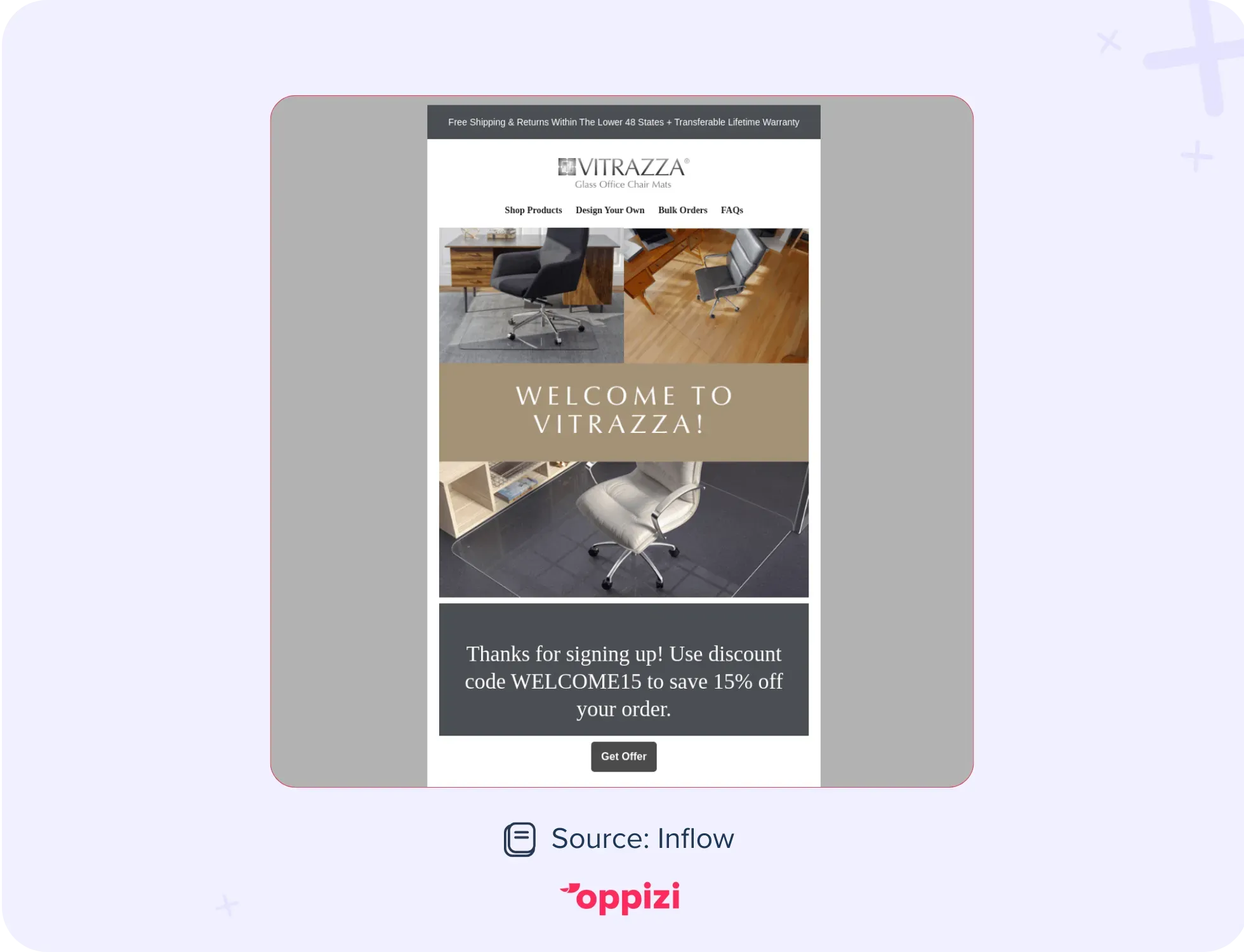
How a new email flow drove $564K in four months for Vitrazza
Vitrazza (luxury chair mats) revamped its email flows. A new welcome sequence with personalized content and testimonials lifted revenue by 55% and click-through rates by 20%. In four months, this single series generated $564,200. Targeted email flows can significantly increase revenue.
7. Marketplace advertising (Amazon, Etsy, Walmart)
If you sell on marketplaces, ads are critical to being seen. These platforms prioritize paid listings, which makes advertising almost required to compete. Running ads puts your products at the top of search results, where shoppers are ready to buy.
Amazon ads
- Use Sponsored Products to show up in high-intent searches.
- Test Sponsored Brands to feature multiple products and build recognition.
- Try Sponsored Display and DSP ads for remarketing and broader reach.
- Track ACoS (Advertising Cost of Sales) to protect margins.
The Amazon marketplace has grown rapidly, with over 9.7 million sellers worldwide. In the US alone, around 200,000 sellers make more than $100,000 a year. That’s why advertising on Amazon is one of the most effective ways to scale your business.
Etsy and Walmart ads
- Etsy’s Promoted Listings let sellers bid for search placement, which works well for unique or handmade items.
- Walmart Sponsored Products function much like Amazon’s, helping sellers capture ready-to-buy customers.
Marketplace ads are often cheaper than Google or Meta but need close monitoring to stay profitable.
How Roomify grew revenue 273% with Amazon Sponsored Products
Roomify (furniture retailer) used Amazon Sponsored Products to fuel growth. During their campaign, revenue grew 273%, with 80% coming from sponsored product ads. Careful keyword management (broad + exact match) helped multiply sales.
8. Offline advertising for e-commerce
Online ads dominate, but offline campaigns create tangible impact and lasting customer connections. Tactics like direct mail, flyers, and local events create real-world connections that online channels can’t. They also build trust and give shoppers a tangible brand experience.
Examples
- Flyer distribution in busy retail areas.
- Direct mail campaigns aimed at specific neighborhoods.
- Guerrilla marketing stunts that spark conversation and social sharing.
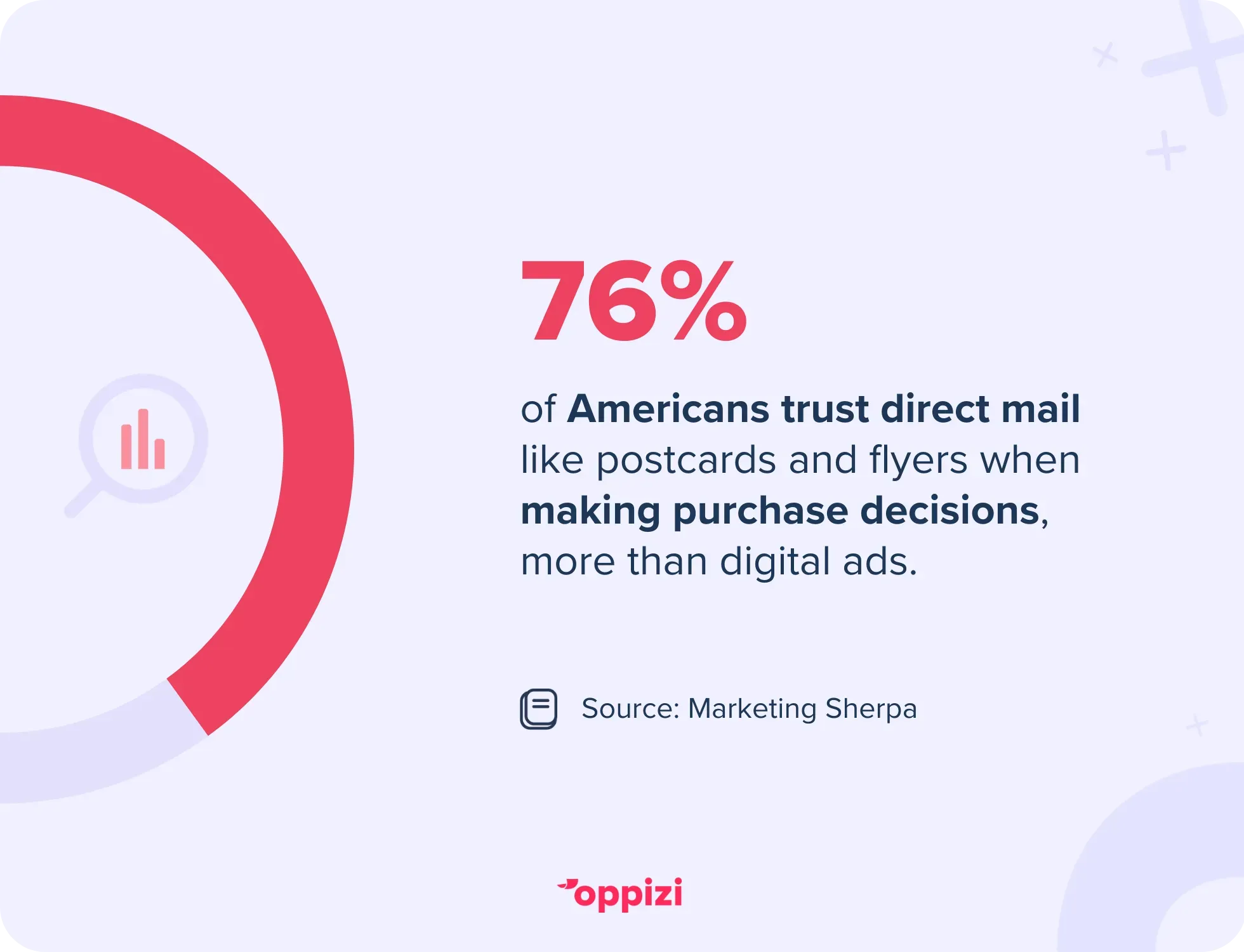
Offline marketing statistics speak volumes about its impact. About 76% of Americans trust direct mail such as postcards and flyers when making purchase decisions, which is higher than digital ads. Offline channels, such as direct mail for retail and e-commerce, also help reach people who spend less time online.
In fact, 81% of Gen Z adults and 78% of Millennials say they often want a break from digital devices. That’s why offline advertising is an important part of a balanced strategy.
Why offline advertising works for e-commerce
- Cuts through digital noise and captures attention in the real world.
- Builds brand trust through a physical presence.
- Can be highly targeted with the right distribution data.
How offline advertising delivered real results for Just Eat
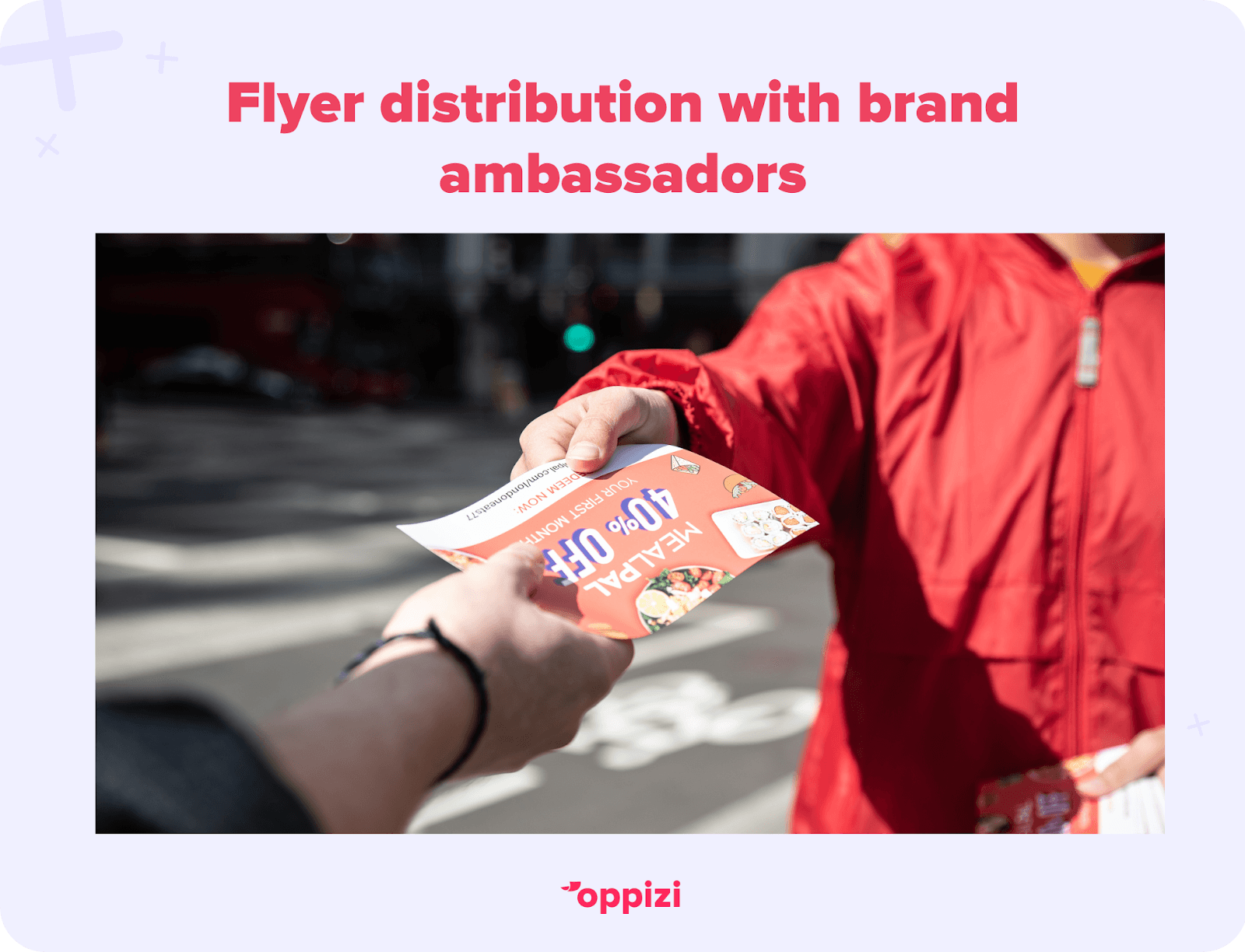
Just Eat partnered with Oppizi to reach new customers where digital ads weren’t cutting through. By putting 8,000 flyers directly into people’s hands, our ambassadors drove more than 250 app orders in three hours. Almost half of those came in the first week. The campaign proved something powerful: when brands meet people face-to-face, growth follows.
9. Scaling with data-driven optimization
Running ads without tracking results is one of the fastest ways to waste money. To grow profitably, you need a data-driven approach that makes clear what’s working and what isn’t. Companies that use advanced analytics see 5–8% higher marketing ROI compared to others.
By looking at metrics and customer behavior, you can adjust campaigns, spend smarter, and maximize returns.
Best practices
- Track ROAS (Return on Ad Spend), CAC (Customer Acquisition Cost), and LTV (Lifetime Value) across every channel to measure true profitability.
- Run A/B tests on creatives, copy, offers, and landing pages to improve results.
- Use attribution modeling to see which channels have the biggest impact on conversions.
- Collect first-party data such as emails, SMS opt-ins, and loyalty data as third-party cookies disappear.
- Centralize reporting with dashboards or analytics tools to spot trends faster.
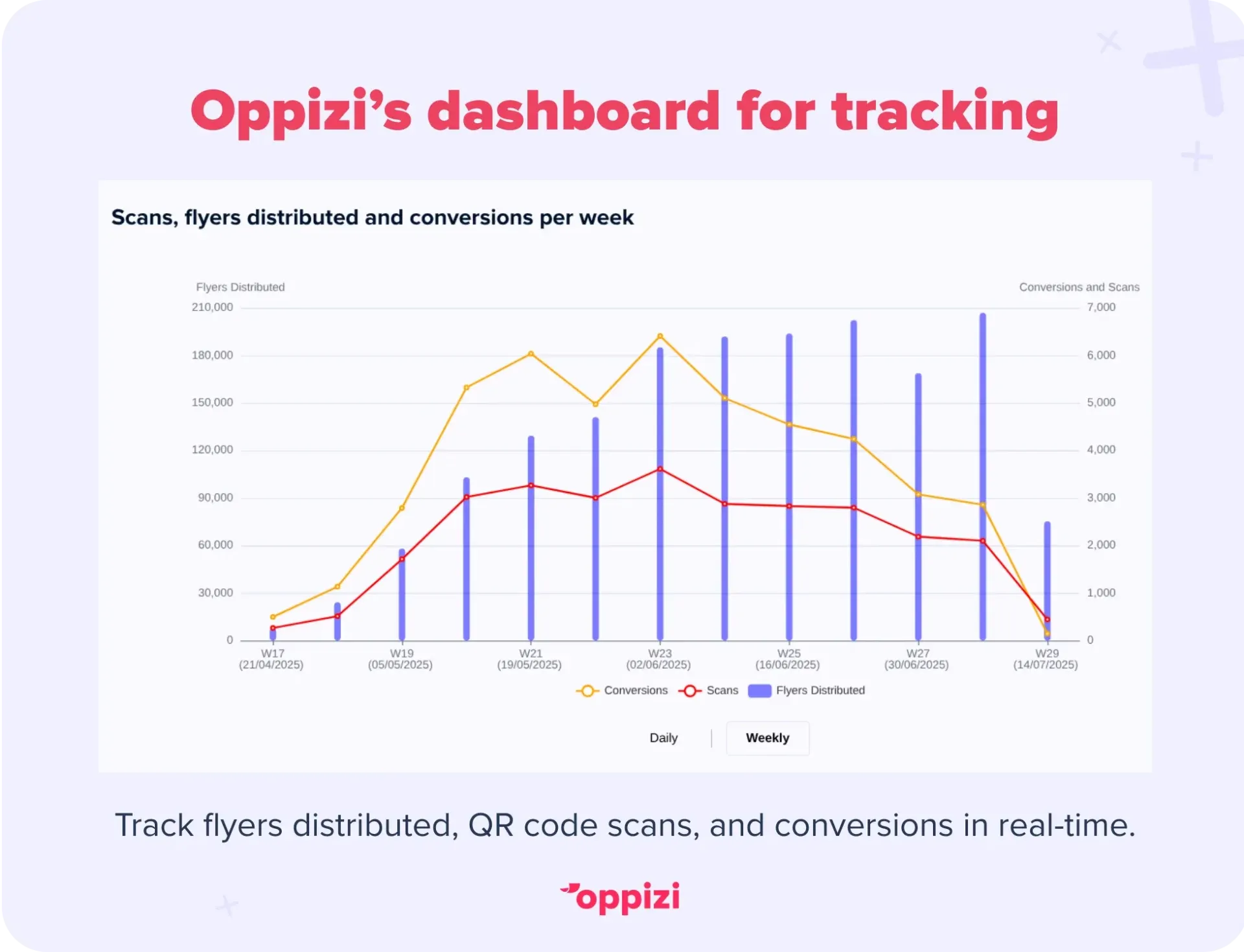
The best e-commerce advertisers see optimisation as an ongoing process, not a one-time setup. And by adding offline marketing, businesses using Oppizi’s data-driven approach can track, optimize, and scale as effectively as they do with digital.
10. Budget allocation strategies
How you split your ad budget is just as important as the ads themselves. The right mix helps you bring in new customers while keeping existing ones engaged. Reviewing and adjusting spend based on performance makes sure your money is going where it drives the most growth.
Recommended breakdown for growth-stage e-commerce brands
- 40% prospecting campaigns: Use social, search, or marketplace ads to bring in new customers.
- 30% retargeting: Turn browsers and cart abandoners into buyers.
- 20% retention and loyalty: Focus on upselling, cross-selling, and repeat orders.
- 10% testing and experimentation: Try new channels, creatives, or formats.
This mix works well for established stores, but it’s not one-size-fits-all. Startups may spend more on prospecting to build awareness, while mature brands often put more into retention to increase lifetime value. The key is to review data monthly and shift spend where you see the strongest returns.
11. Loyalty and retention advertising
Winning new customers matters, but keeping them is far more profitable. Repeat customers spend more and order more often. In fact, research shows that a repeat customer spends 67% more than a new customer, although figures vary from business type to industry.
That’s why advertising shouldn’t stop after the first sale. Smart brands use retention campaigns to drive repeat purchases and long-term loyalty.
Best practices
- Retarget past buyers with product bundles or complementary items.
- Use Facebook Custom Audiences and Google Customer Match to share exclusive offers.
- Promote VIP or rewards programs through ads to boost lifetime value.
- Run win-back campaigns with personalized incentives for lapsed customers.
How Astrid & Miyu boosted revenue 40% with a loyalty program
Astrid & Miyu, a UK jewelry brand, relaunched their loyalty program, “Astrid & You.” Members who joined buy 220% more per year and are six times more likely to repurchase. Overall revenue grew 40% after the program launch. This shows how tiered rewards and perks can turn first-time shoppers into long-term customers.
Conclusion
E-commerce advertising is tougher and more competitive than ever, but the rewards are big for brands that get it right. The winners combine smart targeting with creative campaigns that focus on the customer. From social and search to influencers and offline channels, success comes from building a balanced strategy that fits your stage of growth.At Oppizi, we make offline advertising for e-commerce as simple and measurable as your online campaigns. If you want to reach new audiences, grow brand awareness, and scale profitably, try Oppizi’s platform today.