Last updated July 23, 2026
Ever looked at something online, closed the tab, and then saw an ad for it later? That’s retargeting or remarketing. They sound alike. And they kind of are. But there’s a difference, and knowing it can help you get more people to come back and buy.
This guide will explain the difference between retargeting and remarketing in simple terms. You’ll also see how both can work with offline tools, like flyer campaigns. And how Oppizi can help you run those campaigns without the hassle.
What is retargeting?
Retargeting is online advertising that shows ads to people who’ve already visited your website or clicked one of your ads, but didn’t buy.
It uses cookies or pixels to track what people do on your site. When someone visits, a small bit of code saves a cookie in their browser. That cookie helps you show them ads later when they’re on other sites or apps.
What’s a cookie?
It’s a tiny file that tracks what someone looked at or clicked on while on your site. That info helps you remind them about your product later. Here’s how it works:
- Someone checks out a pair of shoes on your site.
- They don’t buy.
- Later, while they’re on Instagram or reading an article, they see an ad for those same shoes.
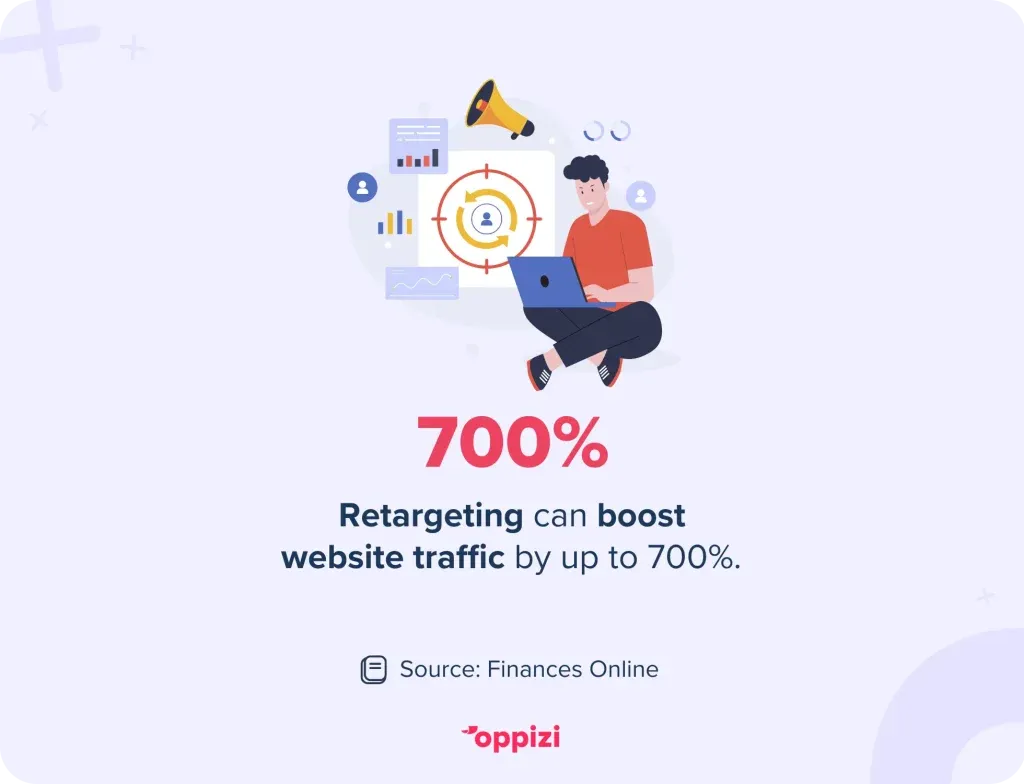
That’s retargeting. And it works. In fact, it can increase your website traffic by up to 700%. So, what does that mean for your business? It means that if you're not using this method, you could be losing a lot of potential customers.
Where can you run retargeting ads?
- Google Ads
- Facebook and Instagram
- Twitter/X
What is remarketing?
Remarketing is a way to reconnect with people who’ve already shown interest in your brand, but instead of ads, it happens through messages like emails or texts. You collect someone’s contact info, then send them a follow-up. This could be a reminder, a discount, or a note to bring them back. Here’s an example:
- Someone adds a product to their cart but doesn’t check out.
- You send them an email an hour later saying, “Hey, your cart’s still here.”
That’s remarketing.
What about privacy?
Because you’re using personal details, make sure you follow data rules like GDPR. Only message people who’ve said it’s okay, and always include an easy way to unsubscribe.
Where can you use remarketing?
- Text messages
- Push notifications
Retargeting vs remarketing: what’s the difference?
Here’s a quick side-by-side:
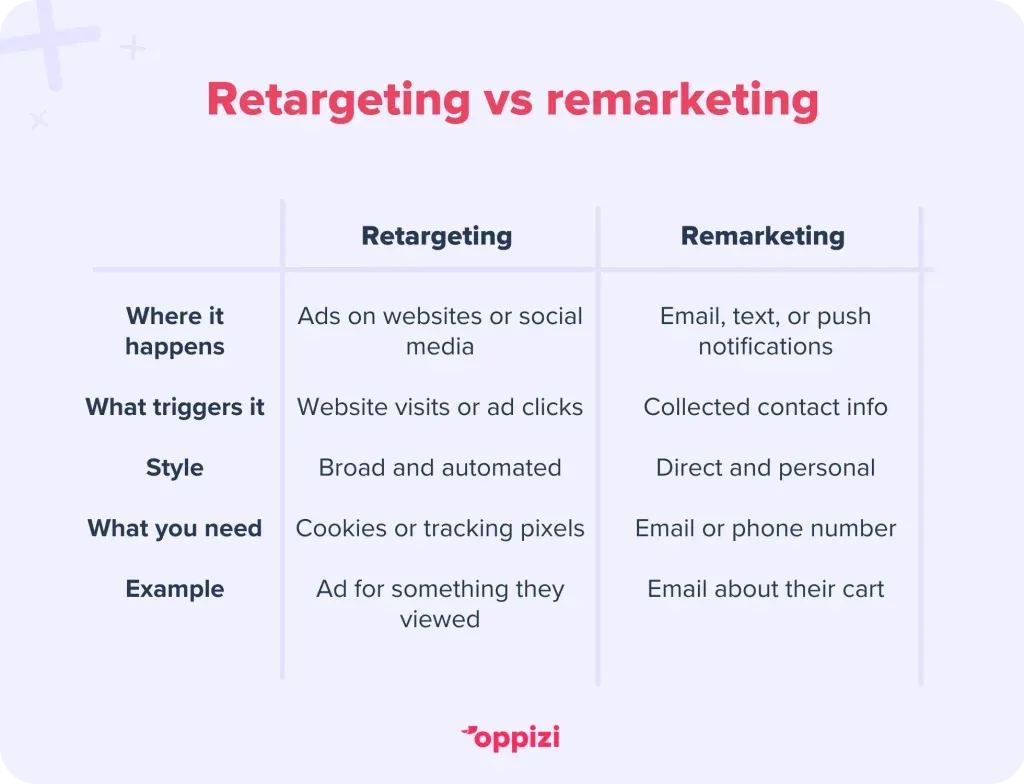
These aren’t either-or options. They work best together.
Use retargeting when:
- You want to reach more people online
- You get a lot of website visitors
- You want people to remember your brand
Use remarketing when:
- You collect emails or phone numbers
- You want to send special offers
- You want to guide people through each step
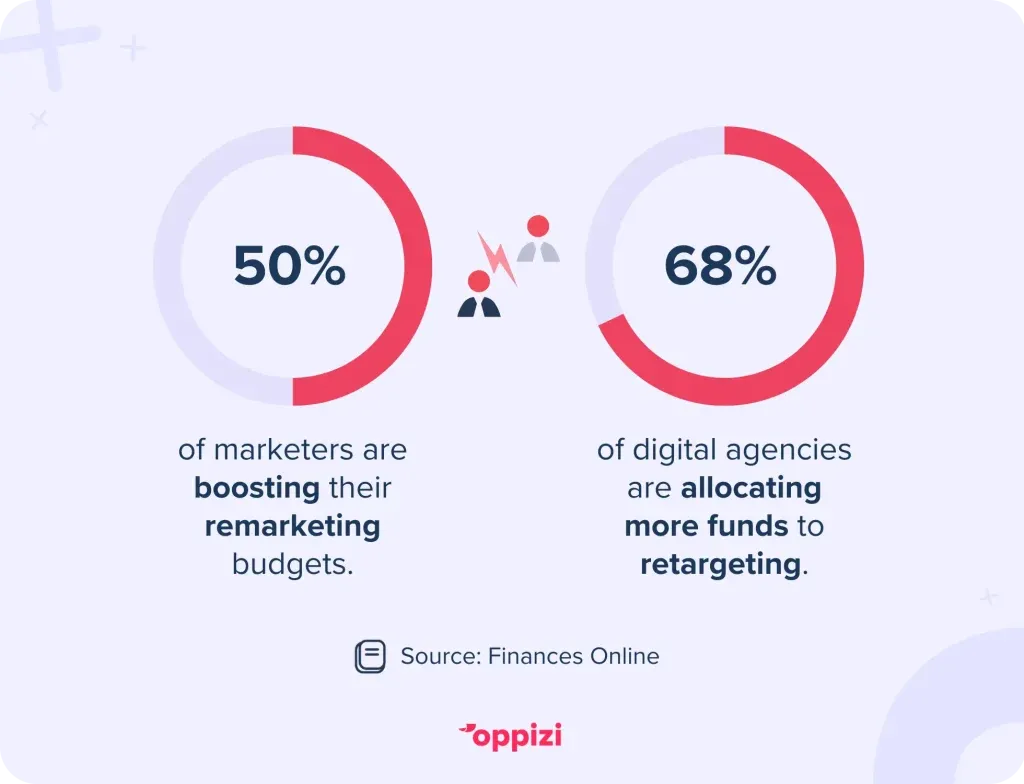
Half of all marketers plan to spend more on remarketing in the next six months. And 68% of digital agencies are putting more money into retargeting. Most businesses use both. That’s how you stay top of mind and bring people back in more than one way.
How offline marketing fits in
Online tools like retargeting and remarketing work well. But they’re even stronger when you mix in offline marketing too. People still notice physical things. A flyer can introduce your brand before someone even visits your website.
Here’s how flyers help:
- Build awareness: Flyers reach people who haven’t seen your online ads.
- Boost conversions: Someone who saw your flyer might click your ad later.
- Feel more familiar: When people get reminders online and offline, your brand feels more trustworthy.
Want to track flyers too?
With tools like Oppizi, you can. Use QR codes or promo codes to see who engages. This shows what’s working and helps improve your online ads by targeting the right areas or people. At Oppizi, we make flyer campaigns simple.
- We print, track, and deliver your flyers.
- You see results in real time.
- And you reach people both online and offline, without extra hassle.
Try Oppizi if you want a fast, easy way to blend both worlds.

Pros and cons of retargeting and remarketing
Let’s break it down.
Retargeting pros:
- Reaches a wide audience
- Doesn’t need personal info
- Helps people remember your brand
Retargeting cons:
- Less personal
- People might get tired of the same ads
- Cookie rules can limit targeting
Remarketing pros:
- Very personal messages
- Great for bringing back leads
- Often gets better results than cold email
Remarketing cons:
- You need contact info
- Some emails go to spam
- Not as helpful for reaching new people
Best option? Use both. Together, they cover more ground and bring in better results.
Best practices for retargeting
- Group your audience. Don’t show everyone the same ad. Change it based on what they did, like viewing a product or leaving a full cart.
- Don’t overdo it. Too many ads can annoy people. Show just enough to stay on their mind.
- Use clear visuals and a strong message. Make it obvious what you want them to do.
- Try different versions. Test what works best by changing one thing at a time.
Best practices for remarketing
- Make it personal. Use their name. Mention what they looked at or bought.
- Act fast. Send the message soon—within hours, not days.
- Give them a reason to come back. Share a discount, helpful info, or remind them what they left behind.
- Keep it simple. One clear message works better than a long list.

A quick example
Imagine you run a meal prep business. Someone gets your flyer in the mail. Later, they visit your site and check the menus, but don’t sign up.
- Retargeting shows them an ad on Instagram with a reminder and a discount.
- Remarketing sends an email an hour later with a promo code.
Now they’ve seen your flyer, your ad, and your email. It feels like your brand is everywhere, and it’s all connected. That makes them more likely to sign up. Each step helped. Together, they worked even better.
Why privacy changes matter
New rules like Apple’s iOS updates and cookie limits are changing how online ads work. Retargeting is harder now. It relies on tracking, and that’s being blocked more often. Remarketing is stronger. It uses email addresses and info you collect directly.
That’s why building your own list and using flyers or other offline tools matters more than ever. They don’t depend on tracking. And they still get results.
How to build a simple retargeting and remarketing funnel
Here’s an easy example of how to use both strategies together:
- Flyer campaign: Use a flyer with a QR code to get people interested.
- Retargeting: When someone visits your landing page, show them a retargeting ad on Facebook or Google.
- Email capture: Collect emails and offer a discount. This triggers an automated remarketing email.
- Second email: Send a follow-up email to encourage the purchase, with a sense of urgency (e.g., “Offer expires tonight!”).
This is a simple flow to follow and is great for beginners.
How to measure success: key metrics for retargeting and remarketing
Here’s how to track results for both:
For retargeting:
- Click-through rate (CTR)
- Cost per click (CPC)
- View-through conversions
- Ad frequency
For remarketing:
- Open rate
- Click-to-open rate
- Conversion rate
- Unsubscribe rate
If you’re using flyers, you can track QR code scans and redemptions with tools like Oppizi. This helps you link offline efforts to your retargeting or remarketing strategies.
FAQ: retargeting vs remarketing
What’s the difference between remarketing and retargeting?
Retargeting shows paid ads to people who visited your site or app but didn’t convert. Remarketing uses emails or messages to re-engage users who’ve shared their contact info. Both aim to bring people back, but use different methods.
What’s an example of retargeting?
You visit a travel site to check out vacation packages but leave without booking. Hours later, you see an ad for that same trip on Facebook. That’s retargeting—using cookies to show ads based on your browsing.
What’s an example of remarketing?
You add an item to your cart but don’t buy it. The next day, you get an email reminding you about your cart, with a 10% discount. That’s remarketing—re-engaging you via email.
What’s the difference between targeting and retargeting?
Targeting is reaching new people based on things like demographics or interests. Retargeting focuses on people who’ve already interacted with your brand, like visiting your site but not converting.
Is retargeting part of SEO?
No, retargeting isn’t part of SEO. SEO helps your site rank higher in unpaid search results, while retargeting is a paid advertising strategy aimed at people who’ve already visited your site.
Final thoughts: retargeting vs remarketing
Here’s the simple takeaway:
- Retargeting uses ads to bring people back.
- Remarketing uses messages to reconnect.
Both help you reach interested customers. And they work even better when combined in a wider strategy. If you’re not only focused on digital, offline methods like flyer distribution can reach new people and support your online efforts.
That’s where Oppizi comes in. We make offline marketing as easy as online. You focus on your business, and we’ll take care of the rest. Want to reach more people with smarter marketing? Try our user-friendly dashboard today and start growing your business the easy way.