Last updated July 23, 2026
Your website is more than just an online brochure. It’s a powerful tool for making sales. When it’s built and set up right, it can help you attract visitors, turn them into leads, and increase your revenue.
A website works best with SEO, paid ads, and other marketing strategies. While SEO and ads bring traffic, your website needs to convert that traffic into action. This could mean filling out a form, making a purchase, or reaching out to you. Without a website, you miss out on these chances.
Why your business needs a website
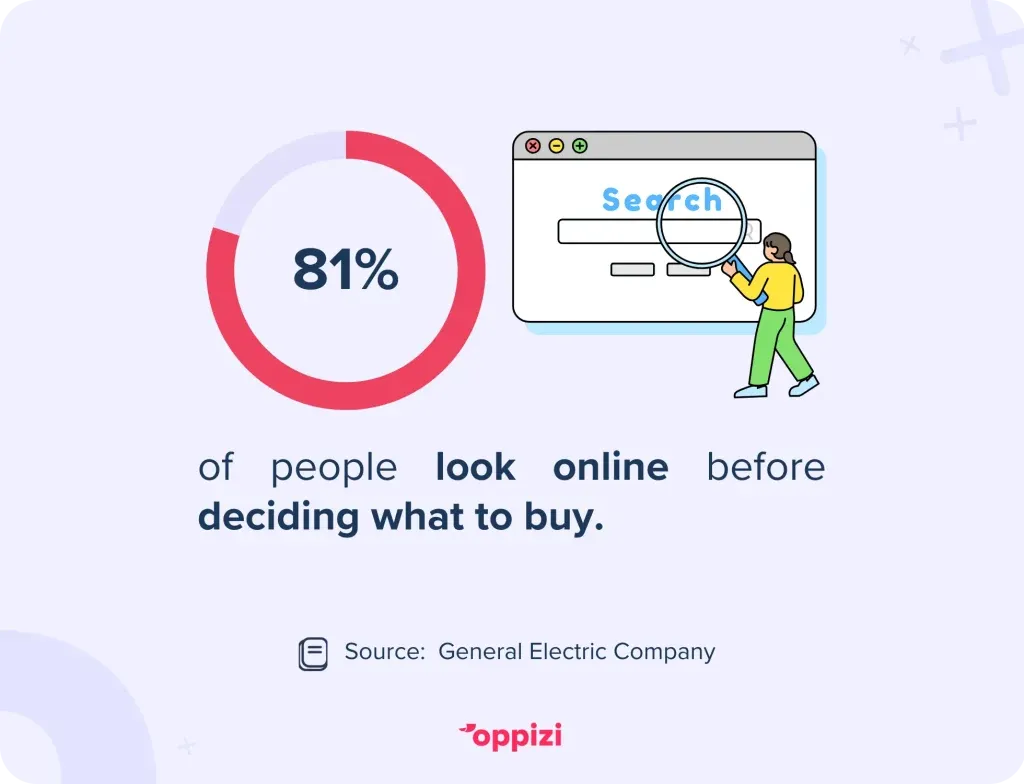
Today, most people start their search online. They shop, research, and look for services all on the internet. In fact, 81% of shoppers check online before they buy. If your business doesn’t have a website, you’re missing out on many potential customers.
Plus, your competition is not sitting idle. In 2018, about half of small businesses had a website. Now, that number has risen to over 71%. More businesses are online, which means more competition for the same customers.
A website also helps build trust. Many online directories, like Google Business Profile and Yelp, require a verified website URL to list your business. Having a custom domain makes it easier to get listed and verified on these platforms.
Claiming your Google Business Profile can help you show up in local search results. These listings provide key information like your hours, address, phone number, and, most importantly, your website link.
Building a website is easier than ever. Platforms like WordPress, Squarespace, and Wix make it simple to create a professional site, even if you don’t have tech skills. With the right tools, you can launch your site on a small budget and start generating leads and sales.
How much does a website increase sales?
A well-designed website can have a big impact on sales, especially for small and growing businesses. While the exact numbers can vary, studies show that businesses with a professional online presence do better than those without one.
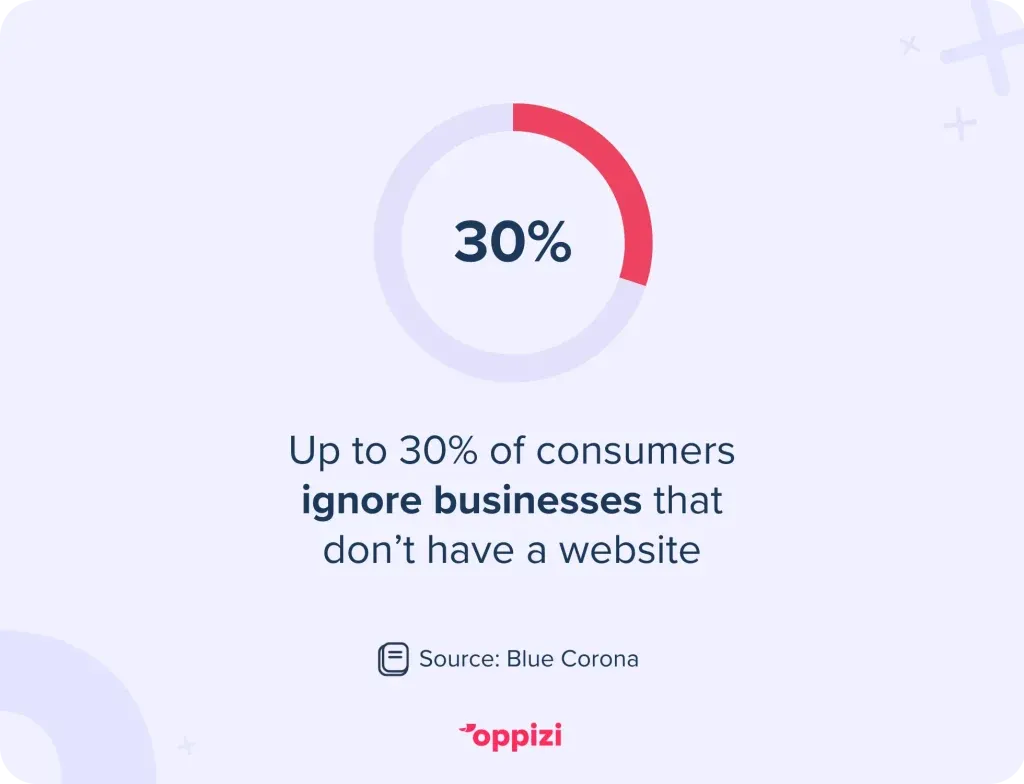
Up to 30% of consumers won’t consider a business that doesn’t have a website. That means you could lose nearly a third of your potential revenue before you even get a chance to make a sale.
Here’s how a website helps boost sales:
- Increased visibility: A website makes it easier for customers to find you through search engines like Google. This helps you reach more people than just relying on word-of-mouth or foot traffic.
- 24/7 availability: Your website is always open. This allows customers to browse, learn, and make purchases anytime, not just during regular business hours.
- Conversion-focused design: High-converting websites guide visitors toward specific actions, like requesting a quote, scheduling a service, or making a purchase.
- Credibility and trust: A clean, professional website gives visitors confidence in your brand. It also allows you to showcase testimonials, case studies, and certifications that influence buying decisions.
Businesses that optimize their websites for SEO, speed, mobile usability, and user experience can see great results. A well-optimized website can boost conversion rates by as much as 200%. If you want to grow your revenue, having a high-performing website is essential.
Here’s what your website can do for your business
Your website is more than just a digital business card. It’s a powerful tool that helps you get leads, build trust, and make sales. Whether you’re a small business or a growing brand, your website is key to how customers find you and choose you over others.
Here’s how your website can help your business:
1. Keep your business open 24/7
Your website never closes. It lets customers access your business any time, day or night. Whether they want to learn about your services, browse products, or contact you, your site is there to help. Without a website, you lose after-hours opportunities to other businesses that are just a click away.
2. Help you reach more customers
A website breaks down location barriers. You’re not just limited to your street or city anymore. With billions of people online, your website connects you to a global audience. Even if you focus locally, a strong online presence helps you attract more nearby customers who start their search on the internet.
3. Build a stronger, more credible brand
A professional website shows that your business is trustworthy. Today, people often judge a business by its online presence. If they can’t find you or don’t like what they see, they’ll move on. Your website is your chance to make a great first impression, explain what you offer, and show why you’re the right choice.
4. Increase brand visibility and recognition
Your website helps grow your brand. Whether through blog posts, SEO, or social media links, your site helps more people discover and remember your business. Over time, this visibility leads to more engagement, referrals, and loyal customers.
5. Make your marketing more effective
Every marketing campaign needs a place to send people. Your website is that central hub. It’s where you can educate visitors, build trust, and encourage action. With tools like landing pages and conversion tracking, your site helps you maximize your marketing efforts.
6. Turn your site into a sales channel
Your website can do more than generate leads; it can drive direct sales. With eCommerce features, you can sell products or services online and reach customers beyond your local area. Platforms like Shopify, WooCommerce, and Squarespace make it easy to set up an online store, manage orders, and start growing your revenue.
How to grow your website
Your website can boost your sales, but only if people can find it. If you’re not getting traffic, you won’t see results.
Most small business websites get fewer than 500 visits a month. About half of that traffic usually comes from organic search. Even a few hundred targeted visitors can lead to many new customers—if your website is ready for growth.
Building a great website takes time. You need a site that reflects your brand, shows what you offer, and is easy to find on search engines. Starting off right can help you attract more visitors and generate leads over time.
Here are some proven strategies to help your website grow:
- Mobile-first design
- On-page SEO
- Conversion funnel optimization
- Content creation
- Paid advertising
Let’s look at each one.
1. Start with a mobile-first design
Nearly half of all web traffic comes from mobile devices. This means your site must look good and work well on smartphones, not just on desktops. If your site isn’t mobile-friendly, you might lose visitors before they even see your offer.
A mobile-first design means you build your site with mobile users in mind from the beginning. This can help lower bounce rates, speed up page loading, and boost engagement.
Key elements of a mobile-first website:
- Responsive layout: Adjusts automatically to fit any screen size.
- Simple navigation: Use sticky menus or expandable icons to make browsing easy.
- Minimal clutter: Avoid unnecessary plugins, pop-ups, or large images.
- Real-device testing: Test on actual phones and tablets, not just browser previews.
If you’re using a platform like WordPress, many modern themes are already mobile-responsive. However, always test every page and feature on different devices to ensure everything works smoothly.
Responsive design
Responsive websites change their layout based on screen size. Instead of having separate versions for desktops and mobiles, a responsive site provides a smooth experience on all devices. This also makes SEO and site management easier.
Intuitive navigation
Your navigation should be quick and easy. Keep menus simple and always accessible. Sticky headers and expandable menus work well for mobile users. Adding a search bar can also help visitors find what they need.
Eliminate clutter
Too much content—like long paragraphs or large images—can slow down your site and overwhelm mobile users. Focus on clarity and purpose. Each element should serve a specific function. If it doesn’t help convert visitors, consider removing it.
Test on real devices
Always test your site on actual smartphones and tablets. Different devices can show different results, and only real testing will reveal hidden bugs or layout issues.
2. Search Engine Optimization (SEO)
If you want your website to get steady, high-quality traffic, SEO is key. Search engine optimization helps your site show up in Google search results, which can lead to more leads and sales.
Good SEO takes time. It’s not about quick fixes. The work you do now—both on your site and off it—will help you get more organic traffic that grows over time.
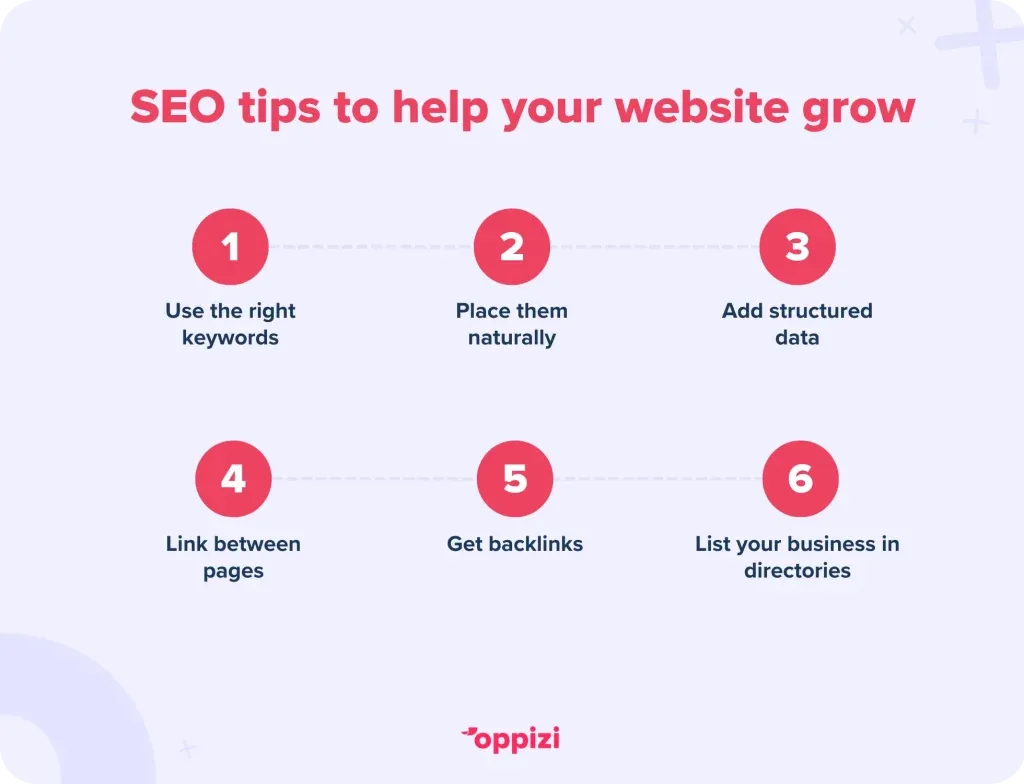
Here are some effective SEO strategies to help your website grow:
- Keyword research
- Smart keyword placement
- Structured data markup
- Internal linking
- Backlink building
- Online directory listings
Let’s look at each one.
Keyword research
Keyword research is the foundation of strong SEO. It helps you find the words and phrases your potential customers use when searching for products or services like yours.
Aim for a mix of:
- High-intent keywords: These are for buyers ready to take action.
- Informational keywords: These are for people doing research.
- Local keywords: These are for businesses with a physical location.
Look for keywords that have a decent search volume (500–5,000 monthly searches) but aren’t too competitive. Trying to rank for very competitive keywords can take a long time, especially for newer sites.
Keyword placement
After you find your target keywords, place them wisely across your site. Keywords help search engines understand your content, but don’t overuse them.
Focus on these areas:
- Page titles and meta descriptions
- H1 and H2 headers
- The first 100 words of your content
- Image alt tags
- URL slugs
Keep the language natural and helpful for readers. Google prefers high-quality, relevant content, so write for people first, then optimize for search.
Structured data markup
Structured data helps search engines understand your content better. Using schema markup from Schema.org, you can label important details on your site, like business hours, product info, reviews, or events.
This extra context can improve your listings in search results, showing rich snippets like star ratings or contact info. This makes your site more attractive to click on.
Internal linking
Internal links help both search engines and users navigate your website. They also spread page authority across your site, which can improve the visibility of more pages in search results.
For every new blog post or service page, link to related content. This keeps users on your site longer and signals to Google that your site is well-structured and informative.
Tip: Use descriptive anchor text to clearly explain what the linked page is about.
Backlink building
Backlinks are links from other websites to yours. They are one of the most powerful factors for ranking well. Getting links from trusted, high-authority sites boosts your own site’s authority.
Here are some ways to build backlinks:
- Publish helpful, original content.
- Reach out to industry blogs for guest posts.
- Share your content on social media.
- Get mentioned in local news or niche publications.
Quality is more important than quantity. One link from a trusted site is better than ten links from low-quality sources.
Online directory listings
Claiming and optimizing your business listings on sites like Google Business Profile, Yelp, and Yellow Pages can also help your SEO. These listings increase your visibility in local searches and provide valuable backlinks.
Make sure your business name, address, and phone number (NAP) are the same across all directories. Inconsistent information can hurt your local SEO and confuse potential customers.
3. Conversion Funnel
A conversion funnel is a key tool to help turn visitors into customers. It includes landing pages, sign-up forms, and email autoresponders that keep potential buyers interested in your products or services.
A well-designed conversion funnel creates several chances to engage visitors after their first visit to your site.
Here’s how it works:
- Top of the funnel: Your goal is to attract as many visitors as possible to your landing page. Use paid ads, social media, or content marketing. Offer something valuable, like a free guide or video, in exchange for signing up for your newsletter.
- Ongoing engagement: After the first visit, follow up with your subscribers using a series of educational emails. Highlight the value of your products or services and include links to more content or landing pages to keep their interest.
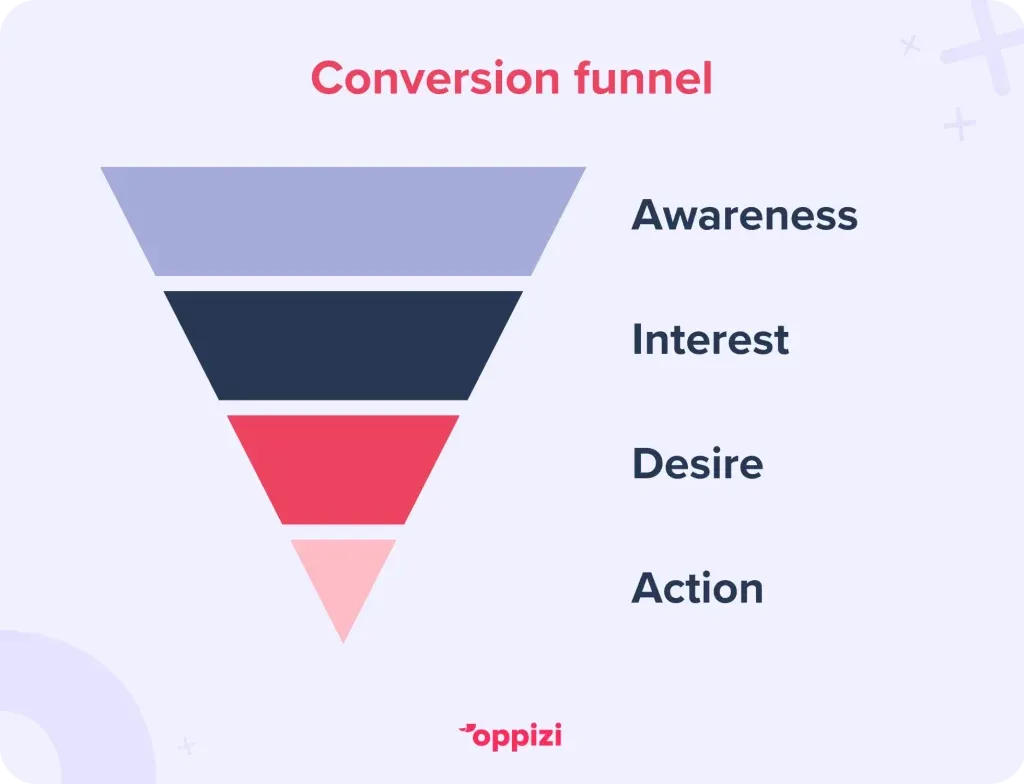
Using an email marketing platform can make this easier. These tools let you set up autoresponders, which automatically send emails when someone takes a specific action or after a certain time. For example, you might send a follow-up email 24 hours after someone subscribes. This helps build awareness and encourage action.
4. Content creation
Content creation is about producing useful information for potential customers. This includes blog posts, social media updates, white papers, press releases, video tutorials, and downloadable eBooks or PDFs.
Creating quality content helps you attract more traffic and boost sales. More content means search engines have more to index, increasing your chances of showing up in search results.
Focus on quality over quantity. Every piece of content should provide real value. For example, a tutorial should include clear steps and instructions that help users solve specific problems.
5. Paid advertising
Paid advertising involves spending money to place ads where your target audience is likely to see them. This includes traditional media like radio, TV, magazines, and billboards, as well as online platforms like search engines, websites, and mobile apps.
While SEO can take time to work, paid ads can quickly bring traffic to your site. A good mix of online and offline advertising can help you reach more people.
No matter where you advertise, make sure your ads connect with your audience. Address the main problems your potential customers face. Use your ads to show how your products or services can provide effective solutions.
How to track the growth of your website
Tracking your website’s growth is important. It helps you see which marketing strategies are working and which ones need changes. By monitoring your site’s performance, you can spot trends, improve user experience, and increase conversions.
Use the analytics tools that come with your content management system (CMS), email marketing platform, and social media ads. These tools provide metrics to track website traffic and other key points.
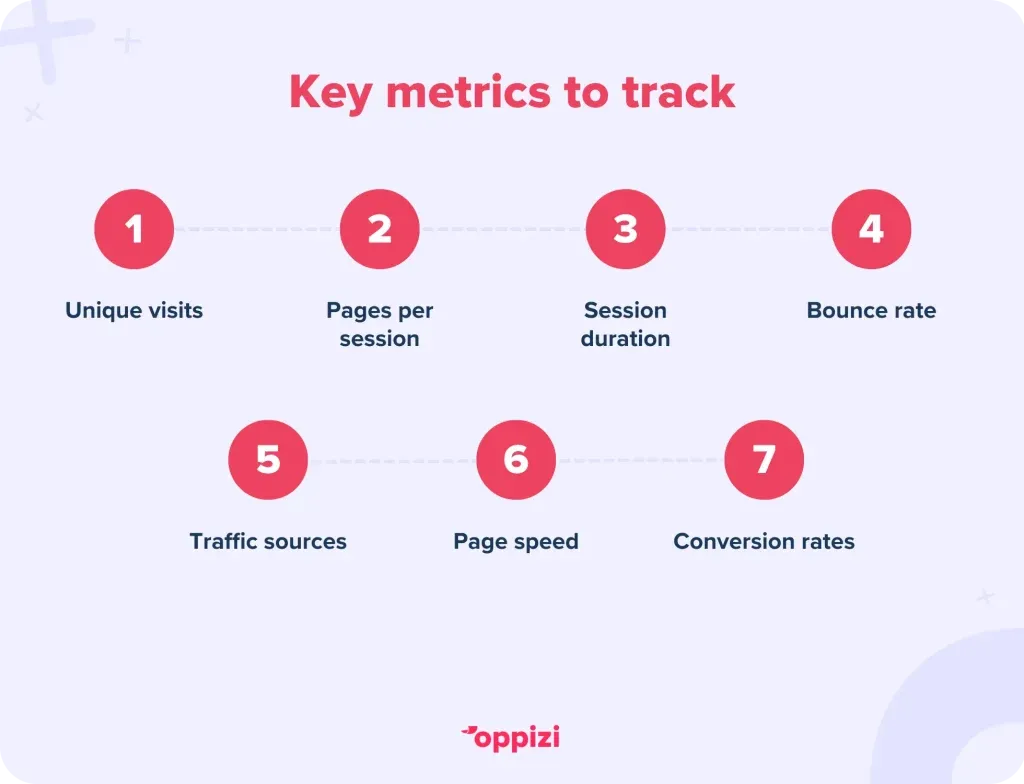
Here are the most important metrics to monitor:
- Total unique visits
- Pages per session
- Session duration
- Bounce rate
- Traffic sources
- Page speed/load time
- Conversion rates
Focus on metrics that you can measure. For example, track how many visitors take specific actions on your landing pages.
1. Total unique visits
Keep an eye on your overall web traffic, especially after launching marketing campaigns or improving your SEO. If you see more unique visits, it likely means your efforts are paying off. Analytics tools often call visits “sessions.”
A session starts when a visitor opens a page on your site and ends when they leave or stay inactive for 30 minutes.
2. Pages per session
This metric shows whether visitors are exploring your website or leaving after one page. It tracks how many pages each user visits during their session. If the number is low, it might mean users aren’t finding what they need.
Consider adding links and anchor text in your content to encourage visitors to explore more.
3. Session duration
Session duration measures how long visitors stay on your web pages. A good landing page or blog post should keep users engaged for several minutes. If they leave quickly, your content might not be connecting with them.
To improve this, break long paragraphs into smaller ones and use high-quality images to make your content more appealing.
4. Bounce rate
Bounce rate tells you the percentage of visitors who leave your page without taking any action. For instance, if someone visits a landing page but doesn’t subscribe to your newsletter or click to another page, that visit counts as a bounce.
A high bounce rate means your content might not be engaging visitors. To reduce this, try adjusting your content, offers, or layout to encourage more interaction.
5. Traffic sources
Knowing where your traffic comes from helps you understand how well your marketing is working. Tools like Google Analytics can show traffic sources, such as:
- Organic (from search engines)
- Direct (typing your URL directly)
- Social (from social media)
- Email (from your email campaigns)
- Referral (from links on other websites)
If organic traffic goes up, your SEO strategies are likely working. Changes in direct traffic might come from offline marketing, like TV ads or flyers.
6. Page speed/load time
Page speed affects user experience. If your pages take too long to load, visitors will leave for faster sites. Google recommends a load time of one to two seconds, but the average page loads in over 10 seconds on desktop and more than 27 seconds on mobile.
To improve load times, optimize images by reducing their size and resolution. Aim for a resolution of 72 PPI for web images. This is much lower than images from cameras or smartphones, which can be 480 PPI or higher.
7. Conversion rates
Conversion rates are crucial for seeing how well your landing pages turn visitors into leads or customers. Higher conversion rates usually mean lower bounce rates. If you see high bounce rates, your conversion rates may be low, too.
Low conversion rates might mean visitors aren’t interested in your offer or content. To attract more visitors who are likely to convert, do keyword research and use relevant phrases in your web content, ads, and social media posts.
How to get more people to buy off your site
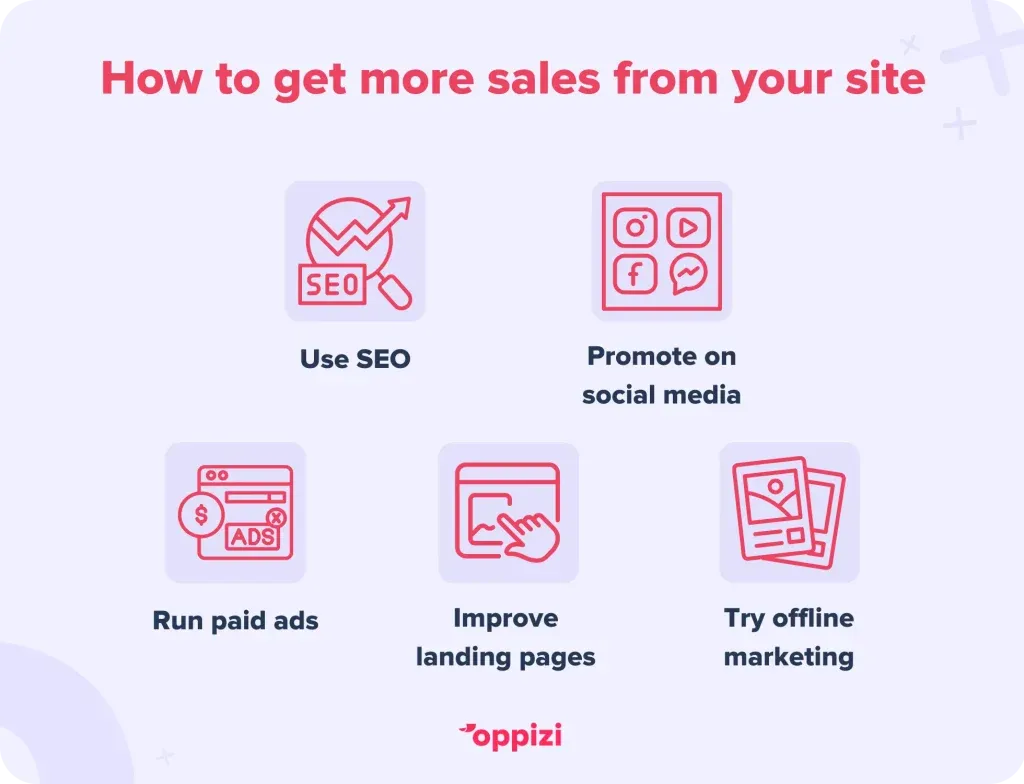
Increasing sales on your website takes good marketing and advertising strategies. It starts with bringing visitors to your site. Then, you convert those visitors into leads and nurture them into paying customers. Here are some effective ways to achieve these goals:
- Search engine optimization (SEO)
- Social media marketing
- Pay-per-click advertising
- Conversion optimization
- Offline marketing
Using these strategies can boost your traffic, conversion rates, and overall sales.
1. Use SEO to increase sales
Search engine optimization (SEO) is key to driving organic traffic to your site and improving sales. Focus on attracting the right visitors who are likely to buy.
Long-tail keywords are especially useful. These phrases usually contain three or more words and are more specific. For example, “how to boost website sales” is a long-tail keyword that targets a specific search.
Using these keywords can help you attract visitors looking for specific solutions, leading to higher conversion rates.
Creating high-quality content is also important for SEO. Long blog posts and helpful tutorials provide value to your audience and give search engines more content to index. This improves your visibility in search results.
To enhance your SEO, consider:
- Choosing keywords with less competition
- Claiming your business listings on platforms like Google Business Profile
- Building backlinks from reputable websites
2. Use social media marketing to increase sales
Social media marketing offers many chances to boost sales. Here are some ways to do it:
- Quickly resolve customer complaints
- Engage with your target audience
- Share valuable content
- Use influencer marketing to promote your products
Set up business profiles instead of personal accounts. Business profiles look more professional and are needed for linking paid ads.
Social media platforms are great for learning about your customers. Use these channels to ask questions, respond to inquiries, and gather feedback. Engaging with users shows you value their input and can help improve your online reputation.
Share relevant content, like articles, videos, and original blog posts, to keep your audience informed and engaged. Focus on content that resonates with your followers.
It’s important to connect with customers on the platforms they use the most. Each social media platform—like Facebook, Instagram, TikTok, Twitter, Snapchat, and YouTube—has its own audience and marketing benefits.
Influencer marketing is another powerful way to reach a wider audience. Partnering with influencers who have large followings can quickly promote your products and services to potential customers.
For more tips on using social media to boost sales, check out our guide on influencer marketing and other social media strategies.

3. Use Pay-Per-Click advertising to increase sales
Pay-per-click (PPC) advertising is a great way to quickly bring in traffic that is likely to convert. Here are some common options:
- Social media ads
- Search engine ads
- Website display ads
- Podcast advertising
Social media ads show up right in users’ feeds, making them a good way to grab attention. Many people spend a lot of time on social media, which makes it a strong platform for advertising.
Search engine ads, like those on Google Ads, let you place your ads at the top of search results. You only pay when someone clicks on your ad, making this method cost-effective.
You can also display ads on websites, podcasts, and other online platforms using tools like DoubleClick or Amazon DSP.
4. Use conversion optimization techniques
Low conversion rates can hurt your SEO, social media marketing, and paid advertising efforts. Most visitors don’t buy on their first visit, so it’s important to optimize your landing pages with sign-up forms and lead magnets to capture email subscribers.
If a landing page has a low conversion rate, many potential customers may leave without signing up. Here are some ways to improve conversion rates:
- A/B split testing
- Updating existing content
- Focusing on a smaller niche
A/B split testing lets you compare two versions of the same content to see which one performs better. You can test different ads, landing pages, or emails. Change one thing at a time, like the headline or the ad copy. Track the results to find out what works best.
Updating your existing content can also help. If a landing page isn’t doing well, refresh it with better information. Go through the page to find areas that need improvement or content that can be removed.
Focusing on a smaller niche might improve your conversion rates, too. Instead of trying to reach everyone, tailor your content for a specific audience. Do some research to segment your market and focus your efforts on one niche at a time. This can help you connect with customers you might otherwise miss.
5. Use offline marketing to increase sales
Besides online marketing, offline marketing can also bring more visitors to your website. Here are some common offline advertising options:
- Television ads
- Radio ads
- Newspaper and magazine ads
- Flyer and pamphlet distribution
Traditional advertising methods like TV, radio, and print can help raise awareness of your products or services. However, distributing flyers often gives you a better return on your investment.
Flyers and pamphlets provide more detailed information than quick ads on TV or radio. They let you educate potential customers about what you offer. This approach is a form of content marketing because you’re helping people understand your products.
You can easily track how well your offline marketing works. For example, Oppizi is a great platform for planning and tracking your flyer campaigns.
Don’t forget, offline marketing isn’t just for your local area. You can distribute flyers and pamphlets to potential customers around the world. Oppizi operates in North America, Europe, and Australia, reaching over 60 major cities. Expanding your flyer distribution globally can help you grow your customer base.

Conclusion
In today’s world, having a website is crucial for any business. A professional website boosts your credibility and helps potential customers find you more easily.
Growing your website to increase sales takes time, but it’s not hard. Start by making sure your site looks good and works well on mobile devices. Use the latest SEO practices to raise brand awareness and attract organic traffic.
Once your website is set up, use effective marketing techniques to draw more visitors to your landing pages. Tools like conversion funnels, paid ads, and social media marketing can help increase your web traffic.
It’s also important to track your results. Keep an eye on key metrics, like total visitors and how long they stay on your site. This way, you can find areas that need improvement. By continually refining your pages and marketing strategies, you can boost your conversion rates and turn more visitors into loyal customers.
Grow the easy way
Launch your offline campaign in minutes with Oppizi. We print, deliver, and track, so you don't have to.