Last updated July 23, 2026
Digital may be popular, but radio does something it can’t. It speaks directly to people, in their cars, in their kitchens, on their morning walks. It doesn’t fight for attention. It already has it.
In this guide, we’ll show you how radio advertising still works in 2025. You’ll learn what makes a good radio ad, which formats work best, and how to buy airtime without wasting your budget. We’ll also show you real examples that prove the power of sound.
Whether you're a seasoned marketer or just getting started, radio belongs in your toolkit. This isn’t nostalgia. It’s smart strategy.
What is radio advertising?
Radio advertising promotes products or services through audio ads on AM, FM, or digital radio stations. You can air these ads during busy listening times, like morning and evening commutes, or on stations that reach specific audiences. This targeting helps brands connect with the right people.
Radio ads come in different formats, including:
- Short jingles that stick in your mind
- Announcer-led voiceovers
- Interview segments or sponsored shows
This variety lets brands share their messages in ways that fit smoothly into listeners’ daily lives.
Compared to podcast ads, which often target niche audiences, radio ads have a broader reach across different times and areas. While podcast ads can feel more personal since they are read by hosts, radio ads can reach large, diverse groups right when they are listening.
Do radio ads work in 2025?
Yes, they do! Radio advertising is still a great way to reach people and make an impact. It’s a trusted medium that captures attention during important moments in the day. This helps brands stay connected with consumers wherever they are.
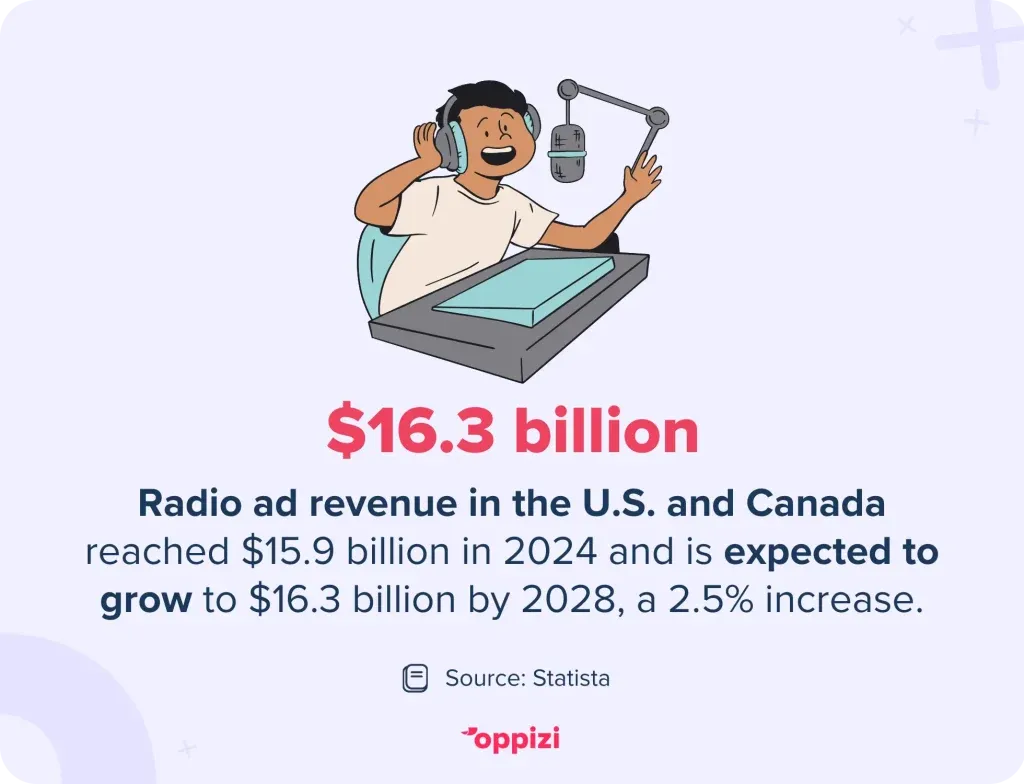
In 2024, radio ad revenue in the U.S. and Canada hit $15.9 billion. It’s projected to grow to $16.3 billion by 2028, a 2.5% increase over four years. This proves that radio is far from outdated.
Let’s look at the benefits of radio advertising and how it can fit into your marketing strategy.
How to buy radio advertising
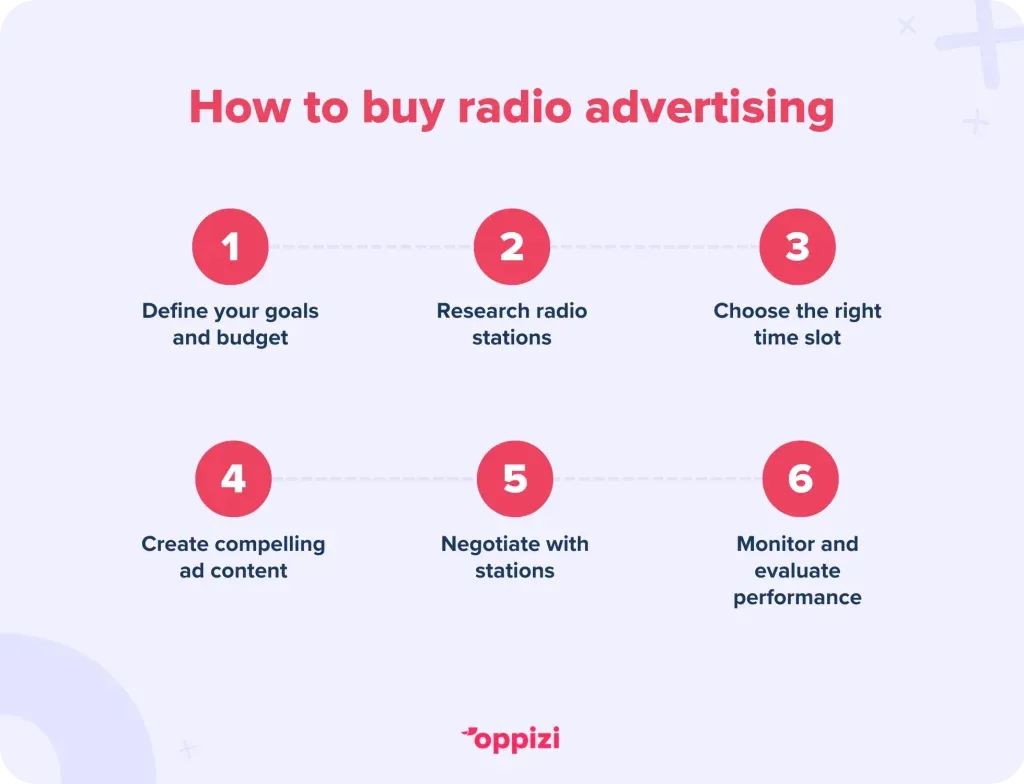
Buying radio advertising can boost your brand's visibility and reach. Here’s a simple guide to help you purchase radio ads effectively:
1. Define your goals and budget
First, think about what you want to achieve. Do you want to raise brand awareness, promote a specific product, or drive traffic to your website? Knowing your goals will help you set a budget. Decide how much you can spend on production and airtime.
Remember, radio ads can cost anywhere from a few hundred to several thousand dollars.
2. Research radio stations
Next, find radio stations that match your target audience. Look for stations that cater to the people you want to reach based on age, interests, or location. Check the station's format, like talk radio, music, or news, to make sure your message resonates with listeners.
3. Choose the right time slot
The timing of your ad is important. Prime time slots, like morning and evening rush hours, have more listeners but can be more expensive. Look at listener patterns and choose time slots that fit your goals and budget.
4. Create compelling ad content
Work with a copywriter or production team to create a strong radio ad. Keep your message clear and concise. Focus on a strong call to action. Use catchy jingles, memorable taglines, or relatable stories to make your ad stand out.
5. Negotiate with stations
Once you have your ad content and time slots ready, contact the radio stations for pricing and availability. Be ready to negotiate rates, especially if you want to run multiple ads over time. Many stations offer discounts for bulk purchases or long-term contracts.
6. Monitor and evaluate performance
After your ad campaign starts, keep track of how it performs. Look at metrics like website traffic, sales, or customer inquiries. Use this data to see how well your radio advertising is working and to make better decisions for future campaigns.
Radio ad examples
To understand how effective and creative radio ads can be, here are some great examples that show different approaches:
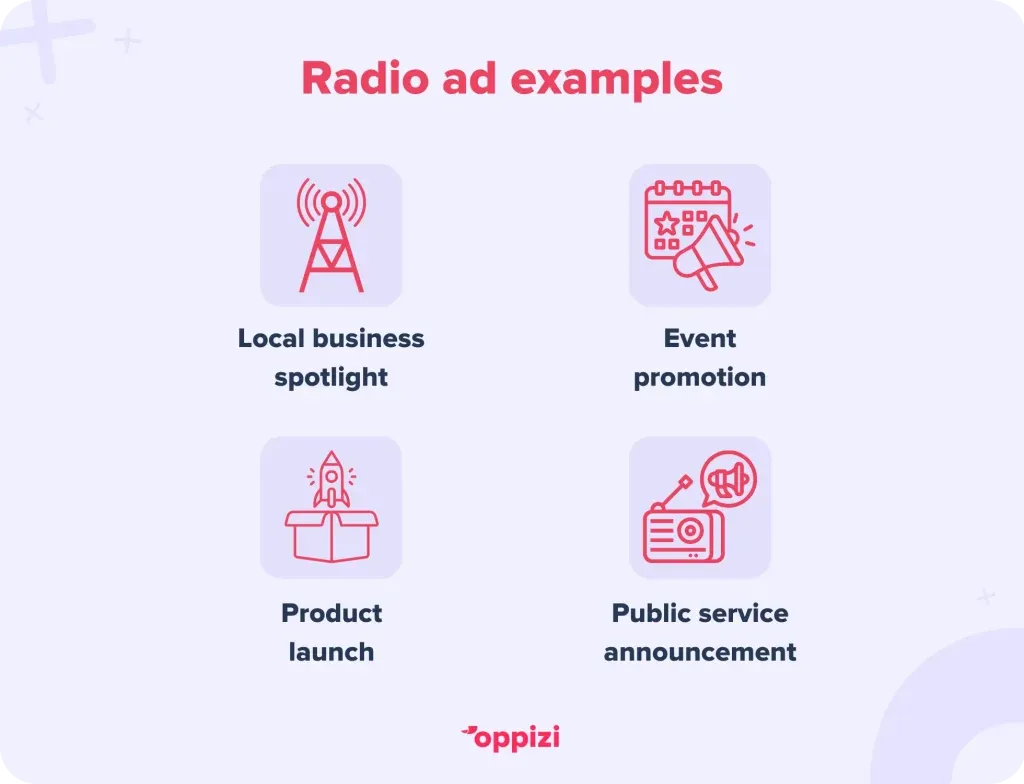
1. Local business spotlight
A small bakery in the community made a heartfelt radio ad. The owner shares the story of how the bakery started. The ad has a catchy jingle about their signature pastries and invites listeners to visit for a special promotion.
This personal touch helps build connections in the community and encourages people to support the bakery.
2. Event promotion
A local charity organization uses a radio ad to promote an upcoming fundraising event. The ad features testimonials from people who attended in the past. They share how the event positively impacted the community.
By telling these emotional stories and providing details on how to participate, the ad encourages engagement and boosts ticket sales.
3. Product launch
A national car brand launches a new model with a high-energy radio ad. It includes sound effects of the car revving and driving. The ad highlights the car's key features, like fuel efficiency and advanced technology, and offers a limited-time deal for test drives.
This exciting approach grabs listeners' attention and prompts immediate action.
4. Public service announcement
A health department creates a radio ad focused on flu prevention. In the ad, a doctor shares tips on getting vaccinated and practicing good hygiene. This ad provides important public health information in an easy-to-understand way.
It helps the community while reinforcing the health department's role as a trusted source.
Benefits of radio advertising
Radio advertising is often overlooked, but it’s still one of the best ways to reach people. Ignoring radio means missing out on a powerful and cost-effective way to connect with your audience. Here are some key benefits of radio advertising:
1. Cost-effective marketing channel
Compared to other traditional media like TV or print, radio is budget-friendly. Producing radio ads is usually affordable, and the cost to air them is much lower than TV slots. For businesses with tight budgets, radio is a great way to reach thousands—or even millions—without breaking the bank.
2. Broad and consistent reach
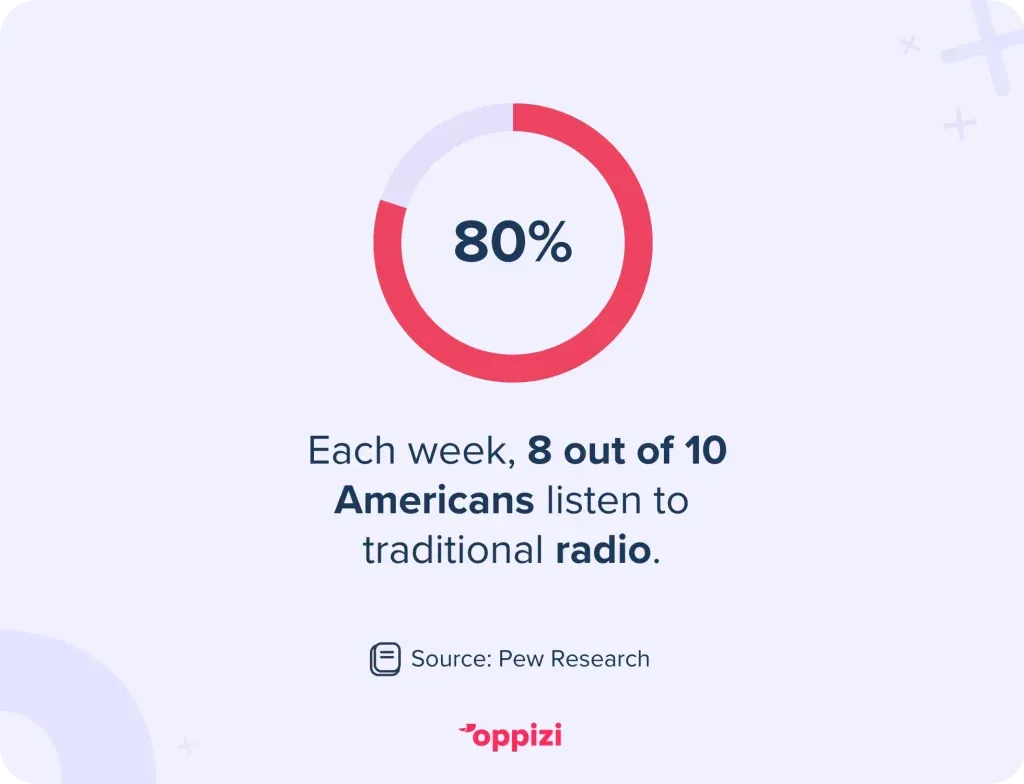
Radio is one of the most accessible media. About 8 in 10 Americans listen to traditional radio each week. This means radio ads can reach a wide range of people, whether you’re targeting the general public or specific groups based on the station and time.
3. Passive and repeated exposure
Unlike TV or print ads that need your full attention, radio ads are consumed passively. Listeners hear them while driving, working, or exercising. This creates chances for repeated exposure, which helps keep your brand in their minds.
4. Local targeting with regional impact
Local radio stations are great for businesses targeting specific areas. If you’re promoting a local event or growing a small business, local radio can help you connect with your community. Tailoring your message for local listeners makes it more relevant and effective.
5. High listener engagement
Radio audiences often feel a strong connection to their favorite stations and hosts. Ads that match the station’s tone or feature familiar voices blend seamlessly into programming. This makes it easier for listeners to remember your message and take action.
Potential downsides of radio advertising
Like any marketing method, radio advertising has its challenges. While it can be effective, it’s good to consider its limitations before adding it to your strategy. Here are some common downsides of radio advertising:
1. Creative limitations
Radio is only audio. You can’t use visuals to support your message. This makes it harder to grab attention or explain complex ideas. You rely on voice, music, and sound effects to engage listeners. This means strong writing and good production quality are essential.
2. Difficult to track performance
Tracking how well radio ads perform can be tricky. Unlike digital ads, which give you clear metrics like clicks and conversions, radio relies on indirect signs of success. You might look at website traffic, store visits, or sales increases after an ad runs.
Tools like promo codes and special landing pages can help, but measuring the return on investment (ROI) from radio ads is still challenging for many marketers.
3. Audience fragmentation
The radio market is very segmented. There are thousands of stations catering to different interests and regions. While this helps you target specific groups, it also spreads your audience across various channels.
To reach a broad and diverse listener base, you may need to run multiple campaigns on different stations. This can add complexity and costs to your planning.
Combining radio ads with other marketing channels
Radio works even better when you use it alongside other channels. Mixing it with digital or printed marketing helps you reach more people and get better results. Here’s how to make it work together:
Digital advertising
Pair your radio ads with things like social media, email, or online ads. You can tell people on Instagram or Facebook to listen for your ad at a certain time. You can also use retargeting so people see your brand online after hearing it on the radio. That way, your message sticks.
Printed materials
Flyers, brochures, or posters can help support your radio message. Add a QR code that links to a landing page or offer you mentioned in the ad. It gives people an easy next step and keeps your message consistent.
Event promotion
If you’re running an event, talk about it on the radio and back it up with printed invites or local posters. Using both helps you reach more people and boosts attendance.
When you combine radio with other channels, your message goes further. People hear it, see it, and remember it. That’s how you build a strong campaign without overcomplicating things.

Radio advertising FAQs
How much does a 30-second radio ad cost?
It depends on where and when your ad airs. A 30-second spot can cost anywhere from $200 to $5,000. Ads during busy times, like the morning or evening drive, usually cost more because more people are listening. Popular stations and cities with lots of demand also charge higher rates.
What are ads on radio?
Radio ads are audio messages played on AM, FM, or digital stations. They promote things like products, services, or events. Some are short and catchy, like jingles. Others are longer or sound like interviews or sponsored segments. The goal is to reach people while they’re listening, often during their commute or daily routine.
What are the best radio ads?
The best radio ads grab your attention and stick with you. They’re short, clear, and easy to remember. Good ones often use humor, a strong hook, a familiar voice, or a story that makes you care. The message is simple, and there’s always a clear next step, like visiting a website or calling a number.
What should a 30-second radio ad say?
A strong 30-second ad should include:
- A quick, catchy opening to hook the listener
- A clear message—what you're promoting
- A few key benefits or reasons to care
- A call to action—what you want people to do next
- Your business name and contact info
That’s it. Keep it simple and make every second count.

Conclusion
Radio ads still work. They’re affordable, they reach a lot of people, and they can help your message stick. If you know how to plan your ads, choose the right station, and pair radio with other tools like print or digital, you can build a strong campaign.
Want to reach people in real life too? Add printed ads to the mix. With Oppizi, it's simple. We handle the delivery, getting your flyers or postcards into the hands of real customers. You stay focused on your business. Get started today.