Last updated August 28, 2026
Do you think print advertising is old-fashioned? It’s time to think again. While everyone talks about digital marketing, print ads offer something special that digital can’t match—real, lasting engagement.
A magazine ad can sit on a coffee table for weeks. A direct mail piece goes straight into someone’s hands. Plus, studies show that print ads inspire 20% more action from consumers than digital ads do.
So, why does print advertising still work? And how can businesses use it effectively? This guide will give you the lowdown on print advertising, including its benefits, types, and smart strategies to make your campaigns shine.
What is print advertising?
Print advertising uses physical materials to promote products or services. This includes newspapers, magazines, brochures, flyers, direct mail, billboards, and more.
Just like digital marketing, the aim of print advertising is to attract potential buyers and influence their purchasing decisions with eye-catching visuals and strong messages.
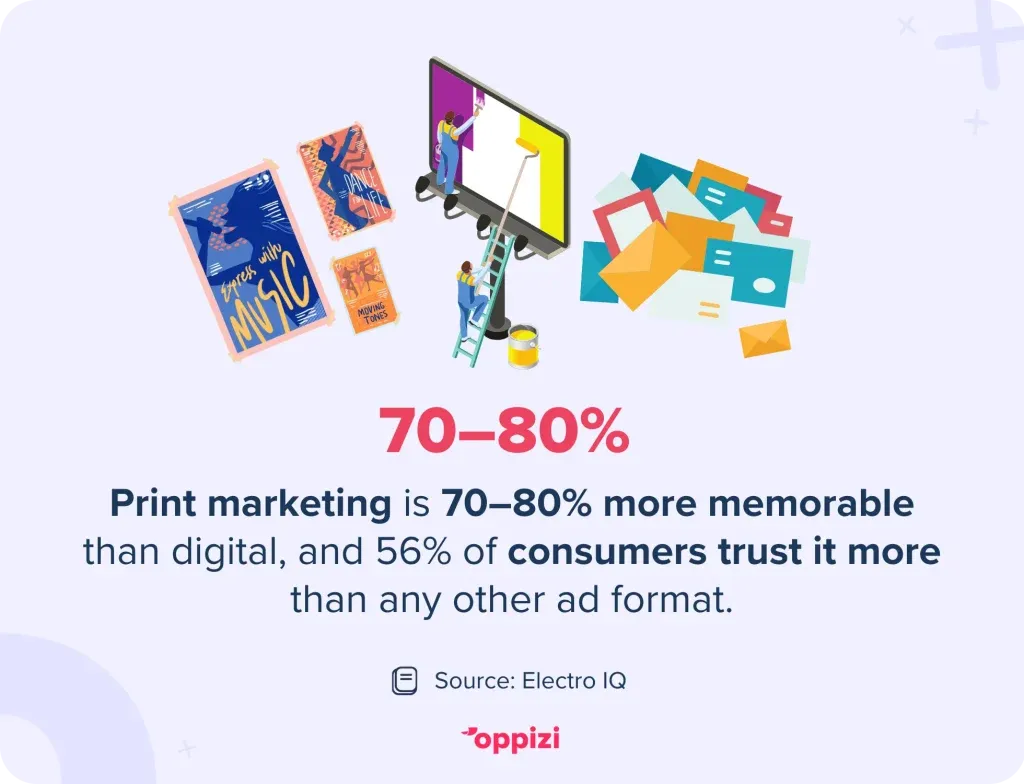
Print marketing is 70–80% more memorable than digital ads. In fact, 56% of consumers say they trust print more than any other type of advertising. So if you want your brand to be both memorable and trusted, print ads are a smarter choice than digital.
Advantages of print advertising
Print advertising has several unique benefits compared to digital marketing:
- Tangible and memorable: Readers can hold a print ad, making it more impactful and hard to ignore.
- Higher trust and credibility: People see print media as more reliable, which boosts your brand's authority.
- Less competition: There are fewer ads in print, so your message stands out more.
- No digital distractions: Print ads don’t come with pop-ups or auto-play videos that interrupt the experience.
- Better retention: Research shows that consumers remember print ads better than digital ones.
- Stronger response from niche audiences: Older consumers and specific market segments engage more with print than digital options.
While digital marketing is important, print advertising is still a powerful tool for building brand awareness and connecting with customers. By adding print to their marketing strategy, businesses can create stronger bonds with their target audience and see real results.
Types of print advertising: Finding the right fit for your business
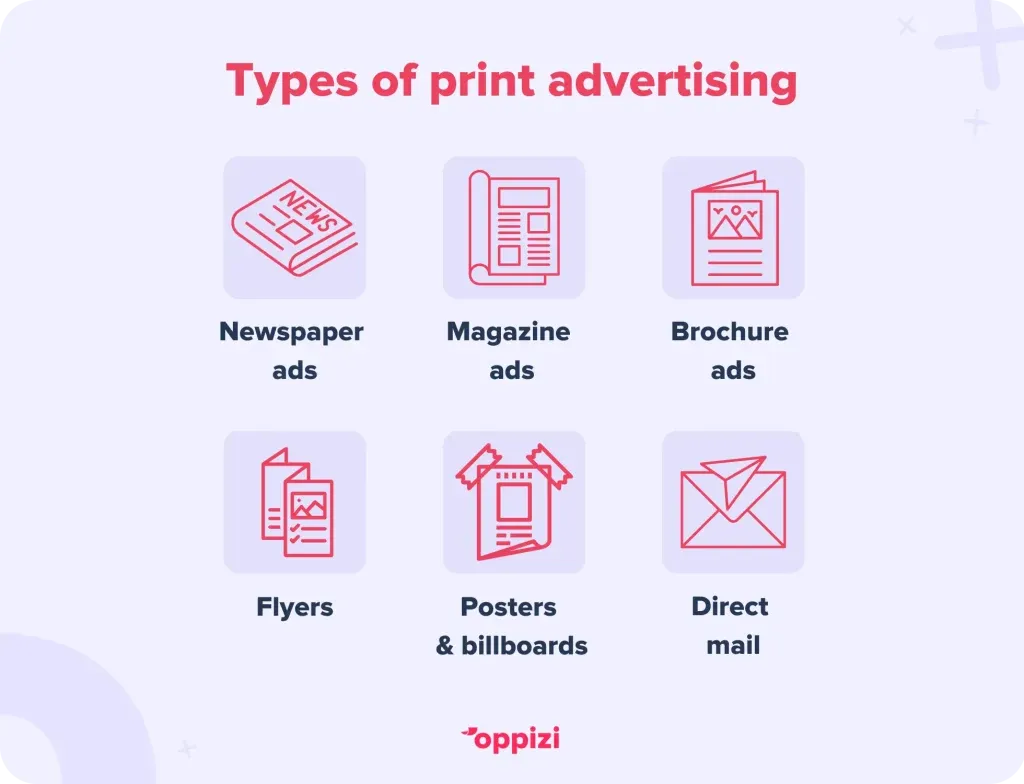
Print advertising comes in many forms to help businesses reach their audience. Whether you choose a flyer for a local event or a full-page newspaper ad, each type has its own benefits. Here’s a look at the most effective kinds of print advertising:
1. Newspaper ads
Newspaper ads are great for reaching a large audience. About 60% of adults aged 35 and older read newspapers weekly. This format is credible and widely read.
- Best for: Time-sensitive promotions, sales, and events.
- Targets: Older readers who rely on print news.
- Availability: Can be found in local and national publications.
2. Magazine ads
Magazine ads work well for businesses targeting specific markets. People often keep magazines for weeks, giving your brand longer exposure.
- Best for: Reaching audiences interested in fashion, business, health, and more.
- Benefit: High-quality print boosts your brand’s image.
- Shelf life: Magazines last longer than newspapers, so your message gets repeated impressions.
3. Brochures and flyers
Brochures and flyers are cost-effective tools to share clear information directly with potential customers. They’re perfect for local promotions and events.
- Distribution: Use as handouts, mailers, or at points of sale.
- Design: Eye-catching visuals help grab attention and convey messages.
- Best for: Targeting specific neighborhoods or niche audiences.
4. Posters and billboards
Large print ads like posters and billboards are excellent for building brand awareness in busy places.
- Best for: Outdoor advertising and public transit areas.
- Design: Simple and bold designs create immediate impact.
- Visibility: High visibility reinforces your brand message.
5. Direct mail campaigns
Direct mail lets businesses send targeted promotions straight to people’s mailboxes. Personalized postcards and catalogs can really boost engagement.
- Personalization: Using the recipient’s name and tailoring content increases response rates.
- Memory: People remember print mail better than digital ads.
- Effectiveness: Great for local marketing and reconnecting with past customers.
Personalized direct mail campaigns lead to higher engagement. When customers feel valued, they are more likely to act—whether that means making a purchase, visiting your website, or reaching out to your business.
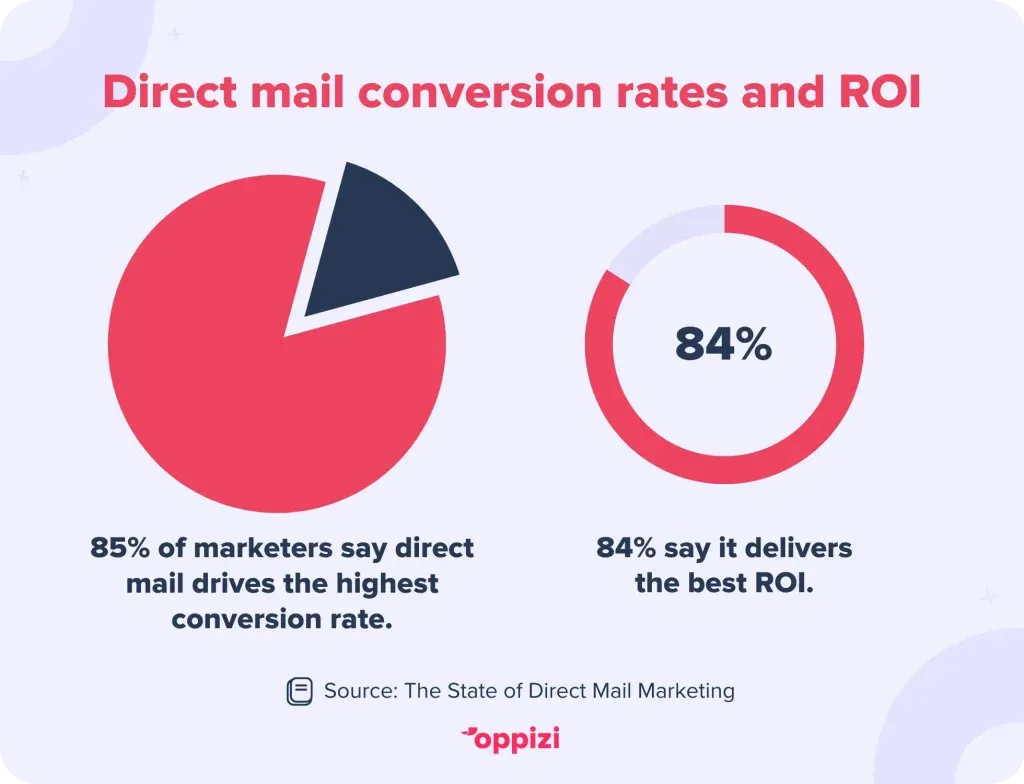
85% of marketers say direct mail delivers the highest conversion rate of any channel, and 84% say it offers the best return on investment. That’s why, despite the rise of digital marketing, traditional methods like direct mail haven’t disappeared—they’re still going strong.
Print ad examples
Great print ads do more than share a message. They grab attention, stir emotions, and inspire action. Here are some examples of print advertising that really stand out:
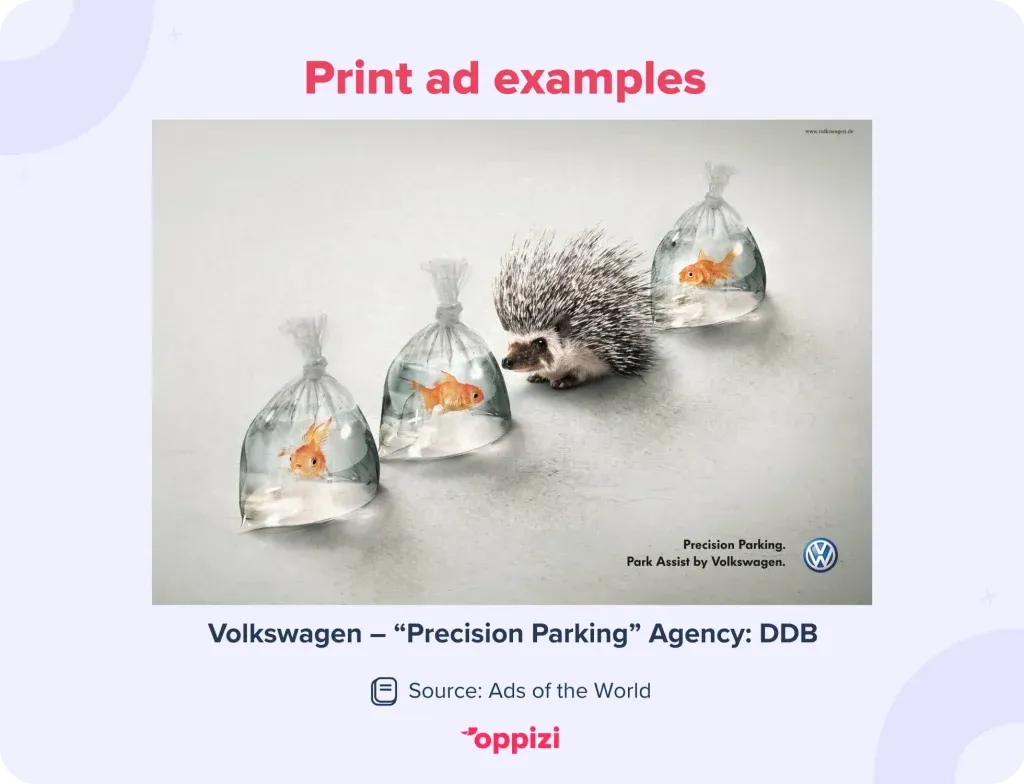
Volkswagen – “Precision Parking” Agency: DDB
Volkswagen's Precision Parking campaign used simple visuals to showcase their Park Assist feature. The ad featured a hedgehog neatly nestled between two plastic bags filled with goldfish. It clearly and creatively delivered the message.
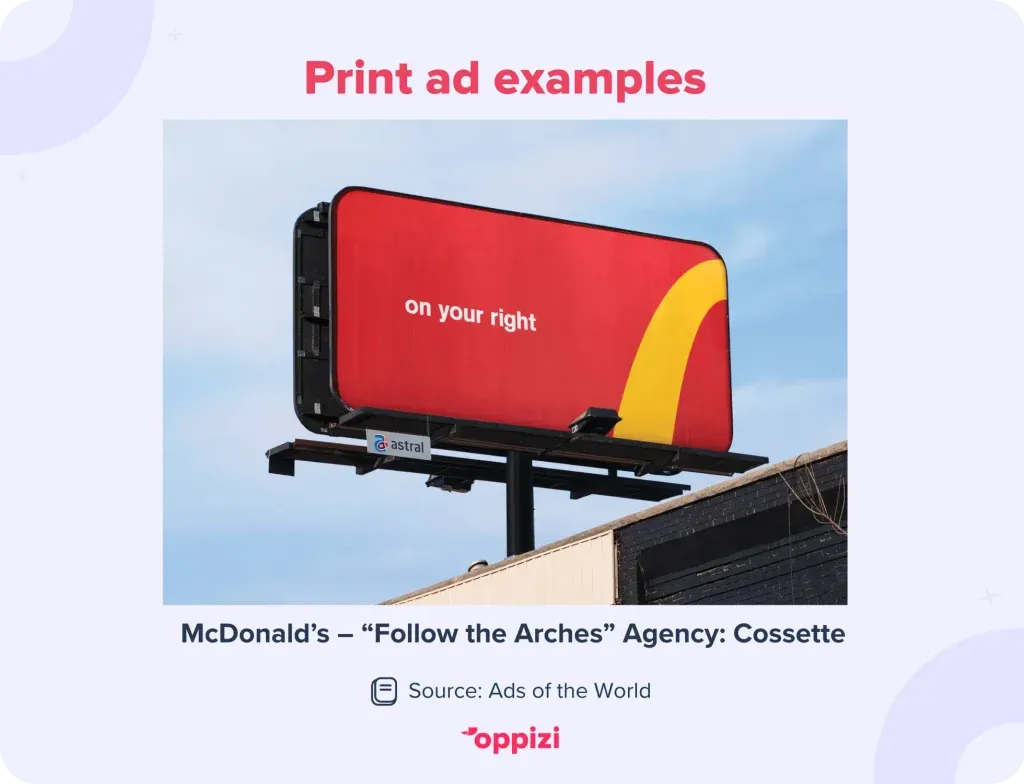
McDonald’s – “Follow the Arches” Agency: Cossette
McDonald’s turned its famous golden arches into a clever navigation tool. The ad showed just a part of the arch, guiding drivers to the nearest restaurant. It was simple but effective.
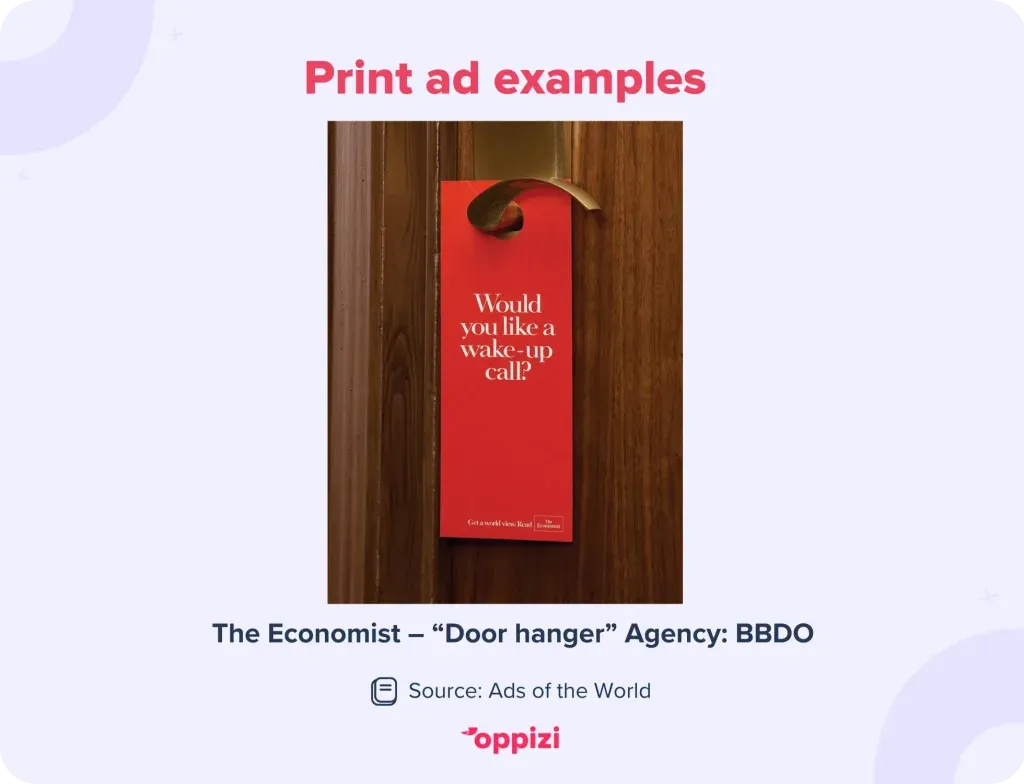
The Economist – “Door hanger” Agency: BBDO
The Economist has a memorable print ad with a red background and a simple white headline. This long-running campaign proves that print ads don’t need fancy visuals—just a strong, thought-provoking message.
How to create print ads that drive results
Adding print advertising to your marketing strategy? Great choice! To make sure your ads really make an impact, they need to grab attention, clearly communicate your message, and inspire action. Here’s how to create standout print ads:
- Know your audience: Understand who your ideal customer is. What are their interests and behaviors? Tailor your message to resonate with them.
- Use eye-catching design: Choose bold colors, engaging fonts, and strong visuals. This makes your ad more noticeable and keeps it in line with your brand.
- Highlight unique benefits: Show what makes your product or service valuable. Focus on how it solves your customers’ problems.
- Keep it simple: Use clean layouts and clear messaging. This helps people read and understand your ad quickly.
- Include a strong call to action (CTA): Tell readers what to do next. Whether it’s visiting your website, calling for more info, or redeeming an offer, make it clear.
- Leverage social proof: Use testimonials, reviews, or endorsements. These build trust and show potential customers that others value your product.
- Add interactive elements: Consider using QR codes, promo codes, or special offers. These connect print ads to the digital world.
- Test and optimize: Try different ad formats, messages, and placements. See what works best and adjust as needed.

Targeting the right audience with print ads
One big advantage of print advertising is the ability to target specific groups. Unlike digital ads that compete for attention online, print materials land directly in people’s hands. This also gives you the opportunity to use persuasive advertising that speaks directly to the needs and motivations of each audience segment.
For instance, geo-targeted flyer distribution helps you reach the right customers in specific locations. Services like Oppizi ensure your print ads go to the right people, which boosts engagement and conversions.
Print advertising services
At Oppizi, we know print advertising effectively connects your business with its audience. We offer various options, including flyers, direct mail, Every Door Direct Mail (EDDM), and more.

Our user-friendly dashboard allows you to track your campaign's progress and see how your ads perform, helping you maximize your investment. With our easy-to-use flyer builder, you can create beautiful flyers quickly, so you can focus on growing your business.
We are proud to be the choice of many leading international brands. Our proven strategies and commitment to quality make us the perfect partner for businesses looking to enhance their print advertising. Let us help you create impactful campaigns.

What are the 5 elements of print advertising?
The five essential elements of print advertising are:
- Target audience: Knowing who the ad is for so you can tailor the message.
- Headline: A powerful phrase that catches attention and conveys the main idea.
- Visuals: Striking images or graphics that enhance the message and draw in the audience.
- Body copy: Informative text that explains the benefits and features of the product or service.
- Call to action (CTA): A strong prompt that encourages readers to take the next step, like making a purchase or contacting the business.
Conclusion
Print advertising is not outdated. It’s a proven way to build trust, reach the right people, and make a lasting impression. Unlike digital ads that disappear quickly, print materials stick around, giving you a real connection that boosts engagement.
From newspapers and magazines to direct mail and billboards, each type of print ad has its own strengths that digital marketing can’t match. The key to success is simple: target the right audience, use appealing designs, and deliver a clear message.
By combining print with modern marketing strategies, businesses can create powerful campaigns that stand out. Want results you can measure and marketing they’ll remember? Launch your next print campaign with Oppizi.
Frequently asked questions
- What is a print advertisement?
A print advertisement is a way to promote products, services, or brands using printed materials. This includes things like newspapers, magazines, brochures, flyers, posters, and direct mail. Print ads are made to grab people’s attention with eye-catching visuals and strong messages that encourage them to take action.
- Is print advertising still worth it?
Yes, print advertising is still valuable. Even with digital marketing on the rise, print ads have unique benefits. They are tangible and credible, and they can reach specific audiences. Many people prefer print media because it offers detailed information without digital distractions. Studies show that print ads can lead to higher engagement and response rates, making them an important part of a marketing strategy.
- What are examples of print advertising media?
Here are some examples of print advertising media:
- Newspapers: Local and national publications that reach a wide audience.
- Magazines: Publications that focus on specific interests or demographics.
- Brochures: Informative materials handed out at events or stores.
- Flyers: Simple handouts used for promotions or events.
- Posters: Large visuals placed in public spaces to raise brand awareness.
- Direct Mail: Personalized marketing materials sent straight to people’s mailboxes.
- What are the 4 elements of a print ad?
The four key elements of a print ad are:
- Headline: The eye-catching text that sums up the main message.
- Visuals: Engaging images or graphics that grab attention and support the headline.
- Body copy: The main text that gives details about the product or service.
- Call to action (CTA): A clear instruction that tells readers what to do next, like visiting a website or calling for more information.
- What are the 5 elements of print advertising?
The five essential elements of print advertising are:
- Target audience: Knowing who the ad is for so you can tailor the message.
- Headline: A powerful phrase that catches attention and conveys the main idea.
- Visuals: Striking images or graphics that enhance the message and draw in the audience.
- Body copy: Informative text that explains the benefits and features of the product or service.
- Call to action (CTA): A strong prompt that encourages readers to take the next step, like making a purchase or contacting the business.