Last updated July 28, 2026
With 71% of consumers expecting personalized experiences, it’s now more important than ever for businesses to invest in personalization techniques. When personalized, direct mail not only captures attention but also fosters meaningful connections with recipients.
In this article, we’ll explore the essence of direct mail personalization, its benefits, effective personalization strategies, and address common questions surrounding this marketing technique.
What is direct mail personalization?
Direct mail personalization involves tailoring physical mail pieces to individual recipients based on specific data and insights. This can range from simple elements, like addressing the recipient by name, to more sophisticated strategies, such as curating content based on past purchases or preferences. The goal is to make the recipient feel valued and understood, thereby increasing the likelihood of engagement and response.

Benefits of personalizing direct mail
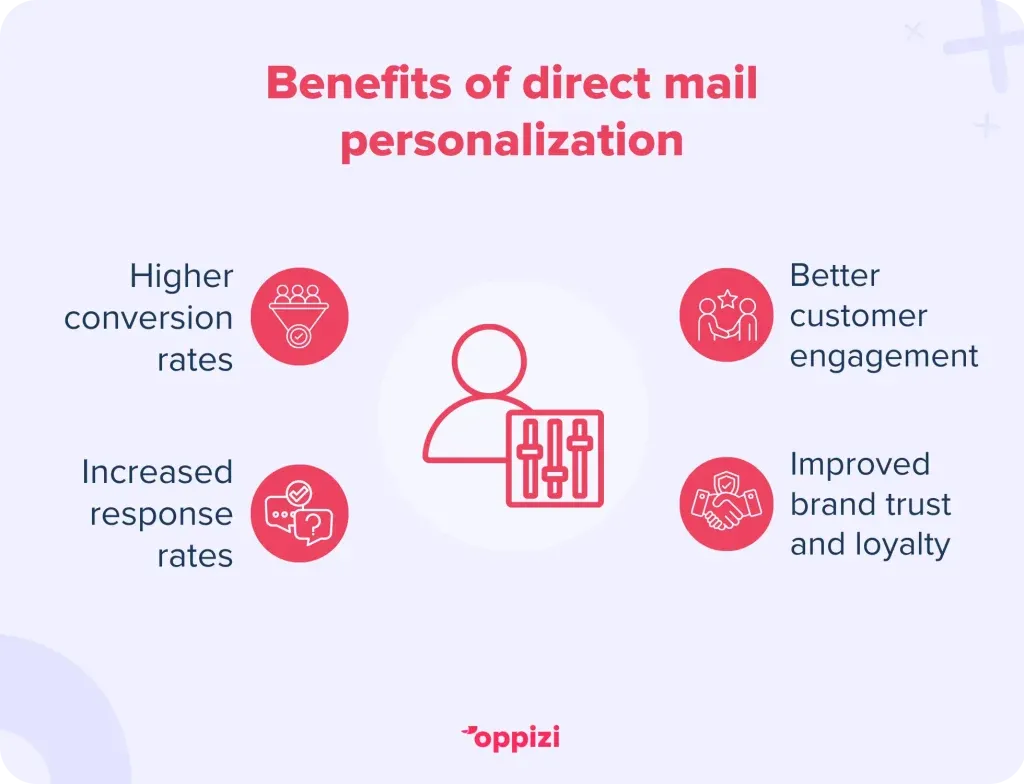
Enhanced response rates:
Personalized direct mail has been shown to significantly boost response rates. Adding a customer’s name to a direct mail piece can increase response rates by 135%, demonstrating the value of tailored messaging.
Improved customer engagement:
Tailored content resonates more with recipients, leading to higher engagement levels. When consumers feel that a brand understands and caters to their needs, they are more likely to interact and build a relationship with that brand. Additionally, 78% of consumers say they’d recommend a brand that uses personalization to their friends and family.
Higher conversion rates:
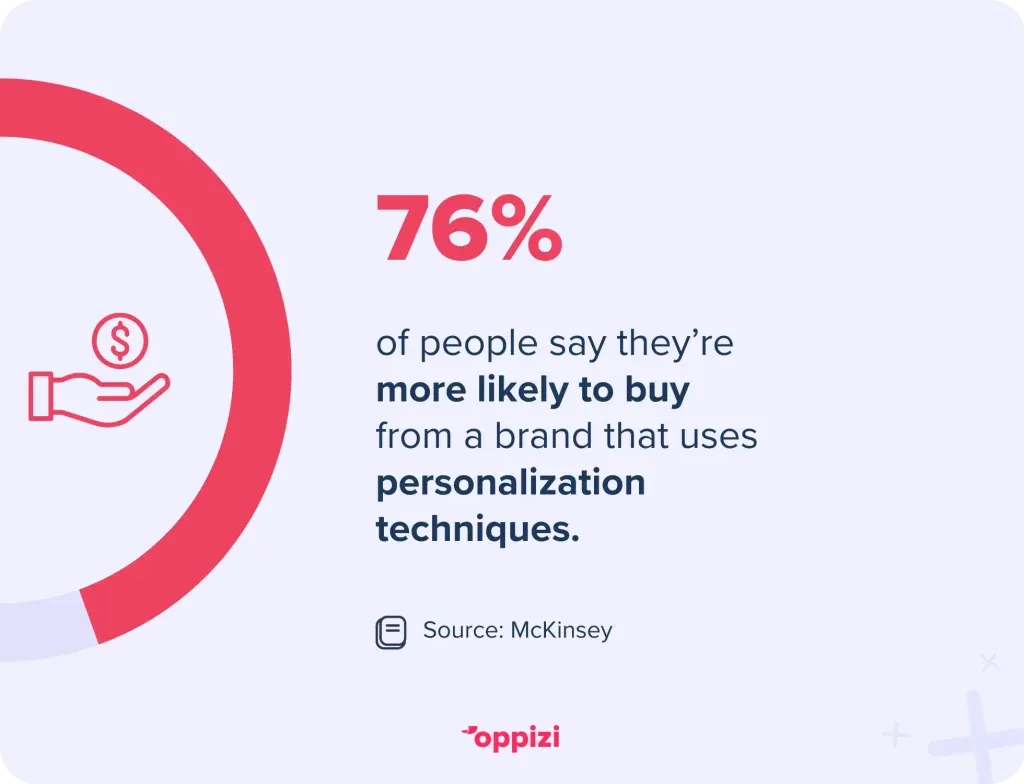
Personalization not only captures attention but also drives action. 76% of people say that they’re more likely to buy from a brand that uses personalization techniques.
Increased trust and loyalty:
Consumers are more likely to trust brands that invest in personalized communication. This trust fosters loyalty, leading to repeat business and long-term customer relationships.
Effective strategies for personalizing direct mail
1. Utilize variable data printing (VDP)
Variable data printing allows for the customization of text, graphics, and images on each printed piece without slowing down the printing process. This technology enables businesses to tailor each mail item to individual recipients.
2. Segment your audience
Divide your mailing list into segments based on demographics, purchase history, or behavioral data. This segmentation allows you to create targeted messages that resonate with each unique group. For example, in HVAC direct mail campaigns, you might send tailored offers to homeowners, businesses, or previous service customers to boost engagement and response.
3. Personalize imagery and content
Beyond addressing recipients by name, incorporate images and content that align with their interests or past purchases. For instance, a customer who recently purchased outdoor gear might appreciate receiving mail featuring camping or hiking imagery.

4. Incorporate personalized URLs (PURLs) and QR codes
Direct recipients to personalized landing pages using PURLs or QR codes. This integration bridges the gap between offline and online experiences, providing a seamless journey for the consumer.
5. Leverage triggered mailings
Set up automated direct mail sends based on customer interactions or milestones. Triggers like birthdays or purchase anniversaries provide a seamless experience that meets customers exactly where they are in their journey.
6. Handwritten notes
A genuine handwritten note, like a thank-you note, adds a personal touch that makes recipients feel truly valued.
FAQs about direct mail personalization
1. Why is personalized direct mail more effective than generic mail?
Personalized mail resonates more with recipients, making them feel valued and understood, leading to higher engagement, brand trust, and response rates.
2. How can I gather data for personalization?
Data can be collected through various channels, including customer surveys, purchase history, website analytics, and CRM systems.
3. How do I measure the success of a personalized direct mail campaign?
Success can be measured using metrics such as response rates, conversion rates, ROI, and customer feedback. Incorporating tracking mechanisms like PURLs or unique promo codes can aid in this process.

Conclusion
Incorporating personalization into your direct mail campaigns can significantly enhance their effectiveness, leading to higher engagement and conversion rates. As consumers continue to seek authentic and tailored experiences, businesses must invest in techniques like personalized direct mail to gain a competitive edge.
Ready to elevate your marketing strategy with personalized direct mail? Partner with Oppizi today to create an offline marketing campaign that resonates with your audience.