Last updated July 28, 2026
Everywhere you look, people are hit with digital ads. Phones, laptops, even streaming shows are full of them. But online isn’t the only place your customers live, and it’s not always where they’re paying attention.
While brands pour budgets into online ads, SEO, and paid social, there are blind spots that digital simply can’t cover. And this is where offline channels step in. From flyering to direct mail, offline marketing bridges the gap—meeting people in the real world, where impressions are tangible and connections last longer.
In this article, we’ll explore 13 blind spots digital misses but offline reaches, and how smart brands use them to grow faster, build trust, and stand out where others fade into the scroll.
1. Reaching the digitally disconnected
Not everyone is online. Older generations, rural communities, and people who choose to unplug are hard to reach with digital ads. As much as 25% of U.S. adults over 65 say they don’t use the internet, and 2.6 billion people worldwide are still offline.
Relying solely on digital means missing entire groups of potential customers—segments with purchasing power and loyalty to offer. These blind spots represent lost reach, weaker penetration, and untapped growth.
Offline marketing fills this void by reaching people where they are, ensuring your message connects with everyone, not just those constantly online. Flyers, posters, and direct mail put your brand in homes and hands, making sure no one is left out of your marketing.
With mail, you can either target entire geographical areas or focus on specific individuals most likely to engage if you have a list. Choosing the right approach comes down to understanding the difference between EDDM and direct mail and deciding which method best aligns with your goals.
2. Overcoming digital ad fatigue
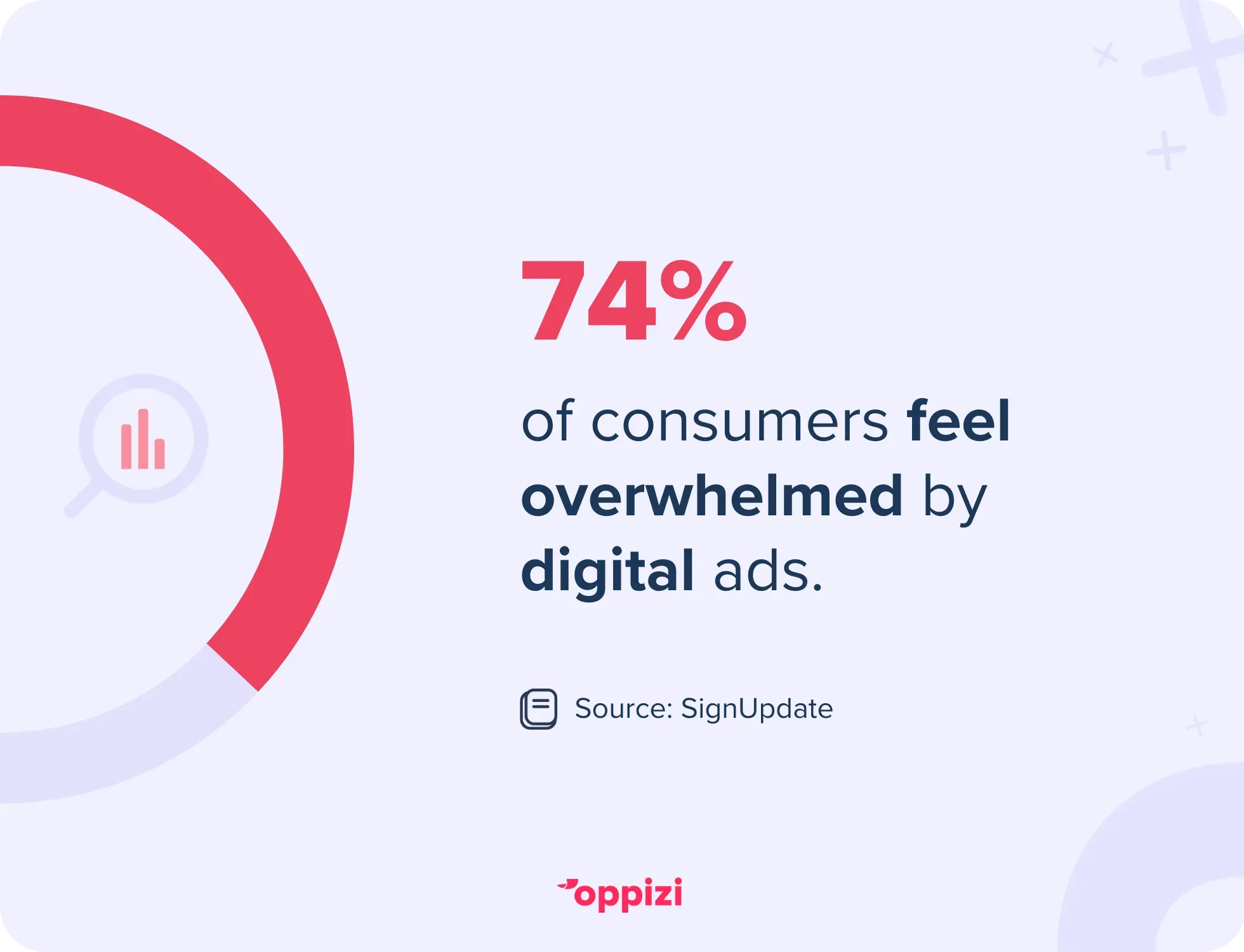
People are tired of online ads. Many scroll past, block, or ignore them. In fact, 74% of consumers say they feel overwhelmed by digital advertising. Banner ads show just how bad it is, with a 0.1% click-through rate, meaning 99.9% go ignored.
This constant bombardment creates a kind of digital fatigue, where even well-targeted ads struggle to make an impact. Offline marketing bypasses this overload, giving your message a clear space to be seen and engaged with, even if only for a brief moment.
Physical marketing, on the other hand, is much harder to skip over. A flyer given to you personally as you walk down a busy street, or a piece of mail delivered to your doorstep catch attention. These tangible touchpoints break through the noise, giving your brand the presence and staying power digital alone can’t achieve.
3. Creating tangible brand presence
Digital ads disappear in seconds. The average attention span on an online ad is dropping and is now only 2.2 seconds. That fleeting nature makes it hard for brands to leave a lasting impression or communicate key messages effectively.
Offline materials, on the other hand, linger in the environment, giving people more time to notice, process, and remember your brand.
Print lasts longer. Flyers stay on kitchen counters, posters remain in view, and mail often gets revisited. Print ads also stick in people’s minds, with recall rates 70–80% higher than digital ads.
Just Eat proved this by partnering with Oppizi. Their offline campaign in Paris saw 8,000 flyers handed out in just three hours, generating more than 250 app orders. Almost half of their offers were redeemed within a week, with more coming later. Flyers created results that went far beyond the moment they were given out.
4. Triggering in-person impulse decisions
Did you know that most impulse buys happen offline? About 62% of grocery sales are spur-of-the-moment decisions, and 20–25% of convenience store purchases are the same. These spontaneous decisions are often influenced by what shoppers see and experience in the moment.
Digital ads can’t replicate that physical context. A banner on a phone can suggest a product, but it can’t nudge a shopper who’s already standing in the store, ready to buy.
Flyers, posters, and point-of-sale displays influence shoppers right as they make decisions. Signs also pull people in, with 76% of consumers saying they’ve entered a new store because of signage alone. These offline triggers turn casual interest into immediate action.
5. Building local trust and familiarity
Digital ads can feel distant or intrusive. Physical marketing feels more real and rooted in the community. This sense of tangibility and local presence helps build trust, making people more likely to engage with your brand.
Door drops, posters, and local events create a sense of belonging. People also trust print more. In fact, 82% say they trust print ads most when deciding what to buy.
6. Cutting through algorithm noise
Online reach depends on algorithms that are always changing. Organic social reach is traditionally very low. Instagram posts average about 3.5% reach, while Facebook is around 1.2%.
That dependency creates a blind spot: brands can’t predict or control who actually sees their message. Campaigns become inconsistent, vulnerable to changes in platform rules, and often invisible to the very audiences they’re meant to reach.
Offline marketing bypasses that noise completely. Marketing materials like flyers, posters, and billboards don’t rely on algorithms. They are always seen. More than 90% of U.S. adults notice an out-of-home ad each month, making offline exposure steady and dependable.
7. Boosting memory retention
Digital ads fade quickly. Only 44% of people remember a brand from a digital ad after one week. That short memory window makes it difficult to build brand recognition or customer loyalty through digital alone.
Print materials stay in people’s minds longer. Flyers, posters, and direct mail reach 75–77% recall, far higher than digital ads. That lasting impression means your brand isn’t just seen; it’s remembered when purchase decisions happen.
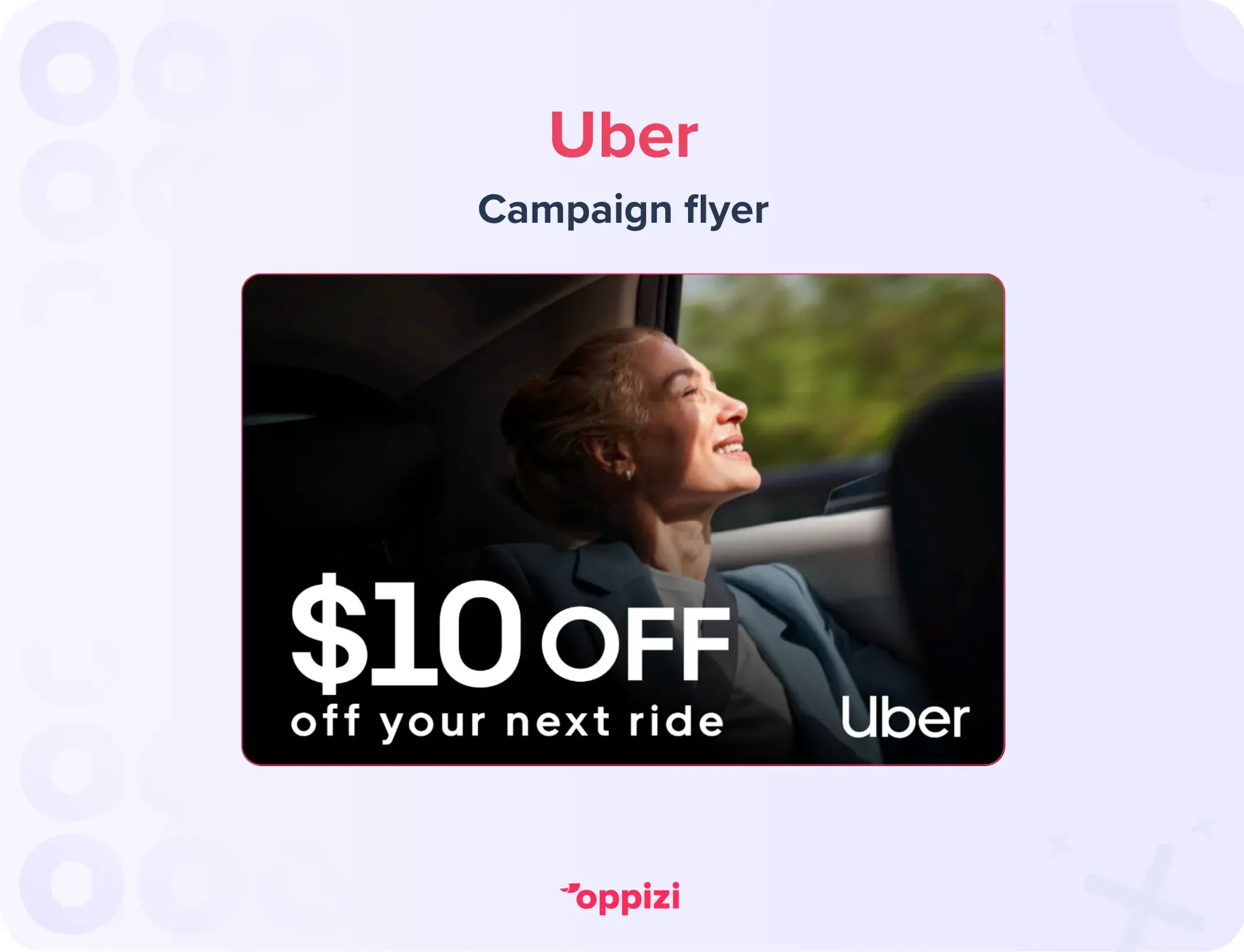
Uber demonstrated the power of offline marketing when it partnered with Oppizi to run flyering campaigns across Australia and New Zealand. Over the course of a year, more than 3 million flyers were distributed, making flyering Uber’s most efficient customer acquisition channel. For some businesses, flyers don’t just work; they outperform every other channel.
8. Creating human-to-human interaction
Clicks and likes don’t build trust. Digital engagement often feels transactional. People may interact with a post or ad, but that doesn’t always translate into genuine connection or loyalty. Without that deeper connection, digital campaigns risk being forgettable once the scroll continues.
In-person marketing feels real. Talking with brand representatives or joining live experiences shapes how people see a brand. In fact, 72% of people say attending an event makes them view a brand more positively.
9. Standing out in overcrowded digital channels
People face thousands of ads online every day. The average person is exposed to hundreds of ads and marketing messages every day. It’s no wonder most get ignored or forgotten. With so much noise competing for attention, even creative or well-targeted digital ads can quickly get lost in the shuffle.
Physical marketing stands apart because the space is less crowded. Each flyer, poster, or piece of direct mail creates a personal, face-to-face moment with your brand. Without competing for clicks, your message captures attention, builds familiarity, and drives action in ways digital simply can’t.
10. Reaching people in transition spaces
Digital ads miss people during offline moments, like commuting, shopping, or attending events. About 140 million Americans commute daily, with 69% driving alone. That’s a huge window of untapped attention where digital simply can’t reach. Offline channels also open the door to quieter, more effective stealth marketing that slips past ad fatigue and actually registers.
Posters, flyers, and event activations reach people during these times. Offline also drives online action. In fact, 66% of people took action on their phone after seeing an outdoor ad.
THE ICONIC used this approach with Oppizi. Their campaign delivered flyers across busy areas and gained 53,000 new customers. The brand built awareness and increased sales in a way that was cost-effective and measurable. It shows how offline ads can bring in customers by focusing on the right parts of a city.
“Flyering is one of the most effective ways for restaurants and delivery services to acquire new customers. The difference between a successful and failed campaign comes down to targeting. Delivering flyers outside your delivery zone wastes resources and limits results. The key is hypertargeting areas where potential customers can access your service and are most likely to convert.” — Francesco Bertolo Díaz, US Operations Manager, Oppizi
11. Reducing reliance on data and cookies
Privacy laws and cookie changes are making online targeting less reliable. As a result, brands are losing precision in how they reach and track audiences online, making digital campaigns less efficient. This uncertainty forces marketers to constantly adapt strategies, often increasing costs while delivering weaker results.
Offline marketing avoids those issues. Flyers, posters, and direct mail reach people directly without relying on third-party data. What's more, spending on out-of-home advertising is projected to hit $25.4 billion by 2029, showing continued effectiveness
12. Delivering authenticity and credibility
Many people don’t trust online ads, especially pop-ups or influencer posts. This skepticism makes it harder for brands to earn credibility through digital channels alone. When ads feel intrusive or staged, they can damage a brand’s reputation instead of building it.
Studies show 76% of people trust direct mail, far more than social media ads (43%), online banners (39%), or pop-ups (25%). That’s because print feels more credible. A flyer or poster carries weight that digital often lacks.
13. Engaging the multi-sensory experience
Digital ads only engage the eyes, and often in a passive way. Because they’re so limited, they rarely create an emotional or memorable experience. This narrow engagement means people often forget digital ads almost as quickly as they see them.
Print and in-person marketing engage more senses. People can touch and hold a flyer. Events add sound, interaction, or even taste. This deeper experience drives stronger recall. That’s why 89% of people remember receiving a flyer, more than any other form of advertising.
Why Oppizi is the leader in offline marketing
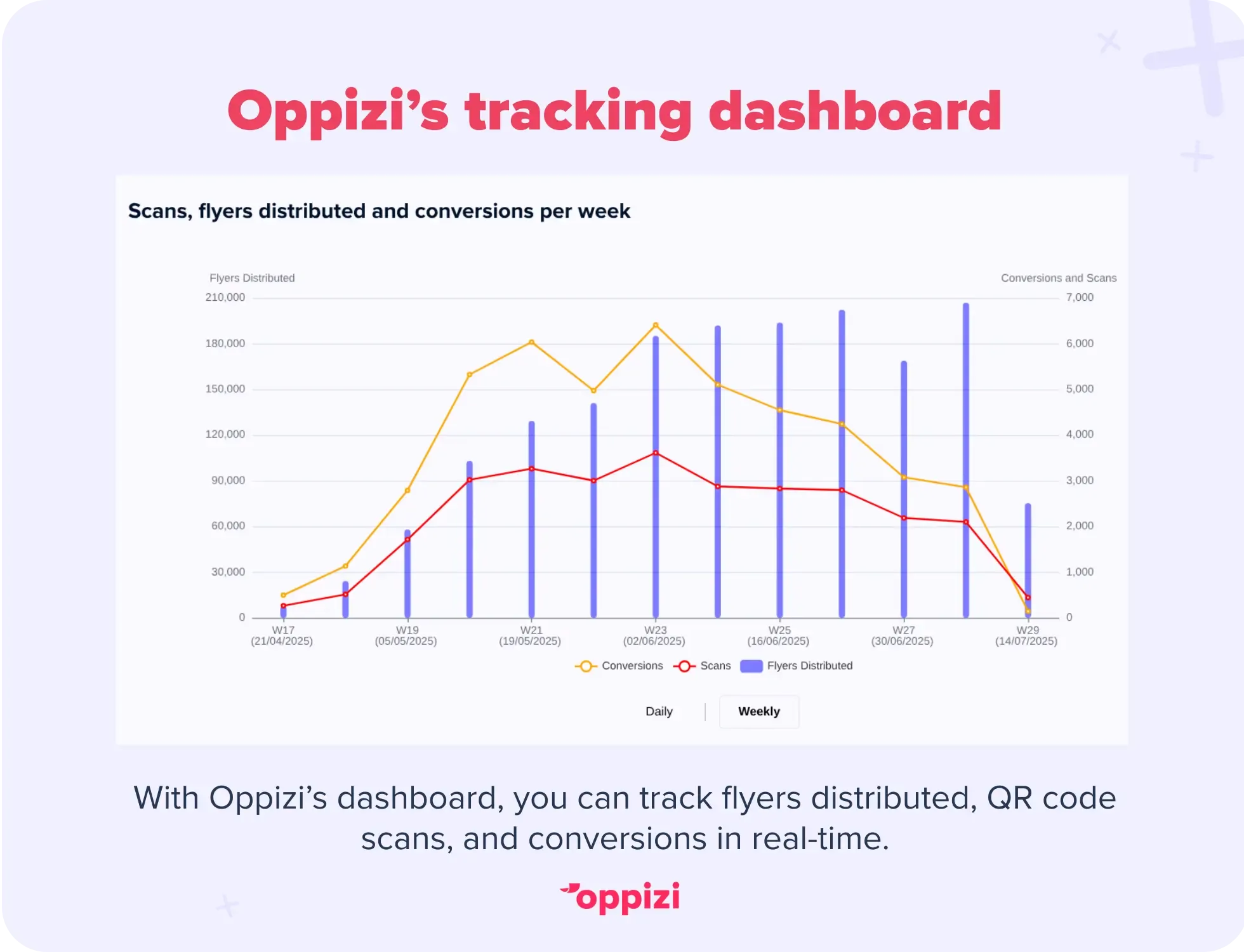
When it comes to offline marketing, Oppizi delivers more than distribution. Every campaign is trackable in real time with dashboards, QR codes, and promo codes that prove ROI. From targeting and creative design to execution and performance review, our team manages the entire process—backed by global reach and precise, data-driven insights.
With more than 10 years of experience and operations in 12 countries, Oppizi gives businesses a scalable and data-driven way to win new customers through offline marketing.
FAQs about offline marketing
1. How can I measure the ROI of an offline campaign?
With providers like Oppizi, it's easy to track offline marketing through our campaign dashboard, which displays tracks results in real time using promo codes, QR codes, and unique URLs. You can view metrics like cost per order, conversion rates, and revenue in a live dashboard. This makes offline campaigns as measurable as digital ones.
2. Is offline marketing scalable for large brands?
Yes. Oppizi operates in 12 countries across the U.S., Europe, Oceania, and Latin America. Campaigns can be launched in multiple cities or countries with the same level of quality and tracking.
3. What types of businesses see the most success with offline campaigns?
Offline marketing works especially well for businesses that want to build local presence, drive impulse decisions, or reach people who are less active online. We’ve seen strong results in retail, food delivery, fashion, real estate, hospitality, healthcare, and more.
Find the winning combination
Offline marketing gets attention in ways digital can’t. It builds trust, drives action, and leaves a lasting impression. Just Eat, Uber, and THE ICONIC have all shown how flyers and in-person activations deliver growth, stronger recall, and real customer loyalty. Now it’s your turn.
With Oppizi’s easy-to-use platform, you can plan and launch an offline campaign in minutes with just a few clicks. Get started today.