Last updated July 28, 2026
If a channel can’t be measured, it’s hard to defend investing in it. Tracking and measurement are what allows marketing teams to prove ROI, justify budget allocation, identify what’s working and what isn’t, and turn campaign results into repeatable, scalable opportunities.
The same standards should apply when considering offline marketing as part of your overall strategy.
Modern offline channels are highly measurable. When executed properly, direct mail, flyering, and other offline tactics can generate rich data, from engagement signals to conversions and return on investment. With the right infrastructure in place, you can have offline campaigns that allow you the same level of granular insight as the digital ones.
This article takes an in-depth look at how traditional offline channels can be tracked, evaluated, and optimized with confidence.
Offline used to be hard to measure
For a long time, offline campaigns lacked direct feedback loops. Once materials were distributed, there was little visibility into who saw them, how they engaged, or whether that exposure led to a conversion. Measurement often relied on indirect signals like regional sales lifts, brand surveys, or foot traffic trends. While still useful insights, these could be quite imprecise estimates.
Operational visibility was also limited. Distribution was difficult to verify and reporting was manual and delayed, if at all present. As digital marketing matured, the contrast became even sharper. Online channels offered immediate visibility into clicks, conversions, and cost efficiency, while offline continued to be associated with less actionable data.
Today, the tools, processes, and performance expectations that defined digital marketing have moved into offline execution, fundamentally reshaping how offline campaigns are tracked and optimized.
How offline campaigns are tracked today
Modern offline tracking involves capturing real-world interactions as they happen and connecting them directly to digital analytics and performance data.
By linking physical touchpoints to online actions, these tools make it possible to see who engaged, how they responded, and what outcomes resulted. The result is end-to-end visibility across channels that were once considered unmeasurable.
Here are a few of the offline-to-online connectors that make this level of measurement possible:
QR codes
QR codes placed on flyers or mailers are one of the most common ways to bridge offline and online, turning these materials into measurable touchpoints.
Each scan can be tracked by campaign, location, or creative, making it possible to see exactly how users engage and what happens after they land online. Dynamic QR codes also allow teams to update destinations, run tests, and track performance over time without reprinting materials.

Tracked URLs
Custom URLs and vanity links placed on offline materials make these interactions analytics-ready without compromising on readability. Behind the scenes, these URLs redirect through tracking layers that capture source, campaign, and behavior data before sending users to the final destination. This makes it possible to track visits, conversions, and revenue from offline placements just like any digital channel.
Promo codes and offers
Unique promo or discount codes provide a direct link between offline exposure and conversion. By assigning specific codes to campaigns, locations, or distribution waves, marketers can track redemption rates, attribute revenue, and compare offline performance across different initiatives, both online and in-store.
Dedicated phone numbers
Unique phone numbers can be assigned to individual campaigns or placements, allowing teams to track call volume, duration, and outcomes, and connect those interactions back to leads or sales in a CRM.
NFC & proximity-based interactions
Near Field Communication (NFC) tags embedded in mailers, cards, or packaging allow users to tap their phone to trigger a digital action. They track taps in a similar way to QR scans and are useful for events, retail, and experiential campaigns.
Using these tracking methods, offline activity can now be tied directly to conversions, cost efficiency, and revenue. Subsequently, that leads to clearer attribution, faster optimization, and more confident budget decisions. You can plan, test and scale offline campaigns as efficiently as you do your online ones.
The logistics behind measurable offline marketing
Offline campaigns involve more operational complexity than digital ones. There are simply more moving parts—printing, distribution, geography, and the human element—all of which need to work in sync for measurement to be meaningful.
When these operational aspects are managed effectively, offline campaigns become fully accountable. When they aren’t, tracking and performance insights break down.
Full-service offline providers like Oppizi have streamlined these processes, handling the logistics from production to distribution so marketers can focus on strategy and results. Here’s a closer look at the key operational components that need to be aligned for a successful, measurable offline campaign:
Production and printing
Choosing the right printer, selecting paper quality and formats, approving proofs, and managing print volumes all affect both brand perception and campaign effectiveness. These steps can be managed in-house, though doing so requires careful coordination and multiple touchpoints to ensure accuracy and consistency.
Alternatively, some offline providers can handle the entire production process, streamlining approvals, managing print runs, and ensuring quality, making the campaign easier to execute while reducing the risk of errors.
Distribution and fulfillment
Whether it’s direct mail delivery, flyer distribution, or insert placement, marketers need confidence that materials actually physically reach the intended audience efficiently. Distribution is not a one-size-fits-all exercise in offline marketing.
With flyering, distribution is active and human-driven. Success depends on having enough trained distributors, clear routes, and well-defined coverage areas. Flyers must be handed out or delivered door-to-door in specific locations, often within tight time frames, and campaigns may need to comply with local regulations.
Direct mail, by contrast, relies on structured delivery systems rather than on-the-ground distributors. Once print volumes and mailing lists are finalized, distribution is handled through postal services or mailing partners. While this reduces some operational variability, it introduces other considerations: address accuracy, delivery windows, postal lead times, and regional differences.
Clear visibility into how much was delivered, where it landed, and how coverage aligns with campaign goals is essential.
Timeline and scheduling
Print schedules, distribution windows, and campaign durations must align precisely. Delays caused by production issues, external events, or poor coordination can blur attribution and make performance harder to interpret.
When timelines are defined upfront and managed centrally by an offline marketing provider, offline campaigns gain an advantage: predictability. Marketers know exactly when exposure occurs, which makes it easier to establish response windows and link results, such as website traffic, calls, or redemptions, directly to offline activity.
Location and coverage
Defining distribution zones, mapping routes, and selecting the right neighborhoods or circulation areas determines who sees the campaign and who doesn’t. Without proper planning and management, campaigns risk wasting spend in low-impact areas or missing high-potential ones entirely.
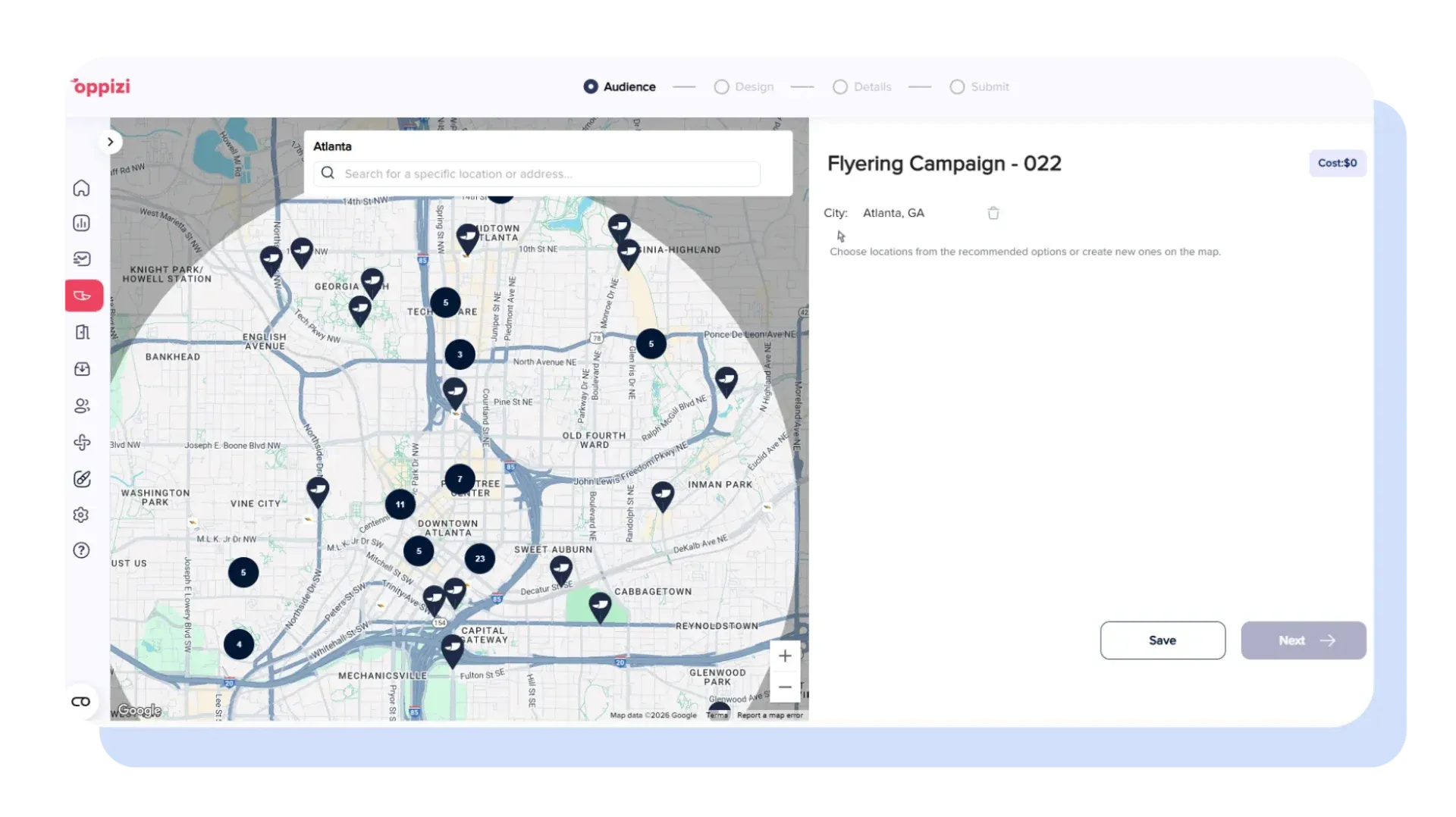
Modern offline execution uses location mapping to remove guesswork before distribution begins. Campaigns are expertly planned around demographic relevance, foot traffic patterns, and historical performance, thus turning location into a strategic input.
Tracking and verification
Proof of delivery, timestamps, geo-validation, and confirmation of coverage all provide essential context for performance data. Without verification, it becomes difficult to tell whether poor results stem from creative assets, weak offers, or incomplete execution.
This is an area where offline partners can add significant value. For example, Oppizi operates with a large, vetted network of trained brand ambassadors responsible for on-the-ground flyer distribution. Their activity is continuously tracked via a custom app that provides live GPS location data, and real-time delivery progress.
By combining operational tracking with verification, campaigns gain a reliable execution layer that complements performance measurement, ensuring that offline efforts are accountable, measurable, and optimized for results.
Data and attribution setup
Offline tracking elements like QR codes, URLs, promo codes, phone numbers must be coordinated carefully across production and distribution. Even small errors, like a mismatched QR code or reused promo code, can break attribution entirely, while omitting these elements means no measurable results at all.
Proper setup ensures that every offline touchpoint integrates seamlessly with analytics platforms, CRM systems, and sales reporting.
While managing these processes in-house is possible, it can be complex and time-consuming. Partnering with a reliable offline marketing provider streamlines execution, reduces errors, and gives marketers confidence that campaigns are running as planned, so you can focus on strategy, optimization, and results.
Measuring offline performance
With tracking and attribution in place, offline performance can be evaluated through the same metrics used for digital channels. So what KPIs do marketers actually track with offline campaigns?
Engagement, conversion, and revenue data can all be captured within defined exposure windows and geographic contexts, giving teams a clear view of what’s driving results.
Common offline KPIs include:
- Reach and distribution volume
- Engagement signals (QR scans, URL visits, calls)
- Conversion actions (sign-ups, purchases, redemptions)
- Cost efficiency (CPA, cost per response)
- Revenue and ROI
- Performance by location, timing, and campaign wave
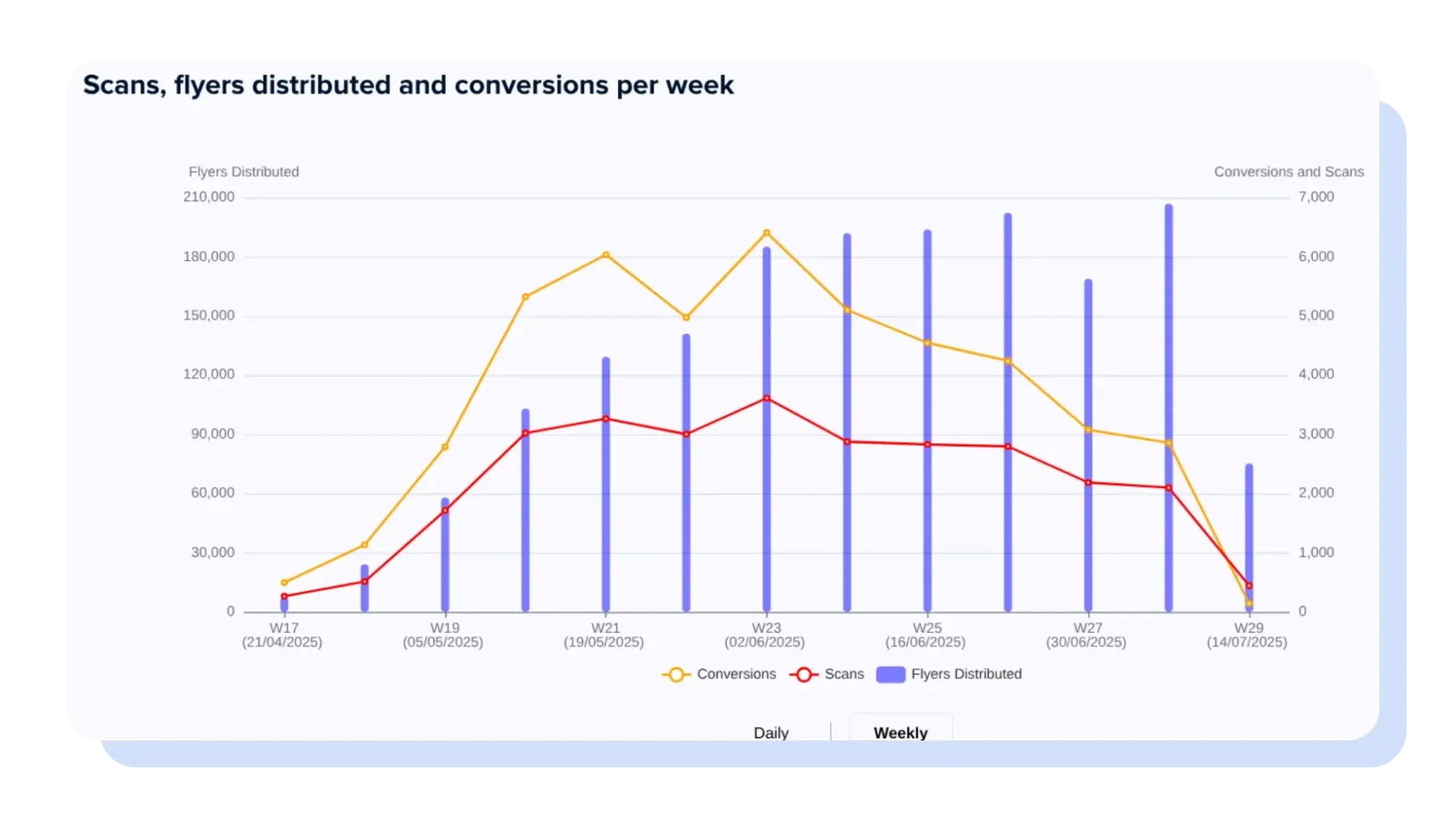
The key shift isn’t just that these metrics exist. It's that they’re accessible and actionable. For example, providers like Oppizi centralize this performance data into a single dashboard, where marketers can monitor up to 14 key metrics in one place. Instead of stitching together reports from different sources, analytics tools, and spreadsheets, teams get a clear, unified view of how campaigns are performing.
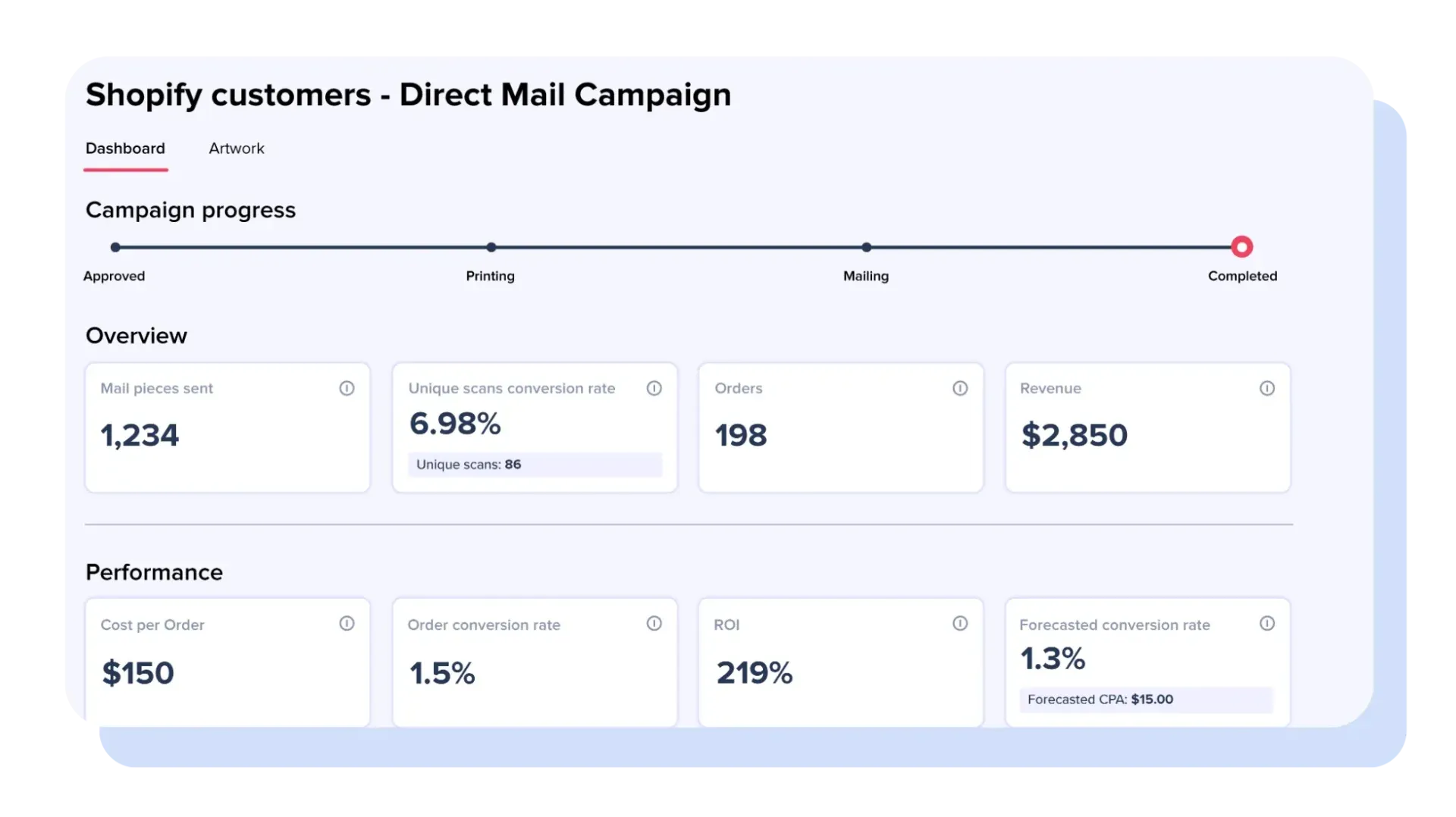
With this level of visibility, offline campaigns can be optimized and scaled based on evidence rather than intuition. Location strategies can be refined, timelines adjusted, and budgets reallocated toward what performs best, turning offline into a reliable, data-driven growth channel.
Offline and online: where the metrics connect
New technological developments have fundamentally expanded the role offline campaigns can play in an integrated marketing strategy. With reliable measurement in place, from production and distribution to engagement and conversions, offline channels can now be paired seamlessly with digital campaigns to complement and amplify their impact.
As we've seen, offline touchpoints can now feed directly into analytics platforms, allowing marketers to understand how physical interactions influence online behavior and conversions. This integration enables coordinated timing, messaging, and targeting across channels.
Offline campaigns can drive initial awareness, spark engagement, or reach audiences who may be oversaturated by digital ads, while digital campaigns capture, nurture, and convert that interest efficiently.
By aligning metrics, attribution, and reporting across offline and online, marketers gain a unified view of performance, uncover cross-channel insights, and optimize budgets based on evidence rather than intuition. In short, modern offline tracking turns once-isolated campaigns into measurable, strategic components of a holistic growth engine.
Ready to add offline marketing to your marketing mix?
Offline marketing has evolved. What was once difficult to measure is now fully trackable, accountable, and capable of delivering the same insights marketers expect from digital campaigns.
With the right setup, offline performance becomes visible end-to-end: from distribution and engagement to conversions, cost efficiency, and ROI. Platforms like Oppizi make this possible by bringing together execution and performance data into a single dashboard, giving marketers a clear, real-time overview of what’s working and why so they can make confident decisions in one place.
That’s what modern offline marketing looks like: measurable, efficient, scalable. If you’re ready to bring offline into your marketing mix and with full visibility into results now is the time to get started with Oppizi.