Last updated July 23, 2026
As a business owner, you know that investing in your business is essential for growth, whether it's starting capital, expansion funds, or your marketing budget. Paid media, including professional services and online ads, is one of the most effective ways to increase visibility and revenue.
While some believe the Internet can handle advertising needs for free, paid online ads offer distinct advantages. They target specific demographics, expand your reach beyond organic methods, and generate more leads that convert into customers.
To learn more about how to harness this powerful tool and benefit your business, keep reading.
What is online paid advertising?
Online paid advertising is the process of promoting your business on the Internet by paying for ad placements. Similar to renting a billboard or distributing flyers, you pay for specific online spaces to display your ads. These can include video ads on platforms like YouTube, images or graphics on social media, or text-based ads on search engines or websites.
Paid ads often appear on search engine results, websites, and social media, with strategies tailored to your audience, goals, and resources. Commonly called biddable media or Pay-Per-Click (PPC), these terms describe how ad placements are purchased. We’ll delve into these concepts further in the next sections.
How can online advertising help my business?
Before investing money or effort in a new facet of advertising, it’s natural to wonder how it can benefit your business. Here are some key ways online advertising can make an impact.
Increase your reach
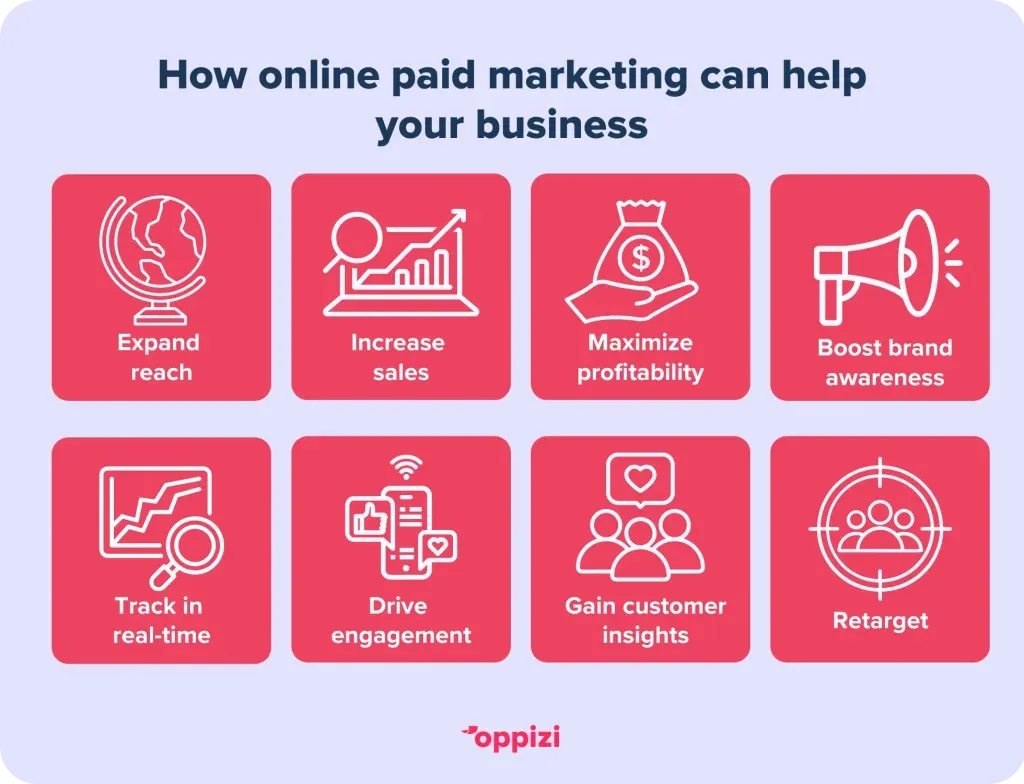
Online advertising helps more people discover your business by targeting your ideal audience using tools like keywords and demographic filters. This ensures your ads reach potential customers rather than random viewers, resulting in a better return on investment. Increased reach means more people interacting with your ads, who can then become paying customers.
Boost your sales
Online ads don’t just generate leads, they drive sales. Studies show exposure to online ads can significantly increase both online and offline purchases. By expanding your audience and converting leads into customers, online advertising directly contributes to your revenue.
Enhance profitability
By increasing sales and optimizing costs, online advertising improves profitability. It’s cost-effective compared to traditional methods like TV or radio ads and can encourage larger orders or repeat purchases through targeted campaigns. Online advertising delivers strong financial returns for your business.

Improve brand awareness
Online advertising increases brand awareness by placing your message in front of a broad audience. With consistent and targeted exposure, your brand becomes more recognizable, fostering trust and increasing consumer confidence.
Measure and optimize campaigns in real-time
Unlike traditional advertising, online ads offer the ability to track performance in real time. By monitoring key metrics like click-through rates (CTR), conversions, and ROI, you can quickly adjust your campaigns to optimize performance and ensure you're getting the most out of your investment.
Higher engagement with interactive ads
Many online ad platforms, such as social media, allow for interactive features like polls, comments, or direct links, which engage users more effectively than passive forms of advertising. This heightened interaction can lead to better connections with your audience and stronger brand loyalty.
Better customer insights
Through online advertising platforms, you gain valuable insights into your audience’s preferences, behaviors, and purchase patterns. This data helps you refine your marketing strategy and create more tailored, effective campaigns moving forward.
Retargeting opportunities
Online advertising allows you to retarget people who have already visited your website or shown interest in your products. By reminding them of your offering through display ads or personalized messages, you can increase the likelihood of conversion.
Which platforms support paid online advertising?
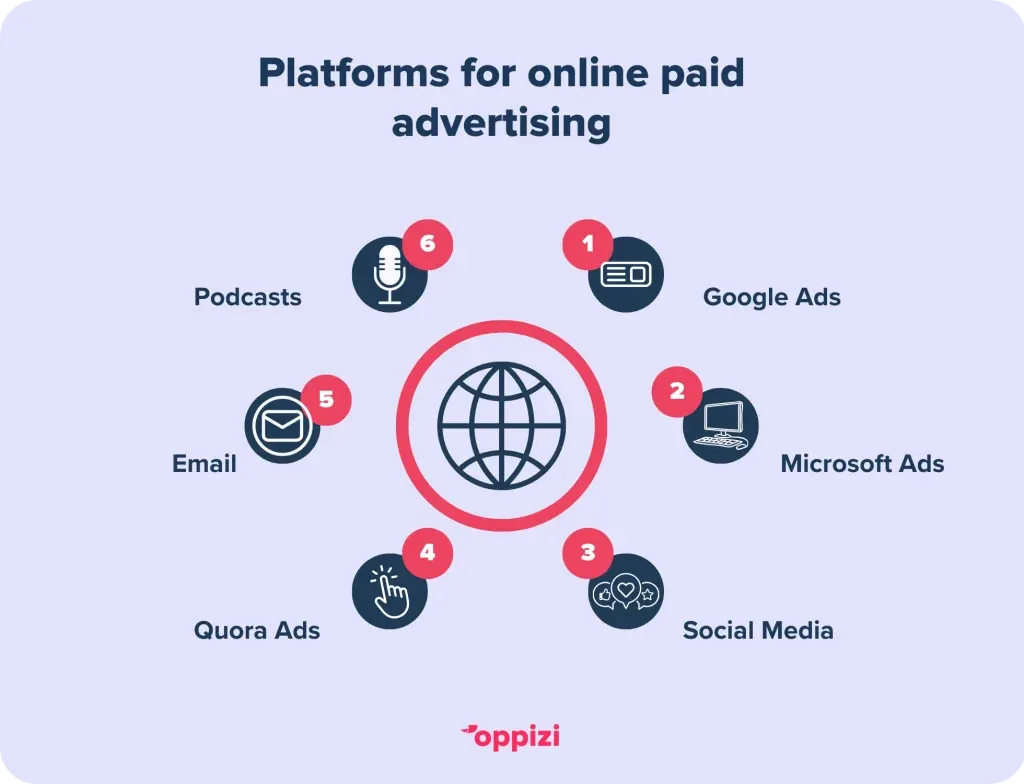
Online advertising spans various platforms, offering multiple ways to connect with your target audience. While most people think of Search Engine Marketing (SEM) when they think of online advertising, there are a few different types. Here’s a guide to various forms of online advertising, complete with their advantages and disadvantages, to help you determine the best fit for your business.
Google Ads
Google Ads remain the cornerstone of online advertising. With search, display, shopping, video, and app campaigns, you can reach billions of users. Ads appear at the top of search results and across the Google Display Network, which includes YouTube, Gmail, and partner websites.
Advantages:
- Wide reach through diverse ad types and placements.
- Advanced targeting based on demographics, keywords, and behavior.
Disadvantages:
- Can be costly in competitive industries.
- Requires ongoing optimization to maintain performance.
Microsoft ads
Microsoft Ads (formerly Bing Ads) covers Bing, Yahoo, and AOL, providing access to a unique audience that skews older and wealthier. With lower competition and costs, it’s an excellent complement to Google Ads for a broader reach.
Advantages:
- Cost-effective keyword bidding.
- Extended reach through multiple search engines.
Disadvantages:
- Smaller audience compared to Google Ads.
- Limited ad tools and integrations compared to competitors.
Social media platforms
Social media advertising remains a key strategy, with platforms like Facebook, Instagram, TikTok, LinkedIn, and X (formerly Twitter) offering diverse ad formats. Sponsored posts, carousel ads, and video campaigns are effective for engaging specific demographics.
Advantages:
- Powerful targeting by interests, location, and behaviors.
- High engagement on visual and interactive platforms.
Disadvantages:
- Algorithms can change, affecting ad visibility.
- Ad fatigue is common due to oversaturation.
Quora ads
Quora allows businesses to advertise by targeting users based on their questions and interests. Ads can appear in topic-specific feeds or as promoted answers, leveraging Quora’s high visibility on search engines.
Advantages:
- Reach an engaged, question-seeking audience.
- Boost visibility through Quora’s strong SEO.
Disadvantages:
- Smaller audience compared to other platforms.
- Limited ad formats and customization options.
Email advertising
Email marketing goes beyond newsletters with paid placements in email platforms like Gmail. These ads appear prominently in inboxes, resembling emails to capture user attention.
Advantages:
- Direct access to a massive, highly engaged audience.
- High visibility in crowded inboxes.
Disadvantages:
- High competition within user inboxes.
- Can be flagged as spam if not well-targeted.
Podcast advertising
With podcasts gaining popularity, paid ads on podcasts offer access to a young, educated, high-earning audience. Ads can be host-read, pre-recorded, or dynamically inserted into episodes.
Advantages:
- Highly targeted, niche audiences.
- Builds trust through host endorsements.
Disadvantages:
- Limited analytics compared to digital ads.
- High production costs for well-crafted ads.
The best platform for your business depends on your specific goals, target audience, and available budget. Each platform offers unique strengths and leveraging a combination of these allows you to cover multiple touchpoints, ensuring your business stays visible throughout the customer journey. A multi-platform approach maximizes your reach and enhances engagement and ROI by connecting with diverse audiences in the places they spend their time online.
What techniques can I use in online paid advertising?
Building a successful online marketing campaign requires targeted strategies and smart tools. Here are four essential techniques to boost your results:
Keyword targeting
Ensure your ads reach the right audience by targeting specific keywords your potential customers are searching for. Focus on long-tail keywords - specific phrases with lower competition and higher intent to purchase. Tools like Google Ads allow you to pair keyword targeting with geographic filters to refine your reach further.
Remarketing
Remarketing helps you reconnect with visitors who showed interest but didn’t convert. Use retargeting ads based on cookies or direct methods like email campaigns to nudge potential customers. While cookies are becoming less common, adapting to first-party data collection ensures your remarketing remains effective.
Influencer partnerships and affiliate marketing
Collaborate with niche influencers or trusted bloggers to promote your brand. Influencers can showcase your products authentically to their followers, while affiliate marketers drive traffic and sales in exchange for commissions. Partner with individuals who align with your brand to boost credibility and engagement. 36% of brands have stated that influencer-generated content has performed better than their brand-created content.
Native advertising
Blend your ads seamlessly with platform content using native advertising. Examples include paid search ads resembling organic results or sponsored social media posts. Native ads stand out for their value and relevance, bypassing consumer ad fatigue and driving higher engagement.
Success in online marketing means reaching the right audience, re-engaging interested users, and building trust through authentic connections. Combining these techniques into a cohesive strategy will enhance engagement, sales, and ROI.
How to get started with online paid advertising
Research
Set SMART marketing objectives based on your business goals and get to know your target audience. Understand their online behavior, preferred platforms, and the keywords they use. Analyze competitors to refine your approach.
Set a budget
Determine how much you can invest in digital marketing. Understand the cost structure of online ads, especially on social media, and allocate funds accordingly.
Create content
Develop compelling ad copy, visuals, and videos using tools like Grammarly, Canva, and Promo. Tailor your content to each platform and aim for a natural look, as native ads tend to perform better.
Run a test campaign
Launch a small test campaign to track performance metrics like click-through rates. Use this data to refine future campaigns and optimize your ROI.
How to budget for online paid advertising campaigns
Budgeting for online marketing can be tricky compared to traditional ads like billboards or TV, where you pay a fixed price upfront. With platforms like Google Ads, you pay based on user actions rather than the space itself.
Most search ads use a Cost-Per-Click (CPC) model, meaning you pay when someone clicks on your ad. Display ads, on the other hand, use Cost-Per-Mille (CPM), where you pay for every 1,000 impressions.
Another model is Cost-Per-Acquisition (CPA), where you pay when a click leads to a desired action, like a sale.
Many online marketing beginners worry that a CPC ad's costs could skyrocket if thousands of people click on it in a single day. However, you can prevent this by setting a daily budget and click limit. Once you reach the limit, Google will stop showing your ad to users.
How are online ads priced?
The price of online ads, like Google Ads, isn't fixed. Instead, it's determined through an ad auction. When you create an ad, you set a bid for how much you're willing to pay per click. Google then evaluates your ad's quality score (how relevant and well-made it is) before deciding which ads to display during a search.
Conclusion
In conclusion, online advertising offers powerful tools to increase your business's visibility, drive sales, and boost profitability. By leveraging targeted strategies such as keyword targeting, remarketing, and influencer partnerships, you can effectively engage your audience and maximize your return on investment. However, the digital landscape isn't the only way to grow your business.
For a more holistic approach, don't forget about the power of offline marketing. Platforms like Oppizi allow you to create and manage effective offline marketing campaigns, such as flyer distribution and direct mailing, which can complement your online efforts and expand your reach. Combining both strategies helps you connect with customers through multiple touchpoints, enhancing your brand's presence and driving even more success.So, why wait? Launch your offline marketing campaign today and take your business to the next level!