Last updated July 23, 2026
If you’re a marketer setting goals for your business, you’ve likely heard of the SMART goalsetting framework. SMART (specific, measurable, achievable, relevant, and time-based) marketing objectives are goals designed to guide actions and align with overall business success. For example, an objective might be to increase web traffic by 50%.
These goals outline not only the desired outcome but also the steps to achieve it and its impact on the business. Without clear objectives, marketing efforts lack direction, making it harder to track success and determine effective strategies. Defined goals give teams a focus and help prioritize tasks to achieve results efficiently.
Let’s take a closer look at the benefits of SMART goals for marketers and why you should be using this goal setting strategy for your business.
What are SMART objectives in marketing?
The SMART acronym is a widely used framework for setting effective marketing goals that align with long-term business objectives. Below you can find out what each of these objectives means when it comes to marketing.
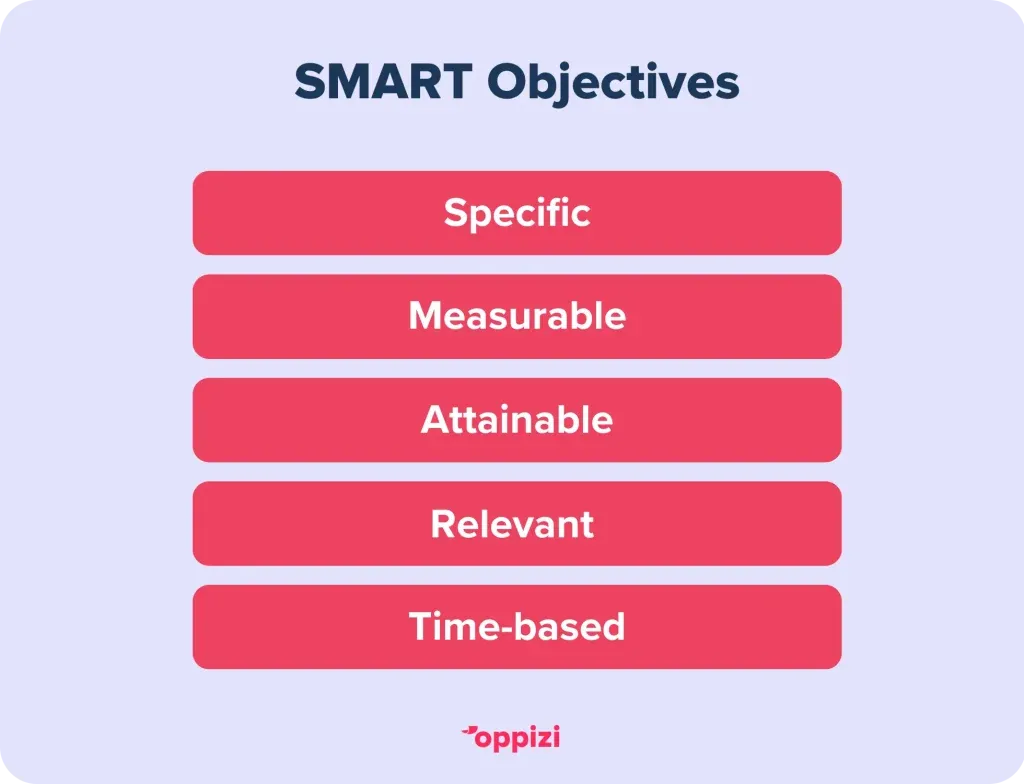
Specific: You should set clear and detailed goals. For example, rather than “increase sales,” specify by how much, such as “increase sales by 20%.” In fact, in 90% of cases, specific and challenging goals lead to higher performance than setting vague goals or none at all.
Measurable: Ensure goals are quantifiable and specify how they will determine success. Increased brand awareness may be your goal, but your goal must define how you plan to achieve it, whether that be by increasing organic product searches or social media followers.
Attainable: Set realistic, sensible goals that can be achieved with available resources and within constraints.
Relevant: Align objectives with broader business goals to ensure they address critical challenges or opportunities.
Time-based: Set deadlines or time frames, like quarterly or yearly benchmarks, to create urgency and focus.
SMART goals guide your strategy, align your team, and provide clear metrics for success. By connecting objectives to key performance indicators (KPIs), you can ensure measurable progress toward your marketing goals.
Why are SMART marketing objectives important?
Setting SMART objectives offers several benefits to businesses. SMART marketing goals allow teams to:
- Create alignment: Encourages teams to define clear, unified goals.
- Guide data usage: Helps identify and utilize relevant data to achieve objectives.
- Prioritize tasks: Improves productivity by focusing on key assignments tied to goals.
- Track progress: Breaks goals into manageable steps to monitor success over time.
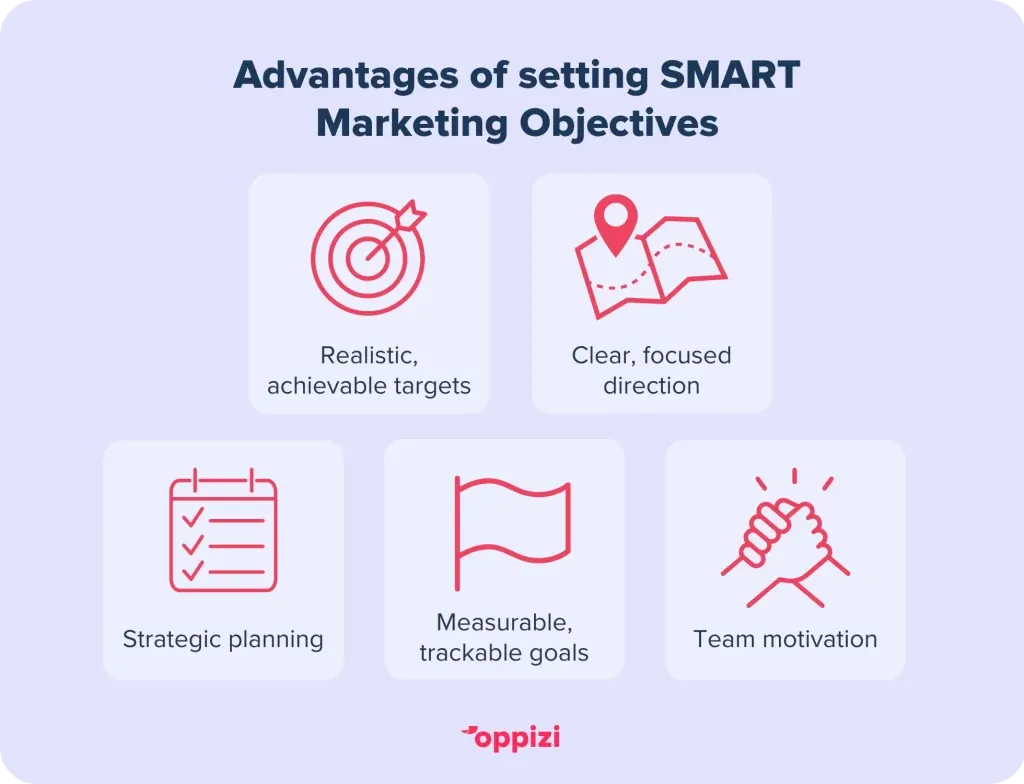
SMART goals help marketing teams clarify objectives, identify areas for improvement, and design effective campaigns. By applying this approach, you can boost revenue, strengthen customer relationships, and align your team’s efforts.
How to start planning SMART marketing objectives
A brand’s objectives should be grounded in a solid understanding of its operating environment, which requires situational analysis before setting goals. Tools like SWOT analysis (Strengths, Weaknesses, Opportunities, Threats) help marketers assess operations and campaigns by gathering input from stakeholders.
The insights from SWOT can guide SMART goal-setting by:
- Identifying strengths and opportunities to leverage while addressing weaknesses and threats.
- Refining goals to align with SMART criteria.
- Setting goals based on identified deficiencies to target improvement areas.
This process ensures objectives are actionable, tailored, and aligned with the brand’s situation.
Why KPIs matter for smart objectives
Key performance indicators (KPIs) are essential in evaluating the effectiveness of your marketing strategies. They provide measurable benchmarks to track your progress and ensure that your efforts align with your objectives. By selecting the right KPIs, businesses can:
- Monitor success: KPIs act as tangible metrics that show how close you are to achieving your goals, such as website traffic, conversion rates, or social media engagement.
- Refine strategies: If a KPI reveals underperformance, teams can adjust their tactics to improve outcomes, ensuring resources are used effectively.
- Promote accountability: Clear metrics encourage team members to stay focused and committed, as their performance can be directly linked to specific outcomes.
- Demonstrate ROI: KPIs provide concrete evidence of marketing impact, helping justify investments and secure stakeholder support.
Tracking KPIs throughout your campaigns helps ensure your SMART objectives stay actionable, achievable, and results-driven.
Examples of SMART marketing objectives and KPIs
Below we’ll provide examples of common SMART marketing goals that businesses may set, along with the KPIs they can use to track progress and measure success.
Build brand credibility
Increasing brand credibility helps differentiate your business and build audience trust, positioning you ahead of competitors. Marketing plays a key role in educating prospects and enhancing brand perception.KPIs: Number of media mentions, positive customer reviews.
Increase profitability
Marketing drives profitability by reducing waste and focusing resources on promoting high-margin products or services, generating more qualified leads.KPIs: New opportunities created, recurring revenue growth rate.
Generate demand for new products
Launching a new product or service requires focused promotional efforts to build awareness and interest. Align KPIs with social media engagement or inquiries and opportunities related to the product.KPIs: Volume of new product-related inquiries, sales pipeline opportunities.
Reduce lost sales or deals
Marketing helps qualify leads and set accurate expectations, reducing lost opportunities. For e-commerce, this might involve lowering cart abandonment rates; for other industries, it could mean improving pre-sales content.KPIs: Decrease in cart abandonment, implementation of sales enablement resources.
What are the main challenges involved with SMART marketing?
While SMART marketing objectives help you focus on your goals, they do come with their own set of challenges. Here, we explore some of the common obstacles marketers may face when implementing SMART goals and their solutions.
- Cross-team communication: Marketing teams often face challenges in aligning with other departments like sales or customer service. Clear, unified communication of KPIs and messaging is essential to avoid misaligned strategies and maximize campaign effectiveness.
- Creativity in a structured environment: Marketing teams need the freedom to innovate. Establishing a culture that encourages creative thinking and regular brainstorming sessions can help overcome barriers, especially in industries with rigid structures.
- Gaining stakeholder support: Stakeholders are focused on results. Marketers must clearly demonstrate the value of their efforts, using attribution tools to show how marketing drives conversions and supports business goals.
- Choosing the right tools: With numerous marketing tools available, selecting the right ones to track and measure performance is crucial. Marketers must ensure they have the proper analytics, social media, and SEO tools to optimize campaigns effectively.
These challenges highlight the need for clear communication, creative freedom, data-driven insights, and the right tools to successfully implement SMART marketing goals.
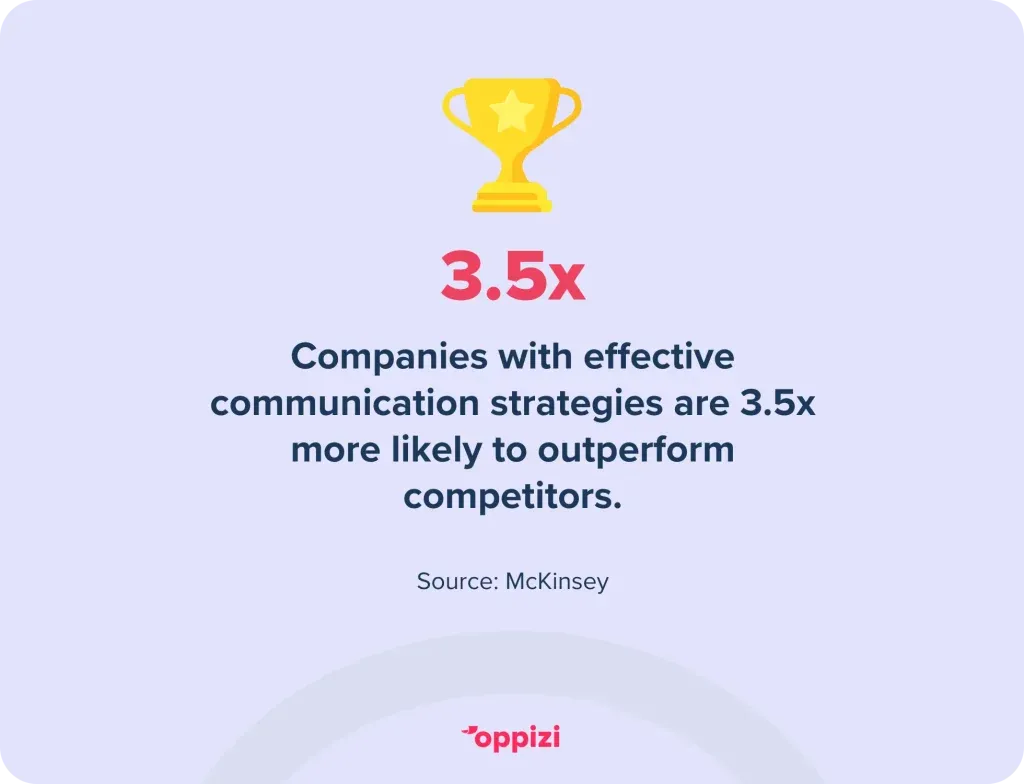
Overcoming these obstacles equip marketers to provide excellent customer experiences and remain relevant to their target audiences.
Tools for planning SMART marketing goals
As previously mentioned, setting SMART marketing goals can present challenges, such as ensuring cross-team communication or selecting the right tools for planning and execution. Below is a breakdown of tools that can simplify the process and help you achieve your objectives effectively:
- Project management tools such as Asana or Trello can help you break your goals down into smaller, actionable tasks which can be assigned to specific teams or team members.
- Data tracking and analytics software ensure you can track any measurable goals and to verify that you’re on the right track. For example, Google Analytics can be used to measure website traffic and conversions. Or Hubspot is a CRM where customer engagement can be tracked.
- Digital marketing performance tools can help you keep track of your marketing efforts to ensure that you’re on the right path. SEMrush, for example, can help you keep an eye on your SEO rankings and keyword performance for any landing pages or blogs you may have written.
- Offline marketing campaign platforms like Oppizi not only help you diversify by creating offline marketing campaigns such as direct mailing or flyer distribution, but you can also track their impact using their integrated performance metrics.
- Collaboration tools are essential to ensure team members can work together efficiently and stay up-to-date with the progress of tasks. Platforms like Google Workspace can allow team members to work together on documents or spreadsheets in real-time. Communication channels like Slack or Google Chat are also means of centralizing team communication.
- KPI dashboards can be set up on Excel or Google Sheets so that performance can be tracked in one singular location and so that all team members can stay up-to-date on the progress towards their goals.
Conclusion
The best marketers are those who can showcase the value of their efforts while staying open to new trends and ideas. As marketing evolves, innovation remains key to staying ahead. By collaborating with other teams and leveraging data to measure results, marketers can continuously adapt and improve.
SMART marketing objectives provide a powerful way to drive ROI, especially when combined with inbound sales strategies. They help focus efforts on achieving measurable outcomes and eliminate assumptions from decision-making.
While digital marketing strategies are vital, the power of offline marketing techniques shouldn't be overlooked. Exploring avenues like direct mail, door-to-door campaigns, or flyers can complement your digital efforts and reach customers in a more personal, impactful way. Ready to take your marketing to the next level? Start your offline campaign with Oppizi today and see the results for yourself!