Last updated July 28, 2026
Are you using the right marketing strategy for your business? When you're up against stiff competition, choosing the right path for attracting and engaging customers is essential for success. That’s why understanding the key differences between inbound and outbound marketing can help you make smarter, more effective decisions. Each approach has unique strengths, and combining them strategically can drive even more growth. Let's take a look at both inbound and outbound marketing, weigh the benefits of each, and learn how to craft a strategy that drives the best results.
What’s the difference between inbound and outbound marketing?
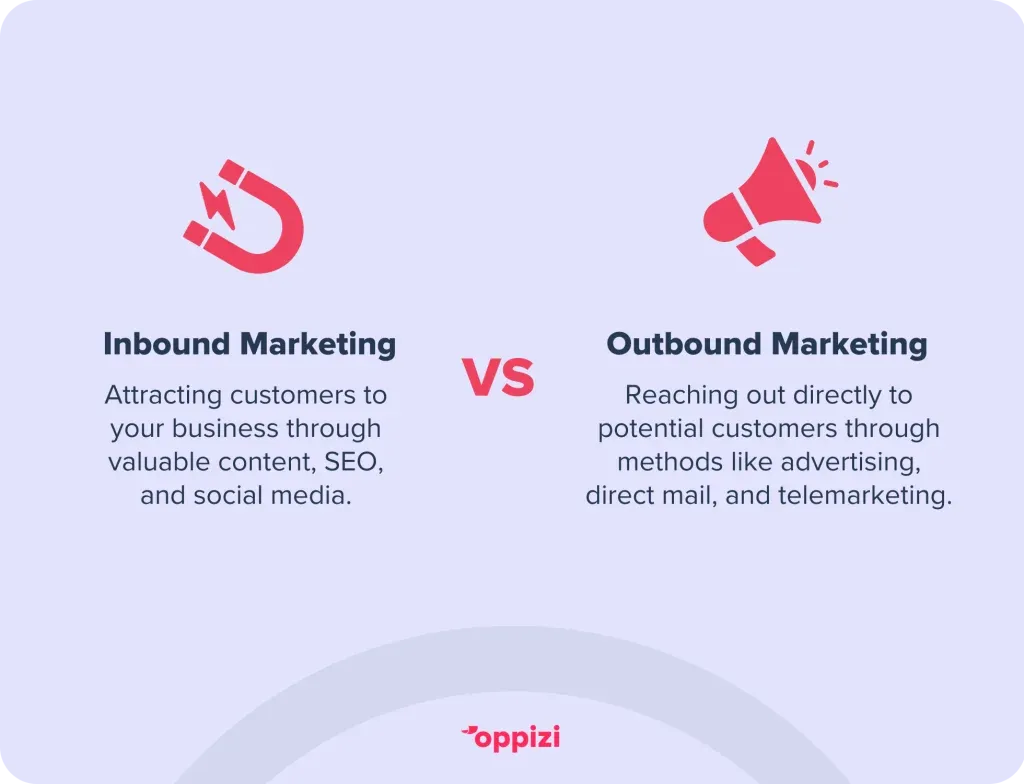
Inbound marketing is about using strategies that attract customers to you. Imagine an open jar of honey—it doesn’t move, but it still draws in the bees. Similarly, a well-designed website or social media account pulls in potential customers. Now, what about outbound marketing?
Outbound marketing is when your business actively reaches out to customers, rather than waiting for them to find you. Instead of just leaving the jar of honey open, you’re taking the jar directly to the bees. This includes strategies like mass advertising, direct mail, and telemarketing.
What is inbound marketing?
As mentioned earlier, inbound marketing is a tactic that helps a business attract customers by creating useful content that connects with audiences. Inbound strategies are widely used today, thanks to the internet’s ability to help businesses promote themselves globally in a cost-effective way.
Examples of inbound marketing
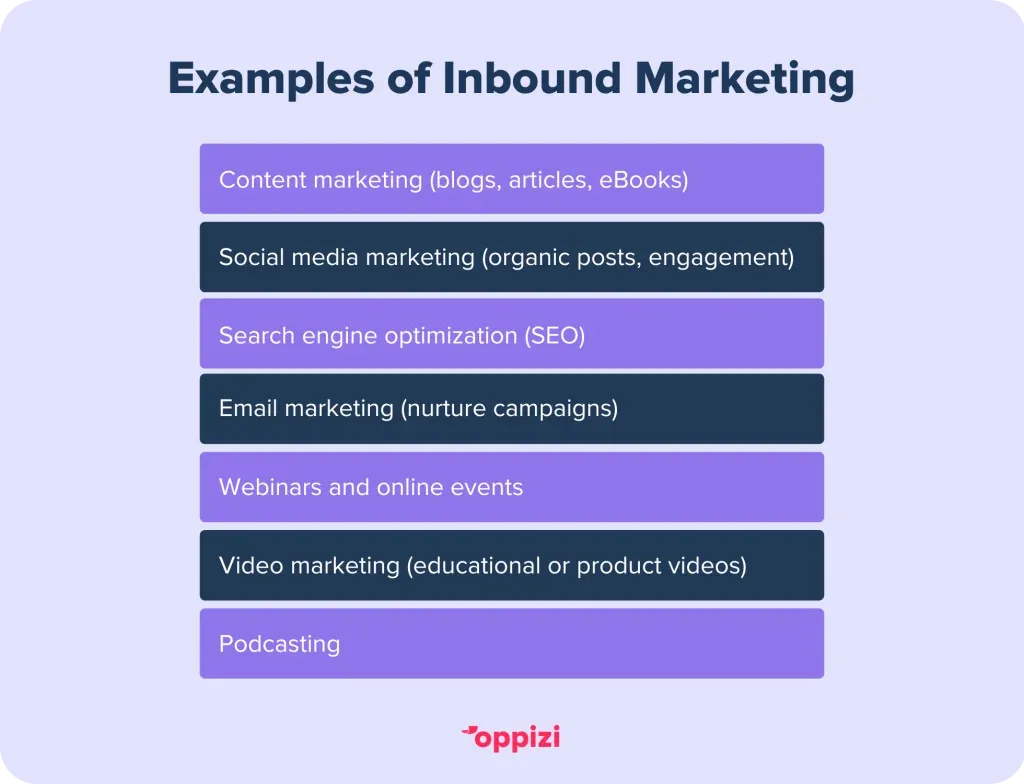
Here are some key examples of inbound marketing tactics:
Blog articles
You’ve got your website up and running—so why add a blog section and post articles? Because it allows you to address the topics that interest your customers. By doing this, potential customers may discover your site while searching for answers to their questions. What are the benefits of this approach?
First, you start building a relationship of trust. Customers begin to see you as a reliable source of information in your area. This trust can lead them to join your mailing list, purchase your services, or become loyal supporters of your brand.
Social media
Whether it’s LinkedIn, Facebook, Instagram, Snapchat, X, or TikTok, having a presence on social media is essential for your business. You don’t need to be on every platform—just focus on the ones your customers use most and make your presence known there.For example, LinkedIn is typically the best platform for B2B companies. Snapchat and TikTok are popular with younger consumers, while Facebook remains the most widely used social media platform both in the U.S. and globally.As of October 2024, there are 5.22 billion social media users globally, accounting for 63.8% of the world’s population. Over the past year, 256 million new users joined, reflecting a 5.2% annual growth rate.
Email marketing
Sending emails or newsletters helps you stay in regular communication with your customers. The benefit of this marketing method is its convenience—everything can be done with just a click, without the need for printing or mailing. However, there are some significant drawbacks to this approach, which we’ll discuss later.
SEO
If you’ve seen the term SEO and are still unsure of its meaning, here’s a quick recap. SEO stands for search engine optimization, which involves optimizing your website to meet the requirements of search engine algorithms, primarily Google. Why is this important?
Applying SEO techniques to your site—such as creating informative content, using high-quality images, and having an attractive layout—signals to Google that your site is a valuable source of information. In return, Google is more likely to rank your site higher in search results.
Advantages of inbound marketing
Inbound marketing focuses on building trust and relationships with prospects, turning them into valuable long-term clients. By offering helpful content without expecting anything in return, you establish credibility and foster loyalty.
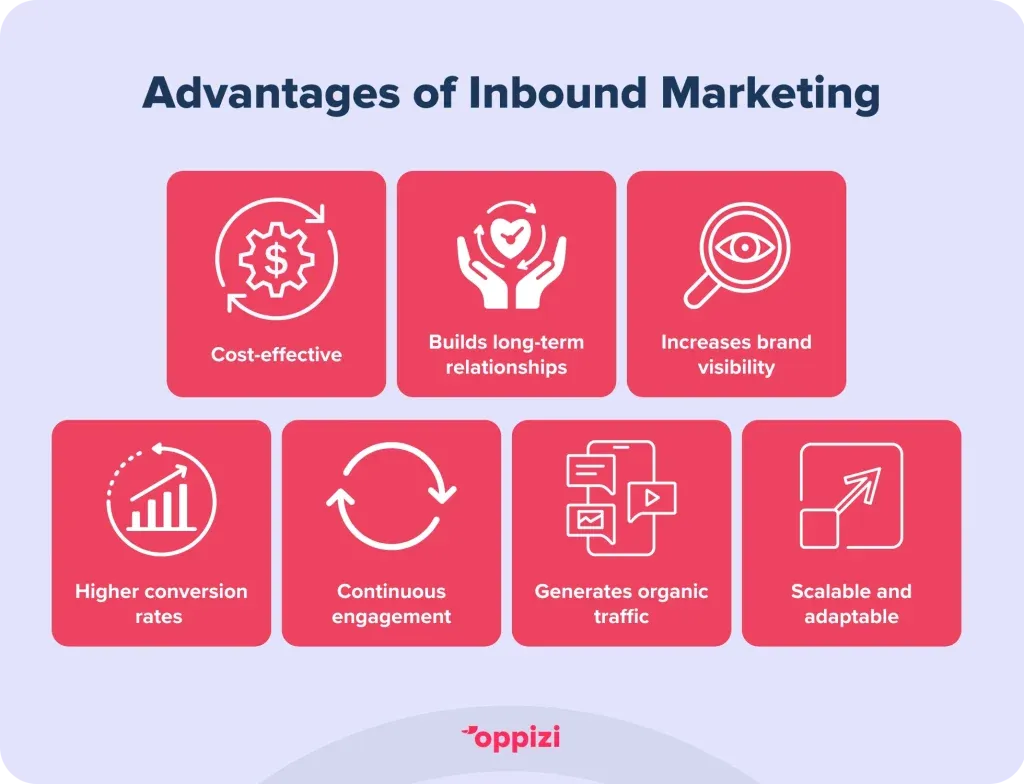
While building trust can be challenging, it’s often a key factor in customers’ purchasing decisions. It’s also more cost-effective than traditional paid advertising, as it eliminates upfront media and ad spend.
Challenges of inbound marketing
Inbound marketing has its challenges. While effective, standing out with content marketing is increasingly difficult. With so much content being produced daily, it’s tough to capture attention. The average customer’s inbox is likely flooded with emails from businesses, and it’s easy for your message to get lost.
Social media adds to the complexity, with frequent algorithm updates making it harder to know what to post, when to post, and how to adapt to constantly changing factors. Here are some other challenges to consider:
- Requires significant time and effort to create quality content
- Results may take longer to see compared to outbound methods
- Can be challenging to measure ROI without proper tracking tools
- Needs ongoing optimization to stay competitive in search rankings
- Highly dependent on audience engagement and interest
- May require skilled professionals for content creation and SEO management
What is outbound marketing?
We've covered inbound marketing—how it works, its pros and cons—but what about outbound marketing? Outbound marketing involves directly reaching out to potential customers through methods like direct mail, flyers, telemarketing, and paid ads.
It takes a more proactive approach, actively targeting prospects rather than waiting for them to come to you. It also offers broader reach, making it ideal for scaling brand awareness.
Examples of Outbound Marketing:
Here are some common examples of outbound marketing tactics:
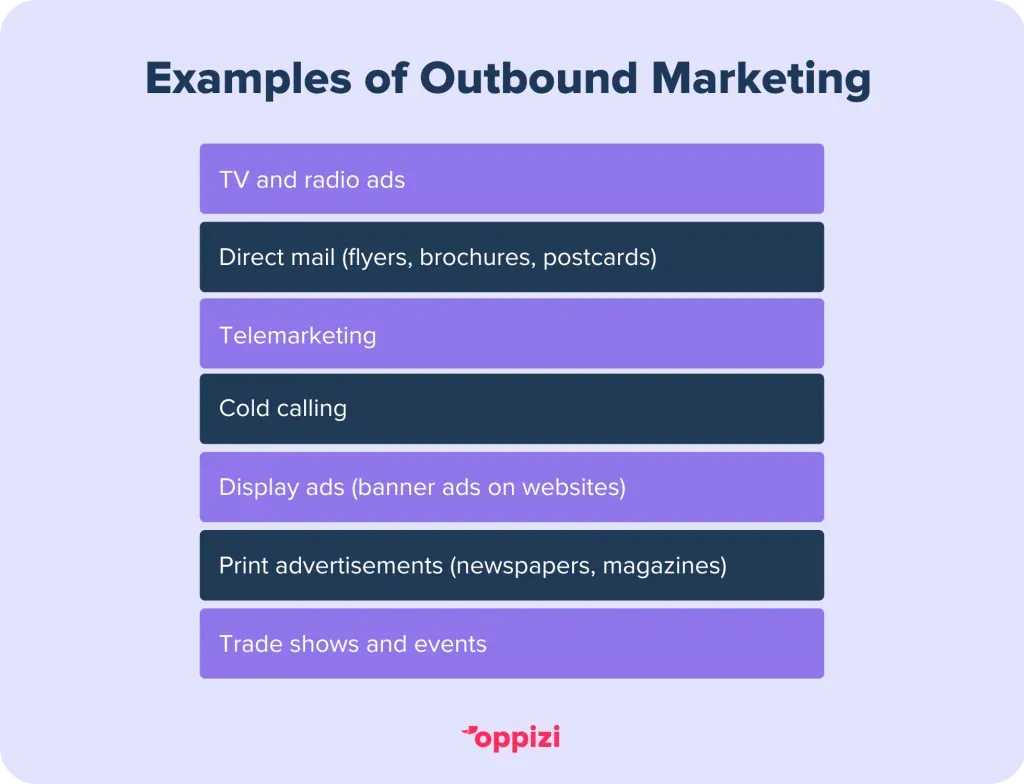
- TV and radio ads
- Direct mail (flyers, brochures, postcards)
- Telemarketing
- Cold calling
- Display ads (banner ads on websites)
- Print advertisements (newspapers, magazines)
- Trade shows and events
Though traditionally seen as more conventional, outbound tactics like flyer delivery can stand out, often leaving a more lasting impression than online ads competing for attention. A well-crafted flyer can do more than just deliver your message; it can put your brand in their hands.

How outbound marketing works
Outbound marketing involves identifying your ideal target audience and selecting strategies to deliver your message directly to them. The goal is typically to build brand awareness, introduce potential customers, and educate them about your business.
An example is a direct mail campaign, such as a local restaurant sending flyers to homes in nearby neighborhoods. These physical materials create a tangible connection with customers and offer the rare excitement of receiving something in the mail.
Proper planning is crucial to ensure you’re using the most effective strategy for your business.
Advantages of outbound marketing
Outbound marketing can drive immediate action, with strategies like telemarketing and direct mail having a direct impact on consumers. That said, telemarketing should be used carefully, as it can sometimes feel intrusive.
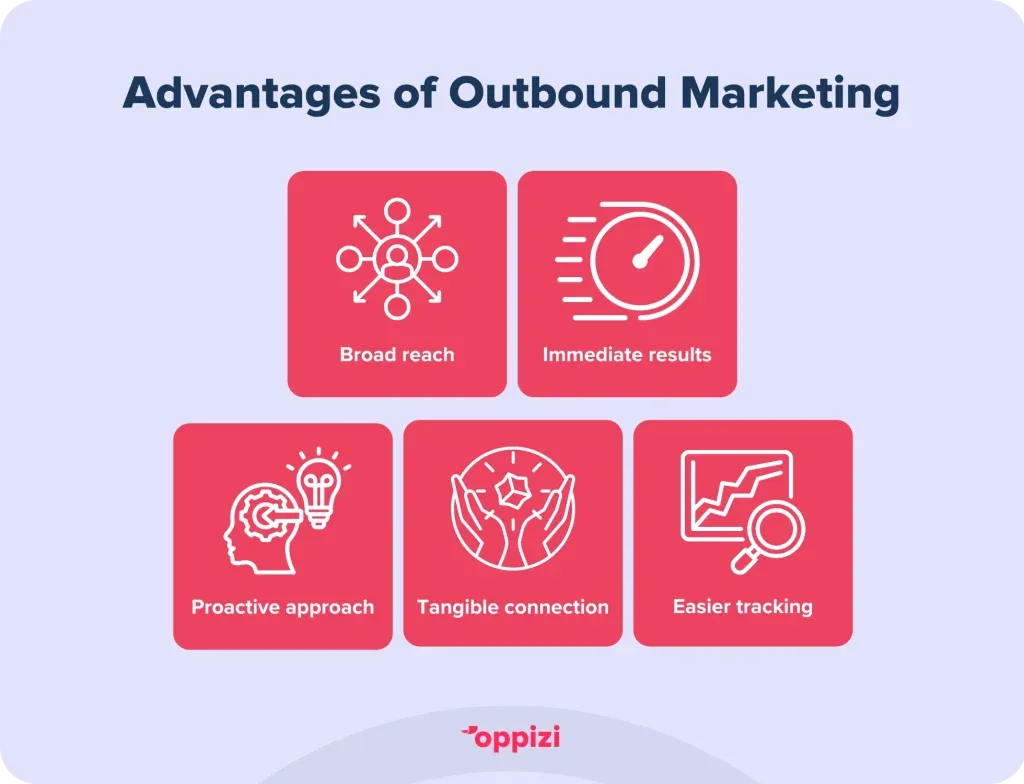
One major advantage is its ability to rapidly build brand awareness and reach broad demographics without prior engagement. This makes outbound marketing ideal for launching new products or entering new markets.
Another benefit is the control over timing. Advertisers can choose exactly when to deliver materials, such as sending flyers before a new store opening.
In today’s digital age, offline channels like direct mail can have a significant impact. With fewer physical mailings being sent, direct mail stands out and is more likely to generate a response. In fact, according to Forbes, response rates for direct mail are 10 to 30 times higher than those for digital marketing.
A HubSpot survey found that 72% of Gen Z respondents feel excited about receiving mail, while 71% of Gen X believe direct mail feels more personal than digital communication. For businesses, this indicates that direct mail can help you stand out and foster a genuine connection with customers.
Challenges of outbound marketing
It's important to consider the potential challenges faced by marketers in their outbound efforts:
- Higher costs: Outbound strategies often require significant investment in advertising, print materials, and distribution.
- Interruptive: Can be seen as intrusive, leading to negative perceptions from recipients.
- Less targeted: May reach people who aren’t interested or aren’t part of the ideal customer base.
- Short-term focus: Primarily focused on immediate impact rather than long-term relationship-building.
- Ad fatigue: Audiences can become overwhelmed by repetitive ads, leading to diminishing returns.
Cost is a challenge for outbound marketing, as most tactics require an upfront investment. However, with the right planning and strategy, the return on investment can be substantial. Outbound marketing can also be less targeted, especially with broad methods like TV or radio ads. While direct mail or flyer marketing can be more targeted, location selection plays a key role.
Striking the right balance: How to combine inbound and outbound marketing
As we’ve seen, both inbound and outbound marketing offer unique advantages and challenges. The best approach for your business is often a combination of both strategies. In fact, inbound and outbound marketing can work together seamlessly to complement each other.
Creating valuable, informative content builds trust and showcases expertise, but it won’t be effective if no one is finding your business. SEO is becoming more challenging, social media algorithms reduce organic reach, and online ads have become costly.
This is where combining content marketing with targeted outbound strategies, like direct mail, can effectively build both brand awareness and trust.
Do what’s right for your business
Every business is unique, and finding the right mix for your market and niche is crucial. At Oppizi, we specialize in outbound marketing, offering impactful offline solutions that create authentic connections with your audience.
Our solutions include direct mail, flyering, and door-to-door marketing. By integrating online and offline strategies, you can enhance your brand's visibility and boost customer engagement, ensuring that every marketing effort delivers meaningful results.
Ready to make an impact? Create a campaign with Oppizi today and watch your business grow!