Last updated July 23, 2026
The best ads aren’t just seen. They’re felt. Experiential marketing turns people into part of the story. It gives them something to try, touch, or share; something they’ll remember long after it’s over.
If you’re trying to stand out in a world full of ads, this approach can help. In this guide, you’ll learn what experiential marketing is, why it works, and how to build a campaign that people talk about. You’ll also get tips, real examples, and a clear plan to get started. Let’s get into it.
What is experiential marketing?
Experiential marketing is a strategy that lets people interact with a brand through real-life experiences. Instead of telling them about a product, it invites them to try it, feel it, or see it in action, creating memorable, hands-on moments that build deeper connections.
How it’s different from traditional marketing
Traditional ads talk at people. A TV commercial or banner ad tells you what the brand wants you to hear. Experiential marketing is different. It’s hands-on. People take part in it. And because they’re involved, they’re more likely to remember it.
For example, someone might try a new snack at a fitness event or test a beauty product using AR in-store. These moments stick with them long after the ad would have faded.
How experiential marketing has grown
Here’s how it’s changed over time:
- Before the internet: Brands handed out samples on the street or sponsored events.
- In the 2000s: Pop-up shops and surprise stunts got attention.
- Now: AR, VR, social media, and online/offline events are common. Influencers often play a big role.
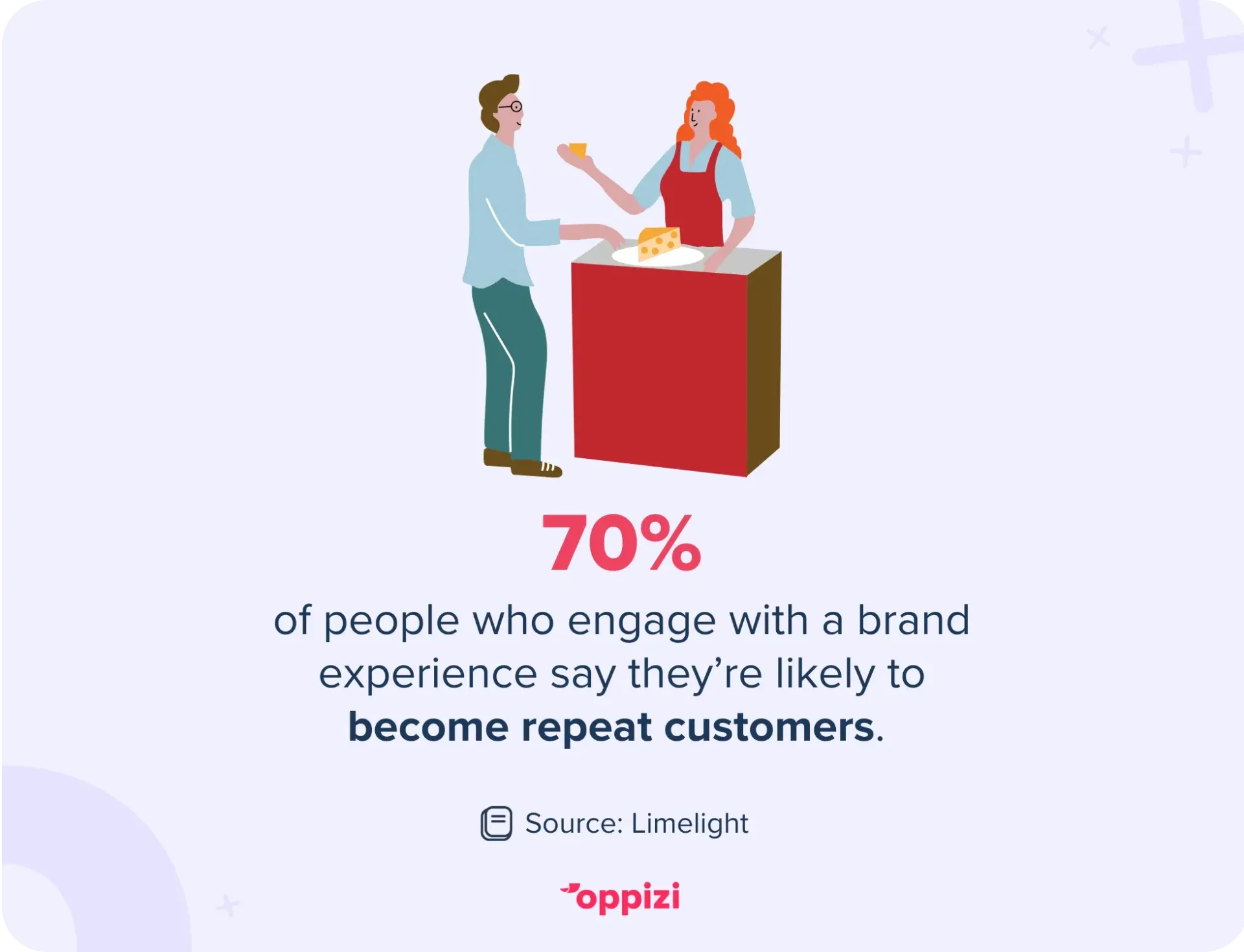
Why the change? People are tired of ads. They want something real. In fact, a study found that 70% of people who take part in a brand experience say they’re likely to become not just customers, but repeat customers.
Why experiential marketing matters in 2025
More brands are putting their money into live experiences. Here’s why:
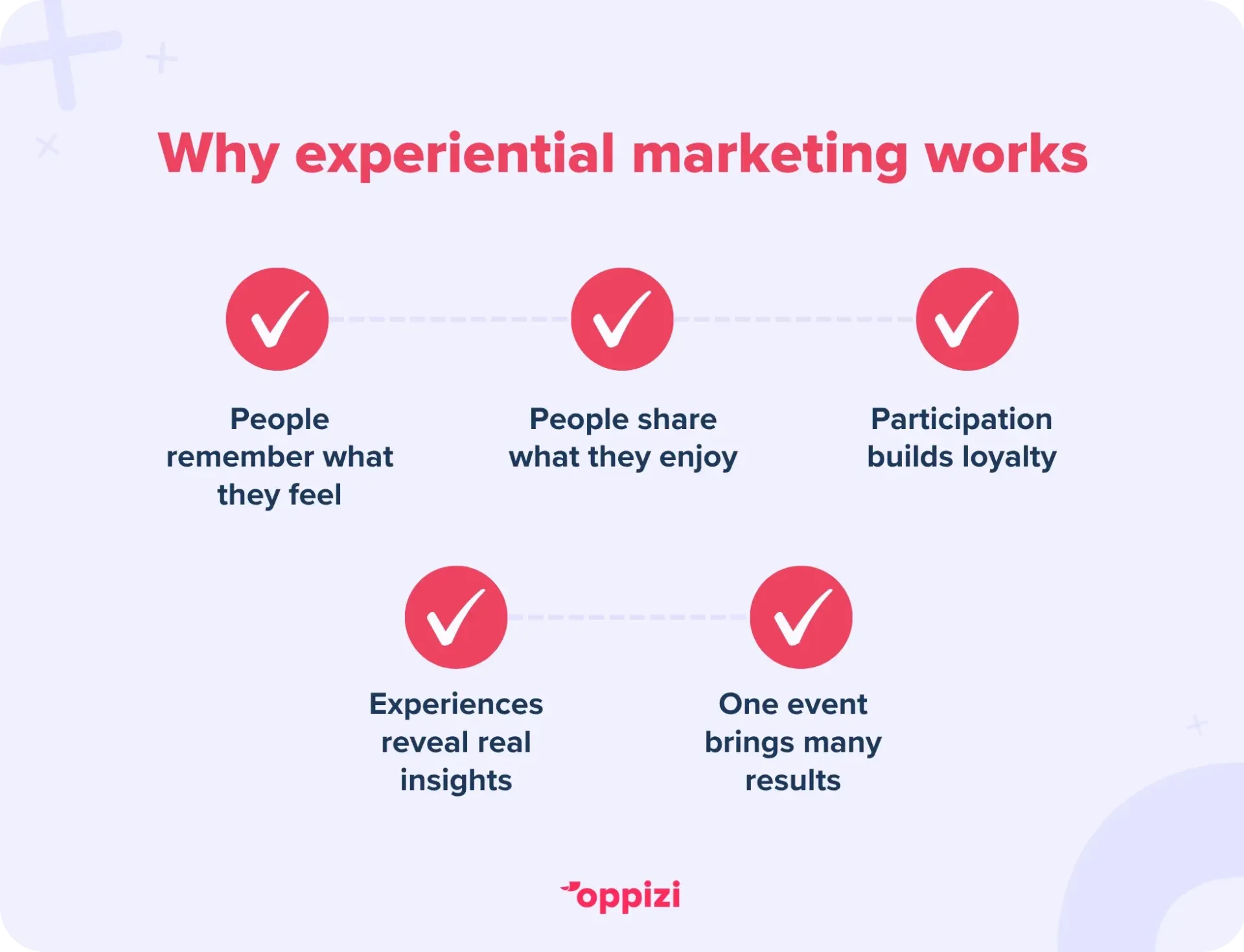
1. People remember what they feel
The brain holds onto emotional, hands-on experiences much longer than basic ads. A single live event can stay with someone for months and affect how they shop.
One study found that 93% of people said live events influenced them more than TV ads. That’s because real, multisensory moments are easier to remember.
2. People share what they enjoy
Unique experiences get people talking. Whether it’s a cool setup or a fun challenge, people want to post about it.
In fact, over 40% of users are more likely to share an AR or interactive experience than a regular social post. These events naturally create moments people want to capture and show others. Standard ads don’t do that.
3. Participation builds loyalty
When people join your event, they give their time and energy. That makes them feel connected. Lululemon is a good example. Their fitness classes and community events have helped them keep 92% of their top customers coming back. People who join in are more likely to stay loyal.
4. Experiences reveal real insights
Experiential campaigns give you direct feedback. Sign-ups, surveys, and how people interact with your brand tell you what they like and how they behave.
5. One brings many results
A well-run event can do a lot at once. It can raise awareness, bring in leads, get people to try your product, and help build trust. Brands say the return on investment is 10 times higher for people who attend events compared to those who don’t.
Real examples of experiential marketing
Here are some smart ways brands are using live experiences to connect with people:
Pop-up stands in surprising places (Retail & Tech)
Harmless Harvest’s campaign saw the handing out of over 1 million samples at events. It led to a 20% jump in sales. Simple giveaways like free products or pop-up stands can turn curious people into paying customers.
AR try-ons in stores (Beauty & Fashion)
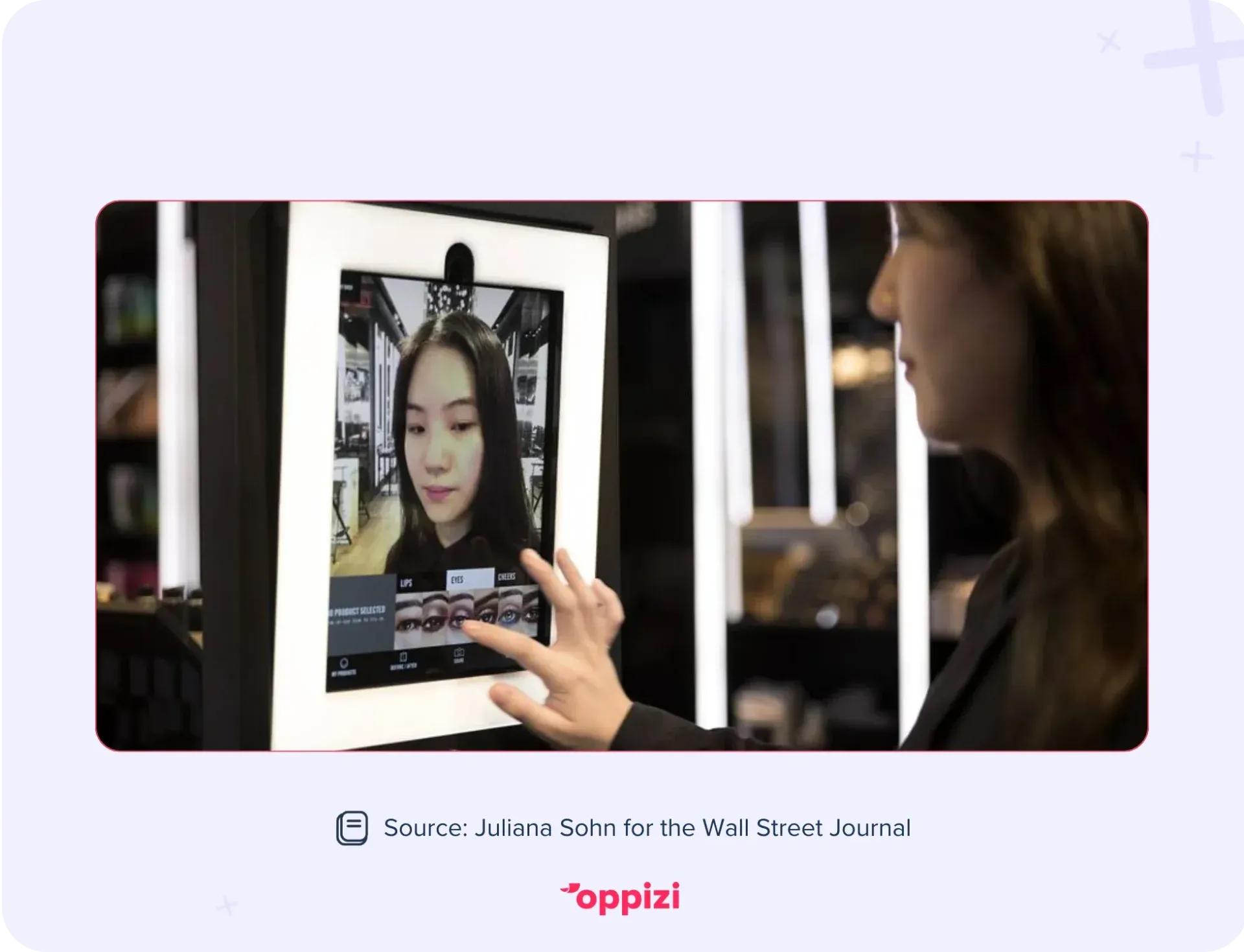
Sephora’s smart mirrors let people try on makeup using augmented reality. It works. These tools helped boost sales by about 31%. Simply put, shoppers who use the AR mirror are more likely to buy.
Community events with a cause (Nonprofits)
Some nonprofits use public art or events to get people involved. The Arthritis Foundation’s “Light Up America” campaign lit up buildings and invited the public to take part. It helped boost social media engagement by 200%. These events create real attention and involvement.
Free samples on the street (FMCG & Beverage)
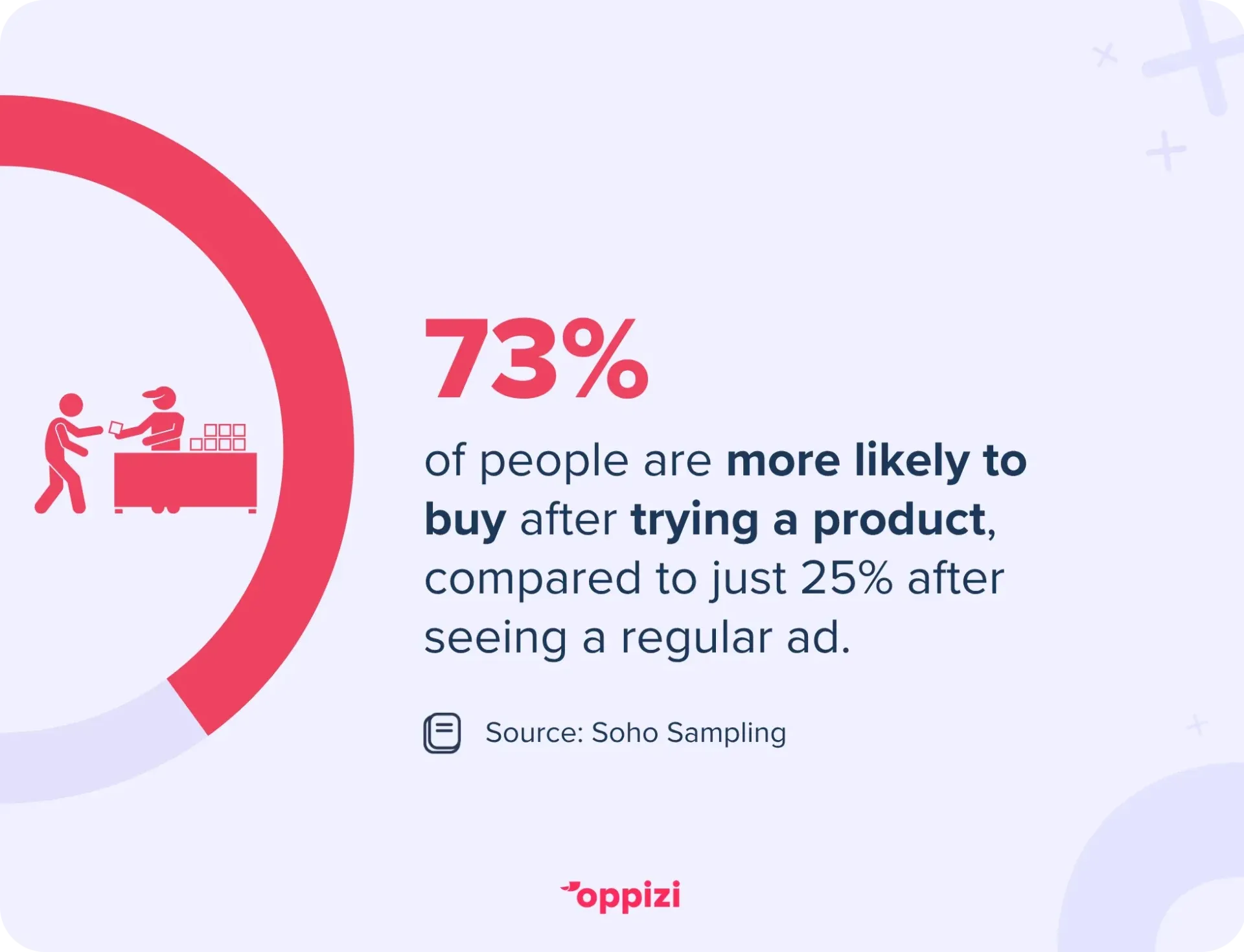
Handing out samples still works. About 73% of people say they’re more likely to buy a product after trying it. That’s compared to only 25% who would buy after seeing a regular ad. Brands like Coca-Cola keep using this tactic because it delivers results.
How to do experiential marketing: A step-by-step guide
This guide will help you plan, run, and improve an experiential campaign. Whether it’s a small sampling setup or a big branded event, here’s how to make it work.
Step 1: Set clear goals
Don’t start without knowing what success looks like. Pick one main goal. Then choose two or three smaller ones. Match each goal with something you can measure. Here are a few examples:
Tips:
- Be specific. Instead of saying “increase awareness,” say “reach 10,000 people and get 500 QR scans.”
- Rank your goals. Focus on your top priority first. Trying to do everything often weakens the result.
Step 2: Pick the right format
Choose a format that fits your goal, your audience, and your budget. You can also mix formats to get more out of your campaign.
Quick tips:
- Start small. Try one pop-up before planning a bigger rollout.
- Combine ideas. A sampling station with a short class or demo works well.
Step 3: Know your audience
Experiential marketing works best when it feels personal. To do that, you need to understand who you're talking to. Build a basic picture of your audience so you can choose the right location, message, and team. Ask yourself:
- Who are they? Age, gender, income, location, family status
- What do they do? Where do they shop? What events do they go to? What apps do they use every day?
- What do they care about? Are they into health, tech, or sustainability? What problem does your product solve?
Example:
A healthy snack brand wants to reach gym-goers. Here's what they might do:
- Set up a sampling table near gyms during peak workout times
- Use simple messaging like “Fuel your workout, the clean way”
- Add a QR code for a free nutrition guide
How to learn more about your audience:
- Use free tools like Google Trends and social media insights
- Ask your retail partners what they’ve noticed
- Look at what your competitors are doing and who shows up
“Knowing your audience is everything,” explains Alberto Granzo, Head of Operations at Oppizi. “You need to understand who they are, where they spend their time, and when the streets are busiest. The best results come when you hand out flyers at the right moment, catching people while they’re on the move, before they have the chance to ignore you.”
Step 4: Create a sensory experience
The more senses you involve, the more likely people are to remember you. Multisensory events can boost recall by up to 70%. Here’s how to bring the senses in:
Tip: You don’t need a big budget. A simple setup with clear visuals, smart design, and a friendly team can still make a big impact.
Step 5: Amplify with digital
Your event doesn’t end when people walk away. Use digital tools to keep things going and reach more people. Try these ideas:
- Branded hashtags: Keep them short and easy to remember
- Photo or video booths: Add props and make sharing simple
- AR filters: Let people play and post with fun branded filters
- Exclusive offers: Use QR codes to unlock discounts or free content
- Retargeting ads: Collect emails (or use pixels where allowed) to send follow-ups
Tip: Give people a reason to share.
Something as simple as “Post with our hashtag and get a free gift” can go a long way.
Step 6: Train your brand ambassadors
The people representing your brand matter. A friendly, informed team can turn a good event into a great one. If they’re just handing out flyers, you’ll miss the chance to connect. But if they’re excited and prepared, people will remember the experience.
What to train for:
- Start real conversations. Avoid scripts. Help staff feel comfortable talking naturally.
- Know the product well. They should be able to answer questions with confidence.
- Listen and learn. Ask staff to note what people say or collect quick feedback.
- Dress the part. Matching, clean clothes with your branding help build trust.
- Keep energy up. Rotate shifts so everyone stays fresh and focused.
Step 7: Measure and improve
Track what’s working and what’s not. Do it before, during, and after the event. Use both numbers and real feedback to make your next campaign even better.
What to measure:
What to do next:
- Spot trends. Which times, places, or messages worked best?
- Do more of what worked.
- Save your notes so you can use them in future campaigns.
Choose the right place and time
Where you hold your event matters. When you hold it matters just as much. It’s not enough to know where your audience goes. You need to know when they’re there, and which days are busiest.
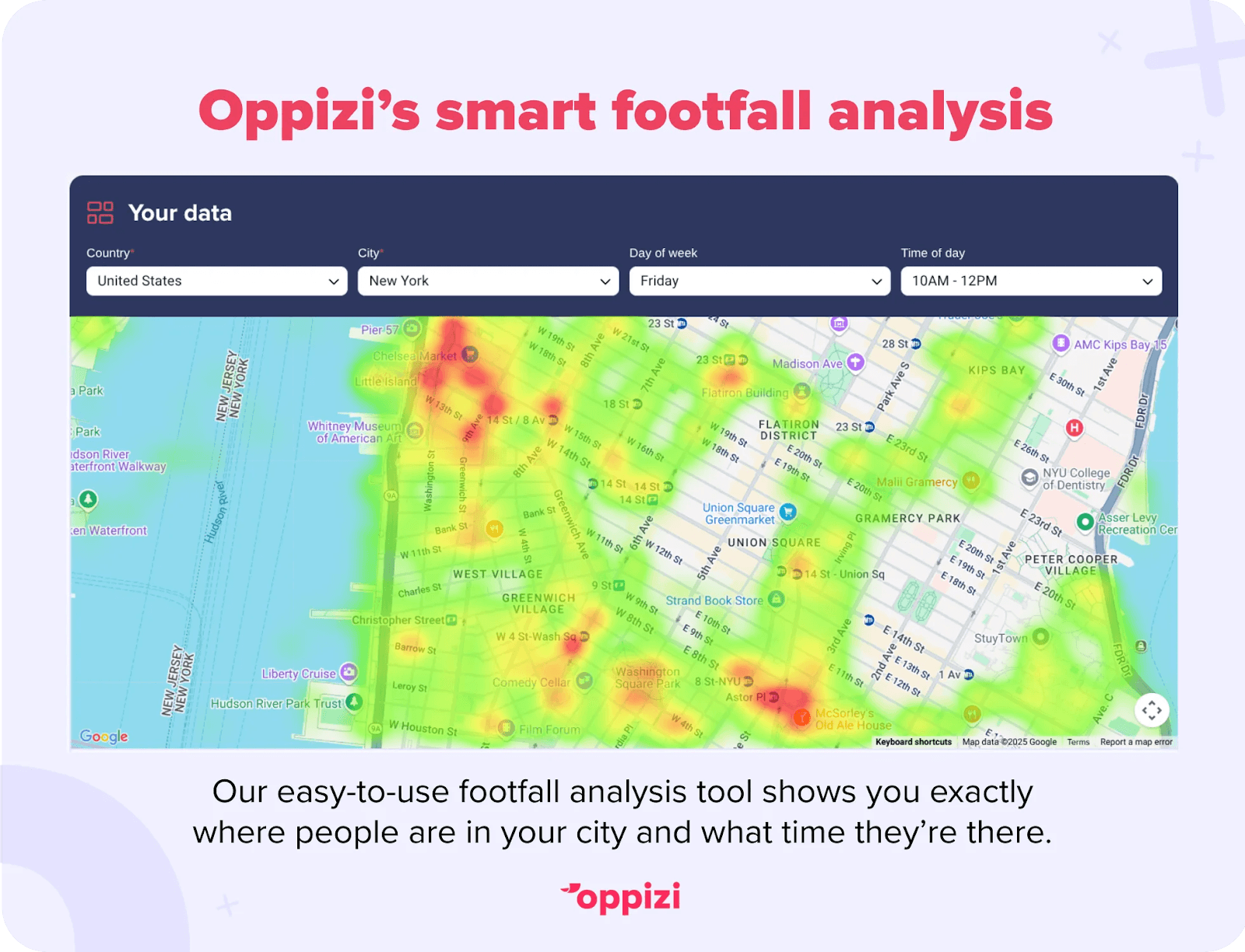
That’s where Oppizi comes in. Our free footfall tool shows real foot traffic data for different cities. You can see heat maps and pick the best locations and times for your campaign. When you combine the right place with the right time, you get more people, better results, and a stronger impact.
FAQs about experiential marketing
What are the 5 C’s of experiential marketing?
Content, context, connection, communication, and conversion. These help guide your campaign. You need the right message (content), delivered in the right place and time (context), that builds relationships (connection), includes two-way interaction (communication), and leads to results (conversion).
What are the 5 dimensions of experiential marketing?
Sense, feel, think, act, and relate. These cover how people experience your brand—through their senses, emotions, thoughts, actions, and social connections. Good campaigns use more than one at the same time.
How can flyers support experiential marketing?
Flyers help spread the word. Before the event, they drive awareness. At the event, they share offers or product info. Afterward, they remind people to buy or sign up. With Oppizi, you can track where they go and how people respond.
How do I pick the best location for a campaign?
Go where your audience already spends time. Fitness brands should target gyms. Tech brands may want co-working spaces or college campuses. Timing matters too. Oppizi’s free footfall tool shows where and when foot traffic is highest.
Is experiential marketing expensive?
It doesn’t have to be. You can start small with things like sampling, flyering, or a single pop-up. Focus on one high-traffic spot. Once you know it works, you can scale up.
Conclusion
Experiential marketing helps people remember your brand. It builds real, lasting connections and delivers clear results.
But the event itself is only part of the story. Oppizi helps you reach people before, during, and after, with targeted flyering that you can track and measure. It’s a simple way to drive traffic, boost engagement, and stay top of mind.
Ready to get started? Launch your campaign in minutes with Oppizi’s easy-to-use platform.