Last updated July 28, 2026
Getting clicks but not conversions?
If your pipeline is full of leads but conversions are slow, it might be worth taking a closer look at your bottom-of-funnel (BOFU) strategy. This is the make-or-break stage of the buyer journey, where trust turns into action and leads turn into paying customers.
Many small and medium-sized businesses focus heavily on building awareness and boosting traffic, but forget that the final stretch is where potential customers are won or lost. You don’t just need more leads - you need the right tactics to convert the ones you already have.
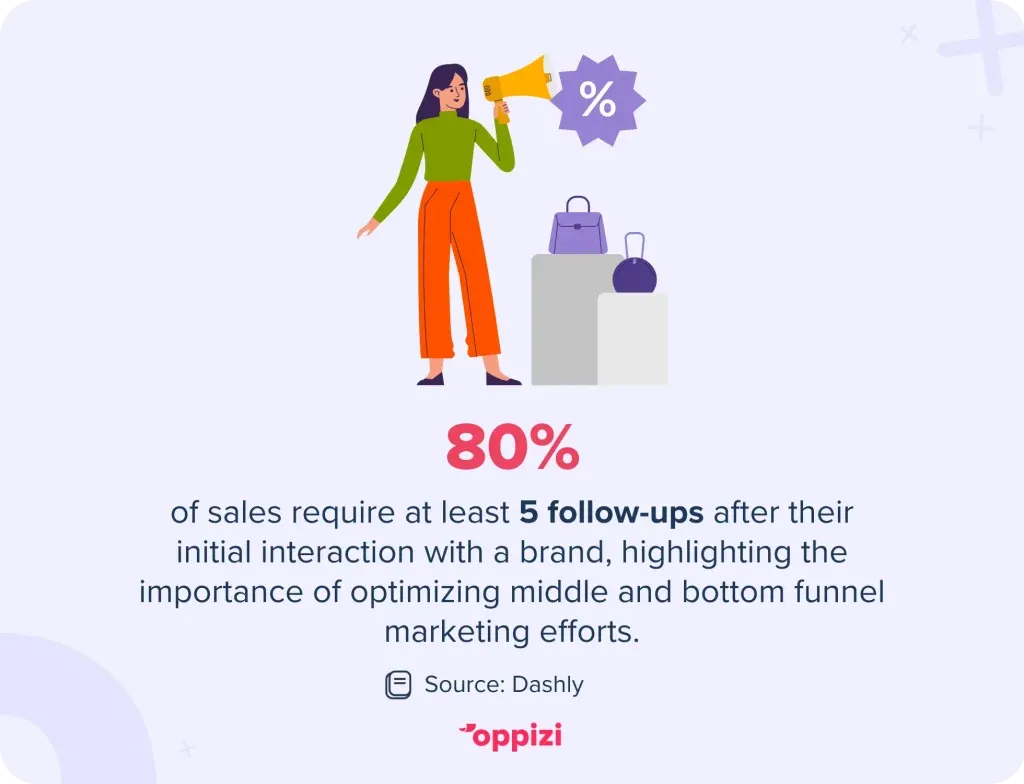
80% of sales require at least five follow-ups after the initial meeting, so if your strategy doesn’t involve nurturing your leads, you're likely leaving money on the table.
In this article, we’ll guide you through the most effective bottom-of-funnel marketing tactics and show you how to use them to seal the deal.
What is bottom-of-funnel marketing?
Bottom-of-funnel marketing focuses on converting warm leads into customers. At this point in the marketing funnel, your audience already knows your brand and is actively considering their options. They’re comparing features, reading reviews and testimonials, and weighing up pricing.
Your job? Give them every reason to choose you.
That means building trust, providing reassurance, and addressing any final objections or doubts before the purchase decision is made.
Why is bottom-of-funnel marketing important?
You’ve put in the hard work to attract and nurture the leads - now it’s time to close the sale. Here’s why BOFU marketing matters:
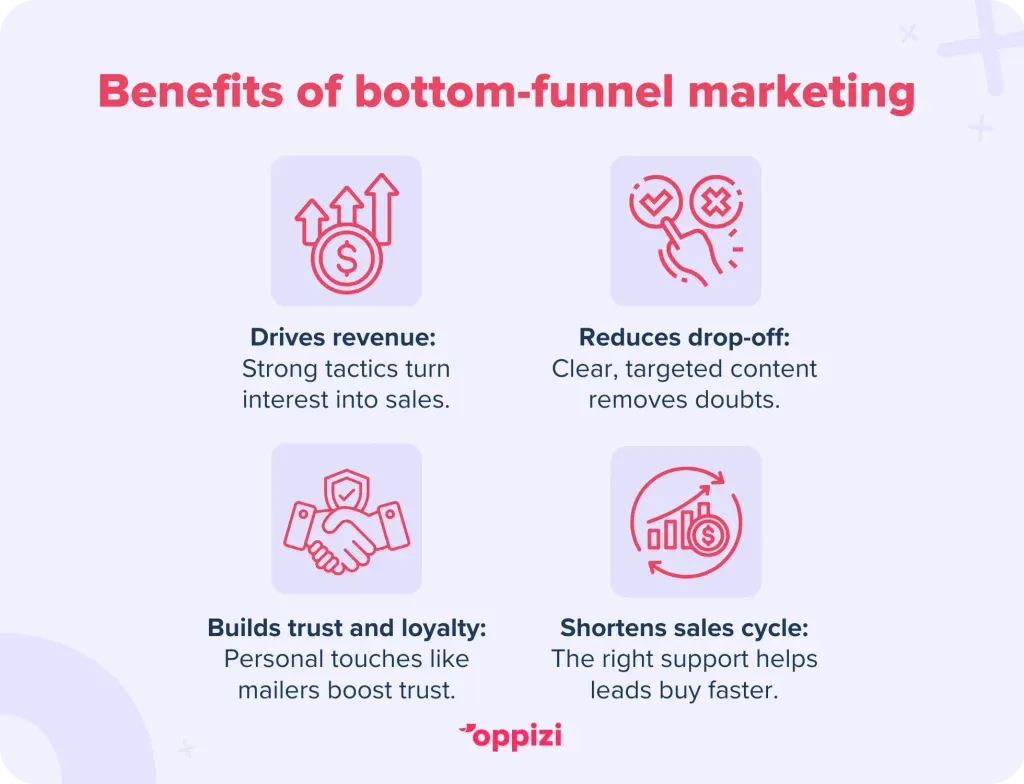
- Drives revenue: This is the final step before purchase. Weak BOFU tactics mean lost opportunities and lost sales.
- Reduces drop-off: People fall out of the funnel for many reasons, such as doubts, confusion, and unanswered questions. Strong BOFU content can clear up any doubts so that customers have no reason not to choose you.
- Builds trust and loyalty: This stage often includes personal touches, like product demos or personalized mailers, which help deepen trust and improve customer satisfaction.
- Shortens the sales cycle: When leads are properly supported at the bottom of the funnel, they move faster from “thinking about it” to “buying now.”
9 bottom-of-funnel marketing tactics to boost conversions
Bottom funnel tactics are all about creating clarity, confidence, and credibility. Here are some strategies on how to deliver on all three:
1. Personalized email campaigns
Personalized emails are highly effective at the BOFU stage. They’re your chance to speak directly to each lead’s needs, behavior, and stage in the decision-making process. According to the American Marketing Association, personalized emails are 26% more likely to be opened and can boost sales by 20%.
Use dynamic email content to:
- Offer tailored product recommendations
- Share case studies relevant to their industry
- Highlight time-sensitive discounts or demos
Pro tip:
Always include a clear CTA like “Schedule Your Demo” or “Claim Your Offer Now.”
2. Product demos and free trials
Let your product do the talking for you. Offering demos or trials reduces the feeling of risk for your leads and gives them firsthand experience on how your product or service solves their problems.
Make it easy:
- Keep sign-ups simple
- Guide new users with onboarding emails, tutorials, or live walkthroughs
- Provide chat or email support during the trial period
Example:
To facilitate quicker purchasing decisions, a B2B SaaS company might provide a 7-day free trial that includes chat support and tutorial videos.
3. Case studies and success stories
The lower funnel stage is all about building trust, and nothing builds trust like social proof. Case studies show how your product provides value.
The best success stories:
- Highlight a relatable customer challenge
- Describe how your product solved the problem
- Share clear, quantifiable results (e.g., "Increased sales by 35% in 3 months")
Pro tip:
Use a story-driven format with quotes, visuals, and metrics. This brings the results to life and draws your lead in.
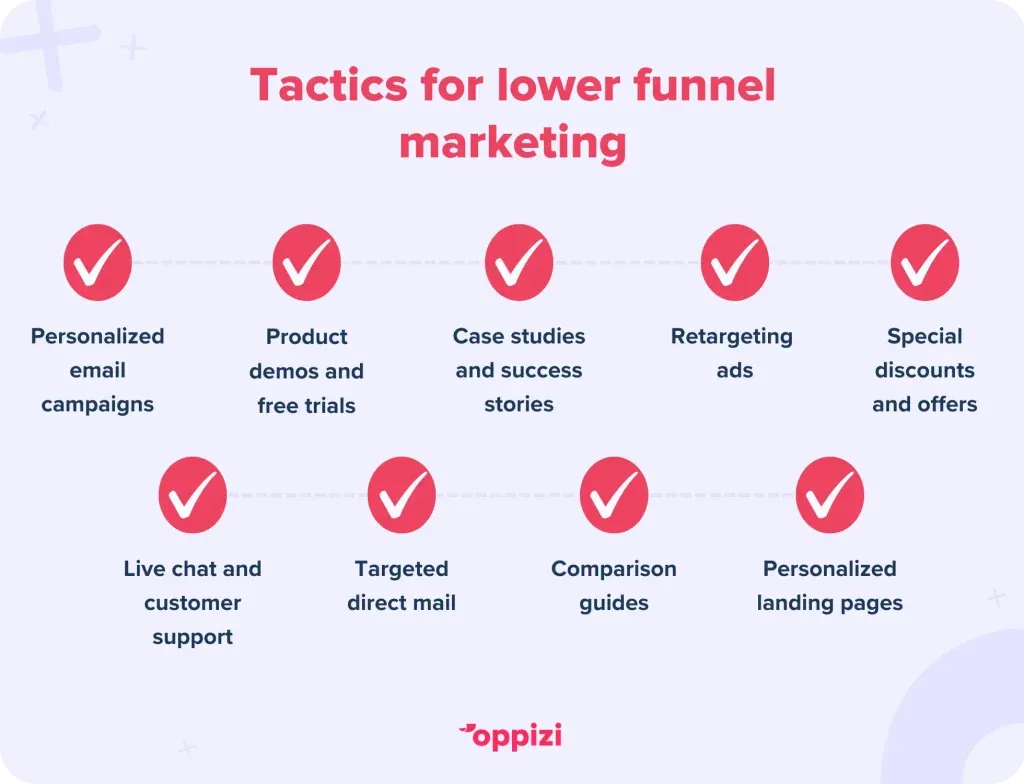
4. Retargeting ads
Retargeting ads help you stay top of mind with prospects who’ve visited your site but haven’t converted. On top of that, research has shown that retargeting efforts can increase conversion rates by 150%.
Use them to:
- Remind visitors of products they’ve viewed
- Highlight a limited-time discount
- Promote a relevant testimonial or demo
Example:
An eCommerce brand could retarget leads with an abandoned cart with a 10% discount code and free shipping for the next 48 hours.
5. Special discounts and offers
When potential customers are almost ready to purchase, well-timed discounts can provide the necessary incentive to finalize the deal. Everyone appreciates a good offer, particularly when they are already considering a purchase.
Tactics that work:
- Limited time offers (“Ends Friday!”)
- Exclusive deals for email subscribers or return visitors
- Bundle discounts or free shipping promotions
6. Live chat and customer support
Sometimes, a simple question or doubt is all that’s stopping a lead from converting. Make it easy to get answers in real time.
Set up:
- Proactive chat prompts on pricing or product pages
- Triggers based on user behavior (e.g., lingering on the checkout page)
- A knowledge base or chatbot for 24/7 support
Bonus tip:
Make sure chat representatives are trained to handle both technical and sales queries.
7. Direct mail
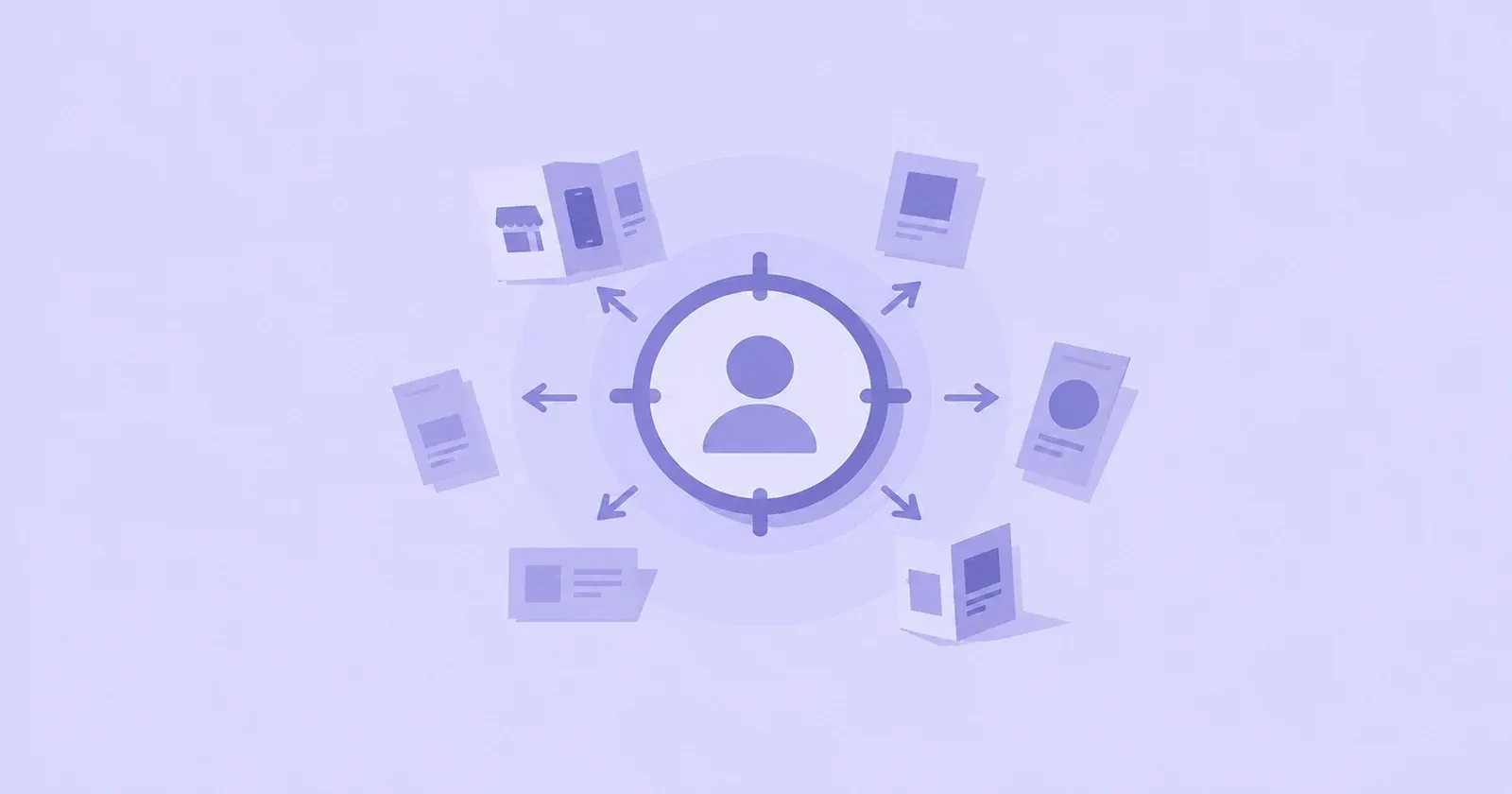
Direct mail is an effective marketing technique that delivers a unique and memorable experience, enhancing the personal impact of your offer. According to the Association of National Advertisers, this approach can achieve a significant return on investment (ROI) of 112%.
Use it to:
- Send a personalized postcard or brochure with a clear CTA
- Include QR codes that link to tailored landing pages
- Highlight customer success stories or time-sensitive promos
Example:
For high-value B2B prospects, consider a personalized direct mail campaign featuring a strong offer and a calendar link to schedule a call.
8. Comparison guides
At the decision stage, buyers are actively weighing up their options. A well-crafted comparison guide helps tip the scales in your favor.
How to do it:
- Create side-by-side comparisons of your product vs. competitors
- Highlight your unique features, benefits, and support
- Be honest - acknowledge competitor strengths but emphasize your edge
Pro tip:
Tailor guides to specific buyer concerns, like price, ease of use, or integrations.
9. Personalized landing pages
Generic doesn’t convert. Personalized landing pages speak directly to the needs, goals, and pain points of different customer segments.
Segment by:
- Industry
- Role or job title
- Behavior (e.g., downloaded a guide, visited pricing page)
Make sure the CTA matches the message. Personalization here can drastically increase conversion rates.
Example:
A CRM platform could tailor landing pages by creating one for startups emphasizing affordable pricing and ease of use, and a separate one for enterprises showcasing features like scalability and customer support.
How to measure bottom-of-funnel success
At the bottom of the funnel, success is measured by conversions. But there are a few key metrics to track:
- Conversion rate: What % of leads turn into customers? Track by source or campaign.
- Demo/trial-to-paid rate: How many trial users or demo attendees become paying customers?
- Cart abandonment rate: If high, this might indicate pricing objections, unclear CTAs, or poor user experience.
- Lead response time: Fast follow-ups can make or break a sale.
- Customer acquisition cost (CAC): How much are you spending to acquire each customer?
Bottom-of-funnel marketing FAQs
1. How do BOFU tactics differ from MOFU (middle-of-funnel) strategies?
Middle-of-funnel marketing nurtures interest - think email sequences and lead magnets. Bottom-of-funnel marketing is where decisions happen. It’s focused on converting warm leads into paying customers.
2. Should small businesses invest in BOFU marketing?
Absolutely. Even if your budget is tight, optimizing your website, adding testimonials, or offering a short demo can significantly improve conversion rates for small businesses.
3. How do I know if my BOFU strategy is working?
Monitor conversion rates, sales-qualified leads (SQLs), and customer feedback. A drop-off of leads at the final stage could indicate problems with trust or clarity.
Conclusion
Bottom-of-funnel marketing is where interest becomes action. If you’re generating leads but struggling to convert them, optimizing this final stage can unlock serious growth.
From compelling case studies to helpful demos and trust-building testimonials, your BOFU tactics should reassure prospects and simplify their decision.
Don’t let quality leads slip through the cracks. Build a conversion engine that works, and watch your sales climb.
With Oppizi, you can launch hyper-targeted direct mail or flyer campaigns to nudge warm leads toward conversion. Combine your digital and offline strategies to seal the deal with confidence.
Ready to convert more leads? Launch your offline campaign with Oppizi today.