Last updated July 28, 2026
Marketing strategies that rely purely on guesswork might get you good results here and there, but this is not sustainable or reliable.
Enter: the marketing funnel - a structured way to turn strangers into loyal customers, with purpose and precision.
Understanding the marketing funnel can drastically improve your results, regardless of whether you're running a small business, scaling a startup, or managing multi-channel campaigns. In this article, we’ll break down what a marketing funnel is, the core stages it includes, strategies for each phase, and how it can supercharge your marketing efforts both online and offline.
What is a marketing funnel?
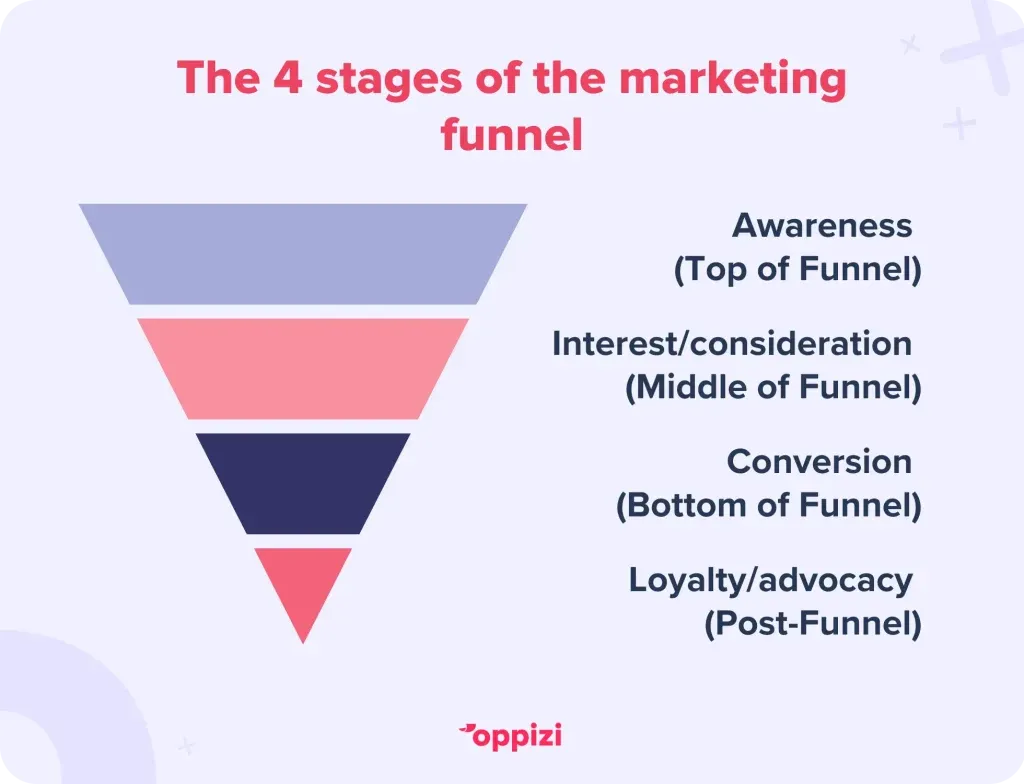
A marketing funnel is a visual representation of the customer journey, from the first moment they hear about your brand to the point where they make a purchase (and beyond).
It works almost like an inverted pyramid. It starts wide at the top when you capture as many potential leads as possible, but narrows as those leads move closer to making a decision.
Each stage requires different messaging, tools, and strategies to guide people down the funnel. Neglecting a stage or using the same approach for all leads can result in missed opportunities for revenue and customer loyalty.
The 4 main stages of the marketing funnel
There may be variations, but most funnels follow four classic stages: Awareness, Interest/Consideration, Conversion, and Loyalty/Advocacy.
Let’s break each stage down and detail which strategies can be used for each.
1. Awareness (Top of Funnel - TOFU)
This is the initial stage where an individual becomes aware of your brand. They are not prepared to make a purchase at this point, they are simply discovering that your brand exists.
Goal:
Capture attention and introduce your value.
Effective strategies:
- SEO-optimized blog posts and how-to content. Research indicates that blogging can increase website visitors by 55%, making it a crucial step for boosting web traffic.
- Social media videos and reels.
- Influencer partnerships.
- Paid ads like Google, Meta, and TikTok.
- Offline tactics like flyer distribution or branded events. These are ideal for getting in front of local audiences.
Tip: Offline flyers that include QR codes that link to online content are an excellent way to attract potential customers at the top of the marketing funnel. This strategy enables multiple brand touchpoints, increasing brand recall. Oppizi can assist with precisely targeted flyer distribution to your ideal customer segments if you are interested in flyer marketing.
2. Interest & consideration (Middle of Funnel - MOFU)
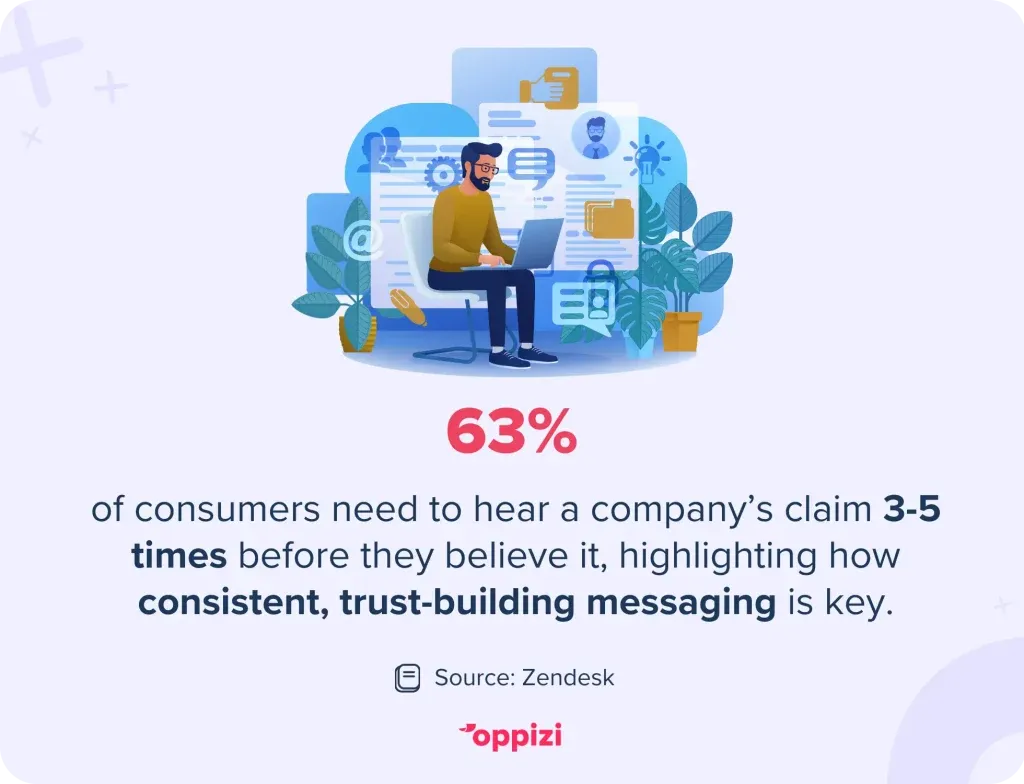
Now that they know who you are, potential customers are actively comparing options and weighing up whether to choose you. In fact, 63% of consumers need to hear a company’s claim 3-5 times before they believe it, so consistent, trust-building messaging is key at this stage.
Goal:
Build trust and guide them toward choosing you.
Effective strategies:
- Email marketing sequences.
- Free trials or demos.
- Lead magnets like eBooks or checklists.
- Webinars or workshops.
- Product comparison pages.
- Case studies and reviews.
- In-person sampling or street activations.
Tip: Combine digital nurture sequences with real-world touchpoints to give your brand a better chance of standing out. For example, follow up online interest with a targeted direct mail offer.
3. Conversion (Bottom of Funnel - BOFU)
This stage is all about converting a lead into a customer. At this point, they have expressed interest, researched your product or service, and are very close to making a purchase decision. To give a final push, you need to make the buying process as easy and seamless as possible. This could involve offering a special discount, highlighting a limited-time offer, or showcasing customer testimonials to instill trust and confidence.
Goal:
This is the point where you need to encourage action, and fast.
Effective strategies:
- Discount codes or limited-time offers
- Personalised emails with strong CTAs
- Optimised landing pages
- Live chats or one-on-one calls
- Retargeted ads
- Flyers with time-sensitive offers or exclusive in-store perks
Tip: Running an offline campaign with a promotional code not only gives customers a reason to shop with you, but it also a means of tracking conversions and measuring ROI on platforms like Oppizi.
4. Loyalty & advocacy (Post-Funnel)
Fostering customer loyalty is essential once you've converted a lead into a customer. The goal is to encourage repeat business and ideally turn them into brand advocates. Customer retention is key for sustainable growth and revenue, as it ensures a steady income stream. In fact, studies show that increasing customer retention by just 5% can boost profits by up to 95%.
Goal:
Turn customers into repeat buyers and brand ambassadors.
Effective strategies:
- Loyalty programs and referral incentives
- Exclusive discounts for repeat purchases
- User-generated content campaigns
- Customer appreciation gifts
- Community-building on social platforms or in person
Tip: Want to stay at the top of your customers' minds? A surprise thank-you mailer with a discount on their next purchase, or a branded gift, can go a long way. Combine digital thank-you emails with offline moments to enhance the customer experience.
Why do you need a marketing funnel?
One thing is for certain - every business has a funnel, whether it's planned or not. The only question is whether yours is strategic or chaotic.
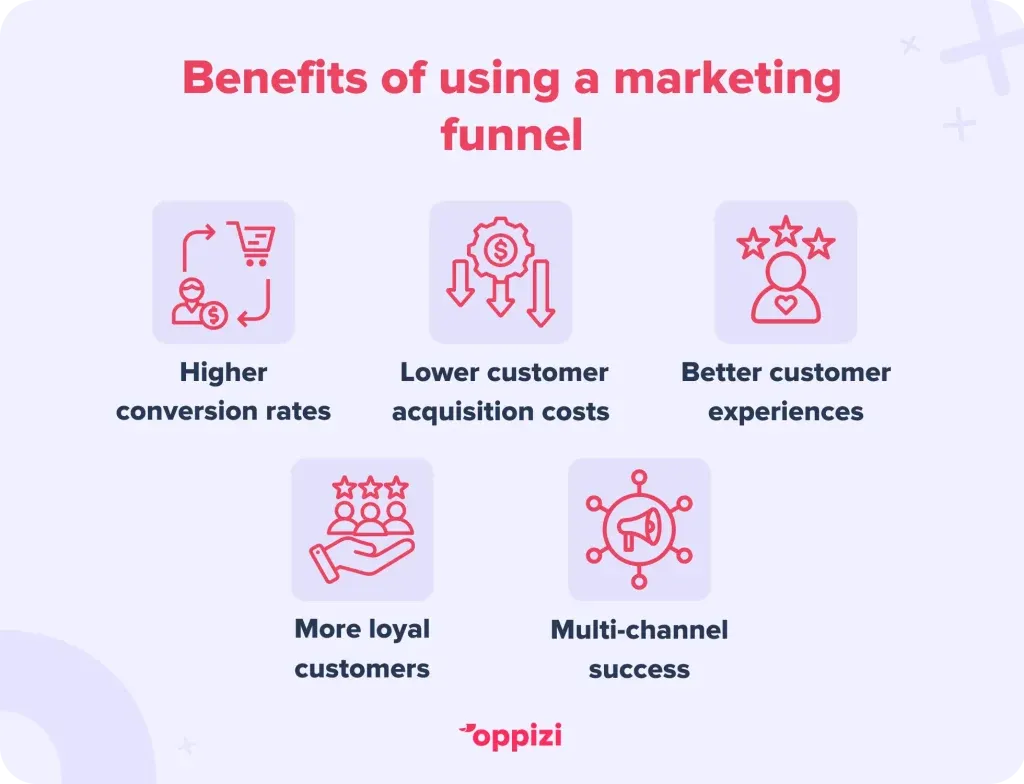
Here are just some of the benefits of building a thoughtful, stage-specific funnel:
1. Higher conversion rates
You eliminate the guesswork by providing people with what they need at the right time.
2. Lower customer acquisition costs
Funnels help you qualify leads and nurture them efficiently, reducing wasted ad spend.
3. Better customer experiences
By anticipating needs at each stage, you make the journey smoother and more valuable.
4. More loyal customers
Prioritizing customer engagement after a sale fosters loyalty and encourages referrals, leading to sustainable business growth.
5. Multi-channel success
Funnels let you combine online and offline strategies for maximum impact. With platforms like Oppizi, offline channels are no longer just a black hole - you can track and optimise your campaigns just like you can with digital.
Frequently asked questions about marketing funnels
1. How long should it take to move someone through a marketing funnel?
The length of your sales funnel is determined by the product you're selling. For example, the sales funnel for a coffee shop might be a few days, while the sales funnel for B2B software could be several months. The most important thing is to make sure that your content is appropriate for the customer's stage in the buying process.
2. Can offline marketing fit into a digital funnel?
Absolutely. Offline channels like flyers, events, and direct mail are great for top- and mid-funnel stages, and they’re highly effective when tracked with QR codes, promo codes, or digital follow-ups.
3. How do I measure funnel success?
Track metrics like:
- Website visits (TOFU)
- Lead magnet downloads (MOFU)
- Sales or bookings (BOFU)
- Repeat purchases or referrals (Post-funnel)
Tools like Google Analytics, HubSpot, and Oppizi can help you measure online and offline performance.
Final thoughts
Marketing funnels are the roadmap to long-term, predictable growth. When you take the time to build and optimize each stage, you’re not just selling - you’re building a brand people want to come back to.
And, even better, the versatility of marketing funnels extends beyond the digital realm. Offline marketing is experiencing a resurgence, and platforms like Oppizi are making offline marketing more intelligent, measurable, and effective.
Whether you’re targeting city commuters or niche neighborhoods, Oppizi’s hyper-targeted flyer campaigns help you connect with the right people at the right time.
Ready to bring your marketing funnel to life? Start a campaign with Oppizi today, and turn attention into action.