Last updated July 23, 2026
Capturing your audience's attention in today's world of shrinking attention spans requires more than just creativity - it demands a strategic approach. This is where the power of paid media comes into play.
Where organic reach is a long game, paid media is the express train - quickly getting your brand in front of the right people. Whether you’re a fresh startup trying to gain traction or a seasoned brand ready to scale, mastering paid media can shift your growth into high gear.
From Google Ads to Instagram promos and even good old-fashioned billboards, paid media is about putting your message where your audience already is and paying to make sure they see it. It's a direct path to greater visibility, sharper targeting, and results you can track.
When used strategically, paid media lets you deliver compelling ads and branded content to the right audience, at the right time, and on the right platforms.
In this article, we’ll uncover the different types of paid media, the benefits it brings to businesses, pricing models, and how to use it effectively in your marketing strategy.
What is paid media?
Paid media refers to a type of advertising where businesses pay to display their promotional content on external channels. This includes things like commercials on TV, ads on social media, banners on websites, and offline space, like billboards. Essentially, businesses buy space or time on the platform of their choice to showcase their brand or products and attract more customers.
Paid media channels are the various platforms or avenues where you can pay to display your advertisements. There’s an ever-expanding number of them, which means companies can choose the ones that best match their target audience and marketing goals.
The difference between paid, owned, and earned media
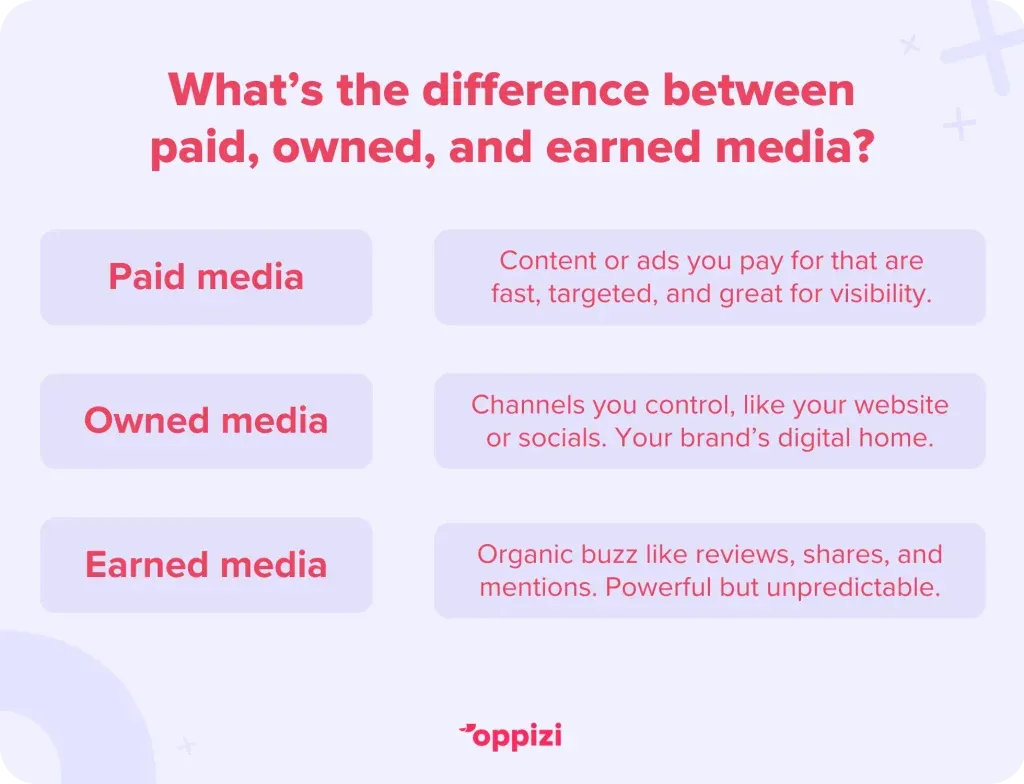
To build a strong, well-rounded marketing strategy, it’s important to understand the three core media types: paid, owned, and earned. Each serves a unique purpose and offers businesses a different degree of control. Let’s explore them in more detail:
Paid media
This is any content or advertising space you pay for. Think Google Ads, social media ads, influencer sponsorships, flyer distribution, or billboard placements. It’s fast, targeted, and scalable, which is great for boosting visibility.
Owned media
Owned media refers to channels that your brand controls. This includes your website, blog, email newsletters, app, and social media profiles. It’s where your brand lives online - a long-term asset you build over time to establish authority.
Earned media
Earned media is the digital version of word-of-mouth. It includes media coverage, mentions, reviews, shares, and organic buzz from people talking about your brand without you paying them to do it. While powerful, it’s not something that can be controlled.
These three marketing methods, when used together, can create a marketing ecosystem that captures, nurtures, and converts your audience at every stage.
Types of paid media
Let’s get into the lineup. There are several types of paid media, and each one plays a different role in your marketing stack:
1. Search Ads (PPC)
Search ads, or Pay-Per-Click (PPC) ads, involve strategically placing ads on Search Engine Results Pages (SERPs) using platforms like Google Ads and Bing Ads. These ads allow you to target users precisely at the moment they’re actively searching for products or services like yours. For example, if you’re a car dealership, you could bid on the keyword “car dealership near me” to show up when someone nearby is ready to buy.
Because you’re capturing users with high intent, search ads are one of the most efficient paid media formats. In fact, search advertising delivers an average ROI of 200% - meaning you can earn $2 for every $1 spent.
To get the most out of your budget, it’s important to balance keyword volume and competitiveness. Focus on keywords that are relevant and attainable for your business, especially if you're working with a limited budget.
Search engine advertising is ideal for lead generation and direct conversions, making it a go-to strategy for businesses looking to drive measurable results quickly.
2. Social media ads
Popular social media platforms like LinkedIn, Instagram, and Facebook all offer great advertising opportunities, with the option to target ads based on demographics, interests, behaviors, and more.
Through these platforms, you can create highly customized campaigns that can include video, images, and interactive elements to engage directly with users. Social media advertising is especially effective for building brand awareness, promoting special offers, and driving traffic to websites or landing pages.
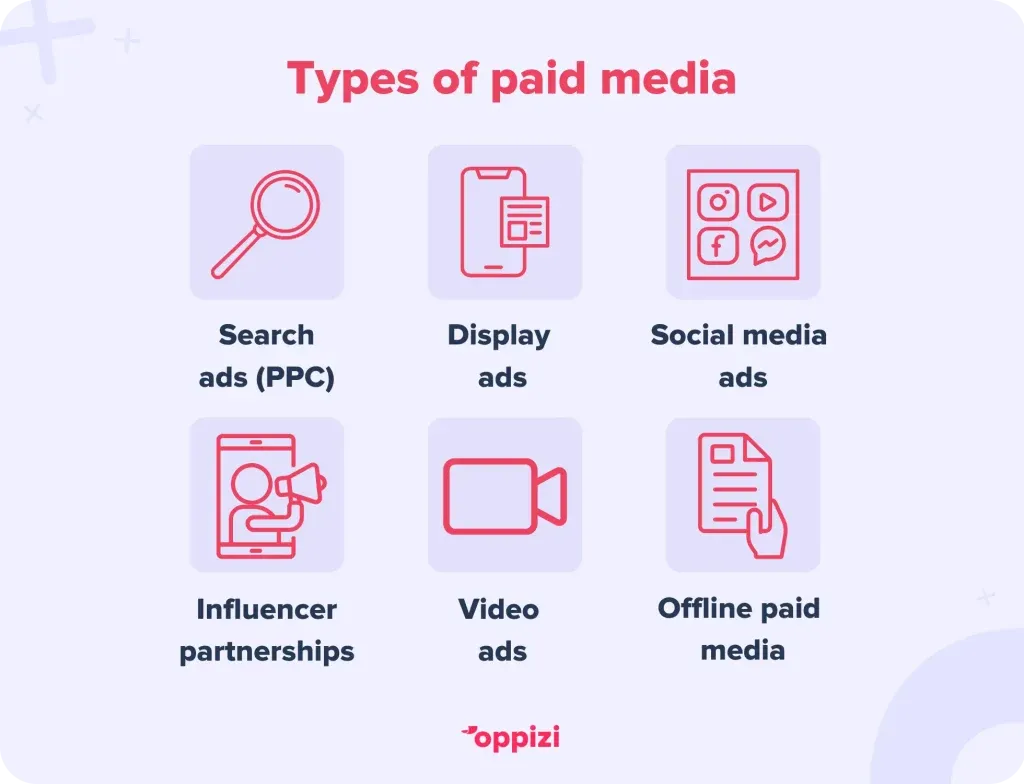
3. Display ads
Display ads encompass a variety of formats, including banner ads, interstitial ads, and video ads, and can be static, animated, or interactive. They are strategically placed on websites, within mobile apps, and in video content to capture user attention. Display ads serve a dual purpose: effectively building brand awareness and retargeting by reaching users who have previously interacted with the brand's website or products. Through compelling visuals and targeted messaging, display ads can leave a lasting impression on potential customers and drive them further down the sales funnel.
4. Influencer partnerships
Influencer marketing involves collaborating with influencers who can create sponsored content, such as posts, stories, or videos, featuring your product or service. They may also host giveaways or contests to generate excitement and engagement around your brand. Additionally, influencers can participate in affiliate programs, where they earn a commission for every sale generated through their unique referral link. By leveraging the trust and authenticity that influencers have built with their audience, you can effectively reach a wider audience and drive conversions.
5. Video ads
Short-form video content is currently experiencing a surge in popularity across multiple social media platforms. This includes pre-roll advertisements on YouTube, Spark Ads on TikTok, and Reels on Instagram. The widespread appeal and effectiveness of this format have made it dominant in the digital advertising landscape.
6. Offline paid media
Paid media isn’t just digital - it thrives offline, too. Channels like flyer distribution, direct mail, and out-of-home (OOH) ads (think billboards or street furniture ads) are still incredibly effective, especially when hyper-local targeting is the goal.
For example, flyer distribution is a powerful tool for local businesses or events looking to drive action within a specific geographic area. It offers tangible, immediate reach, and people actually respond to it. In fact, 79% of consumers act on direct mail immediately, compared to just 45% who do the same with email.
Want to take your offline campaigns to the next level? Oppizi’s trackable flyer distribution solutions combine traditional marketing with modern analytics so you can see exactly what’s working.
Pricing models in paid media
Now, onto one of the most important questions: how much does this all cost?
There are different pricing models available to choose from depending on what action you want to incentivise and the specific goals of your campaign. Whether you’re after visibility, engagement, or for customers to take a specific action, there’s a model that can help you while ensuring maximum ROI.
Here’s an overview of some of the most popular pricing models:
1. Cost Per Click (CPC)
CPC advertising, commonly used on social media and search engines, involves paying a fee for each user click on your ad. This method drives targeted traffic to specific web pages and ensures payment only for ads that generate direct engagement. CPC is particularly effective for conversion-focused campaigns as it encourages advertisers to optimize their ads and landing pages to maximize the click-through rate (CTR).
2. Cost-Per-Impression (CPM)
Cost-Per-Impression (CPM), also known as Cost-Per-Mille, is a payment model where advertisers pay per thousand impressions. CPM is an effective way to build brand awareness and reach a broad audience rather than drive immediate sales.
While CPM can reach large audiences, it still allows for targeted advertising based on interests, geography, and demographics, ensuring that messages are delivered to the right people. Additionally, it provides budget management and reach forecasting capabilities by enabling advertisers to estimate the cost of exposure based on the chosen platform's traffic.
3. Cost-Per-Action (CPA)
CPA is a highly appealing advertising model because it directly links the cost of the ad to the effectiveness of the ad in generating desirable results. It achieves this by charging the advertiser only when a specific action is taken, such as a click, sale, sign-up, subscription, or another form of conversion.
CPA is often used by businesses focused on conversion optimization, as it reduces the risk of ad spend that does not result in tangible business benefits. It’s ideal for campaigns where the advertiser wants to align advertising costs with ROI and use data to continually improve campaign performance.
Benefits of paid media
Here are the key advantages of using paid media:
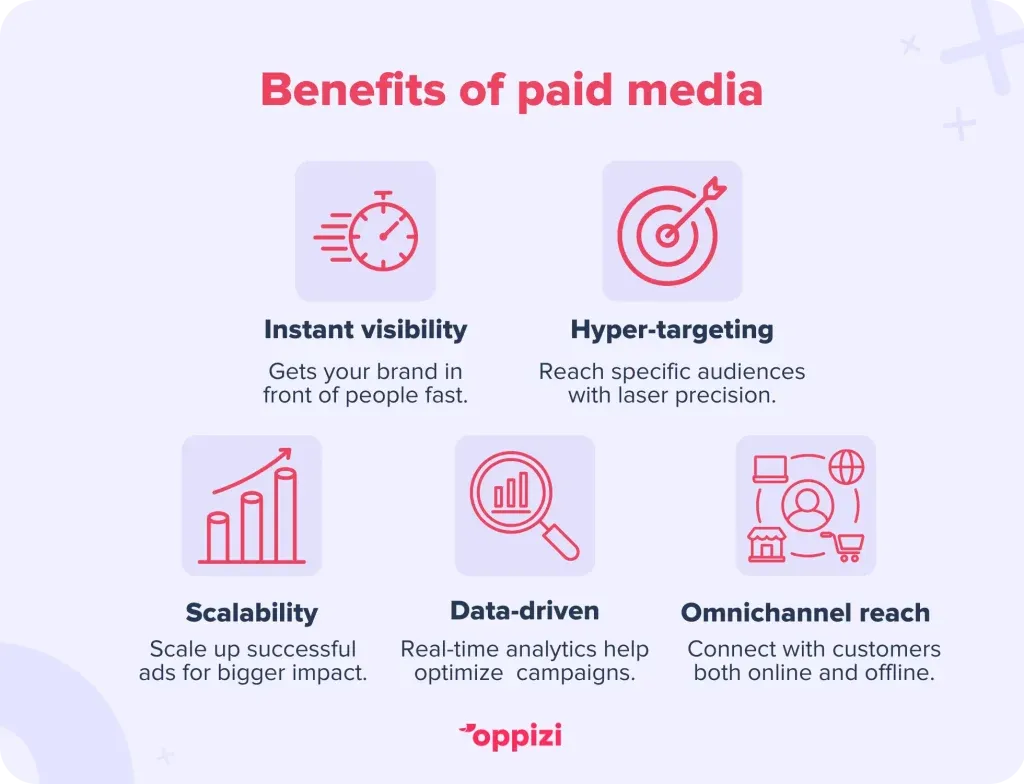
Instant visibility
Unlike SEO or content marketing, which take a while to build momentum, paid media delivers immediate results. This is ideal when you’re launching products, offering promotions, or raising brand awareness.
Hyper-targeting
Paid media can reach specific audiences based on their location, behavior, interests, and more.
Scalability
Paid media campaigns are made for optimization. Begin with a small budget and a variety of creative assets. This allows you to test different messaging, visuals, and targeting options to see what resonates with your audience and then scale what works.
Data-driven
Another major benefit of paid media is that it enables you to make data-driven marketing decisions. With comprehensive tools built into most advertising platforms, you can track ad performance in real time and make quick adjustments as necessary.
This includes data on user behavior, ad engagement, conversion rates, and ROI. These insights allow you to optimize campaigns and test different messages and visuals to maximize your ad spend.
Omnichannel reach
Paid media encompasses a wide range of channels, both offline and online, that businesses can leverage to reach their target audience and influence their decision-making process. By strategically utilizing paid media, businesses can effectively guide potential customers through the entire customer journey, from the initial point of contact to the ultimate conversion.
How to use paid media effectively
Below are some tips on how to create an effective paid marketing campaign.
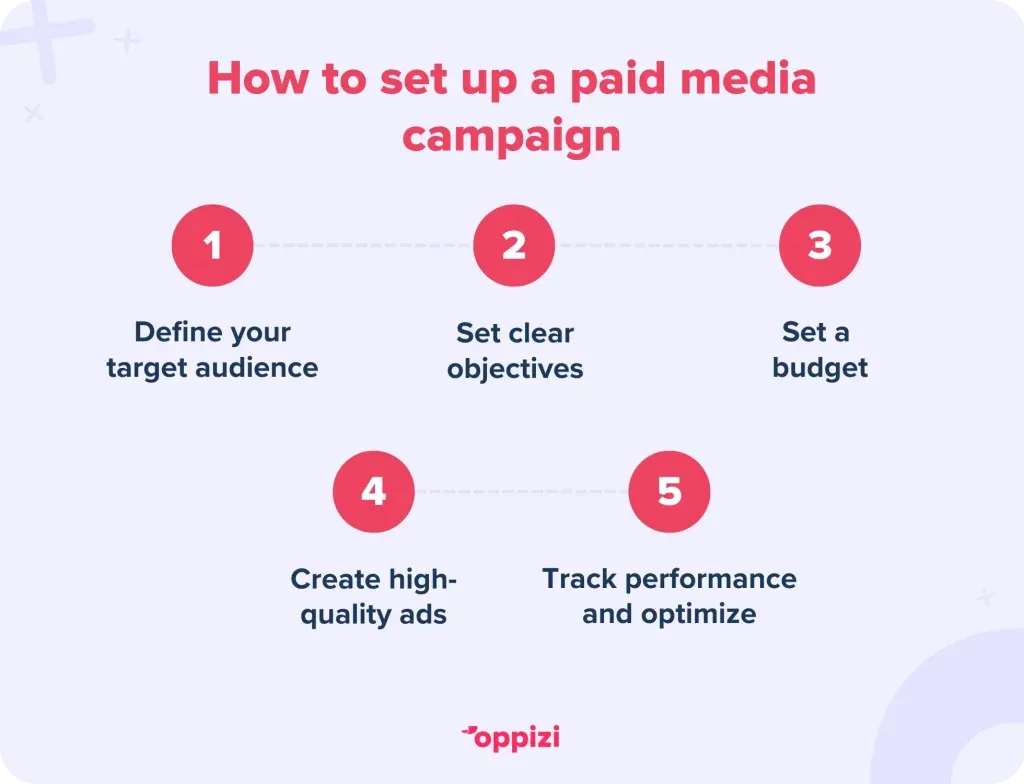
1. Define your audience
The first step in launching a paid media strategy is knowing where your audience is and how to reach them. Analyze demographic data, interests, purchasing habits, and behavior patterns to define your audience with precision.
Consider whether your ads will have the most impact on social media, search engines, video platforms, or perhaps an offline channel. This helps you direct your marketing efforts to those who are most likely to convert.
2. Set clear objectives
Decide what you want to achieve with your paid media campaign by setting SMART goals. You may want to increase brand awareness, drive website traffic, generate leads, boost sales, or promote a new product launch. Your goals will dictate the choice of advertising platform, ad format, targeting strategy, and budget allocation.
3. Set a budget
Allocate a budget to the campaign. Choose which pricing models you want to use, whether CPC (Cost-Per-Action), CPC (Cost-Per-Click), CPM (Cost-Per-Impression), or a combination of them, depending on what you’re trying to achieve. Closely monitor spending to ensure you’re achieving a good ROI.
4. Test creative formats
Invest in high-quality ads that resonate with your target audience. Ensure images and ad copy are highly personalized for your audience, with strong, engaging CTAs. Also, be sure to adapt content for the platform you’re using.
A/B test different copy, visuals, and calls to action (CTAs) to discover what resonates with your audience the most.
5. Track & optimize
Use the data produced from your campaign to make beneficial changes, such as tweaking ad copy, adjusting targeting settings, changing your budget, or trying out different ad formats. Regular optimization based on actual performance data is key to improving efficiency and maximizing ROI.
FAQs about paid media
1. What’s the difference between paid, owned, and earned media?
Paid ads are the ads you pay for, owned are assets you control (like your website or newsletter), and earned is organic exposure gained over time like reviews or press.
2. Is paid media only for big businesses?
No! Small businesses can also benefit from using paid media. Using paid ads can achieve quick visibility, especially on platforms with low entry points like Meta or Oppizi’s local flyer distribution.
3. What’s the ROI of paid media?
The ROI of paid media campaigns varies widely. The key is tracking and optimizing to ensure you achieve the best possible result. According to the 2022 ANA Response Rate Report, the ROI on paid media was 27%.
4. How long should a paid media campaign run?
A paid media campaign should ideally last at least 2-4 weeks. This leaves you sufficient time to gather data, tweak your targeting, and assess results.
Conclusion
Paid media is a fantastic tool for marketers looking to expand their reach and tap into large networks beyond their existing audiences. It’s also a useful tool for driving specific actions quickly and effectively.
With a diverse range of channels available, from social media and search engines to email marketing and traditional flyer distribution, companies can tailor their paid media strategies to reach who they want, when they want, and where it counts.
At Oppizi, we specialize in supplementing your online efforts with innovative and trackable offline strategies, like flyer distribution, which can add a tangible element to your marketing mix.
Ready to get started? Create an offline marketing campaign with Oppizi today to make your message stand out!