Last updated July 28, 2026
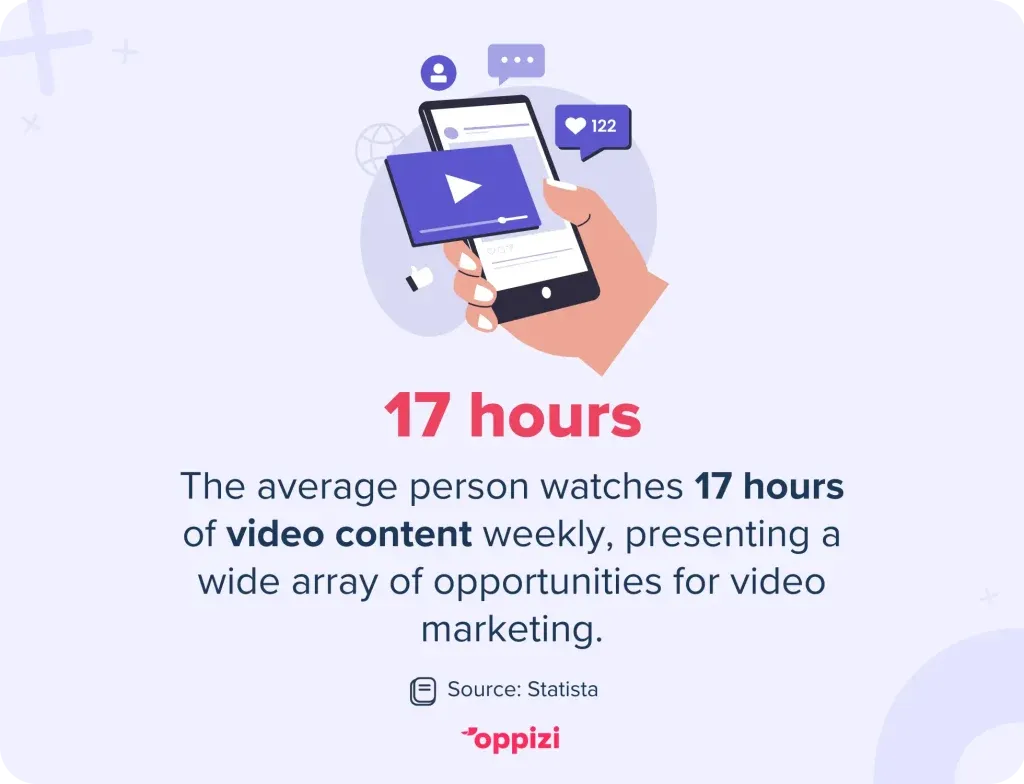
On average, people watch 17 hours of video content each week. That’s 17 hours of opportunity for brands to engage, inform, and convert potential customers.
Video marketing has become a cornerstone of modern digital strategies, helping brands captivate audiences and drive meaningful action. In 2025, video content is expected to make up 82% of all internet traffic, cementing its role as the dominant form of online communication.
In this guide, we’ll explore the fundamentals of video marketing, its various formats, the benefits it offers, and expert tips to help you create content that resonates with your audience.
What is video marketing?
Video marketing utilizes engaging video content to promote brands, products, and services. It leverages various platforms, including social media, websites, and email campaigns to inform, entertain, and connect with target audiences.
Types of video marketing
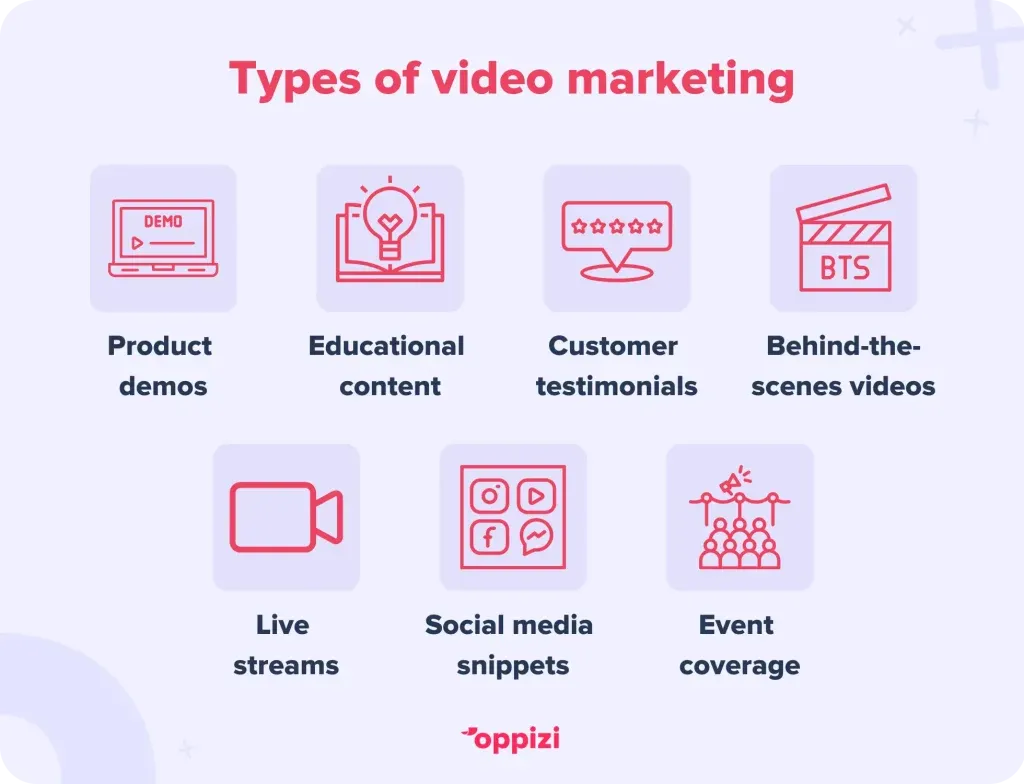
Video is an extremely versatile content format. Whether you need to showcase your physical product or you want to show your customers behind-the-scenes footage of your business, you can find a suitable type of video format to achieve your larger marketing objectives.
Below are a few of the most common types of video marketing content you can create for your business.
Product demo videos
Product demo videos are an effective way to showcase your product’s features and benefits in action. In fact, research has shown that 84% of people have been convinced to buy a product after watching a video.
By walking viewers through how your product works, you can clearly communicate its value and help prospective customers understand how it can solve their problems. These videos are particularly useful for complex products or services that require a bit more explanation.
Tips for effective product demos:
- Highlight key features and explain their benefits.
- Keep it concise; focus on what makes your product unique.
- Use clear visuals and real-life examples to illustrate usability.
Educational and informative videos
Educational videos provide value to your audience by teaching them something new. These videos could explain a concept related to your industry or help viewers solve a specific problem. They position your brand as an expert in your field, building trust and credibility.
Popular educational video ideas:
- Tutorials: How to use your product or a related skill.
- Explainers: Breaking down complex topics into simple concepts.
- Tips & tricks: Sharing best practices related to your industry.
Customer testimonials
Customer testimonials are powerful tools for building social proof. These videos feature satisfied customers discussing their positive experiences with your product or service. Seeing genuine reviews from real users helps build trust and overcome potential objections, increasing the likelihood of conversion.
Elements of a strong testimonial video:
- Genuine storytelling that focuses on the customer’s problem and how your product provided a solution.
- Clear results or improvements experienced after using your product.
- Personal and authentic delivery to make it relatable.
Behind-the-scenes videos
Behind the scenes (BTS) content gives viewers an inside look at your company’s culture, values, and processes. It helps humanize your brand by showing the people behind the product or service, making it more relatable and fostering an emotional connection with your audience.
Ideas for BTS videos:
- A day in the life of your team members.
- Tours of your workspace or office.
- Insights into product development or event planning.
Live streams
Live streaming allows you to connect with your audience in real time. It’s a great way to generate excitement, answer customer questions, or even host product launches. Live streams provide authenticity and immediacy that pre-recorded videos can’t match, making viewers feel more connected to your brand.
Live stream content ideas:
- Q&A sessions to address common customer questions.
- Product launches or special announcements.
- Hosting a live interview with an industry expert or influencer.
Social media snippets
Short, engaging videos designed for platforms like Instagram, TikTok, and Facebook to maximize reach. These bite-sized videos capture attention quickly and encourage sharing, making them a powerful tool for generating brand awareness.
Best practices for social media snippets:
- Keep videos under 60 seconds for maximum engagement.
- Use eye-catching visuals and strong hooks in the first few seconds.
- Incorporate trending sounds, effects, or challenges to boost visibility.
Event coverage
Event coverage videos showcase key moments from company events, trade shows, and product launches to generate buzz and extend the reach of your event beyond attendees. These videos can be live-streamed or edited into dynamic highlight reels to maintain excitement long after the event ends.
Types of event coverage videos:
- Highlight reels: Recap the most memorable moments in a fast-paced, engaging format.
- Live coverage: Stream real-time footage to engage remote audiences.
- Behind-the-scenes: Offer a candid look at event preparation and exclusive moments.
Benefits of video marketing
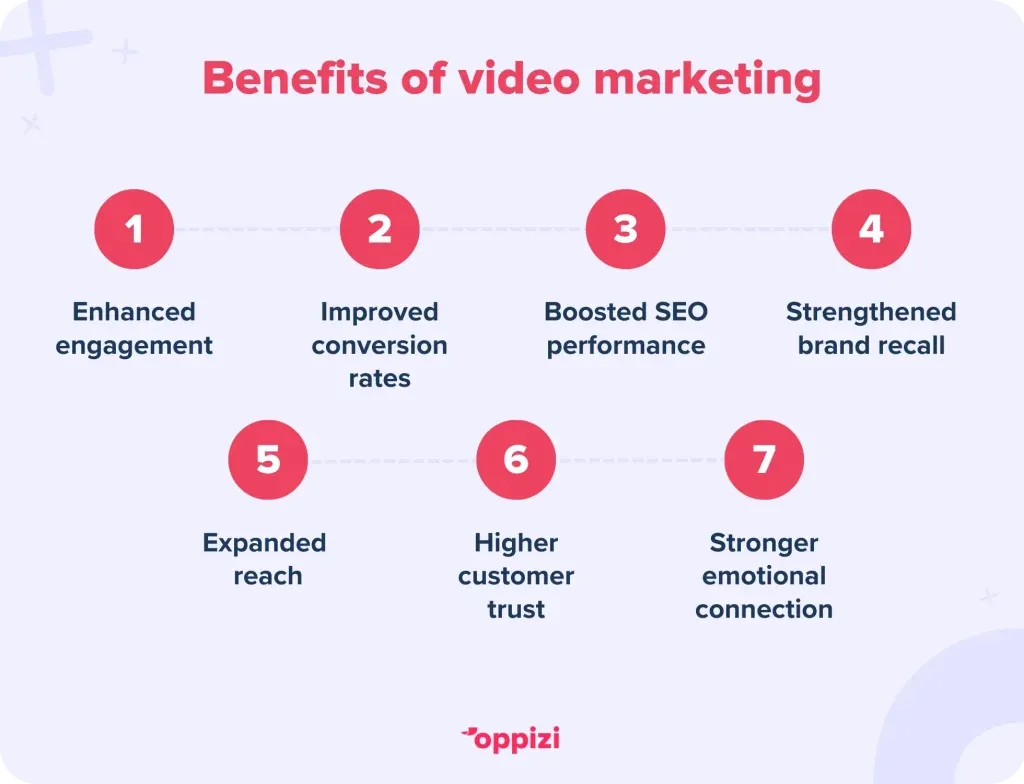
Integrating video into your marketing strategy yields numerous advantages:
Enhanced engagement
Our shorter attention spans mean that marketers must work harder to capture the audience’s attention. Videos are naturally engaging, and platforms like social media prioritize video content. This leads to higher interaction rates compared to text or images alone. In fact, 85% of marketers believe that videos are an effective method to help audiences engage with their brand.
Improved conversion rates
Video marketing can influence customer purchasing decisions by nurturing the sale with educational content and social proof. Data shows that landing pages that feature video content can increase conversions by as much as 86%!
Including product demos or testimonials on landing pages can significantly boost conversion rates by helping viewers understand the product or service more effectively, thus motivating them to take action.
Boosted SEO performance:
Video content can significantly improve search engine rankings by increasing engagement on your website. Search engines like Google prioritize rich media, making well-optimized videos more likely to appear in search results and drive organic traffic.
Strengthened brand recall:
The combination of visual and auditory elements in videos enhances memory retention, helping audiences remember your brand long after they’ve watched your content. Compared to simply using text-based information, videos create an immersive experience, reinforcing key messages more effectively. This makes it easier for customers to recall your brand when making purchasing decisions.
Expanded reach:
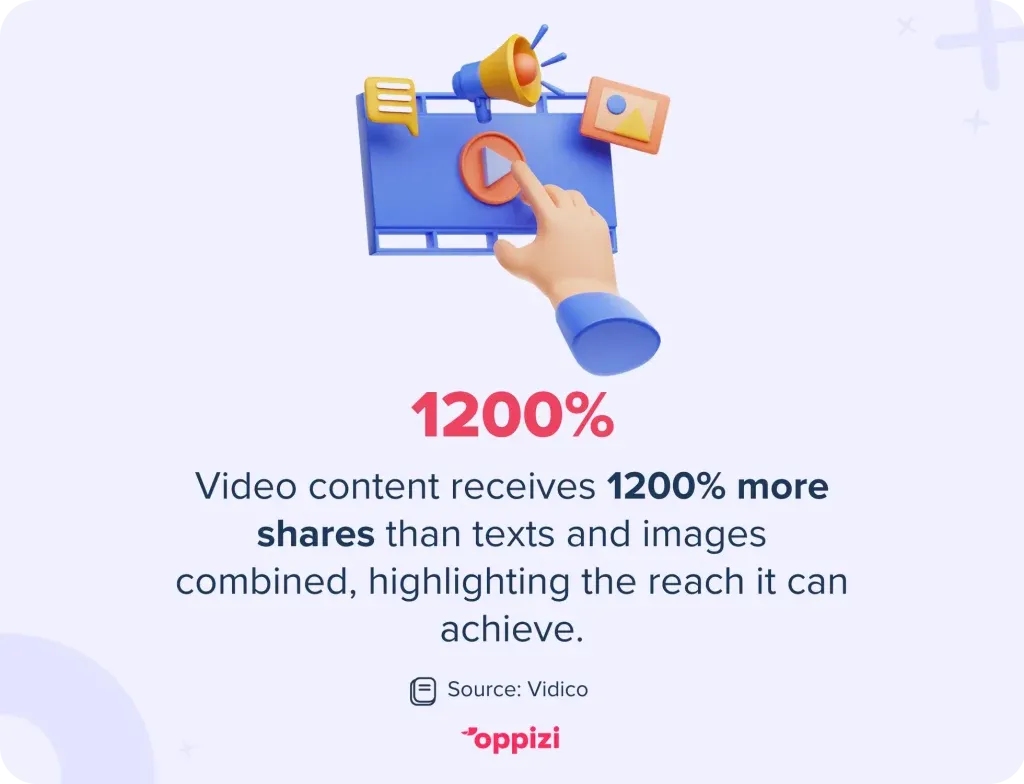
Video content has a high level of shareability, with social videos receiving 1200% more shares than text and images combined - and people tend to remember videos better than other forms of content. This means that video marketing can create a lasting impression of your brand, which helps in building a loyal customer base.

Higher customer trust:
Authentic video content builds credibility and fosters trust by showcasing real people and transparent information about your brand. Seeing a product in action or hearing customer testimonials can reassure potential buyers, reducing skepticism and increasing their likelihood of conversion.
Stronger emotional connection:
Video storytelling has the unique ability to evoke emotions, making your brand more relatable and memorable. Through compelling narratives, music, and visuals, videos can create a deep emotional resonance with viewers, strengthening their connection to your brand.
How to develop a video marketing strategy
Video marketing can seem intimidating, especially if you’ve never created videos before. However, just like for other kinds of content, it just requires a bit of planning and strategizing.
Here’s a step-by-step guide to creating a successful plan:
1. Define your goals
Set SMART goals by identifying what you want to achieve with your videos. Common objectives include:
- Increasing brand awareness
- Driving website traffic
- Boosting sales or lead generation
- Educating customers
- Enhancing social media engagement
Your goal will determine the type of content you create and how you measure success.
2. Know your target audience
Understanding your audience is crucial. Research demographics, preferences, and behaviors to create videos that resonate with them. Consider:
- What platforms they’re most likely to use (YouTube, TikTok, Instagram, LinkedIn, etc.)
- What problems they need solutions for
- What video formats they prefer (short-form, tutorials, testimonials, etc.)
3. Choose the right video types
Select video formats that align with your goals and target audience. Popular options include:
- Videos explaining your products or services
- Behind-the-scenes content to humanize your brand
- Customer testimonials to build trust
- Educational videos to position your brand as an industry leader
- Social media snippets for engagement
4. Create a content calendar
Once your strategy is set, create a video content calendar to organize your ideas and ensure a consistent content flow. A well-structured calendar helps you plan topics around important dates, industry events, and relevant trends.
Be sure to set realistic deadlines for scripting, production, and publishing to keep your team on track.
5. Plan your content & scripting
Outline your video ideas and create scripts or storyboards to ensure consistency and to ensure everyone on your team understands the concept. Keep your messaging concise, engaging, and aligned with your brand voice.
6. Create your video content
This stage involves the actual creation of your video content. Focus on producing high-quality videos that effectively communicate your brand message. Consider the different types of videos that suit your goals, such as live-action, animations, explainer videos, or customer testimonials.
Make sure each video is optimized for its platform and is tailored to the audience’s needs and viewing habits. It’s important to include strong visuals, compelling storytelling, and a clear call to action to make your videos impactful.
7. Optimize for each platform
Different platforms have unique video requirements, so ensure that you tailor video length, format, and style accordingly:
- YouTube: Long-form, searchable content with strong storytelling
- TikTok & Instagram reels: Short, attention-grabbing videos with trends and music
- LinkedIn: Professional and informative content
- Facebook: Engaging and shareable videos
8. Focus on quality production
While you don’t need a Hollywood budget, good production values do matter. Ensure:
- Clear visuals and high resolution
- Good lighting and stable footage
- Clear, high-quality audio
- Closed captions for accessibility
9. Distribute and promote your videos
Once your videos are created, it's essential to effectively distribute and promote them. Select the right platforms based on your target audience, and adapt your content to suit each platform's specific requirements.
Increase visibility by promoting your videos through paid ads, social media sharing, and email newsletters. Additionally, implement SEO best practices in your video descriptions, titles, and tags to enhance discoverability. Cross-promotion across various channels can further expand your reach and engagement.
10. Repurpose your content
To maximize the value of each video, consider repurposing it across different formats and platforms. You could break down longer videos into short clips for social media, convert key insights into blog posts, or create infographics from the content.
For example, one video can turn into:
- Smaller YouTube videos
- A podcast episode (with the audio clipped from the video)
- A blog post
- Social media clips
- Social graphics
- A LinkedIn article or post
- A resource guide
- An email
Repurposing your video content into various formats allows you to reach new audiences, extend the lifespan of your content, and maximize your return on investment. By adapting your videos to different channels, you can maintain a consistent brand presence.
11. Analyze performance & optimize
Track key metrics like views, engagement, click-through rates, and conversions. Use these insights to make data-driven decisions that will refine your strategy and improve future videos.
By following these steps, you’ll create a video marketing strategy that connects with your audience and drives meaningful results.

10 tips for creating successful video content
To maximize the impact of your video marketing efforts, consider the following strategies:
- Understand your audience: Tailor video content to address the specific preferences and pain points of your target audience.
- Keep it concise: Short-form videos often achieve higher engagement; aim for brevity while delivering value.
- Prioritize quality: Invest in high-quality production to reflect your brand's professionalism.
- Include a clear call-to-action (CTA): Guide viewers on the next steps, whether it's visiting your website, subscribing, or making a purchase.
- Optimize for mobile: With over 75% of videos viewed on mobile devices, your videos must be mobile-friendly.
- Leverage SEO techniques: Use relevant keywords, engaging titles, and descriptions to boost discoverability.
- Analyze performance metrics: Regularly assess key performance indicators (KPIs) like engagement, view counts, and conversion rates to refine your strategy.
- Use captions and subtitles: Many users watch videos without sound; adding subtitles ensures accessibility and engagement.
- Create a story arc: Storytelling enhances viewer retention - structure videos with a compelling beginning, middle, and end.
- A/B test your videos: Experiment with different video formats, lengths, and CTAs to determine what resonates best with your audience.
Frequently asked questions about video marketing
1. How long should my marketing videos be?
The ideal length of a video depends on the platform and content type. For example, to grab attention quickly with an Instagram or TikTok reel, your video should be between 7-15 seconds long. For product showcases or video tutorials for social media, you should aim for videos no more than 30 seconds long.
2. Which platforms are best for video marketing?
Popular video-sharing platforms include YouTube, Instagram, TikTok, LinkedIn, and Facebook. You should choose platforms based on where your target audience is most active.
3. Do I need professional equipment to create effective videos?
While high-quality equipment enhances production value, there have been many successful videos made using smartphones and basic editing tools. Relevant and authentic content is a priority.
Conclusion
With consumer expectations rising, it’s no longer optional for brands to invest in video marketing. Video content is essential for engaging with potential customers, conveying complex messages, and building trust between you and your audience. A well-executed video marketing strategy can significantly elevate your brand’s visibility and engagement.
However, video marketing is only part of the equation. If you want to complement your video marketing strategy with other effective methods, consider exploring Oppizi’s offline marketing solutions. Offline channels like flyering and direct mail can help you reach your audience in a more tangible and personal way, effectively boosting your brand’s presence.
Ready to take your marketing efforts to the next level? Start a campaign with Oppizi today and watch your brand grow both online and offline.