Last updated July 23, 2026
Ever feel like you’re just guessing what your audience wants? It’s difficult to know if your campaigns will resonate or fall flat.
Gut feelings and intuition alone are no longer enough to drive impactful, integrated marketing strategies. The modern marketer’s secret weapon is data—raw, actionable, and insightful. Data-driven decision-making in marketing is transforming how businesses connect with their audiences, optimize campaigns, and achieve measurable results.
In this blog, we’ll explore what it means to adopt a data-driven approach in marketing, uncover its benefits, and share actionable steps to harness the power of analytics for smarter decision-making.
What is data-driven decision-making in marketing?
Data-driven decision-making (DDDM) in marketing is the practice of using data analysis and insights to guide marketing strategies, tactics, and decisions. Instead of relying on intuition or assumptions, marketers leverage quantitative and qualitative data to make informed choices that optimize performance and achieve specific business objectives.
This valuable data can come from customer interactions, website analytics, social media engagement, sales figures, and more.For example, you might notice a product page gets a lot of traffic. But it fails to generate many conversions.
By analyzing the data, you can figure out what's going wrong—maybe the product description needs a revamp, or the pricing isn't competitive. Understanding these details is what allows you to make adjustments that are more likely to boost sales.
6 benefits of data-driven decision-making
Data-driven decision-making can significantly enhance your marketing campaigns. Here are the key benefits:
1. Improved targeting
A data-driven approach helps you identify and target your audience more precisely. You can segment customers based on criteria like demographics, behavior, and preferences to create highly targeted campaigns. Precise targeting increases the chances of engagement, lead generation, and ultimately, conversions.
2. Enhanced Personalization
In a recent survey by Anteriad, marketers ranked personalization as the most critical data-driven marketing trend.
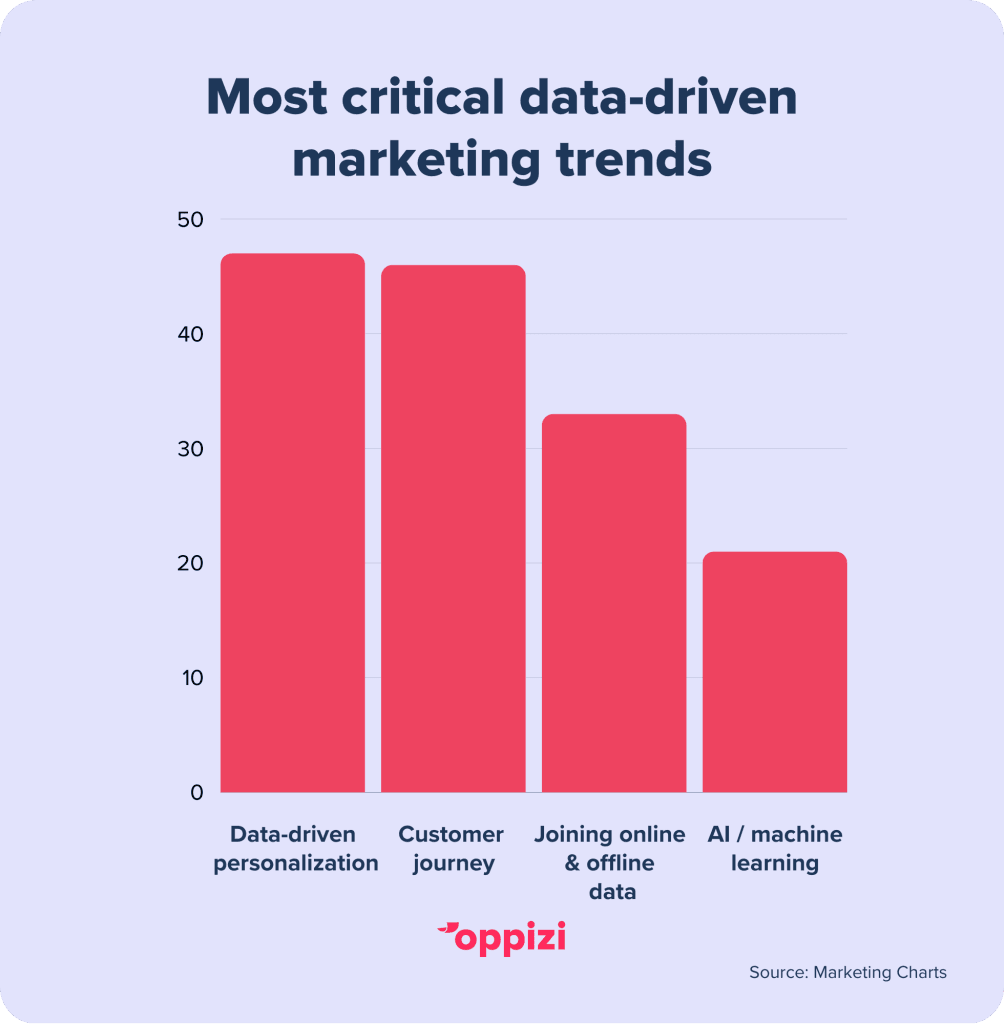
Data is the fuel that powers personalized marketing. By analyzing customer behavior and preferences, you can tailor your messages and offers to individual needs.
For example, you can recommend products based on past purchases or send personalized emails based on browsing history. This level of personalization helps build stronger relationships with customers.
3. Increased ROI
Data-driven marketing maximizes the impact of your marketing spend. It helps you focus your efforts on audiences most likely to convert. Your campaigns become more effective, and you know where to allocate your budget for the best return on investment (ROI).
4. Better predictive insights
Analyzing data can help you predict future marketing trends and customer behaviors. This gives you an advantage when planning your campaigns. For example, your sales data might show a growing interest in a particular product category.
In response, you could stock up on related items and launch targeted marketing campaigns. These predictive insights enable proactive decision-making and help you keep ahead of the competition.

5. Real-time adjustments
One of the most powerful benefits of data-driven decision-making is the ability to adapt in real time. By continuously monitoring performance metrics, you can identify what’s working and what’s not as it happens.
If a campaign or strategy underperforms, swift adjustments—like refining an ad or reallocating resources—can be made instantly. This agility ensures you’re always optimizing for the best outcomes and staying ahead in dynamic environments.
6. Enhanced customer experience
Data-driven insights provide a deeper understanding of your customers’ needs, preferences, and behaviors, allowing you to deliver a more personalized and satisfying experience. From product development to customer service, every touchpoint can be fine-tuned based on actionable data.
For example, if your analytics reveal that customers prioritize fast shipping, you can focus on improving delivery speed to exceed expectations and build loyalty. Ultimately, this tailored approach sets your brand apart and fosters long-term relationships.
Drawbacks of data-driven decision-making
There are plenty of advantages of data-driven decision-making. However, it also comes with some challenges.
Data Quality Issues
The success of data-driven strategies hinges on the accuracy and reliability of the data. Inaccurate, incomplete, or outdated data can lead to flawed insights and poor decision-making. This could result in marketing strategies that fail to connect with the target audience—or worse, harm your brand’s reputation. Ensuring data quality requires rigorous validation processes, which can be time-consuming and resource-intensive.
Privacy Concerns
With increasing public awareness and regulations surrounding data privacy, businesses face heightened scrutiny over how they collect and use data. Compliance with laws like the GDPR and CCPA is mandatory, but even small missteps can lead to hefty fines or damage to brand trust. Beyond legal risks, any perception of data misuse can erode customer confidence, making privacy management a critical challenge for businesses embracing data-driven methods.
High Costs
Going data-driven isn't cheap. It often requires a significant investment in technology and expertise. You need tools for collecting, storing, and analyzing data. Also, hiring skilled data analysts and data scientists can be expensive. For smaller businesses, these costs can be a major hurdle.
Looking to make your marketing budget go further? Check out our guide on cost-effective marketing tactics for startups.
Over-Reliance on Data
While data is extremely useful, leaning too heavily on it can squash creativity and innovation. Marketing isn’t just about numbers. It’s also about understanding human emotions and motivations. If you only focus on data, you might miss out on creative ideas that make your brand stand out. Finding the right balance between data-driven insights and creative thinking is key.
Data Silos
In many companies, data is stored in separate silos across different departments. This can make it hard to gain actionable insights. In a recent survey, data silos were ranked as the biggest barrier to making data-driven decisions.
This fragmentation makes it hard to get a complete view of the customer journey. That can lead to inconsistent and less effective marketing strategies.

Examples of data-driven marketing
There are many different types of data-driven marketing. The right approach for you depends on the data you have and your business goals. Here are a few examples of how companies use data to boost their marketing efforts:
Personalized email campaigns
A great example of data-driven marketing is personalized email campaigns. Instead of sending the same email to everyone, you can use customer data to tailor your messages.
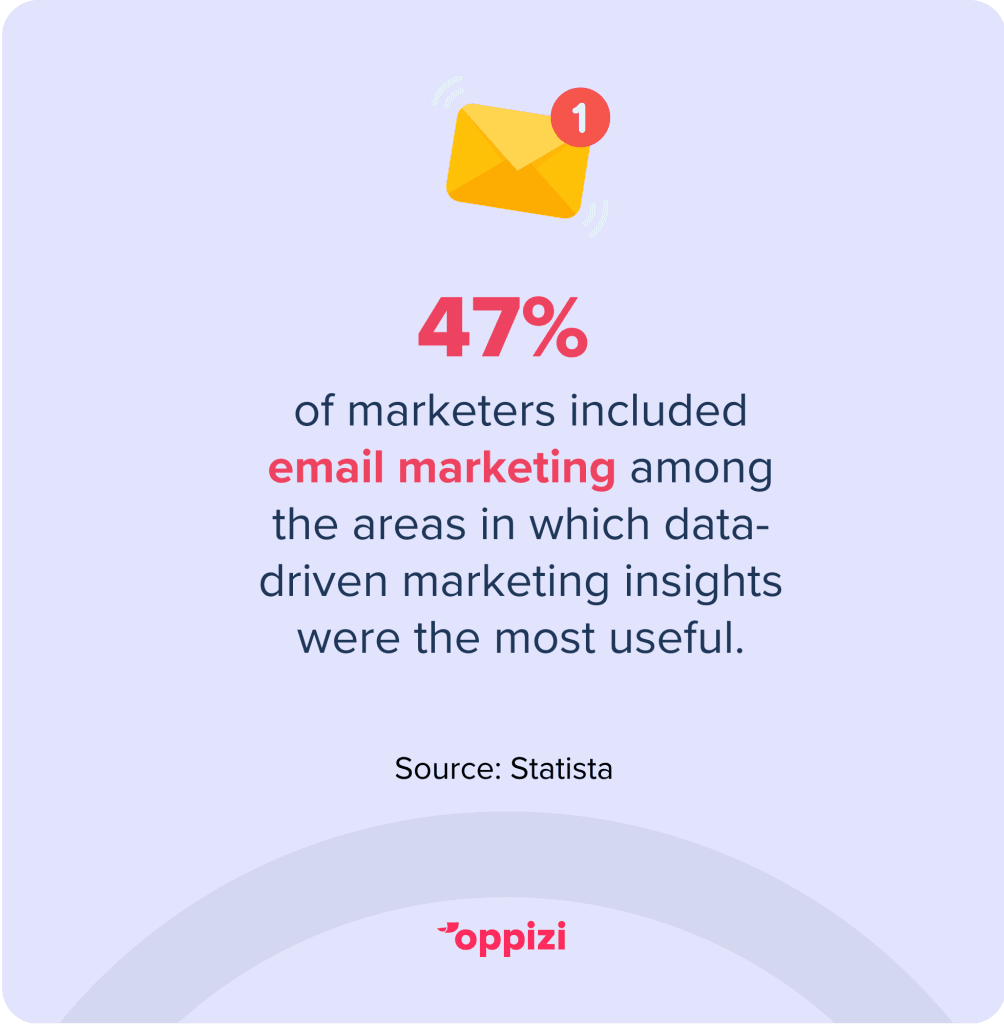
In a recent survey, 47% of marketers included email marketing among the areas in which data-driven marketing was the most useful.
You can segment your audience based on behavior, preferences, and purchase history. For example, if a customer often buys sportswear, you can send emails showcasing the latest sports apparel. This personalized touch boosts engagement and increases the chances of conversion.
Targeted advertising
Another example of data-driven decision-making is targeted advertising. Platforms like Google Ads and Meta Ads allow businesses to show ads to specific audiences based on detailed criteria. This can include user age, location, interests, and online behavior.
You can analyze which ads perform best with which segments to ensure you reach the most receptive audience.
Social media analytics
Social media analytics can inform your marketing strategies. You can gauge what type of content resonates most with your audience by tracking likes, shares, and other engagement metrics.
This data helps in planning future content. You can develop content more likely to attract attention and drive interaction.
Trackable flyer distribution

Trackable flyer distribution through providers like Oppizi can be an excellent way to use data. It involves putting unique coupons or QR codes on physical flyers to track their effectiveness. When a customer uses the code to make a purchase or visit a website, you can see which flyers are working best and where.
This data helps you refine your flyer strategies. You can focus on areas that drive the most traffic and conversions.
Need some help tracking your offline campaigns? Check out our guide on how to measure offline marketing.
Customer journey mapping
Customer journey mapping is a key part of data-driven marketing. It involves analyzing data from different touchpoints, such as website visits, email interactions, and purchase history. The goal is to see how customers move through the sales funnel.
By understanding this journey, you can make each stage smoother and more intuitive. It's all about making the customer experience as seamless as possible. That can result in more leads and sales.
A/B testing
A/B testing is a great example of data-driven marketing. First, you create two versions of a marketing asset, like an email or landing page. Then, you test them with segments of your audience to see which version performs better. This analysis helps you decide which approach to use going forward.
Data-Driven Decision-Making FAQs
What is an example of data-driven decision-making in marketing?
An example of data-driven decision-making in marketing is analyzing website traffic and conversion metrics to identify high-performing ad campaigns and allocating more budget to those channels. For instance, if data shows that Facebook ads drive 70% of sign-ups with a low cost per acquisition, marketers can prioritize spending there while optimizing or discontinuing underperforming campaigns.
Why is data-driven decision-making important in marketing?
It removes the guesswork and enhances targeting accuracy. This leads to improved ROI by focusing marketing efforts on the right audience with the right message.
What does data-driven mean in marketing?
Data-driven marketing means making strategic decisions based on the analysis of collected data. This approach relies on concrete information rather than intuition or anecdotal evidence.
What is the difference between traditional marketing and data-driven marketing?
Traditional marketing relies on intuition, experience, and broad audience targeting through channels like TV, print, or radio. Data-driven marketing uses analytics and customer data to create personalized campaigns, optimize strategies, and measure results in real time.
Conclusion
Data-driven marketing empowers businesses to make smarter, more impactful decisions by leveraging insights to reach the right audience with precision and efficiency. At Oppizi, we combine the power of data with offline marketing strategies like flyer distribution and EDDM, ensuring your campaigns deliver measurable results.
By analyzing performance metrics and audience behavior, we help you optimize your reach and maximize ROI.
Ready to take your marketing to the next level? Create a campaign with Oppizi today and see how data can drive your success.