Last updated August 28, 2026
At some point, your market will start to feel small. You’ve reached the people you can reach. Now it’s time to grow. That means finding new customers and increasing revenue.
To do that, you need a plan. A business expansion strategy helps you figure out how to grow—whether that’s launching a new product, entering a new market, or teaming up with another business. The best approach depends on your industry, your goals, and who you’re trying to reach.
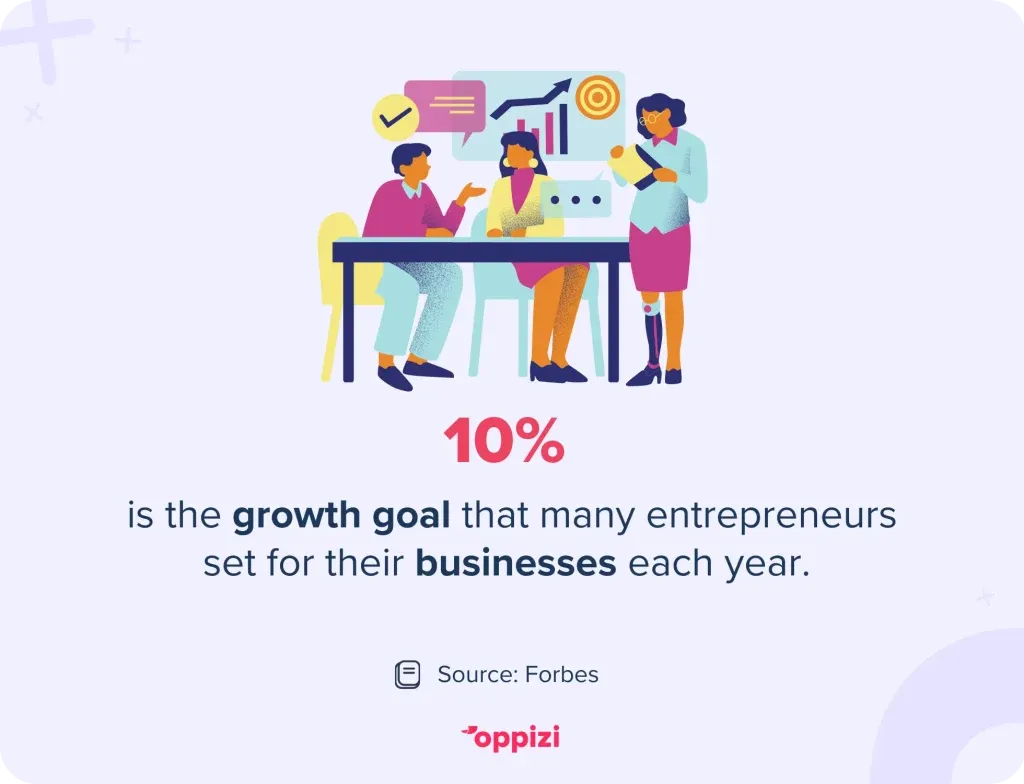
Many entrepreneurs set a goal to grow their businesses by 10% each year. However, your target should depend on your industry and specific circumstances. The important thing is to have a realistic goal and take the necessary steps to achieve it.
Before you spend money on a new campaign or location, you need a clear direction. This guide breaks it down into simple steps. It covers smart ways to grow, even if you don’t have a big budget, and how startups can scale without burning out.
Organic vs non-organic growth
There are two main ways to grow a business: organically or non-organically.
- Organic growth means growing from within. You improve what you already do. That could be launching a new product, selling to a new audience, or streamlining your operations.
- Non-organic growth means joining forces with others. That might include buying another business, merging, or partnering up.
Both can work. But they come with different costs, risks, and timelines.
Why organic growth is a solid first step
Most businesses start with organic growth. It’s steady, manageable, and helps you stay in control.
Here’s why it works:
- Fewer disruptions – You’re not changing everything. You’re building on what already works.
- More control – No outside investors or partners calling the shots.
- Long-term gains – It helps you grow in a way that lasts.
- Lower costs – You don’t need to buy another company to grow.
Organic growth helps you make the most of what you have. You can fine-tune your products, test new markets, and improve how your business runs—all without taking big risks.
The upside of growing through mergers and partnerships
Sometimes, growing from the inside isn’t enough. You need outside help. That’s where non-organic growth comes in.
This kind of growth uses other companies or resources to help you scale. Think mergers, acquisitions, and partnerships.
- Acquisitions mean buying another company. You take control and use what they’ve built.
- Mergers bring two businesses together to form one. You combine your strengths and share the rewards.
In 2024, about 36,000 mergers and acquisitions (M&A) were completed around the world. That’s because mergers and acquisitions are effective and offer significant benefits for both parties involved. These strategies are great when you want to grow fast or go big.

Why businesses choose non-organic growth
Organic growth takes time. Non-organic strategies move faster and open doors quicker. Here’s what they offer:
- Faster market access – You can reach new customers right away.
- More market share – Buying a business means getting their customers too.
- Stronger position – With more size and resources, it’s easier to compete.
- New talent – You get access to skilled teams and leaders who can help you grow.
This type of growth is ideal when speed matters or you need to catch up with competitors.
What to watch out for
Non-organic growth isn’t always easy. It comes with a few challenges:
- Less control – Mergers and partnerships may require shared decisions.
- Higher costs – Buying a company can be expensive.
- Disruptions – Combining systems and teams takes time and effort.
If you’re thinking about this kind of expansion, make sure you’re ready for the changes it brings.
What about joint ventures?
Yes, a joint venture is another way to grow externally. It’s when two companies work together on a shared goal—like launching a product or entering a new market.
It can be a smarter, simpler option than a full merger or buyout.
- Lower risk – You don’t need as much money up front.
- More flexibility – You keep control of your business while working together.
- Less disruption – You stay separate, but work as a team.
Still, joint ventures mean shared decisions. That can slow things down or limit how independently you can move.
10 ways to grow your business
If you want to grow, you need a strategy. Some businesses grow from the inside by improving what they already do. Others grow by teaming up, launching new products, or reaching new customers.
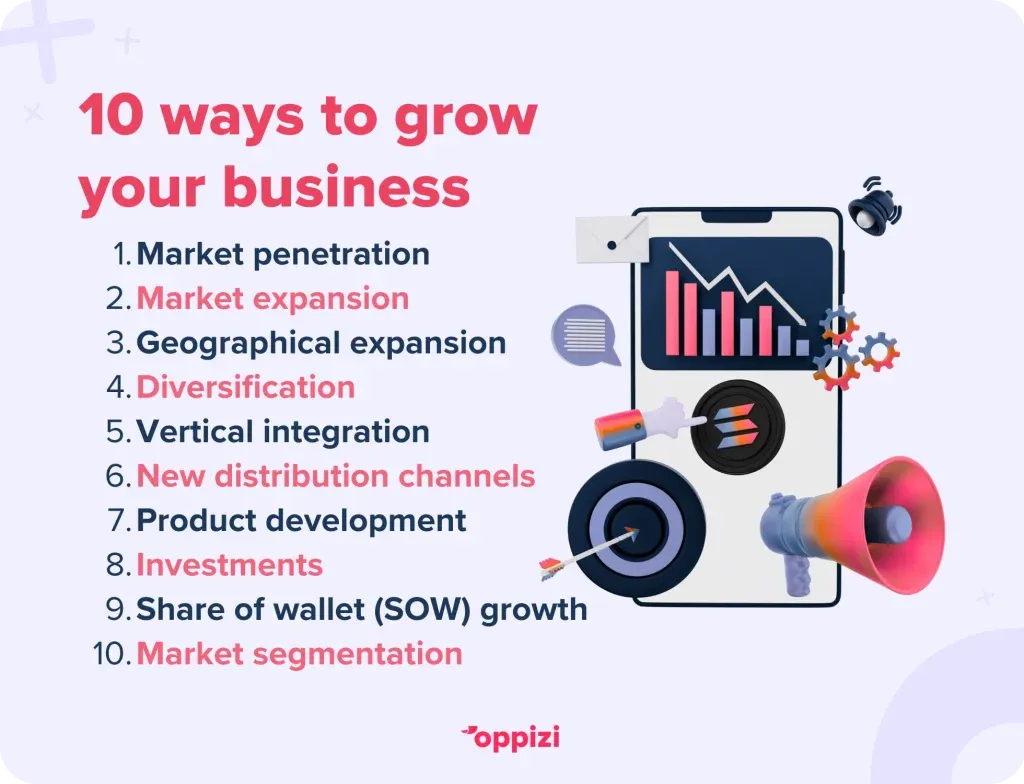
Here are 10 common strategies companies use to grow revenue and reach more people:
- Market penetration
- Market expansion
- Geographical expansion
- Diversification
- Vertical integration
- New distribution channels
- Product development
- Investments
- Share of wallet (SOW) growth
- Market segmentation
Each option has its own pros and cons. Let’s break them down.
1. Market penetration
This means growing inside the market you already serve. You’re not targeting new people—you’re just doing better with the ones you have.
Ways to do this:
- Lower your prices to win over budget-conscious buyers
- Improve your product or service
- Sell in new places (like stores, marketplaces, or through local partners)
- Strengthen your marketing—online or offline
Example: One client boosted their conversion rate by 30% just by using a leaflet campaign. Sometimes, traditional tactics still work best.
Pros
- Doesn’t need a lot of new resources
- Helps you stay ahead of competitors
Cons
- Price cuts can reduce profits
- If your market is saturated, growth may be limited
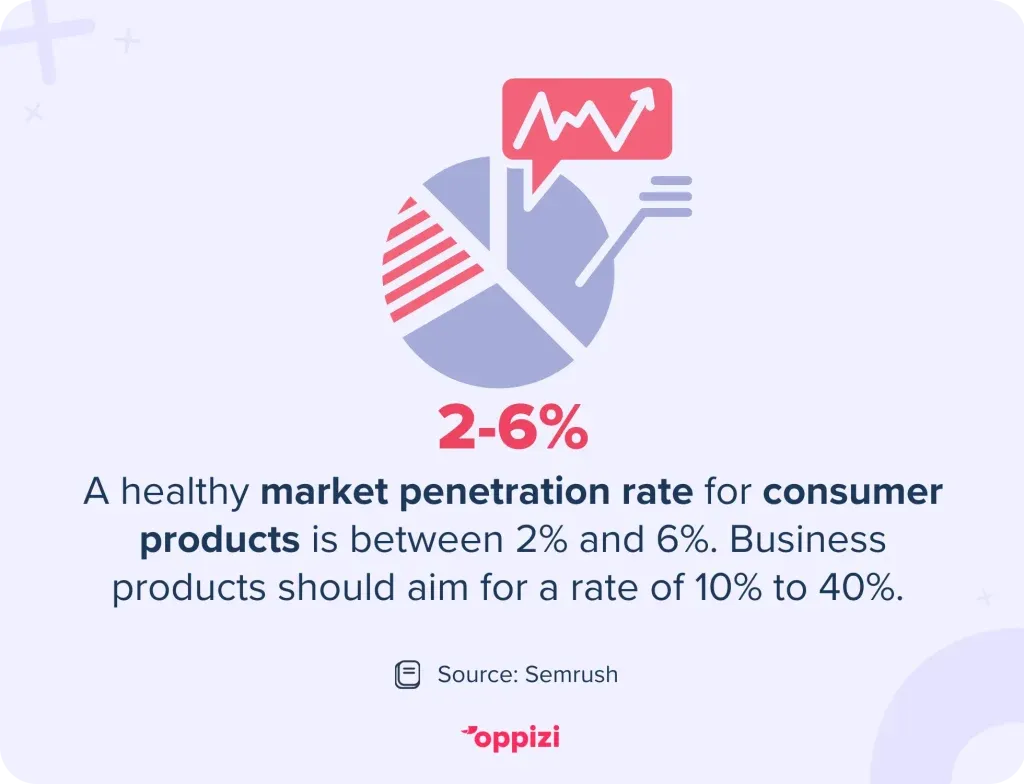
For consumer products, a healthy market penetration rate is between 2% and 6%. For business products, the ideal rate ranges from 10% to 40%. Achieving these rates can significantly boost sales and enhance market presence.
2. Market expansion
Here, you’re still in the same type of business—but you’re targeting a new group of customers.
Ways to do this:
- Launch new products for a different audience
- Adjust your current products to fit a new group
- Expand into related areas of your industry
- Merge with a business that serves a different customer type
Example: A software company could build a tool for a new industry. A restaurant might offer new dishes to attract a younger crowd.
Things to watch: You need enough resources to handle the extra demand. Otherwise, your operations may get stretched too thin.
Pros
- Lets you reach new people without changing industries
- Builds on what your business already does well
Cons
- Can strain your resources
- Growth depends on how big that new segment is
3. Geographical expansion
This means bringing your business to new locations—like other cities, states, or countries—without changing your industry.
How to do it:
- Open new stores or offices
- Partner with retailers or distributors in new areas
- Use digital ads to reach people in new regions
This strategy helps you grow steadily over time. You reach more people without changing what you offer.
Challenges: New regions may come with different rules, customer habits, or supply chain needs. You may also need to hire local staff or adjust how you do things.
Pros
- Grows your reach while keeping your core business the same
- Can lead to steady, long-term success
Cons
- You may need to adapt your product for different regions
- Managing logistics and operations can get complicated
Need help planning a move into new regions? Check out our geographic expansion guide.
4. Diversification
Diversification means offering something new to a new group of customers. It could be a new product in a new market, or moving into a related industry nearby.
Big companies do this all the time. For example, GE makes money from several industries—like energy, aviation, and finance.
Why businesses diversify:
- Spreads your risk. If one part of your business slows down, others can keep things steady.
- Brings in new income. If growth has stalled, trying something new can open the door to more customers and revenue.
But it’s not easy. You may need to learn new skills, hire people with different experience, or even build partnerships to succeed in a space you don’t know yet.
Pros
- Less risk because you’re not relying on one thing
- More ways to earn money and reach new customers
Cons
- Takes time, money, and focus to do well
- Your main business might suffer if you spread yourself too thin
5. Vertical integration
Vertical integration means doing more things in-house instead of relying on outside partners. You might start handling your own distribution, packaging, or production.
Why companies choose this path:
- More control. When you run more parts of your business, you can fix problems faster and keep quality high.
- Better profits. You spend less on third parties, so over time, you can make more money.
But you’ll likely need to invest a lot upfront—new equipment, new systems, and possibly new teams.
Pros
- More control over how your product is made and delivered
- Less money spent on suppliers or middlemen
Cons
- Can be expensive to get started
6. New distribution channels
This is about finding new ways to sell what you already offer. You’re not changing the product or the market—just how it gets into customers’ hands.
A good example is traditional stores going online. E-commerce gave them a chance to reach more people without opening more stores.
Why this works:
- More reach. New channels like online shops, marketplaces, social media, or delivery apps help you get in front of more customers.
- Access to new markets. Sometimes a new channel opens the door to people who weren’t shopping with you before.
It sounds simple, but it comes with some risk. If you’re not used to a channel, it might cost more than expected or take time to get right.
Pros
- Reaches more people without changing your product
- Helps you grow into new or bigger markets
Cons
- Some channels come with extra costs or learning curves
7. Product development
Product development means creating something new to sell. You can build it in-house or work with a partner to bring it to life.
It helps you keep current customers and attract new ones. Think of phone companies that release new models every year. People keep buying because there’s always something fresh.
But creating a new product takes time. Some are done in weeks. Others take years. Delays are common—almost half of all product launches run at least a month behind.
Pros
- Helps your business grow
- Keeps your customers interested
- Brings in new buyers
Cons
- Takes time and money
- Delays can mess with your plans
8. Investments
Investing isn’t just for growing personal wealth. Businesses invest too.
You can put money into stocks, bonds, or buy a piece of another company. It’s a way to build value outside your main business.
If your core sales slow down, your investments can still grow. They can also lead to partnerships or even future mergers if you increase your stake in another business.
Pros
- Can protect you if your main business has a bad year
- Opens doors to future deals
Cons
- All investments carry risk
9. Share of wallet (SOW) growth
Share of wallet means getting your current customers to spend more with you instead of your competitors.
This could mean offering add-ons, better products, or encouraging upgrades. Think of how fast food places ask if you want to “make it a combo” or add a dessert.
It’s usually cheaper than trying to get new customers because you’re working with people who already know and trust you.
Pros
- Gets more value from your current customers
- Costs less than finding new ones
Cons
- You’ll hit a limit in small markets
10. Market segmentation
This means focusing on a smaller, more specific group within your larger market.
Instead of trying to sell to everyone, you target a niche. You shape your product or service to match what they want.
This strategy works well for small businesses. You can stand out by offering something personalized and consistent.
How to do it:
- Pick a group inside your current market
- Build offers that solve their specific problems
Pros
- Less risk because you’re talking to the right people
- Takes fewer resources
- Easier to run efficiently
Cons
- Focusing on one group may limit how big you can grow
Business expansion strategy ideas
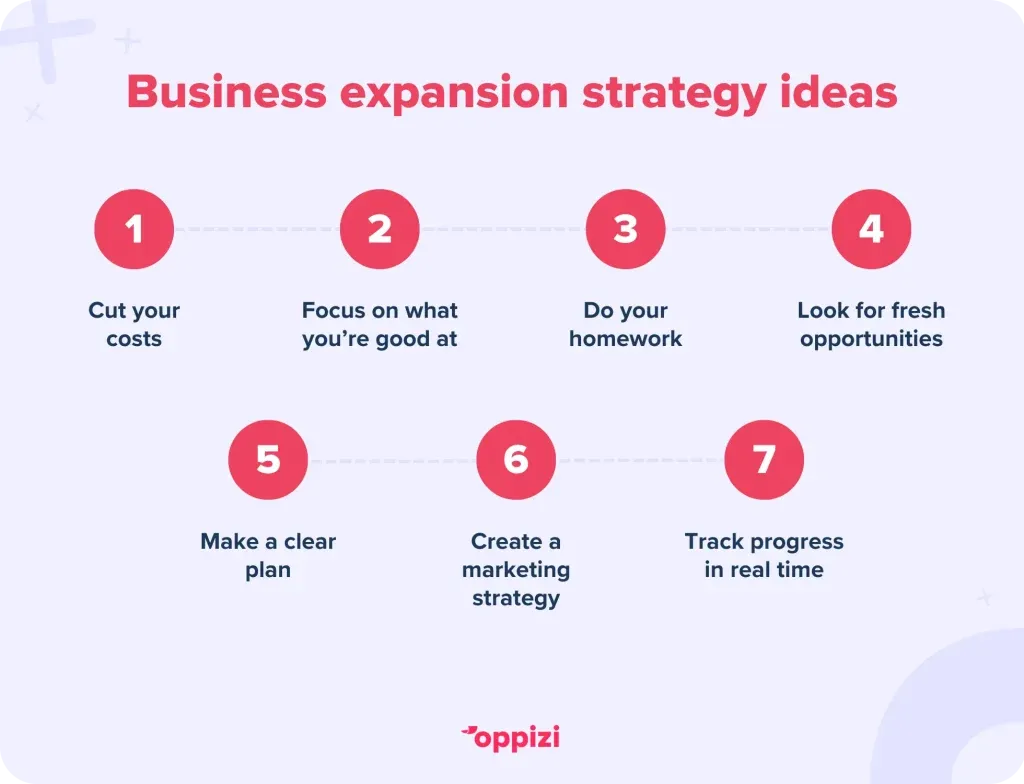
No matter what type of expansion you pursue, you'll need a solid strategy to turn your growth plans into action. Here are a few smart ways to get started:
1. Cut your costs
Before you grow, look at your current costs. Where can you save money?
Cutting waste and making things run smoother means you earn more from every sale. It also frees up money to put toward growth.
2. Focus on what you’re good at
Stick to your strengths. It’s faster and more effective than fixing your weak spots.
If you already know what your business does well, double down on it. This usually leads to better sales, happier customers, and stronger profits.
3. Do your homework
Before launching a new product or entering a new market, do your research.
Find out who your competitors are, how big the market is, who your customers might be, and what kind of demand exists. The more you know, the better your chances of success.
4. Look for fresh opportunities
You might be missing something right in front of you. Has your local market grown since you started? Are there customer needs your competitors aren't meeting?
Keep an eye out for these gaps. If you can solve a problem no one else is solving, you’ve found a great place to grow.
5. Make a clear plan
Once your main business runs smoothly, it’s time to build a plan for growth.
Use what you learned in your research to pick the right strategy. If money is tight, you might look into partnerships or diversifying. You could also aim for a new market—but only after you’ve made the most of your current one.
6. Create a marketing strategy
If you're planning to grow your business, you need a solid marketing plan. Good marketing helps people hear about what you're doing—whether you're launching something new or entering a new market.
The best results often come from using both online and offline channels.
Online marketing might include:
- A website or landing page
- Blog posts, videos, or free guides
- Email campaigns
- SEO (so people find you on Google)
- Paid ads on search engines or social media
53% of shoppers say they always research a product before buying to make sure they’re making the best possible choice. So, having a strong online presence isn’t optional—it’s a must.

But don’t ignore offline marketing. It still works and often has less noise to compete with. It can leave a stronger, more lasting impression.
Offline marketing options:
- Flyers or pamphlets
- TV or radio spots
- Newspaper or magazine ads
- Billboards and other out-of-home (OOH) ads
- Direct mail or EDDM
Using both online and offline tools gives you a better shot at getting noticed. You can even connect the two. For example, turn a blog post into a flyer. Add QR codes or website links to print ads so people can go online for more info.
7. Track progress in real time
To know if your expansion is working, track your progress as you go.
There are lots of digital tools to help. You can monitor your website traffic, SEO results, customer behavior, and ad performance.
For offline marketing, tools like Oppizi let you plan and track your campaigns easily. You can measure over 14 different performance metrics. That way, you always know how your offline strategy is doing.
Track everything—marketing, sales, customer feedback. The more you know, the faster you can adjust. Real-time data helps you make smart choices and get the most out of your efforts.

How to expand your business into new markets
Expanding your business means reaching new people. You can do this by moving into a new location or offering something different. Both paths can help you grow—but they come with different risks.
If you diversify, you offer something new. For example, a vet clinic could start grooming or boarding services. That’s a way to grow without opening a new location.
If you expand geographically, you open in a new area but keep doing what you already do. That same vet clinic might open in another city with the same services.
Here’s how to make a smart move into a new market:
1. Look at your competitors
Start by checking out the competition. Look at their prices, services, and how they treat customers. What are they doing well? What are they missing? If there’s something they’re not offering—or not doing well—you might have an opportunity to fill that gap.
2. Explore related markets
Don't just look at direct competitors. Think about related businesses too. These nearby markets might show you other ways to grow or new needs you could meet.
3. Make sure it fits your goals
Only expand if it fits your long-term plans. Are you trying to grow across the country? Into a new industry? Or do you want to stay in your niche and go deeper? Your plan should match where you want to be in a few years.
4. Listen to your customers
What are your customers telling you? Look at reviews, surveys, and social media. You might notice they want something you’re not offering—or wish you had a location closer to them. Their feedback can point you in the right direction.
5. Set a budget
Growth costs money. Decide how much you can spend. Include things like:
- Rent or property
- Inventory and equipment
- Hiring and training
- Marketing
- Tech and tools
A clear budget helps you avoid overspending and stay ready for surprise costs.
6. Build a clear timeline
Break your expansion into steps—like research, hiring, setup, and launch. Then give each step a deadline. This helps your team stay focused and makes it easier to track progress.
7. Know the local rules
If you're expanding to a new city or country, check the local laws. You might need permits, licenses, or other approvals. You may also need to adjust your product for local language or culture.
Final tip: keep tracking feedback
Customer feedback doesn't stop once you expand. Keep listening. Their comments will help you improve and spot new growth opportunities early.
How to expand your business on a low budget
If money is tight, the best way to grow is by improving what you already have. This is called organic growth. It means getting more out of your current setup without spending a lot upfront.
Start by finding ways to cut waste and work more efficiently. Look at big expenses like rent, equipment, and inventory. You might:
- Move to a smaller space to save on rent
- Ask suppliers for better prices
- Keep only the stock you need to avoid extra costs
Marketing can also eat up your budget. But instead of cutting it, try to get better results from what you spend. Review your current campaigns:
- Stop running ads that aren’t working
- Put more money into the ones that are
- Try low-cost options like email marketing or blog content
Small changes can lead to bigger profits. Once your business is running better, use a budget-friendly way to grow. A few smart options include:
- Market segmentation – Focus on a specific group of customers
- Share of wallet – Sell more to the customers you already have
- Market penetration – Get a bigger share of your current market
- Market expansion – Reach new markets without spending too much
These strategies help you grow slowly and safely while keeping costs down.

How to expand a startup business
Startups often grow with outside funding, especially early on. If your product or service is new and exciting, you might attract investors who want to help you grow faster.
Funding usually starts with:
- Angel investors
- Seed funding
- Venture capital
Startups that raise a Series A round often have:
- A steady group of users
- A proven way to make money
- Clear demand in the market
As you grow, you might go for more funding—like Series B or C rounds—to take things further.
But not every startup is ready for investment. If you're still working on steady sales or getting enough customers, try lean growth instead. That means:
- Running your business more efficiently
- Cutting costs where possible
- Focusing on a niche market
Even small savings—like cutting overhead by 10%—can give you money to spend on marketing that reaches the right people.
You can also think about relocating. A new area might help your business grow faster. For example:
- Bigger cities have more customers
- Some places have cheaper rent, lower wages, or better taxes
Whether you're bootstrapping or raising funds, match your growth plans to what you can afford. That’s the best way to grow without burning out.
How to develop your business expansion strategy
To grow your business, you need the right strategy. That depends on things like your budget, how fast you're growing now, and how big your market is. Each option comes with different costs, risks, and timelines.
If money is tight, focus on internal growth. This means running your business more efficiently, improving how things work, and using your resources better. As profits go up, you’ll have more to reinvest in growth.
Startups and fast-growing businesses often look for outside funding. Investors can help you grow faster, reach new markets, and scale up more quickly.
If you're planning to enter a new market—like a new location or a new customer group—you’ll likely need more money. This might mean launching in another city, reaching a different audience, or adding new products.
Internal vs. external growth
There are two main ways to grow: internal (also called organic) and external (or inorganic).
Internal growth focuses on improving what you already have. This can include:
- Launching new products
- Getting more done with the same resources
- Increasing how much each customer spends
- Growing in your current market
External growth uses help from outside. This might mean:
- Merging with another company
- Forming a partnership
- Starting a joint venture
Whichever route you take, make sure you have a clear plan. Set goals, build a timeline, and track your progress.
Use both online and offline marketing to support your strategy. And keep an eye on your numbers—online and offline—so you know what’s working.


Conclusion
Creating a solid business expansion strategy is important for growth. Whether you want to find new customers, boost revenue, or enter new markets, having a clear plan is crucial. You can focus on organic growth by improving your current operations, or you can look at non-organic growth through partnerships or acquisitions.
As you think about your options, consider your budget, market size, and long-term goals. Strategies like market penetration, product development, and geographical expansion can help guide your efforts. Keep an eye on your costs, listen to customer feedback, and track your progress.
With the right approach, you can expand your business steadily and sustainably. Start small, focus on your strengths, and don’t be afraid to seek help or partnerships when you need them.
Focus on the Real World
If you want to grow effortlessly, connect with your audience in the real world. How do you achieve this? It’s simple. Let Oppizi handle the hard work for you. Our user-friendly platform delivers professional physical ads directly to your customers, all while providing advanced tracking to measure your success. Start your journey with us today and watch your business thrive.
Frequently asked questions
- What is expansion strategy in business?
An expansion strategy is a plan that helps a business grow and reach more customers. This can mean launching new products, entering new markets, or selling more in the markets you’re already in. The goal is to increase revenue and market share.
- What are four expansion strategies?
Here are four common ways to expand:
- Market Penetration: Sell more of your existing products to your current customers.
- Market Expansion: Introduce your existing products to new markets.
- Product Development: Create new products for your current customers.
- Diversification: Launch new products in new markets to spread risk and boost revenue.
- What is a business expansion example?
A good example is a restaurant opening a second location in a nearby city. They already have a popular menu and loyal customers. By replicating their model in a new area, they can attract even more diners.
- What are the 3 strategies for international expansion?
Here are three common strategies to expand internationally:
- Exporting: Sell your products in other countries without having a physical store there.
- Licensing: Let a foreign company produce your product or use your brand for a fee.
- Joint Ventures: Partner with a local company to enter a new market, sharing resources and knowledge.
- How can a business expand globally?
To expand globally, a business can:
- Research new international markets to find opportunities and learn about local preferences.
- Build a strong online presence to connect with customers worldwide.
- Adjust products or services to fit different cultures and legal requirements.
- Partner with local companies to make entering new markets easier.
- Conclusion
Creating a solid business expansion strategy is important for growth. Whether you want to find new customers, boost revenue, or enter new markets, having a clear plan is crucial. You can focus on organic growth by improving your current operations, or you can look at non-organic growth through partnerships or acquisitions.
As you think about your options, consider your budget, market size, and long-term goals. Strategies like market penetration, product development, and geographical expansion can help guide your efforts. Keep an eye on your costs, listen to customer feedback, and track your progress.
With the right approach, you can expand your business steadily and sustainably. Start small, focus on your strengths, and don’t be afraid to seek help or partnerships when you need them.
- Focus on the Real World
If you want to grow effortlessly, connect with your audience in the real world. How do you achieve this? It’s simple. Let Oppizi handle the hard work for you. Our user-friendly platform delivers professional physical ads directly to your customers, all while providing advanced tracking to measure your success. Start your journey with us today and watch your business thrive.