Last updated July 23, 2026
Have you ever wondered why some ads stick in your mind while others fade into oblivion? Or what makes you choose certain brands over others, even when the choices seem endless? Your decisions don’t just happen by chance; they’re down to marketing weaving its magic.
Marketing is the art of promoting and selling products or services. It’s not just about transactions; it’s about understanding people’s desires and inspiring them to act.
In this guide, we’ll break down what marketing is, why it matters, and the different ways businesses use it. By the end, you’ll know how marketing works and how it can help your business grow.
What is marketing?
Marketing is the process of promoting and selling products or services by understanding customer needs and communicating value. It’s what businesses do to get people to know, like, and choose their products or services. It’s how brands connect with their customers.
At its heart, marketing is about understanding people—what they need, what they want, and what influences their choices. Businesses collect this information to create messages and strategies that speak directly to their audience.
This is nothing new. Marketing has been around since ancient Mesopotamia, around 3000 BCE. Traders used clay tablets and stones to advertise their goods in busy markets. Even back then, the goal was the same: to catch the eye of potential buyers.
What’s the purpose of marketing?
The purpose of marketing is simple: to get people to notice a product or service, feel interested in it, and want to buy it. Although selling is often the eventual goal, marketing is about more than just that. It’s also about raising awareness, creating interest, and building loyalty. Let’s explore these aspects in more detail.
To create awareness
You might have an amazing product, but if no one knows it exists, it won’t sell. Marketing helps spread the word. Through ads, social media, and various channels, it raises awareness of your brand or product, helping you establish a presence in the market.
To generate interest
After people know about your product, the next step is to spark their interest. Show them what makes it special and how it can help them.
Focus on the features and benefits that solve problems or meet their needs. Use clear messages, eye-catching visuals, and content that grabs attention. The goal is to make them think, “This could be exactly what I need.”
To drive sales
This is typically the main goal. In the end, you want to turn interested people into paying customers.
You can do that through things like sales promotions, special offers, or personalized messages. All of these are designed to encourage people to buy.
To build brand loyalty
So, they’ve bought from you once, but what next? The next step is to build trust and strong connections with your customers. You want to be a brand people like and rely on.
When you keep delivering value and stay in touch, customers are more likely to stick with you. Loyal customers may also recommend your brand to others, helping you reach even more people.
What are the 4 Ps of marketing?
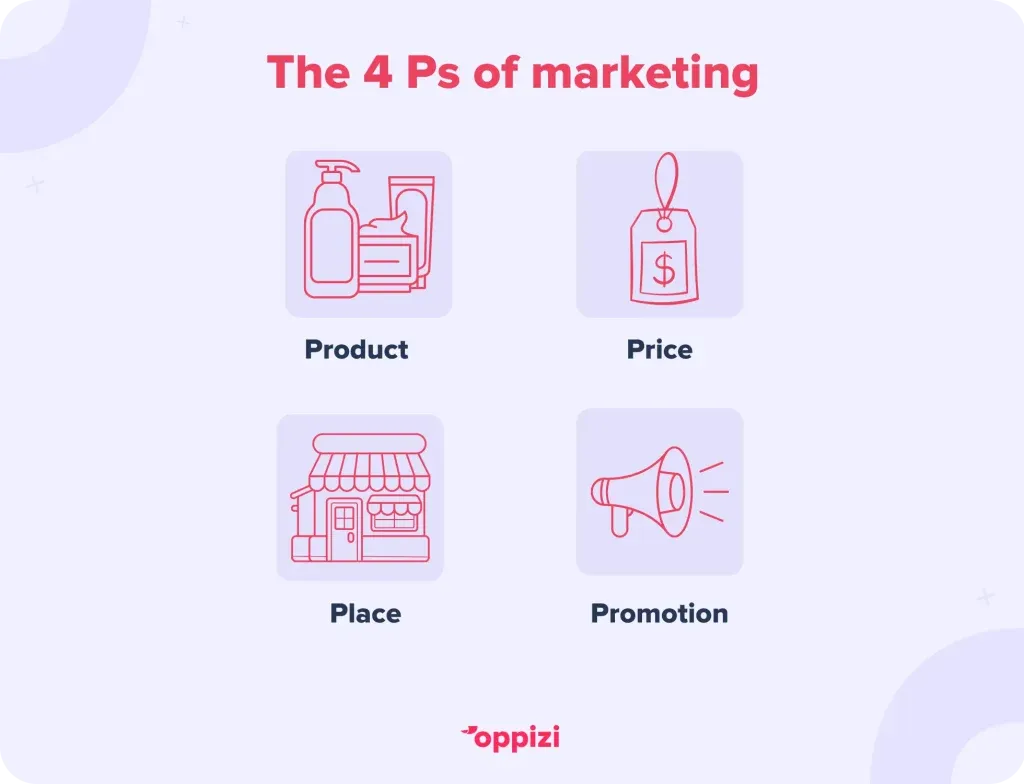
What makes a great marketing strategy? It comes down to the 4 Ps: Product, Price, Place, & Promotion. These four basics are the key to creating a plan that works. Let’s dive into each one.
Product
This means what you’re selling—its design, features, branding, and packaging. Think about your audience. What problem does your product solve? What makes it different from others? A great product that meets people’s needs is the foundation of good marketing.
Price
The right price will attract customers and boost sales. Think about your costs, what competitors charge, the value customers see in your product, and what they’re willing to pay. You might start with a lower price to grab attention or match what others are charging.
Place
This is about how you get your product to customers. Make your product available where and when people need it. You might sell in stores, online, or both. The key is to make it easy for your customers to find your product. If they shop online, having a great ecommerce site is essential.
Promotion
This is everything you do to tell people about your product and its benefits. Whether you hand out flyers or use social media, the goal is to create awareness, spark interest, and drive sales.
Good promotion means knowing where your audience looks for information and shaping your messages to fit. Partnering with influencers can also be a smart move, especially if they have a strong social media presence.

Types of marketing
There isn’t a one-size-fits-all way to do marketing. Different strategies work for different goals, audiences, and platforms. Here are some common types of marketing that businesses use to connect with their customers.
Traditional marketing
Traditional marketing uses offline methods like TV and radio ads, print ads, billboards, and direct mail. These methods can reach a wide audience and are great for building brand awareness.
Even with the growth of digital marketing, traditional marketing is still important. A MarketingSherpa survey found that the five most trusted ad formats are all traditional. To get the best results, you need a mix of online and offline tactics.
Examples of traditional marketing
- TV commercials
- Radio ads
- Print advertisements (newspapers, magazines)
- Billboards
- Direct mail (postcards, brochures)
- Flyers and posters
- Telemarketing calls
Digital marketing
Digital marketing means promoting products and services using online platforms. This includes search engine optimization (SEO), pay-per-click (PPC) ads, social media marketing, email campaigns, and content marketing.
One major advantage of digital marketing is the ability to target specific groups of people. It also gives you measurable results, so you can improve your campaigns for better returns on investment.
Examples of digital marketing
- Search engine optimization (SEO)
- Pay-per-click (PPC) ads
- Display ads
- Social media ads
- Content marketing (blogs, articles)
- Email marketing
- Influencer partnerships online
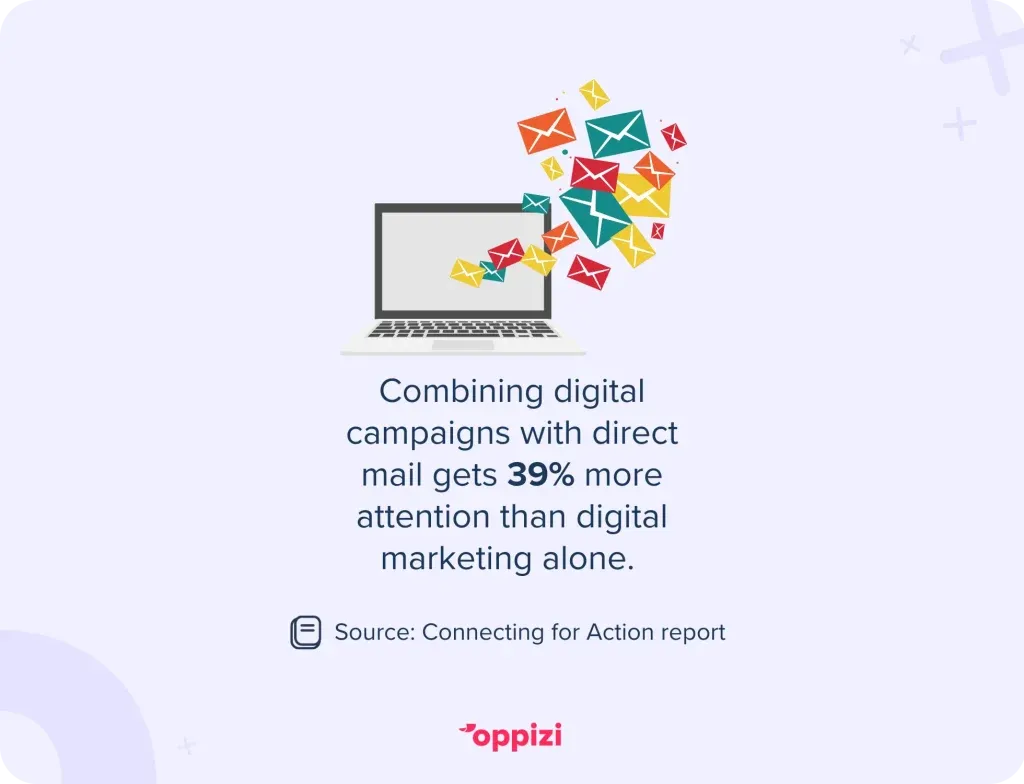
Combining digital campaigns with direct mail leads to 39% more engagement than digital marketing alone. For marketers, this means that while digital marketing is very much in fashion, ignoring direct mail and other traditional marketing methods could be a costly mistake.
Content marketing
Content marketing means creating and sharing helpful content to attract and engage your target audience. This can include blog posts, videos, infographics, and ebooks.
The goal is to provide useful information that helps potential customers solve problems or learn something new. By doing this, you build trust and show your expertise in your field. This makes it more likely that people will come to you when they need what you offer.
Examples of content marketing
- Blog posts
- Ebooks
- Infographics
- Videos
- Podcasts
- Webinars
- Case studies
Influencer marketing
Influencer marketing means partnering with well-known people in a specific area to promote your product or service. These influencers have loyal followers who trust what they say. They can be great allies for your brand.
Businesses often work with influencers for product reviews, sponsored posts, or social media takeovers. This helps you reach more people, build trust, and benefit from the influencer’s connection with their followers. It’s an effective way to boost your marketing efforts.
Examples of influencer marketing
- Sponsored social media posts
- Product reviews by influencers
- Instagram takeovers
- Brand ambassadorships
- YouTube collaborations
- Affiliate partnerships
- Influencer-hosted events
Social media marketing
Social media marketing is the use of platforms like Facebook, Instagram, LinkedIn, and TikTok to promote products or services and connect with customers. It lets you interact directly with your audience. You can share updates, run ads, and get valuable feedback.
This type of marketing is great for building brand loyalty and driving traffic to your website or store. By posting engaging content and running targeted ads, you can create a strong online presence and build a community around your brand.
Examples of social media marketing
- Facebook ads
- Instagram stories
- Twitter polls
- LinkedIn articles
- TikTok challenges
- Pinterest pins
- Social media contests
Email marketing
Email marketing means sending targeted emails to a list of subscribers. These emails can include newsletters, special offers, product updates, and personal messages.
It’s a great way to build relationships, nurture leads, and encourage repeat business. In fact, 50% of B2B marketers say email marketing is the best way to generate leads.
It’s also cost-effective and easy to measure. You can track open rates, click-through rates, and conversions to see how well your emails are performing.
Examples of email marketing
- Newsletters
- Promotional emails
- Abandoned cart reminders
- Customer loyalty offers
- Event invitations
- Product launch announcements
- Survey invitations
Event marketing
Event marketing means hosting or sponsoring events to promote a brand, product, or service. These events can be in-person, like trade shows and conferences, or online, like webinars and virtual summits.
Events help you connect with your audience on a personal level. They create opportunities for networking and direct interaction. This way, you can engage with customers in a memorable way.
Whether in person or online, event marketing can make your brand stand out and build meaningful connections.
Examples of event marketing
- Trade shows
- Webinars
- Conferences
- Product launch events
- Networking events
- Community fairs
- Workshops
Guerrilla marketing
Guerrilla marketing is the use of creative and unconventional tactics to grab attention and create excitement. This includes things like flash mobs, street art, viral videos, and surprise stunts. It often uses low-cost strategies to create memorable experiences that get people talking.
The goal is to generate word-of-mouth marketing and increase brand visibility. Studies show that guerrilla marketing can significantly boost brand awareness and influence people’s buying decisions. It’s a powerful way for businesses to stand out.
Examples of guerrilla marketing
- Flash mobs
- Street art and murals
- Viral videos
- Public installations
- Creative stunts (e.g., pop-up shops)
- Unexpected giveaways
- Ambush marketing tactics
Affiliate marketing
Affiliate marketing means having partners who promote your products for you. These affiliates can be businesses or individuals who earn a commission for the sales they help generate. It’s a great way to use their reach to grow your customer base.
Affiliates might promote your products on their websites, blogs, social media, or email lists. The best part? It’s performance-based, so you only pay for actual results.
Examples of affiliate marketing
- Product reviews on blogs
- Affiliate links in YouTube videos
- Sponsored posts on social media
- Email newsletters promoting products
- Website banners
- Podcast sponsorships
- Cashback and reward programs
Direct marketing
Direct marketing means reaching out to potential customers through methods like direct mail, telemarketing, and SMS. The goal is to connect directly with people to get a response or make a sale.
This approach is very targeted, making it effective for driving immediate action. Direct marketing encourages quick responses, whether it’s a special offer in the mail or a promotional text.
It’s a great way to communicate directly with your audience and see fast results.
Examples of direct marketing
- Catalogs sent by mail
- Telemarketing calls
- SMS promotions
- Personalized letters
- Door-to-door sales
- Targeted postcards
- In-person sales presentations
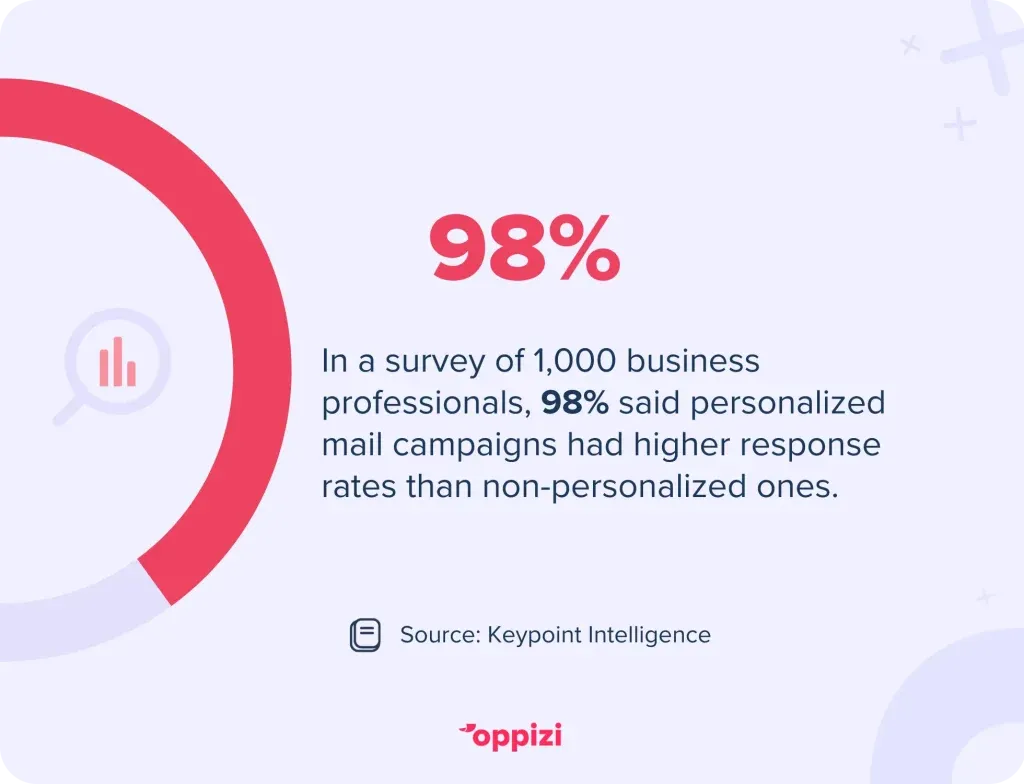
In a survey of over 1000 respondents working in business, 98% reported that personalized mail campaigns delivered significantly or moderately higher response rates compared to those that were not personalized. That’s why direct marketing stands out—it creates genuine connections.
Marketing FAQs
What is the simple definition of marketing?
Marketing is everything a company does to get people to buy and use its products or services. This includes tactics like advertising, running sales promotions, distributing products, and doing market research.
What are the 4 principles of marketing?
The four principles, or “4 Ps,” of marketing are Product (what you sell), Price (how much it costs), Place (where it’s sold), and Promotion (how customers learn about it).
What is an example of marketing?
A good example of marketing is Nike’s “Just Do It” campaign. This campaign used inspiring ads featuring athletes to encourage people to push their limits. The catchy slogan and strong message helped boost Nike’s brand and sales.
What does a marketer do?
A marketer creates ads and promotions to sell products or services. They also manage social media and track how well their campaigns are performing. The goal is to attract customers and increase sales.
Final thoughts
Marketing is the lifeblood of any business. It’s your bridge to the audience, your tool for building brand recognition, and your engine for driving sales.
Making use of both digital and traditional marketing methods is essential. By doing so, you not only reach more customers but also build meaningful connections with them.
Whether you’re launching a new product or looking to boost brand awareness, Oppizi is guaranteed to increase your visibility and help you make an impact. Start your campaign today and gain access to our user-friendly offline marketing solutions that will help your business thrive.