Last updated July 28, 2026
Event marketing is a powerful catalyst for brand engagement, customer acquisition, and meaningful human connection. More brands are turning to both live and virtual events to create immersive experiences that leave lasting impressions.
Whether you’re a small business looking to make your mark, an established corporation seeking to reinvigorate your marketing strategy, or a nonprofit aiming to create lasting impact, event marketing can be a unique opportunity to transform passive audiences into engaged participants.
This comprehensive guide will walk you through a strategic approach to event marketing - what it is, why it’s beneficial, and how to execute it successfully.
What is event marketing?
Event marketing is a promotional strategy where businesses use events, such as conferences, trade shows, product launches, and webinars, to showcase their products or services. The core element of event marketing is face-to-face interaction, allowing brands to engage their audiences in a more personal and impactful way.
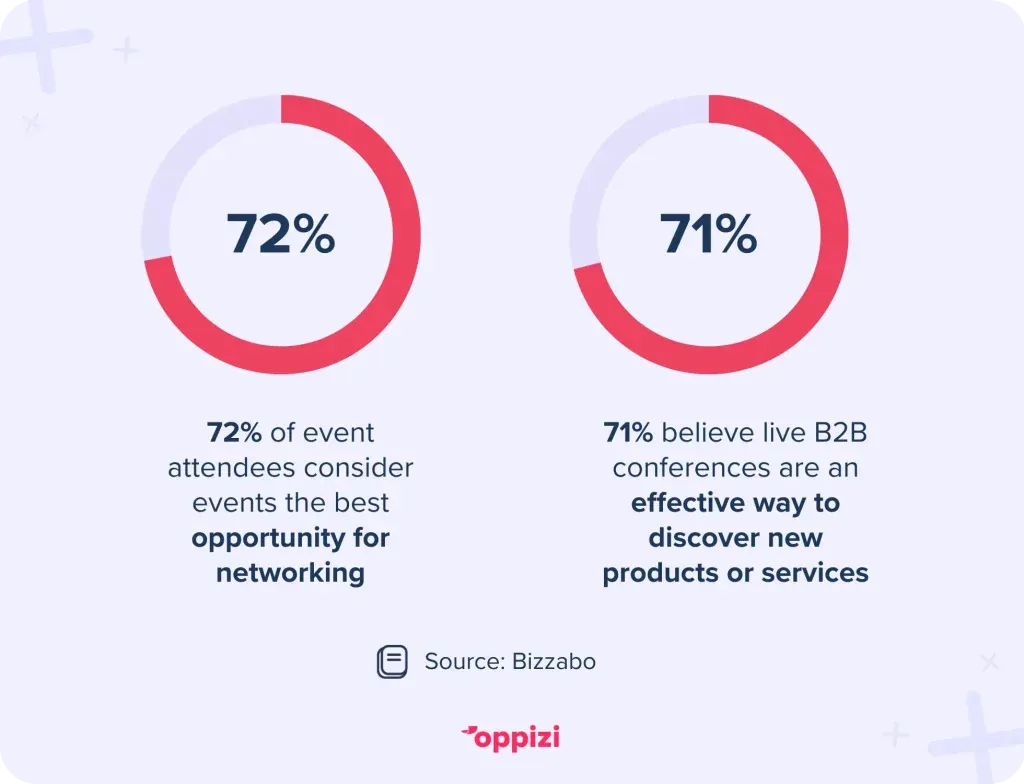
Why is this important? According to Bizzabo, 72% of event attendees say that events offer the best networking opportunities, and 71% said live B2B conferences are effective for learning about new products or services.
By leveraging event marketing, businesses can create memorable experiences that go beyond traditional advertising methods, fostering customer loyalty and brand affinity.
Benefits of event marketing
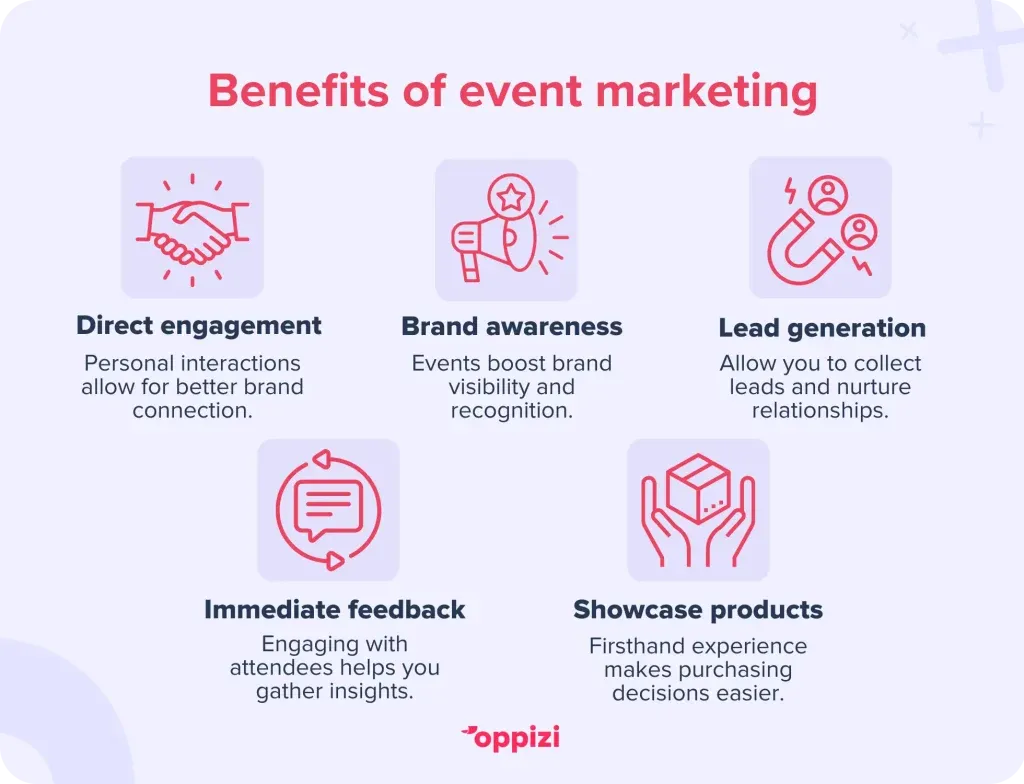
Event marketing offers numerous advantages that can significantly impact your business growth. Here’s why it’s worth considering:
Direct engagement
People are more likely to remember your brand when they’ve had a direct and interactive experience with it. Customers can interact with your team in person, ask questions, express their needs, and receive immediate responses. This personal interaction helps build trust and stregnthens relationships.
Increased brand awareness
Hosting or participating in events puts your brand in the spotlight. Whether it’s a large-scale conference or a niche workshop, getting your brand name out there can boost visibility within your industry. Even those who don’t attend may hear about it through promotions, word-of-mouth, and media coverage. According to EventTrack, 74% of consumers say engaging with branded event marketing experiences makes them more likely to purchase promoted products.
Want to build brand awareness? Check out our guide on how to boost brand awareness for more actionable strategies.
Lead generation
Events are a great way to gather leads. In fact, according to a recent study, 49% of B2B marketers in the US use events for lead generation.
Attendees are often interested in what you offer, making them prime candidates for follow-up. You can offer exclusive content, run contests, or provide free samples in exchange for contact details.
Immediate feedback
You can get real-time feedback on your products or services. Attendees can give you insights into their needs, preferences, and pain points. This direct feedback helps you adapt and improve your offerings to better meet market demands.
Showcase products and services
Events provide a platform to demonstrate your products or services. This can be far more impactful than online descriptions or advertisements. Attendees can see, touch, and experience what you offer, making it much easier for them to make purchasing decisions.
Types of event marketing
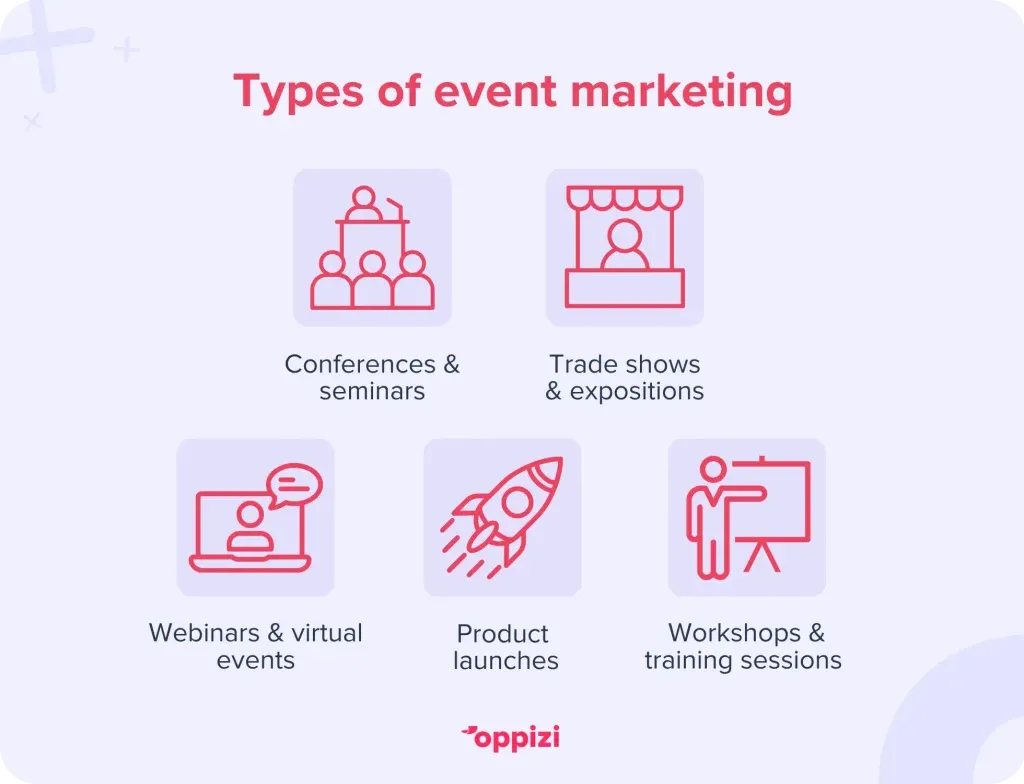
There are many different types of event marketing. Here’s a breakdown of the events you can use to engage your audience and promote your brand.
Conferences and seminars
Conferences and seminars are ideal for sharing knowledge and establishing your brand as an industry leader. By hosting or participating in a conference, you can present your expertise through keynote speeches, panel discussions, and workshops. This can position your brand as a thought leader and create opportunities for networking with potential clients.
According to a recent survey, conferences have 2.85x more impact on business objectives than other event types, highlighting how conferences are an effective means of marketing your brand.
Trade shows and expos
Trade shows and expositions are perfect for showcasing your products and services to a large, targeted audience. These events are often industry-specific, attracting attendees who are already interested in what you offer.
Setting up a booth allows you to demonstrate your products, engage with potential customers, and collect valuable leads. Trade shows also offer the chance to observe competitors and industry trends, helping you stay ahead.
Webinars and virtual events
Webinars and virtual events are an increasingly popular way to reach a global audience without geographical limitations, with over 53% of people saying they plan to attend more webinars in 2025. By providing valuable, educational content, you can position your brand as an expert in your field.
Product launches
An in-person or virtual product launch event can create buzz and excitement around a new product or service.
Inviting the media and industry influencers can help you generate further interest and coverage. Providing live demonstrations and special offers or discounts for attendees can make your product launch even more impactful.
After launching your product, you’ll need a solid marketing strategy. For inspiration, check out our list of 30 tips to sell your products faster.
Workshops and training sessions
Educational events like workshops and training sessions help showcase the practical benefits of your products or services in an engaging setting while positioning your brand as an industry expert.
Participants can interact with you directly, ask questions, and gain a better understanding of how your offerings can solve their problems.
How to utilize event marketing
Event marketing can be a powerful tool for your business, but it does take some planning and effort. Here’s a detailed step-by-step guide to help you create a successful event marketing strategy.
Step 1: Define your goals
Start by clearly defining what you want to achieve with your event. Are you looking to increase brand awareness, generate leads, or launch a new product?
Having specific goals and KPIs will help you plan your event and measure your success more effectively. For example, you run a software company and host a webinar to showcase new features. Your goal might be to generate leads. To make this actionable, ensure you establish SMART goals:
- Specific (generate 100 leads)
- Measurable (track number of attendees)
- Achievable (realistic target)
- Relevant (aligns with sales goals)
- Time-bound (within two weeks post-event)
Step 2: Identify your audience
Who do you want to attend your event? Consider their demographics, interests, and needs. You can create attendee personas that detail the characteristics of your ideal attendees. This can include job roles, challenges, and what they seek from events like yours.
Understanding your audience will help you tailor your event content and promotions to attract the right people.
Step 3: Choose your event format
The type of event should match your goals and audience, so think about what will resonate most with the people you want to reach.
Each type of event has its strengths, so choose a type that best suits your specific goals and what your audience will find most engaging and valuable. For example, a workshop event could work well if you want to offer hands-on experience.
Step 4: Plan your event
Now, it’s time to get into planning your event. First, pick the date, time, and location (physical or virtual).
Next, you need to carefully plan the agenda. Consider the speakers, activities, and any special features you want to include. Ensure you cover all the logistics, like seating arrangements, audiovisual equipment, and catering, if needed.
Step 5: Set a budget
A clear budget helps you manage your resources effectively and avoid any surprise costs. Make sure you include all potential expenses like venue rental, marketing materials, speakers, technology, catering, and anything else you might need.
Allocate funds to different parts of the event and track your spending to stay within budget. Also, consider potential revenue sources, such as ticket sales, sponsorships, and exhibitor fees, to help offset some of the costs.
Step 6: Promote your event
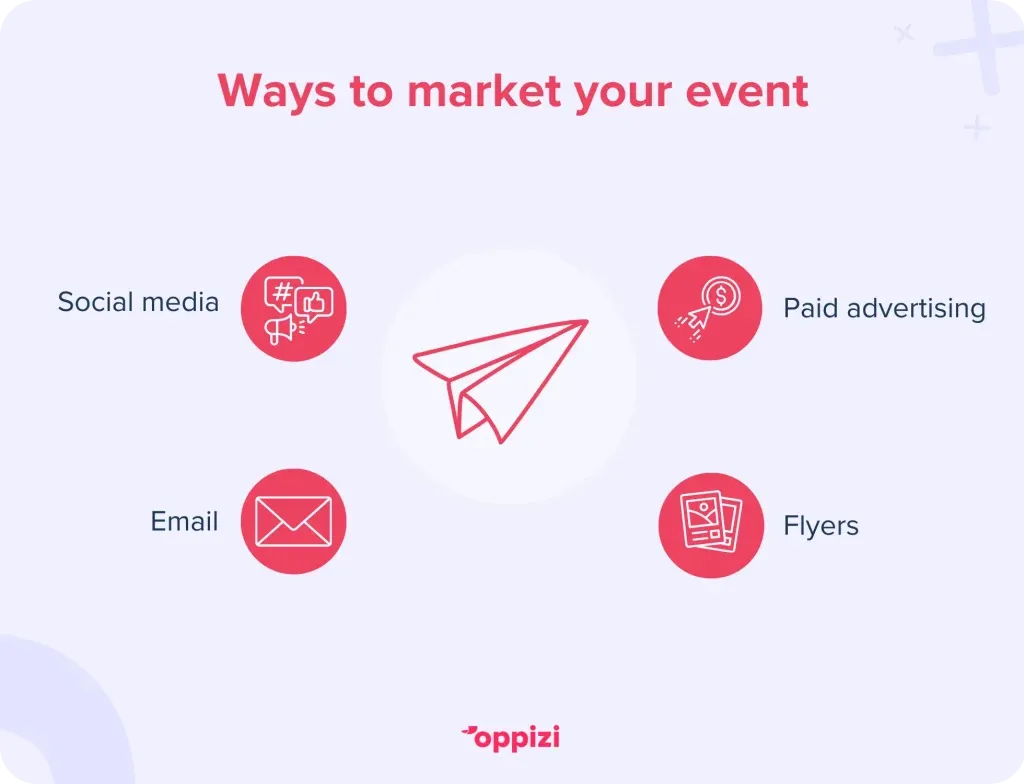
Promotion is crucial for your event’s success. To maximize attendance, use a mix of digital and offline marketing channels.
Social media
Utilize social media platforms like Facebook, LinkedIn, X, and Instagram to promote your event. Create event pages, share updates, and engage your audience through posts, stories, and live sessions.
Email marketing
Email marketing is one of the best ways to attract attendees. In fact, a recent survey found that 87% of event planners use email to promote their events.
Send out email invitations and reminders to your mailing list. Personalizing your emails to different audience segments can make them more relevant and engaging. You should also ensure that you include a clear call to action and easy registration links.
Paid advertising
Paid advertising can be an effective tool for reaching a wider audience. Social media ads and targeted Google campaigns can attract attendees who might be interested in your event topic.
Flyers
Design attractive flyers with key information about your event and distribute them to relevant businesses and in high-traffic areas. Flyers are an effective way to reach local audiences and create visual reminders about your event. Include a clear call to action and contact details for more information.
Unsure if flyers are right for your business? Check out our guide to discover six reasons why you should use flyers to advertise corporate events.
Step 7: Engage attendees
During the event, focus on engaging your attendees by providing valuable content that addresses their needs and using interactive elements like live polls and Q&A sessions.
Make sure your team is approachable and ready to answer questions. Your goal is to create a welcoming and engaging atmosphere for your attendees so that they’re more likely to recommend your products or services, and any future events you might hold.
Step 8: Measure success
When your event is over, you should measure the success based on the goals you set before planning. Take a look at metrics like attendance numbers, engagement levels, leads generated, and any sales from the event.
When it comes to measuring success, 54% of marketers track event registrations, 53% track opportunities created, and 40% track attendance rates. Metrics like these can give you a good sense of your event’s success.
Tools like CRM systems and analytics platforms allow you to track these key performance indicators (KPIs). Compare the actual outcomes with your initial goals to see how effective your event was. This will help you understand your return on investment and identify areas for improvement for future events you might hold.
Frequently asked questions about event marketing
1. What is an example of event marketing?
An example of event marketing could be a tech company launching a new product at a major industry conference, using live demonstrations and interactive sessions to engage potential customers.
2. What does an event marketer do?
An event marketer plans, organizes, and executes events to promote a product or service. This includes creating buzz before the event, engaging attendees during it, and following up after.
3. How do you succeed in event marketing?
To succeed in event marketing, you must understand your audience and create engaging, memorable experiences tailored to their interests.
- Pre-event: Use social media and email campaigns to build buzz and drive attendance.
- During the event: Focus on boosting attendee engagement with interactive activities and personalized touches.
- Post-event: Use follow-up techniques to maintain connections and gather feedback for continuous improvement.
4. What are the key benefits of event marketing?
Event marketing helps businesses increase brand awareness, generate leads, engage customers, receive real-time feedback, and showcase products and services in a tangible way.
5. What are the most effective types of event marketing?
The best event type depends on your goals, but conferences, trade shows, product launches, webinars, and workshops are among the most impactful for engagement and lead generation.
6. How can I measure the success of my event marketing efforts?
Track key performance indicators (KPIs) like attendance, engagement, lead conversions, social media interactions, and post-event surveys to assess the success of your event.
7. How far in advance should I start planning an event?
Smaller events may require as little as a few weeks of planning, while larger conferences or trade shows can need 6-12 months of preparation for logistics, marketing, and sponsorships.
8. How can I make my event stand out from competitors?
To make your event stand out from competitors, incorporate unique elements like interactive experiences, exclusive giveaways, or immersive brand activations.
Conclusion
Event marketing is an effective strategy for creating memorable brand experiences and driving business growth. By carefully planning and executing events, businesses can achieve greater brand awareness, generate leads, and build lasting customer relationships.
If you want to boost attendance at your events, Oppizi can help. Our flyer distribution services can help you expand your reach with trackable distribution in high-traffic areas.
See how Oppizi’s offline marketing solutions can transform your marketing strategy: create a campaign today!