Last updated July 23, 2026
Whether you are a startup looking to scale or an established company aiming for expansion, having a well-defined business growth strategy is essential. Without a solid plan, businesses risk stagnation, declining revenue, or being outperformed by competitors.
In this article, we’ll explore what a business growth strategy is, various strategies businesses can use to expand, and practical examples of how companies have successfully implemented these tactics.
What is a business growth strategy?
A business growth strategy is a structured plan that outlines how a company intends to increase revenue, expand market share, and achieve long-term sustainability. Growth can come from multiple avenues, such as expanding into new markets, introducing new products, optimizing operations, or acquiring competitors.
Businesses typically pursue growth to:
- Increase profitability
- Boost brand awareness
- Stay competitive in their industry
- Adapt to evolving market trends
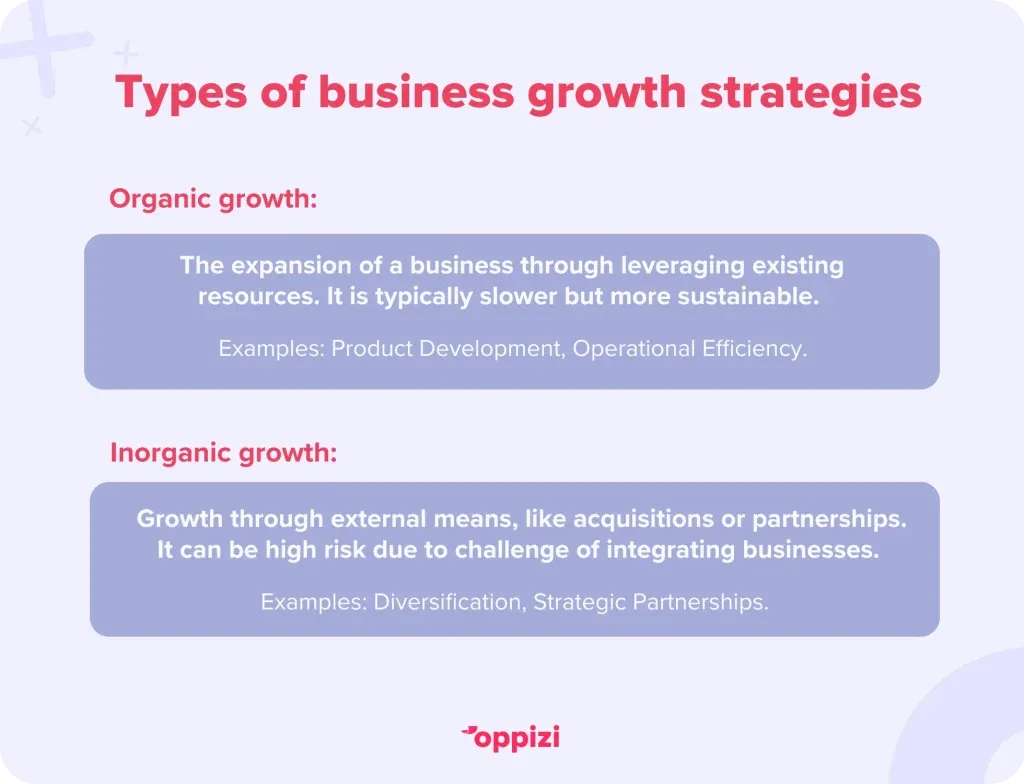
Growth strategies can be classified into organic growth (internal efforts) and inorganic growth (external acquisitions or partnerships). Let’s explore key strategies that businesses use to achieve growth.
Organic business growth strategies
These strategies focus on growing a business through internal efforts and enhancing existing operations, products, or markets without relying on external partnerships or acquisitions.
1. Market penetration
Market penetration focuses on increasing sales of existing products or services within the current market. This can be done through enhanced marketing efforts, competitive pricing, or improved product accessibility.
Example: McDonald's regularly runs promotions, like their annual Monopoly game promotion, and limited-time offers to encourage repeat purchases, driving sales without expanding to new markets.
2. Market development
Expanding into new markets or targeting new customer segments can significantly drive growth. This strategy may involve geographical expansion, targeting different demographics, or launching in underserved regions.
Example: Netflix has expanded internationally, entering markets such as India and Latin America, leading to a surge in subscriber numbers.
3. Product development
Introducing new or improved products to meet customer needs is a powerful way to drive business growth. Investing in research and development (R&D) ensures that businesses stay ahead of the competition.
Example: Apple continuously innovates with new iPhone models, each featuring improved technology and new features, keeping customers engaged and willing to upgrade.
4. Customer retention & loyalty programs
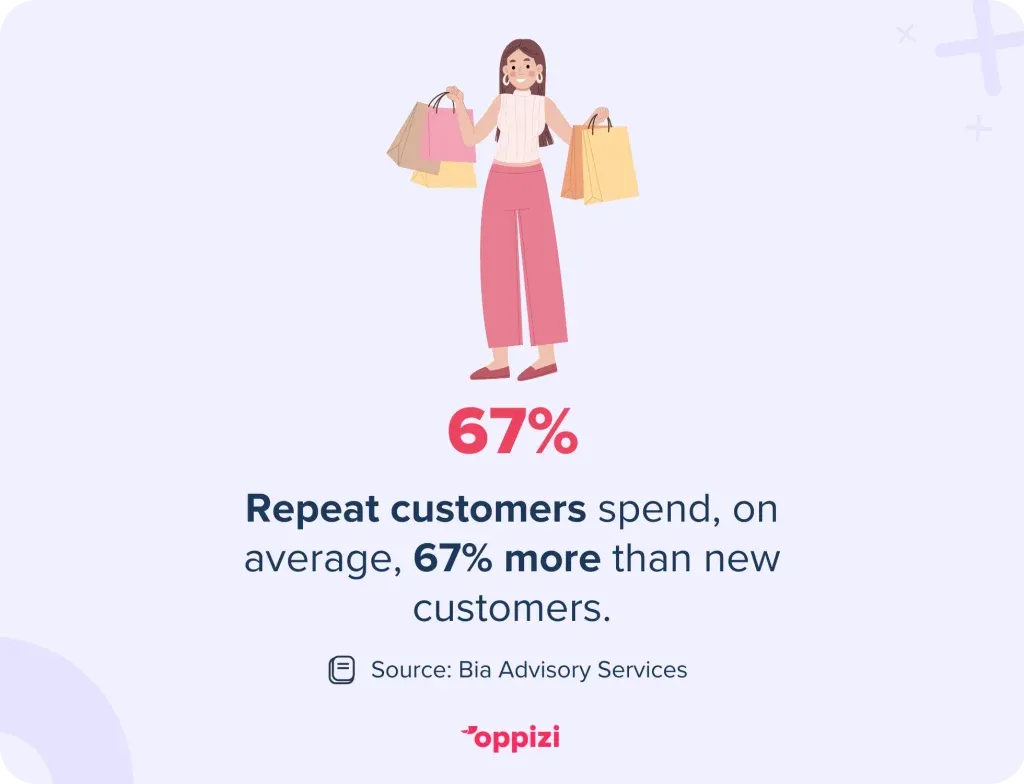
Acquiring new customers is essential for any business, but retaining existing ones can be even more profitable. Studies have shown that repeat customers spend 67% more than new customers. Strong customer retention strategies lead to repeat purchases and brand advocacy.
Example: UK supermarket chain Tesco uses its ‘Clubcard’ loyalty program to offer exclusive discounts, personalized vouchers, and a points system that customers can redeem for money-off vouchers on future purchases.
5. Operational efficiency & automation
Streamlining operations through automation and better supply chain management can enhance profitability and support quicker scalability.
Example: Walmart has optimized its supply chain using data analytics and automated distribution centers, reducing overall costs and improving its inventory management.
Inorganic growth strategies
Inorganic growth involves expanding through external sources such as partnerships, acquisitions, and entering new industries.
1. Diversification
Diversification involves entering new industries or launching unrelated products to create additional revenue streams. This strategy can be high risk but high reward.
Example: Amazon started as an online bookstore but diversified, firstly by selling a wider range of products beyond books, and then expanding into entertainment (Prime Video) and smart devices (Alexa).
2. Strategic partnerships & acquisitions
Mergers, acquisitions, and strategic alliances can accelerate growth by providing access to new markets, technologies, or customer bases.
Example: Facebook acquired Instagram and WhatsApp, expanding its social media ecosystem, reducing competition and increasing user engagement.
The role of marketing in business growth
Marketing plays a crucial role in implementing growth strategies. Whether through digital marketing, content strategies, or traditional advertising, reaching and engaging customers is paramount for growing your business.
Key marketing strategies for business growth
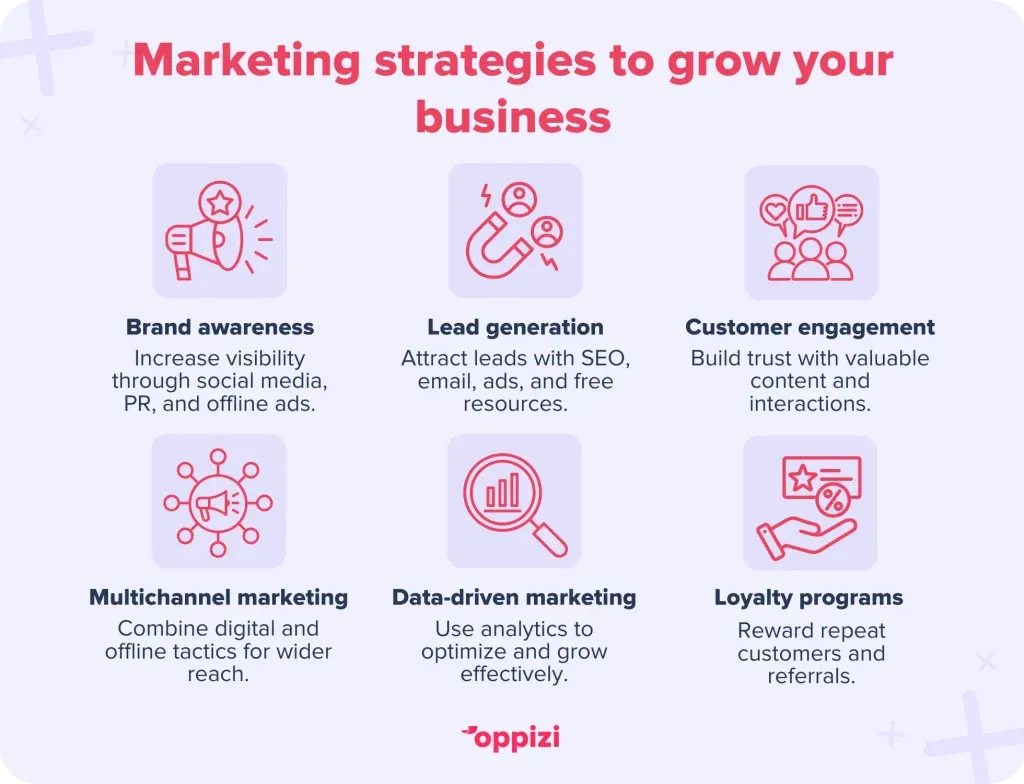
A well-rounded marketing approach should include a mix of digital and offline tactics to maximize reach and effectiveness. Here are some key marketing strategies that can help drive business growth:
Brand awareness
Establishing strong brand awareness is essential for generating business growth. Use social media platforms, offline advertising methods like direct mail and flyers, and public relations efforts to increase visibility. Sponsoring events or collaborating with influencers can also enhance brand credibility and attract new audiences.

Lead generation
Effective lead-generation strategies ensure a steady stream of potential customers. Invest in SEO to rank higher in search engine results, create compelling email marketing campaigns, and run paid advertising campaigns on platforms like Google Ads and Meta. Offering valuable lead magnets, such as free guides or webinars, can also help capture leads.
Customer engagement
Actively engaging with customers is crucial for building trust and long-term relationships. Create high-quality, valuable content through blogs, social media posts, and videos that address customer pain points. Use interactive elements like polls, quizzes, and live Q&A sessions to encourage participation and strengthen your community.
Multichannel marketing
A combination of online and offline marketing efforts increases the chances of reaching your target audience effectively. Additionally, companies that use multi-channel marketing strategies experience a 21% increase in revenue compared to those that only use single-channel strategies.
While digital marketing allows for precise targeting, offline strategies like direct mail campaigns and networking events help reinforce brand messaging and engage customers on multiple touchpoints. For example, a local gym might run Facebook ads while also distributing flyers with exclusive in-person promotions, ensuring they capture both digital and physical audiences.
Data-driven marketing
Leverage analytics tools to measure campaign performance and refine marketing strategies. Track customer behavior, website traffic, and conversion rates to make informed decisions on how to grow your business further. Businesses that use data-driven marketing are 23 times more likely to acquire customers.
Referral and loyalty programs
Encourage customer loyalty and referrals by offering rewards for repeat purchases or word-of-mouth recommendations. According to Statista, 94% of consumers say a positive customer experience makes them more likely to repurchase.
FAQs on business growth strategies
1. What is the fastest way to grow a business?
The fastest way to grow depends on the industry, but a combination of market penetration, strategic marketing, and partnerships often yields quick results.
2. Should small businesses focus on growth or profitability first?
While profitability is essential, sustainable growth ensures long-term success, especially for small businesses. A balanced approach to prioritizing both is ideal.
3. How do I know which growth strategy is right for my business?
Analyze market trends, customer needs, competition, and internal capabilities to determine the best strategy for your business.

Conclusion
A strong business growth strategy is essential for achieving scalability and long-term success. Whether through market expansion, partnerships, or operational improvements, businesses must continuously adapt and refine their approach to stay ahead in a competitive landscape.
If you’re looking for an effective way to boost brand visibility and drive local engagement, consider integrating an offline marketing campaign into your strategy with Oppizi. Combining digital and offline efforts can help you reach a wider audience, create lasting brand impressions, and ultimately accelerate your business growth.
Ready to take your business to the next level? Start an offline campaign with Oppizi today!