Last updated July 28, 2026
If you run a business or handle the marketing, chances are you're focused on one thing—getting more customers. But that’s not always easy. You don’t want to waste time, money, or effort on things that don’t work. That’s where customer acquisition comes in.
This guide breaks it down in simple terms. You’ll learn what customer acquisition means, how to build a plan, which campaigns actually work, and how to keep things simple—even if you don’t have a big team.
What is customer acquisition?
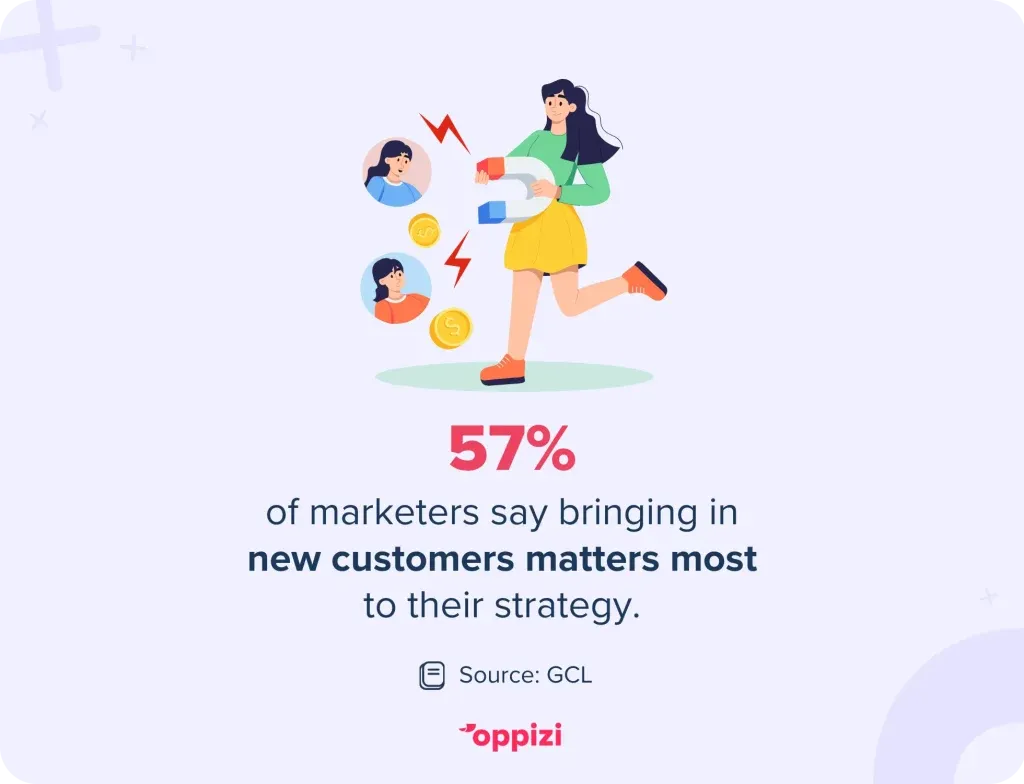
Customer acquisition means getting new people to buy from your business. It covers everything from the first time they hear about you to the moment they make a purchase. In fact, 57% of marketers say customer acquisition is their top marketing priority.
But it’s not just about getting clicks or attention. You want to reach the right people—those most likely to care about what you offer. The goal is to build a system that helps you get new customers again and again, without breaking the bank.
What is acquisition marketing?
Acquisition marketing is the way you reach new people. It’s a part of your overall marketing, but it focuses just on the early stages—when someone first hears about your business and starts thinking about buying.
Here’s what that looks like:
- You promote your product or service to people who don’t know you yet.
- You show them why it’s worth their time.
- You help them decide to take action—like signing up or making a purchase.
You can do this online or offline. Think social media ads, flyers, email, or Google search. The goal is simple: turn strangers into customers.
It’s different from brand marketing, which builds awareness, or retention marketing, which keeps current customers happy. Acquisition marketing is all about helping new people find and choose your business.
Think of it like a bridge. One side is a person who’s never heard of you. The other side is a new customer. Your job is to help them cross that bridge.
How acquisition marketing works
There are two main stages:
1. Awareness
This is the first time someone sees your brand. It might be a Facebook ad, a flyer on their doorstep, or a search result on Google.
2. Consideration
Now they’re curious. You give them a reason to learn more—maybe a discount, a helpful blog, or a quick video that shows what you offer.
What makes a good acquisition campaign?
A strong campaign usually has:
- Clear targeting – You know who you want to reach.
- The right message – You speak to what they care about.
- Data – You track what’s working so you can do more of it.
Whether you’re promoting a local class, selling products online, or launching a new service, acquisition marketing helps bring in fresh eyes—and new customers.
Why customer acquisition matters (especially for small businesses)
Word of mouth and repeat customers are great. But if you want steady growth, you need a plan to bring in new people.
Here’s why it matters:
- You can’t control referrals—but you can control your own campaigns.
- New customers keep your business moving forward.
- With the right plan, you can grow without working around the clock.
It doesn’t have to be expensive or complex. There’s a simple, smart way to do it—and we’ll show you how.
How to build an acquisition marketing strategy from scratch
Think of this as your game plan. It should be clear, easy to follow, and focused on the right people. Here’s a simple way to start:
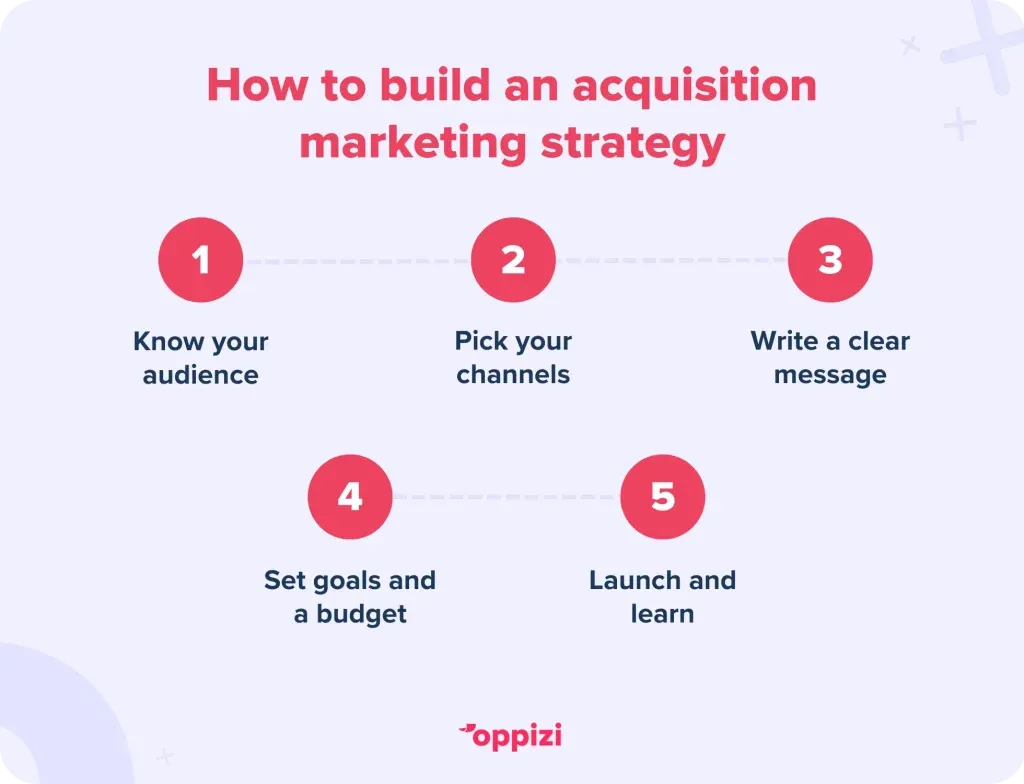
1. Know who you're trying to reach
You can’t reach everyone. Focus on the people most likely to care about what you offer.
Ask yourself:
- What problems do they have?
- Where do they live or work?
- What do they do online?
- What message would make them stop and pay attention?
Be specific. It makes everything easier.
Example:
If you run a fitness studio, your audience might be:“Women aged 25–40 who live or work nearby, scroll Instagram, and want to stay healthy but don’t have time for long workouts.”
This helps you choose where to show up, what to say, and how to say it. Start with one group like this. Focus on them first.
2. Pick your channels
There are two main types:
- Online – like search ads, Instagram, email, or working with influencers
- Offline – like flyer drops, local events, direct mail, or billboards
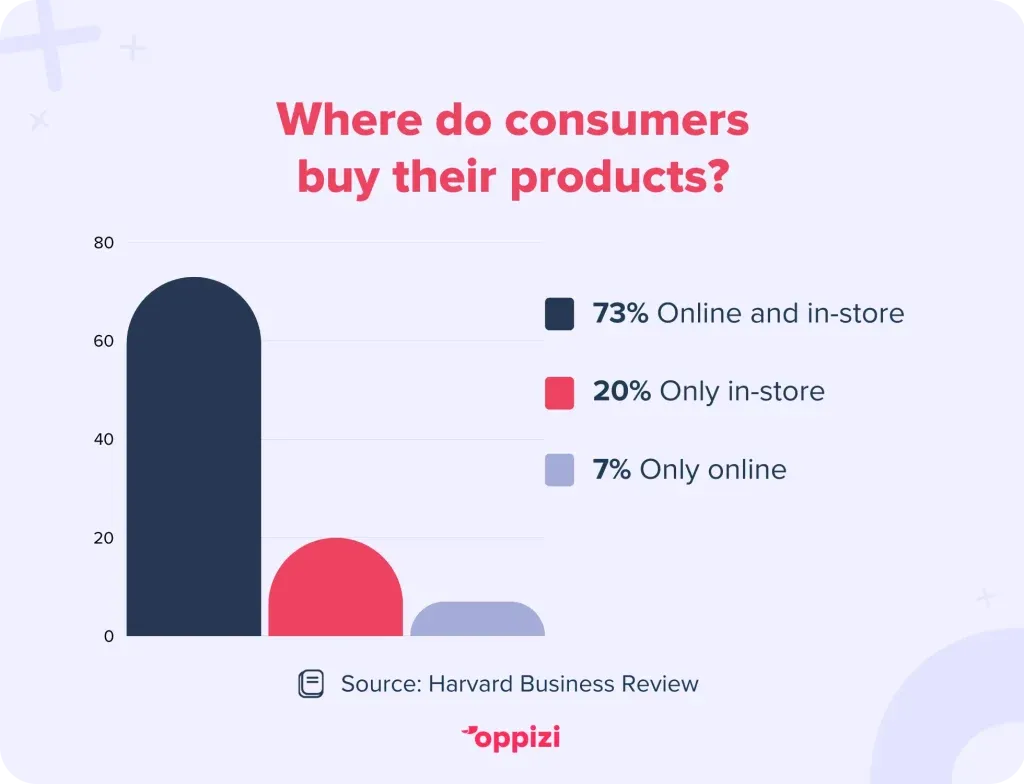
Online is great for reaching specific people. Offline can help you stand out, especially if you're targeting a local area. According to Harvard Business Review, 7% of consumers shop only online, 20% only in-store, and 73% use both.
Tip: Oppizi makes offline marketing campaigns quick and easy. You can target certain areas, choose your audience, and track everything from start to finish. We handle the rest.
3. Write a clear message
Your message should be simple and speak directly to your customer.
It should:
- Talk about the problem they’re facing
- Show how you can help
- Explain why you’re different
- Tell them exactly what to do next
Here’s a quick checklist:
- Problem: What’s the issue?
- Solution: How do you solve it?
- Proof: What makes you credible?
- Call to action: What should they do now?
Example:"Too tired to cook? Try [Your Brand]—healthy meals ready in minutes. Get 10% off your first box!"
4. Set goals and a budget
Decide what success looks like.
For example:
- How many leads do you want?
- What’s a good conversion rate?
- How much should each new customer cost?
Keep it simple. Track your results so you can make changes later. Even a small campaign can teach you a lot. Try two versions of a flyer with different headlines. Or test two images in your ads. Little changes can lead to big results.
5. Launch and learn
Start small. Run a quick test—an Instagram ad, a local flyer drop, or an email campaign.
Watch what happens:
- Are people noticing it?
- Are they taking action?
- What can you adjust to make it better?
The best campaigns always leave room to improve. Learn, tweak, and try again.
Top customer acquisition channels to try
Not sure where to start? These channels are worth testing. Each one works in a different way, depending on your goals and audience.
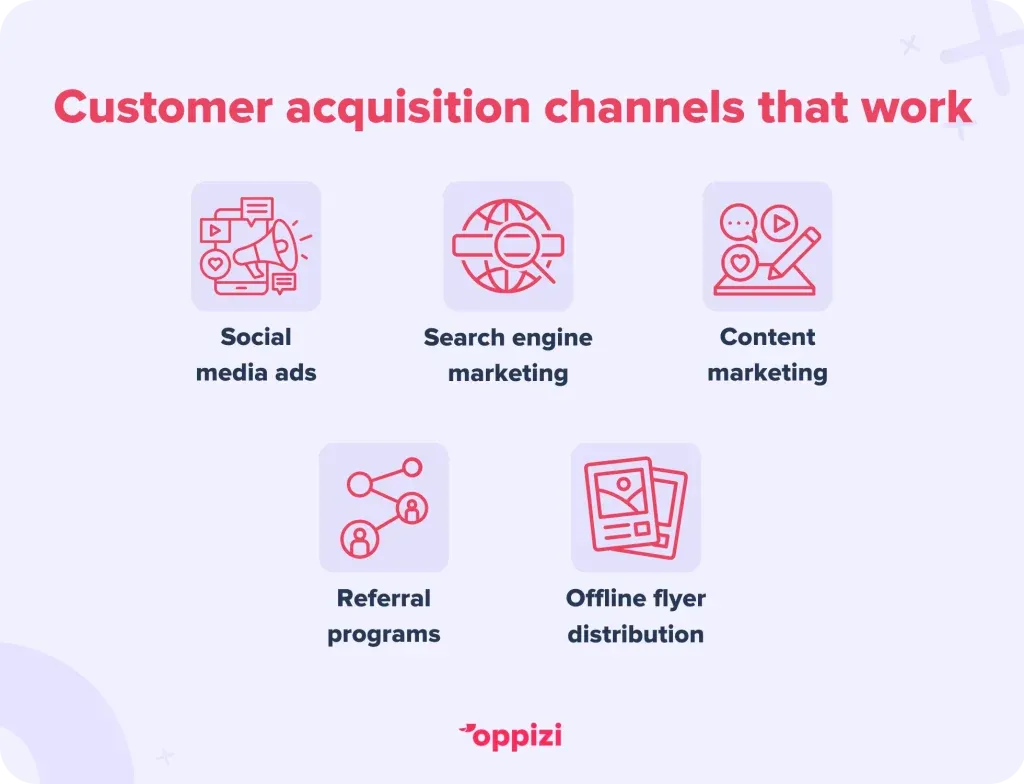
1. Social media ads
Facebook, Instagram, and TikTok let you target by location, age, interests, and behavior.
Why it works:
- Good for getting noticed and following up with people.
- Easy to test different messages and images.
- Great for products that are visual or bought on impulse.
Things to watch out for:
- Can get expensive if you don’t manage it well.
- Ads can feel old fast—you’ll need to refresh them often.
2. Search engine marketing
With Google Ads, you show up when people search for what you offer.
Why it works:
- People are already looking for a solution.
- Easy to track clicks, costs, and results.
Things to watch out for:
- Popular keywords cost more.
- You’ll need strong keywords and a good landing page.
Best for services or products that solve specific problems.
3. Content marketing
This includes blogs, videos, and guides that help or teach your audience.
Why it works:
- Builds trust and improves your SEO.
- Keeps bringing in traffic over time.
- One good piece of content can work for months or even years.
Things to watch out for:
- Takes time to see results.
- Needs regular effort and some writing or video skills.
Great for businesses that give advice, explain things, or sell complex services.
4. Referral programs
Ask happy customers to share your business with friends—and reward them when they do.
Why it works:
- People trust recommendations from people they know.
- Low cost to run.
- Helps build a loyal community.
Things to watch out for:
- You need a good base of happy customers to start.
- Incentives may be needed to get people to join in.
Best for subscription services, apps, or local businesses.
5. Offline flyer distribution
Flyers still work—especially when they’re done right. They’re great for local reach and short-term offers.
Why it works:
- Feels more personal than a digital ad.
- Gets attention in specific areas.
- Works well for time-sensitive deals.
Things to watch out for:
- Harder to track—unless you use tools like Oppizi.
- Needs strong design and smart timing.
Good news: Flyer marketing is now trackable. Use QR codes, landing pages, and real-time data to see what’s working.
With Oppizi, you can:
- Choose your audience and locations
- Design, print, and deliver flyers
- Track results as they come in
We make it easy, so you can focus on your message—we’ll handle the rest.
Examples of acquisition marketing campaigns
Here are some simple campaigns that worked well for different types of businesses:
1. Local coffee shop
- Channel: Flyers
- Offer: “Free pastry with your first coffee”
- Target: People living within 2 km
2. Online fitness coach
- Channel: Instagram ads
- Offer: “Join a free 7-day fitness challenge”
- Target: Women aged 25–45 interested in home workouts
3. Home cleaning service
- Channel: Google Ads and flyers
- Offer: “20% off your first clean”
- Target: Homeowners in a specific area
4. New hair salon
- Channel: Instagram and local flyers
- Offer: “20% off your first visit + free consultation”
- Target: Women aged 20–50 nearby
5. Productivity app
- Channel: Google search ads and YouTube videos
- Offer: “Free 14-day trial—cancel anytime”
- Target: Remote workers and students
6. Fitness bootcamp
- Channel: Direct mail postcards
- Offer: “First class free—bring a friend”
- Target: Households within 5 miles
How to keep acquisition marketing simple
A lot of small businesses try to do too much. That’s when things get messy. Here’s a better way:
- Pick one channel to focus on.
- Choose one clear offer.
- Track what happens and see what works.
You don’t need fancy tools or a big team. What you do need is a smart plan, a clear message, and a bit of consistency.
Want to make it even easier? Oppizi can help. We’ll handle your flyer campaign from start to finish—printing, targeting, tracking, and delivery. You focus on the message. We’ll do the rest.
Frequently asked questions about customer acquisition
What do you mean by customer acquisition?
It’s how you get new people to buy from your business. From the first time they hear about you to the moment they make a purchase—that’s customer acquisition. The goal is to build a system that brings in new customers again and again.
Is customer acquisition a KPI?
Yes. Many businesses track it to see how well their marketing works. Some common numbers to watch are how many new customers you get, how much it costs to get them (CPA), and how many people turn into buyers after seeing your ad.
What are the four stages of customer acquisition?
Here’s a simple breakdown:
- Awareness – They find out you exist.
- Interest – They want to know more.
- Consideration – They compare your offer to others.
- Conversion – They decide to buy.
What is an example of a customer acquisition strategy?
Sure. A local gym runs a flyer campaign. The offer is “50% off your first month.” They hand out flyers in nearby areas. Each flyer has a QR code that links to a sign-up page. They track how many people scan and sign up. This mix of offline and online tools helps bring in new members.
What's a good CAC (customer acquisition cost)?
It depends on how much your customer is worth over time. You want your CAC to be low enough that you still make money.
For example:
- If a customer spends $200, spending $10 to get them is great.
- If they only spend $15, that same $10 cost is too high.
A good rule? Your customer should bring in about 3x more than they cost to acquire.
Final thoughts
Getting new customers doesn’t have to be hard. Whether you're just starting or growing fast, you can find what works. Start small. Pick one goal, one offer, and one way to reach people. Test it. Learn from it. Make it better.
If you’re serious about getting more customers, don’t ignore offline marketing. Oppizi handles the heavy lifting—so your flyers reach the right people, at the right time, with zero fuss. Sign up today for free and start seeing results.