Last updated July 23, 2026
Many businesses seeking growth often concentrate the majority of their efforts on acquiring new customers. However, retaining existing customers is equally, if not more, critical to long-term and sustainable success.
Customer retention not only increases profitability but also promotes brand loyalty and advocacy. In this article, we'll explore what customer retention entails, effective strategies you can implement to improve it, and methods to measure your retention efforts.
What is customer retention?
Customer retention is the process of keeping existing customers engaged and satisfied with your brand in the long term. The aim of this is to ensure that they continue purchasing products or services rather than switching to competitors. High retention rates generally indicate that a company is meeting its customers' needs, providing value, and creating positive experiences.
With so much competition in today’s market, customer retention is imperative to sustained business growth. Not only is it more cost-effective to retain existing customers, but loyal customers can also become advocates, driving word-of-mouth referrals and improving your brand reputation.
Why is customer retention important?
Before diving into specific strategies, it’s important to understand why customer retention is so essential:
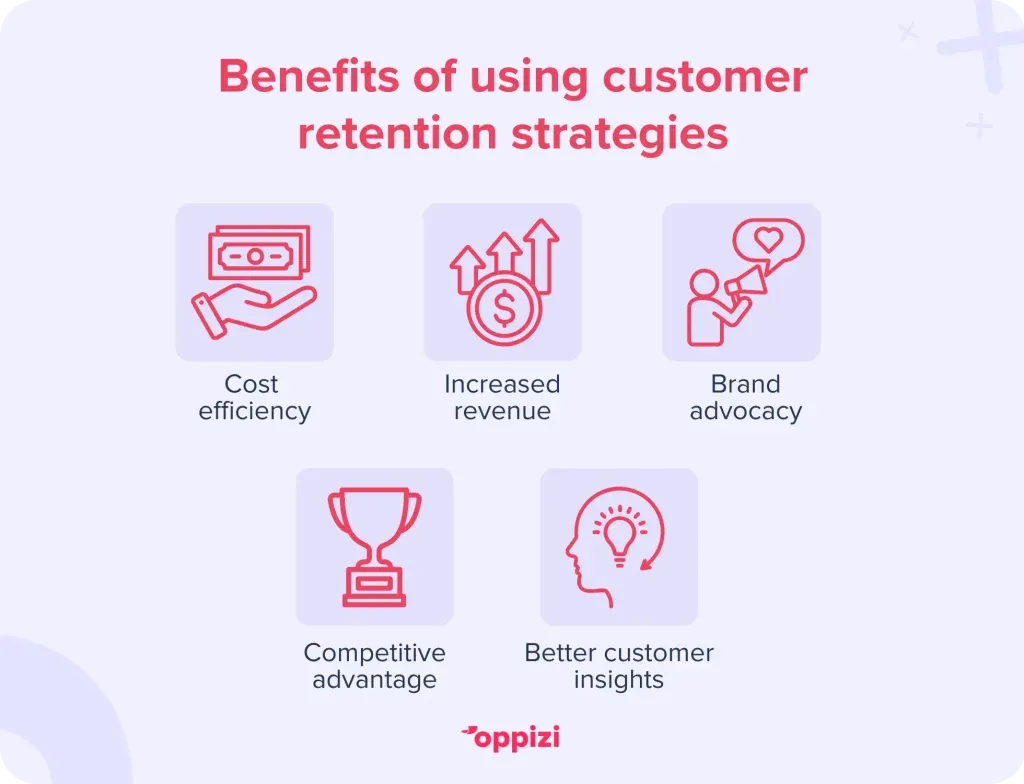
Cost efficiency:
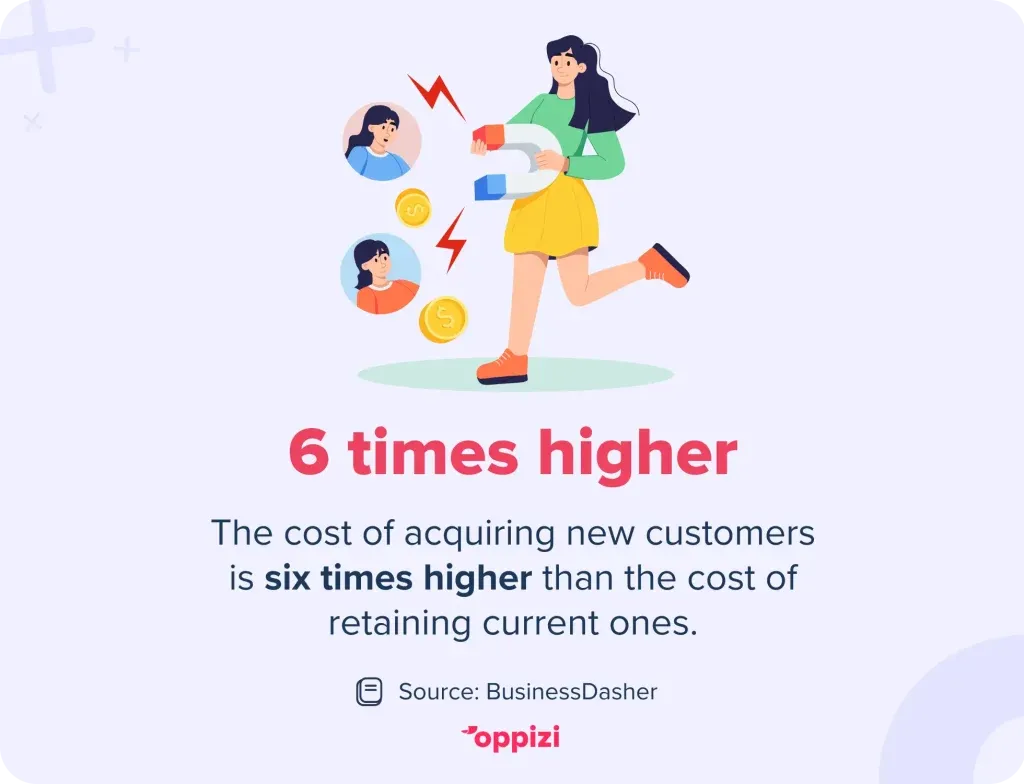
It is six times more expensive to acquire new customers than it is to retain existing ones. Focusing on customer retention is a smart way to increase profitability without constantly spending on customer acquisition efforts.
Increased revenue:
Loyal customers tend to spend more over time. Research shows that existing customers spend 67% more than new customers. Additionally, a 5% increase in customer retention can boost profits by over 25%.
Brand advocacy:
Satisfied customers are more likely to recommend your brand to others, providing valuable word-of-mouth marketing. These referrals can help you attract new customers, leading to organic growth.
Competitive advantage:
Strong customer retention can make you stand out from your competitors. With so many available options nowadays, customers tend to stick with brands they trust.
Better customer insights:
Engaged customers are more likely to provide valuable feedback that can help you improve your products and services.
Customer retention strategies with tips
Now that we understand why customer retention is crucial, we’ll outline ten effective strategies that can help boost your retention efforts:
1. Personalized customer experience
62% of business leaders have said that using personalization has improved customer retention. Tailoring your communications, offers, and interactions based on customers’ previous behaviors, preferences, or purchase history can make a significant difference in their experience.
Tip:
Use customer data to offer customized recommendations and targeted promotions. For example, an e-commerce store can offer personalized discounts on items that customers have previously viewed or purchased.
2. Loyalty programs
Loyalty programs incentivize customers to keep coming back. These programs reward repeat purchases and encourage customers to continue engaging with your brand.
Tip:
Create a points-based system where customers earn rewards for every purchase, or offer exclusive perks such as early access to sales or member-only discounts. Make sure the rewards are easy to redeem and add real value to the customer experience.
3. Exceptional customer service
Excellent customer service should not be underestimated - it can be a powerful tool in retaining customers. Customers who feel heard and valued are more likely to stay loyal to your brand.
Tip:
Train your customer service team to be responsive, empathetic, and efficient. Offering multiple contact channels (e.g., phone, live chat, social media) gives customers more ways to reach out. Address issues quickly and resolve them in a way that exceeds expectations.

4. Regular communication
Stay top-of-mind with regular communication that adds value. Whether it’s through email newsletters, social media, or blog updates, consistently sharing useful content will keep your brand in the spotlight.
Tip:
Keep your communication personal and relevant. Send tailored email marketing, such as birthday discounts, seasonal offers, or exclusive previews of new products. Furthermore, personalization helps maintain engagement and strengthens relationships.
5. Offer educational content
Educational content that adds value to your customers’ lives helps build trust and authority in your industry. Providing customers with knowledge enhances their overall experience with your company.
Tip:
Create blogs, videos, webinars, or tutorials that educate customers about your products, industry trends, or related topics. For example, a skincare brand can share videos showing skincare routines for different skin types, or blogs with tips on how to get the most out of their products.
6. Create a community around your brand
Building a sense of community fosters customer loyalty. Customers who feel like they belong to something bigger are more likely to remain engaged with your brand.
Tip:
Create online groups or host events where customers can interact with each other and share experiences. For instance, a fitness company could host live virtual workout sessions or create a community on social media where customers share their journeys and share fitness tips.
7. Gamification
Gamifying the customer experience makes it more engaging and fun. It can also add an element of friendly competition and rewards that encourage customers to stay loyal. In fact, organizations that implement gamified loyalty programs see a 22% increase in customer retention.
Tip:
Introduce challenges or contests that reward customers for their actions, such as making a purchase, sharing on social media, or referring a friend. For example, a cosmetics brand could host a challenge where customers earn points for completing specific actions.
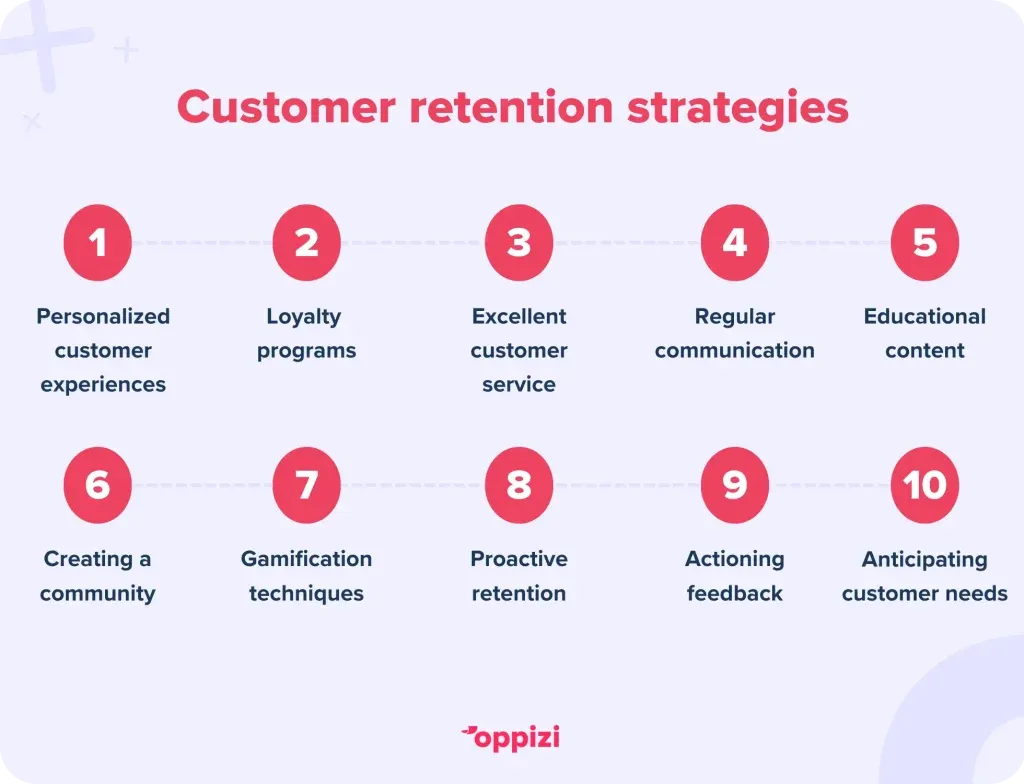
8. Proactive retention strategies
Rather than waiting for customers to leave, be proactive in retaining them. Monitor behaviors such as reduced engagement or frequency of purchases, and take action before they churn.
Tip:
Set up automated re-engagement emails for customers who haven’t interacted with your brand in a period of time. Offering them incentives to return, like a special discount on their next purchase, can help re-establish the connection.
9. Request feedback and act upon it
Customers like to know that their opinions matter. Regularly ask for feedback and act on it. This not only improves your offerings but also highlights to customers that you are dedicated to making their experience better.
Tip:
Send surveys or ask for reviews after a purchase. Follow up with customers to let them know what changes or improvements have been made based on their feedback. This shows that you value their input and are committed to continuous improvement.
10. Anticipate customer needs
Proactively anticipating customer needs helps you stay ahead of the competition. When customers feel that your brand understands their needs, they’re more likely to stay loyal.
Tip:
Leverage predictive analytics to anticipate customer behavior and make relevant suggestions. For example, if a customer frequently buys certain products, offer them complementary items that they might require in future, or a subscription service for regular deliveries.
How to measure retention efforts
Measuring the success of your retention strategies is essential to understanding their impact and making data-driven adjustments. Here are a few key metrics you can track:
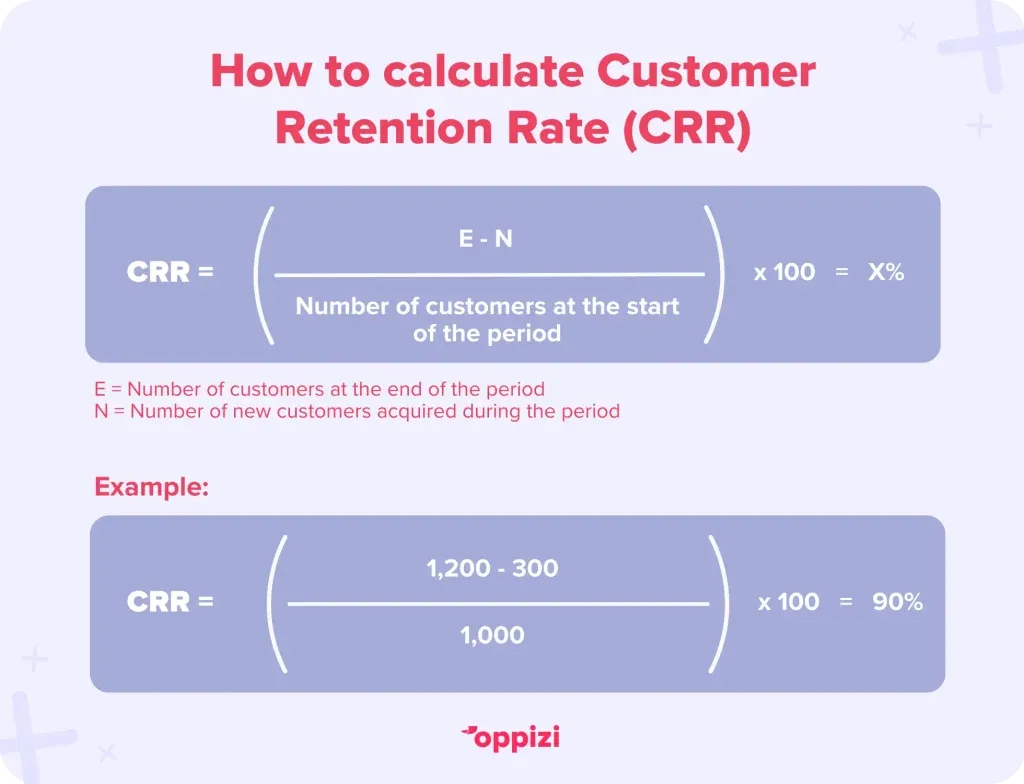
- Customer Retention Rate (CRR): This measures the percentage of customers retained over a specific period.
Formula: CRR = [(E - N) / S] × 100
Where:
E = Number of customers at the end of the period
N = Number of new customers acquired during the period
S = Number of customers at the start of the period
- Customer Lifetime Value (CLV): This metric calculates the total revenue a customer is expected to generate over their lifetime with your brand. Increasing CLV is one of the main goals involved in retention strategies.
- Net Promoter Score (NPS): NPS measures customer loyalty by asking customers how likely they are to recommend your business on a scale of 0-10. A higher NPS indicates strong customer satisfaction and loyalty.
Frequently asked questions about customer retention
How do I know if my retention strategies are working?
Track key metrics like Customer Retention Rate (CRR), Customer Lifetime Value (CLV), and Net Promoter Score (NPS). These will help you evaluate the success of your retention efforts.
What is the difference between customer acquisition and retention?
Customer acquisition is focused on attracting new customers, while customer retention is about keeping existing ones engaged and loyal to your brand.
Can customer retention strategies work for small businesses?
Yes, customer retention strategies can be highly effective for small businesses. Focusing on personalized experiences and building strong relationships is key for long-term success.

Conclusion
Customer retention is one of the most cost-effective ways to grow your business sustainably. By implementing strategies such as personalized experiences, exceptional service, regular communication, and community building, you can improve customer satisfaction and loyalty. Measuring the impact of these efforts through key metrics ensures that your strategies continue to evolve and improve over time.
If you’re ready to take your customer retention efforts to the next level, consider incorporating offline marketing into your strategy. Partnering with Oppizi can help you execute effective campaigns that strengthen relationships with your customers.
Ready to get started? Create an offline marketing campaign with Oppizi today and see the difference it can make for your brand.