Last updated August 28, 2026
If traditional marketing isn’t helping your business grow, you’re not the only one. A lot of businesses are trying something different: growth marketing.
This guide explains what growth marketing is and how to start using it. It's written for beginners, whether you’re a business owner or a marketer.
What is growth marketing?
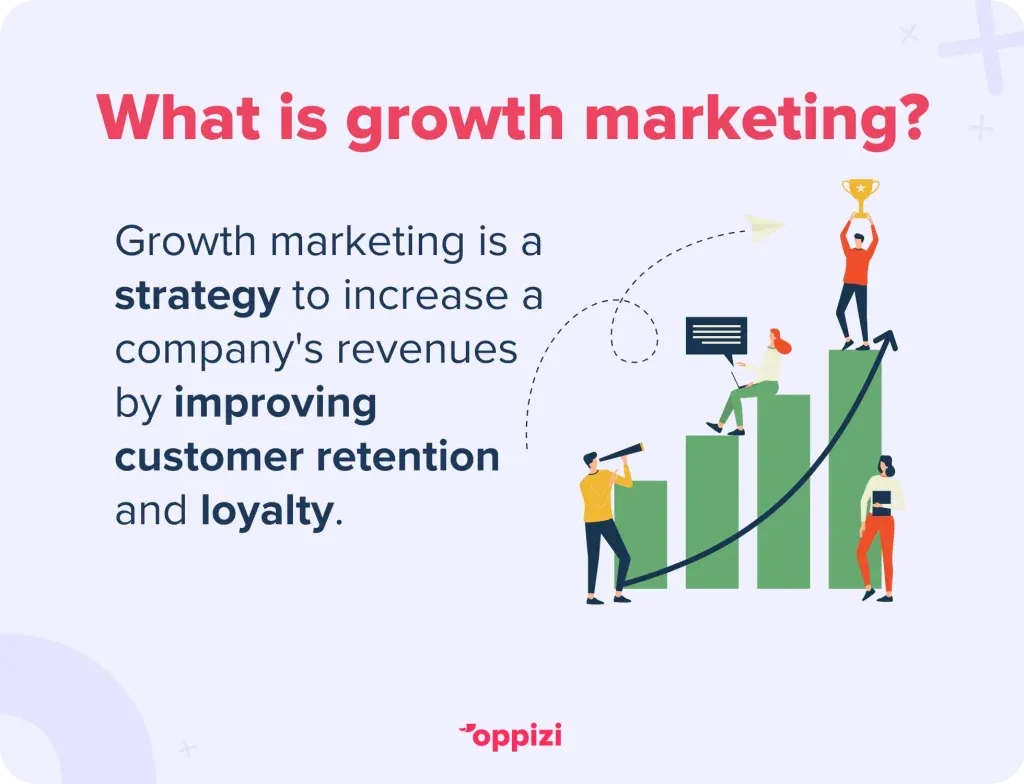
Growth marketing is about testing different ideas to see what works best. It’s driven by data and focuses on the full customer journey, from first touch to loyal customer.
Unlike traditional marketing, which often focuses on brand awareness or quick sales, growth marketing looks at every step. The goal is to find smart ways to grow your business over time.
It’s not about a big ad campaign. It’s about trying things, learning fast, and making small improvements that add up.
What does a growth marketer do?
A growth marketer runs experiments to figure out what helps the business grow. Their job is to test, learn, and improve results. They might try to:
- Get more email sign-ups
- Help customers stick around longer
- Increase word-of-mouth referrals
Here’s what they do on a typical day:
- Run A/B tests to compare different messages or offers
- Look at results to see what’s working
- Try new channels like direct mail or flyers
- Work with other teams to make the customer experience better
They’re creative, analytical, and focused on finding what drives growth.
Let’s say a local gym wants more members. A growth marketer might use Oppizi to run two different flyer campaigns in separate neighborhoods. They’d track which flyer gets more QR code scans and sign-ups. Then they’d use the winning version in more places.
What is a growth marketing manager?
A growth marketing manager leads the team. They focus on the big picture and keep everything moving in the right direction. Their job is to:
- Set clear growth goals
- Decide which experiments to run
- Plan how to spend the budget
- Work with other departments to support the strategy
If you’re new to growth marketing, think of this role as the one that pulls all the pieces together.
Growth marketing vs traditional marketing
Growth marketing works differently than traditional marketing. Here’s a quick comparison:
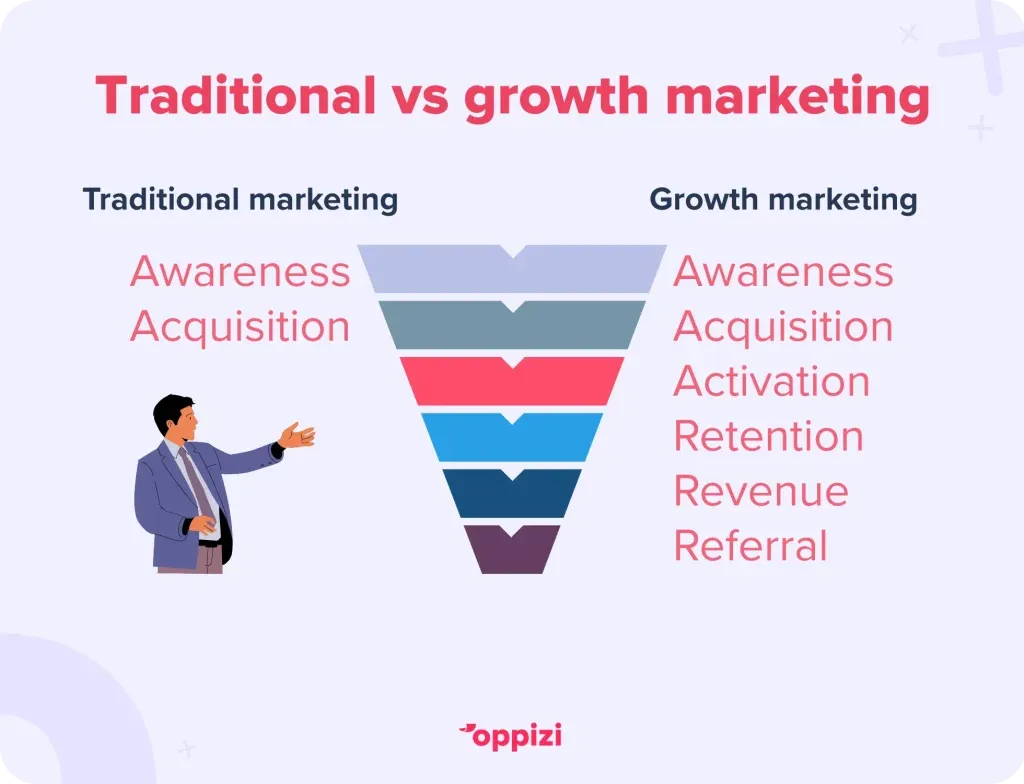
Traditional marketing:
Growth marketing:
- Focuses on results you can measure
- Tests and improves things quickly
- Mixes online and offline tactics, like flyers and direct mail
Growth marketing is a great fit for small businesses and startups. It’s flexible. You can start small, learn fast, and grow from there.
Proven growth marketing tactics
Growth marketing isn’t about using every channel. It’s about making smart choices based on results. Here are some of the most useful tactics:
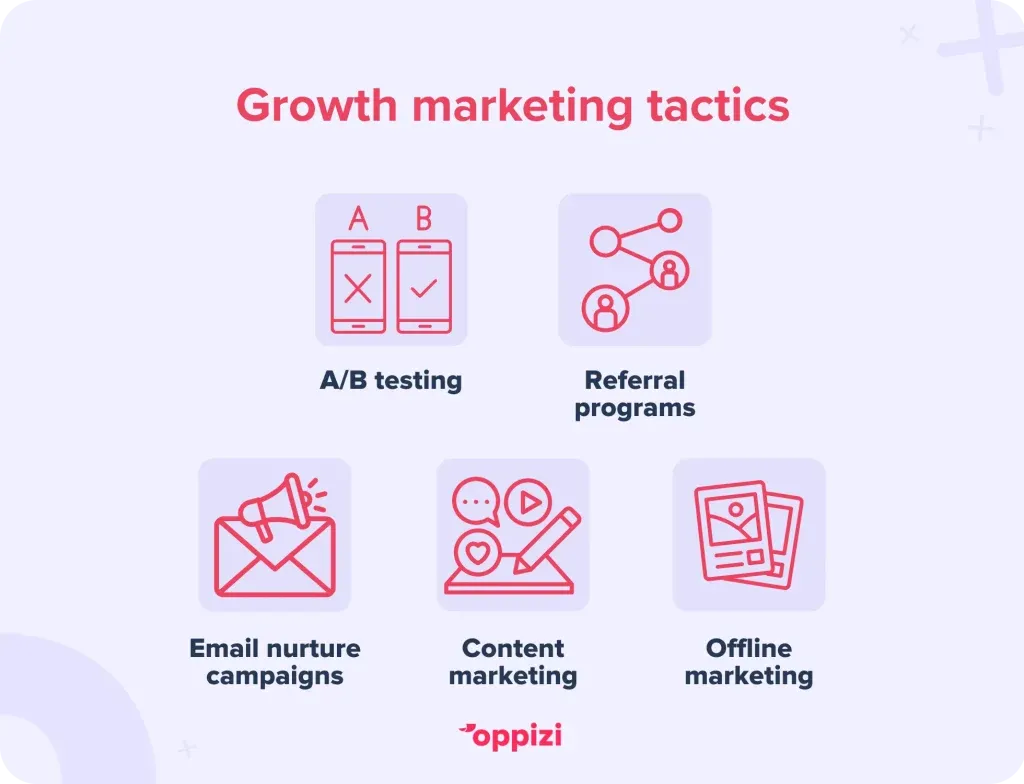
1. A/B testing
This means comparing two versions of something, like an email, landing page, or flyer, to see which one works better. A growth marketer might test two flyer headlines in different areas to find out which one brings more sign-ups.
2. Referral programs
Ask your current customers to bring in new ones. Offer a reward for every referral. It’s a simple way to grow and lower your marketing costs. For instance, in marketing for IT companies, offering a free consultation or service credit for each referral can help expand your client base while rewarding loyal customers.
3. Email nurture campaigns
Send automated emails that guide people toward buying. These emails can be based on what someone does on your website or how they interact with your brand.
4. Content marketing
Share useful content that helps people and builds trust. This could be blog posts, videos, or brochures handed out in person.
5. Offline marketing
Use print materials like flyers or direct mail. It may seem old-school, but when done right, it still works. Oppizi makes offline campaigns easy. You pick the audience. Oppizi handles the printing, tracking, and delivery. It’s a simple way to add offline marketing to your strategy without extra work.
When should you hire a growth marketing specialist?
If managing tests and channels feels like too much, a growth marketer can help. They focus on what works and cut out what doesn’t. You might need one if:
- Your current marketing isn’t working
- You don’t know where to invest
- You want to try offline marketing, like flyers or mail
- You’re launching something new
A good growth marketer brings fresh ideas, useful tools, and a clear plan. They help you focus on what actually drives growth.
Building your first growth marketing plan
Want to give growth marketing a try? Start with a simple plan:
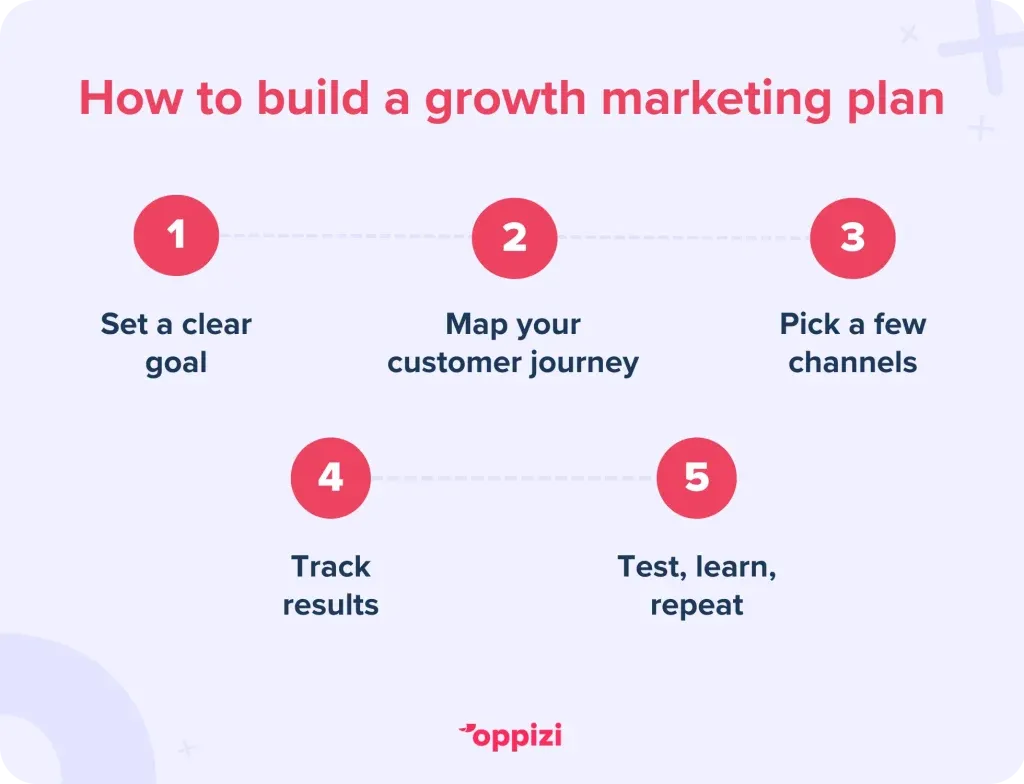
Step 1: Set a clear goal
Pick one thing to improve. For example: get 20% more leads in 3 months.
Step 2: Map your customer journey
Look at how people find and buy from you. Where can you make it easier or faster?
Step 3: Pick a few good channels
Choose a couple that fit your audience. This could be email, social media, or direct mail. If you’re a local business, you might test flyers through Oppizi to reach people nearby.
Step 4: Track results
Use tools to see what’s working. Online tools like Google Analytics help. For flyers, use QR codes or unique links.
Step 5: Test, learn, repeat
Try different messages, designs, or offers. See what works best. Then improve and try again.
Why offline marketing still works in growth strategies
Most people think growth marketing is all online. But offline channels still work, especially when digital ads feel crowded or too expensive.
Here’s why offline marketing is worth keeping in your plan:
- High visibility: A flyer in the right place can catch attention fast.
- Less noise: You’re not competing with hundreds of emails.
- Real connection: People remember something they can hold.
- Clear results: With Oppizi, you can track how many people saw your flyer, responded, or converted, just like you would with an online ad.
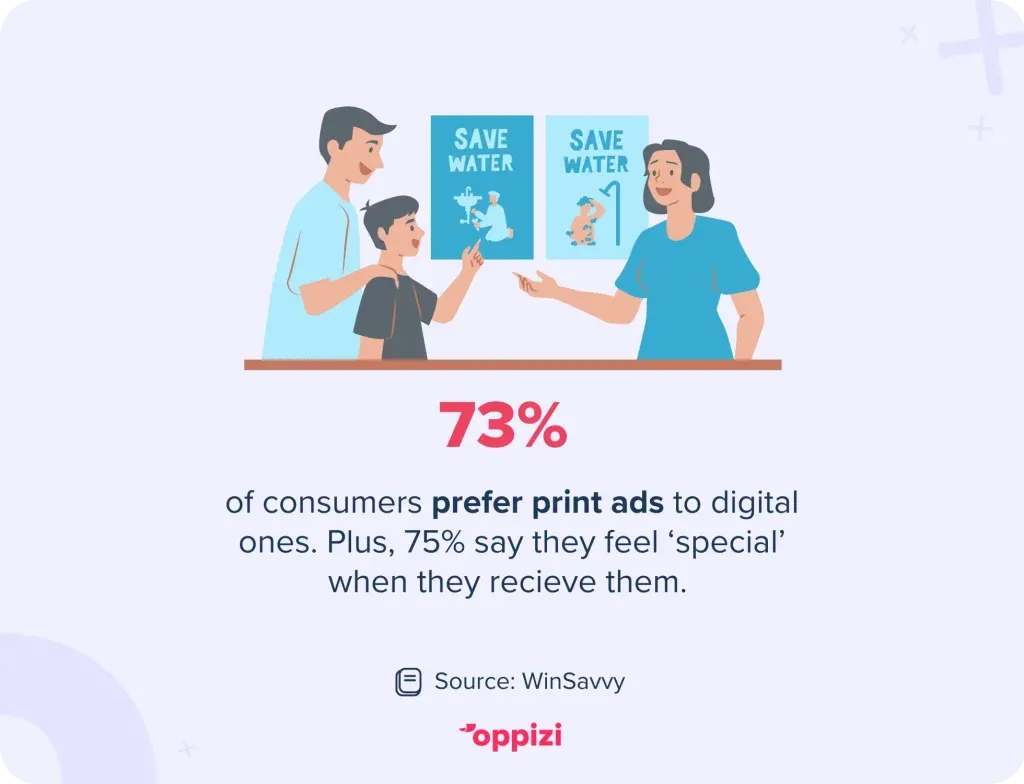
Nearly three out of four consumers (73%) prefer print ads over digital ads. Even more, 75%, feel special when they receive print advertisements. These stats show that print media builds a deeper emotional bond and makes people feel appreciated.
Offline tactics are also a smart way to test a new market or boost your online campaigns. For example, a startup could launch a flyer campaign in a new city to build local awareness while also running digital ads. Or you could send direct mail to old customers to win them back.
You don’t have to choose one or the other. Offline and online work better together.
How growth marketing works at each stage of the funnel
Growth marketing isn’t just about getting new customers. It’s about guiding people through every step, from learning about your brand to telling others. Here’s what that looks like:
Top of funnel (Awareness)
The goal is to get noticed. This might include content marketing, SEO, or flyer drops in busy areas. A new restaurant, for example, could hand out menus near offices before opening day.
Middle of funnel (Consideration)
Now you want to keep their interest. This might mean mid-funnel marketing tactics, such as follow-up emails, retargeting ads, or a direct mail offer to people who visited your site but didn’t buy.
Bottom of funnel (Conversion)
Here, the focus is on action. You can try time-sensitive offers, strong calls to action, or a simple postcard reminder. Small nudges often lead to sales.
Post-purchase (Loyalty and advocacy)
After someone buys, you want them to come back and tell others. You can send thank-you notes, offer discounts, or start a referral program. These little touches can turn buyers into loyal fans.
Planning across the whole funnel helps build steady, long-term growth, not just quick wins.
Growth marketing tools to know
The right tools make growth marketing easier. You don’t need all of them at once. Just start with the basics:
- Analytics: Use Google Analytics, Mixpanel, or Heap to see where your traffic comes from and what people do on your site.
- A/B testing: Tools like Optimizely, Unbounce, or Mailchimp let you test different versions of your campaigns.
- Email automation: Platforms like ActiveCampaign or Klaviyo help send the right message at the right time.
- Offline tracking: Use QR codes or unique URLs to measure flyer or mail performance. Oppizi includes all of this, so you can see your results in real time.
Start small, track your results, and build from there.

Common growth marketing mistakes to avoid
It’s easy to make mistakes early on. These are a few to watch out for:
- Chasing trends: Just because a channel is popular doesn’t mean it’s right for your audience.
- Skipping tracking: If you don’t track results, you’re just guessing.
- Doing too much: Trying everything at once can slow you down. Start with one or two things and test from there.
- Forgetting offline: Flyers and direct mail are often overlooked, but they can be a low-cost way to reach the right people.
Avoiding these common errors will help you save time, spend smarter, and get better results.

Final thoughts
Growth marketing is more than a buzzword. It’s a better way to build your business by testing, learning, and growing fast.
And don’t overlook offline marketing. It’s one of the most reliable ways to reach people where they are. At Oppizi, we make it simple to run local campaigns that you can track and scale. Try our easy-to-use platform and see how simple growth marketing can be.
Frequently asked questions
- What is growth marketing?
Growth marketing is about finding smart ways to grow a business. It’s not just about brand awareness. It’s about testing what works, learning from the data, and doing more of what gets results. The focus is on the full customer journey, from first click to loyal customer.
- What is a growth strategy in marketing?
A growth strategy is a plan to bring in more customers and keep them coming back. This might include using the best-performing channels, running referral programs, improving conversions, or trying offline tactics like flyer drops. The goal is steady, cost-effective growth.
What are the 4 marketing growth strategies? These are the four classic growth paths:
- Market penetration: Sell more to your current customers.
- Market development: Reach new people in new places.
- Product development: Launch new products for your current market.
- Diversification: Create new products for new markets.
Growth marketing helps you test these strategies fast, including offline tools like direct mail or flyers to see what sticks.
- What does a growth marketer do?
Growth marketers run tests to see what helps bring in and keep customers. Some focus on day-to-day experiments. Others lead the bigger plan. These roles mix creative ideas with data and usually work closely with product, sales, and customer teams.
- How is a growth marketer different from a marketing manager?
A growth marketer focuses on testing, learning, and improving. They dive into the data and try out new tactics, like QR codes or flyer campaigns, to boost results.
A marketing manager usually takes a broader view. They plan bigger campaigns, manage budgets, and handle brand direction. Growth marketers are more hands-on and quick to adjust. Marketing managers often work on longer-term goals.