Last updated July 23, 2026
Think a website and some ads are enough to grow your IT business? Think again. IT companies face unique challenges. Competition is tough, the industry is complicated, and explaining technical services to people who aren’t tech-savvy can be tricky.
So, how do you market your IT services effectively? Whether you’re just starting a software company or you’ve been in the game for a while, here are some straightforward strategies to help you attract more clients and grow your business.
1. Understand your audience
First things first: know who you’re trying to reach. Are you aiming for small businesses that need IT support? Big companies looking for cybersecurity? Or founders who don’t have a tech background but want to build software?
Take time to create a clear picture of your ideal customer. What problems do they have? What solutions are they looking for? The better you understand your audience, the easier it will be to explain how your IT services can help them.
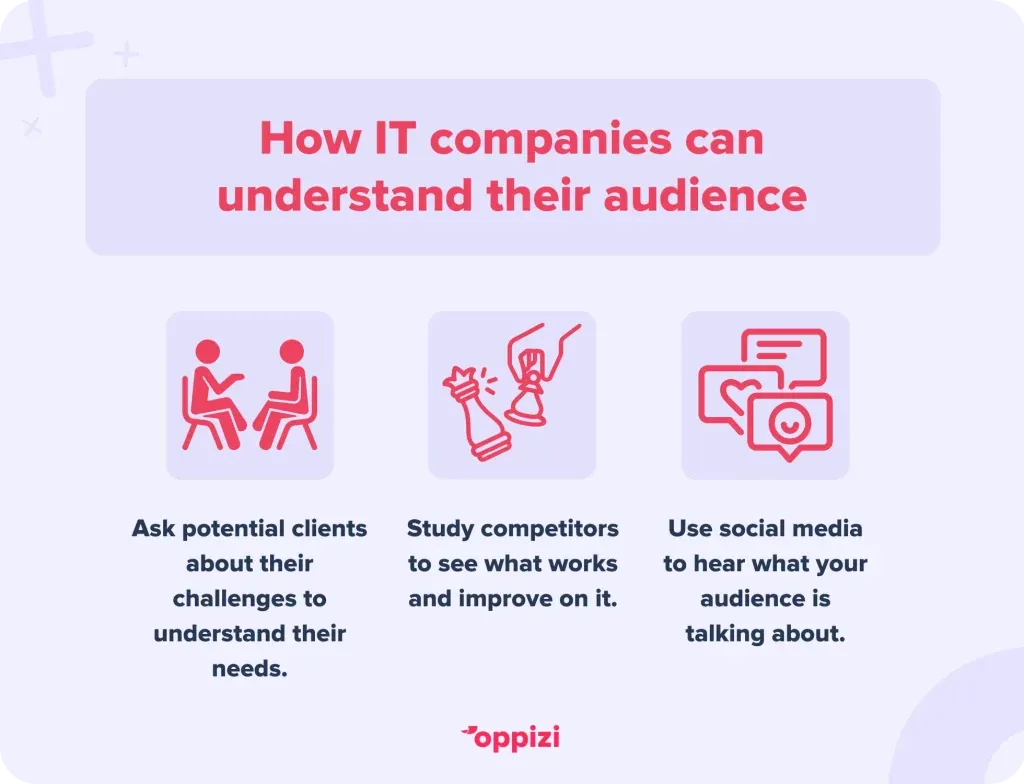
Here are some tips:
- Talk to potential clients – Ask them about their challenges. This will help you learn what they really need.
- Look at what competitors are doing – See what works for them and find ways to do it better.
- Listen to online conversations – Use social media to find out what your audience is discussing.
2. Build a strong online presence
Having a professional website is crucial for any IT company. Here’s what you need to focus on:
- Keep it clear and simple. Use plain language to explain what you do. Avoid tech jargon that might confuse visitors.
- Optimize for search engines. Use keywords like “IT services,” “IT companies,” naturally throughout your site. This helps people find you online.
- Ensure it's fast and mobile-friendly. If your website is slow or hard to navigate, visitors will leave quickly.
Your website should also feature case studies, testimonials, and blog posts. These elements help build trust and showcase your expertise.
Additional tips:
- Create landing pages for specific services. Customize content for different customer segments.
- Offer free resources. Provide downloadable guides or templates to attract leads.
- Implement live chat. This allows potential clients to get instant answers, improving their experience.
3. Use content marketing to educate and attract
Content marketing is one of the best ways to show your expertise in IT. By creating blog posts, whitepapers, and how-to guides, you help potential clients understand their challenges and see your company as the solution.
Here are some ideas for IT content:
- Common IT security mistakes and how to avoid them
- Benefits of managed IT services for small businesses
- How to choose the right cloud solution for your company
Sharing useful insights builds credibility and attracts potential clients who are searching for answers online.
Additional tips:
- Repurpose content. Turn blog posts into social media updates, videos, or podcasts.
- Guest post on relevant sites. This helps you reach a wider audience by sharing your content on industry blogs.
- Send regular newsletters. Keep potential clients engaged with helpful insights and updates.
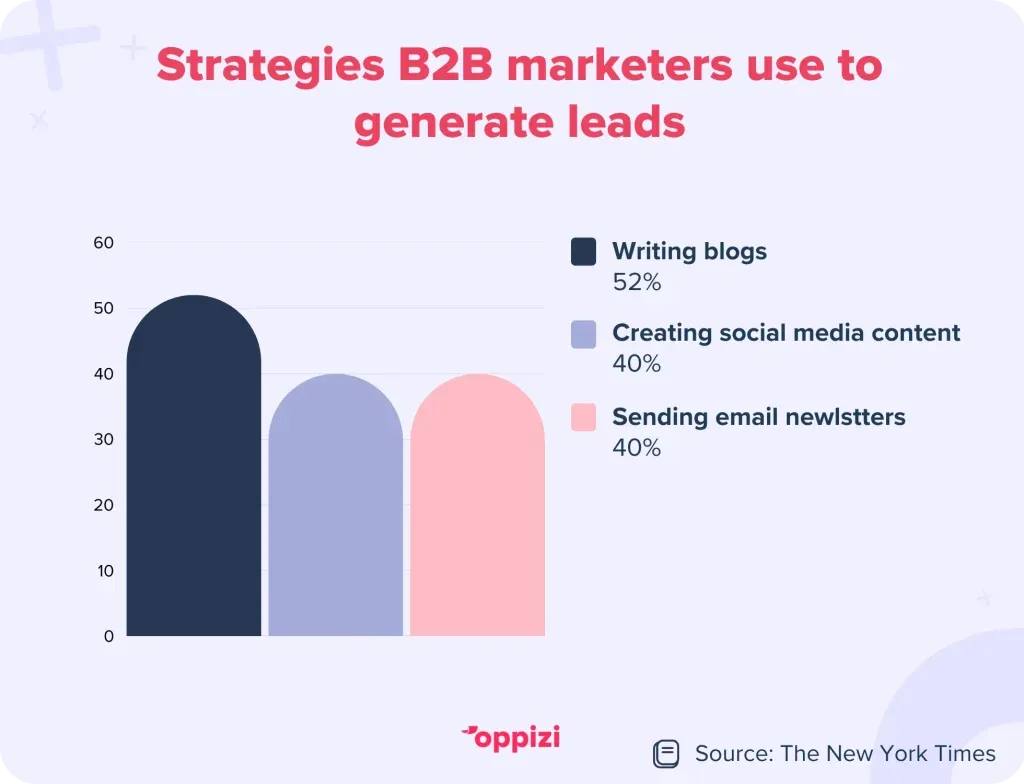
Many B2B marketers are focusing on effective strategies to generate leads. This includes writing blogs (52% of marketers), creating social media content (40%), and sending email newsletters (40%). These tactics enhance visibility and engage potential clients.
4. Leverage offline marketing to stand out
While digital marketing is important, IT companies often miss the benefits of offline strategies. Simple tools like flyers or direct mail can reach decision-makers who aren't always online.
For instance, with Oppizi’s easy platform, IT businesses can target specific areas. Whether it’s a busy financial district or a startup hub, you can get your message to the right people.
Using offline marketing adds a personal touch. It makes your brand more memorable and connects with audiences in ways digital ads can’t.

Additional tips:
- Host local meetups or workshops. This is a great way to educate potential clients and build trust in person.
- Partner with complementary businesses. Work with companies that offer related services to help each other grow.
- Distribute branded materials. Use high-quality brochures, business cards, and promotional items to keep your brand in people’s minds.
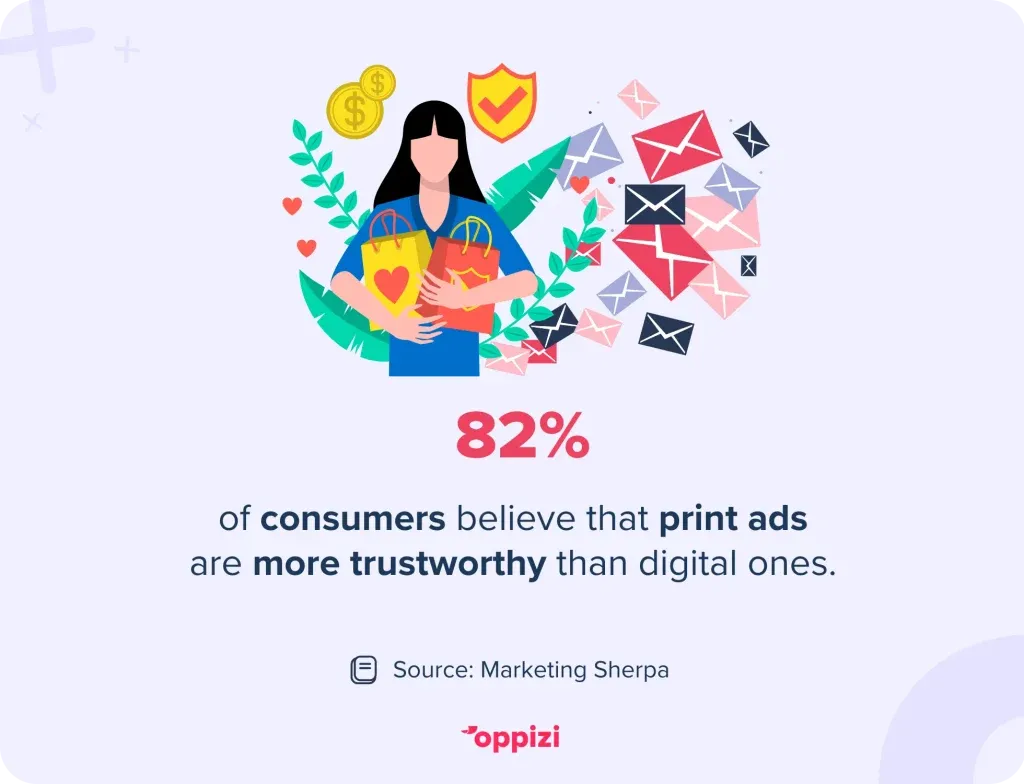
Research shows that 82% of consumers find print ads more trustworthy than digital ones. This fact shows how valuable traditional marketing can be for building credibility and creating strong connections with your audience.
5. Utilize paid advertising for quick results
Organic marketing takes time, but paid advertising can bring fast results. Google Ads, LinkedIn Ads, and social media promotions can help you reach the right audience quickly.
Key strategies:
- Target decision-makers. Focus on executives, business owners, or IT managers who influence buying choices.
- Use retargeting ads. Show ads to people who have visited your site but didn’t make a purchase.
- Test different ad formats. Try out video ads, carousel ads, and lead forms to find what works best.
6. Build trust through reviews and testimonials
Potential clients want to see proof that your IT services are effective. Encourage happy customers to leave reviews on sites like Google, Clutch, or Trustpilot. Case studies and testimonials can show how you solve real problems.
How to get more reviews:
- Ask at the right time. Request reviews after a successful project or when you receive positive feedback.
- Make it easy. Provide direct links to review sites for your clients.
- Showcase reviews. Highlight testimonials on your website and in your marketing materials.
7. Network and build relationships
Trust is key in the IT industry. People want to work with experts they can rely on. Attend industry events, join local business groups, and take part in online communities where your target audience spends time.
Offering free workshops or speaking at conferences can help you establish yourself as a leader and generate quality leads.
Additional tips:
- Engage in LinkedIn groups. Join discussions and share helpful insights.
- Offer referral incentives. Encourage satisfied clients to refer new business to you.
- Follow up consistently. Keep in touch with potential clients through personalized emails or calls.
8. Track your results and adjust
Marketing is an ongoing process. It’s important to see what’s working and what isn’t. Use simple tools to measure your website traffic, email open rates, and the success of your offline campaigns.
If something isn’t getting results, don’t hesitate to change your approach. Good IT marketing means learning and adapting all the time.
Additional tips:
- Use A/B testing. Try different headlines, images, and calls to action to find what people respond to best.
- Watch your competitors. Keep an eye on what they’re doing and adjust your strategies if needed.
- Set clear goals. Decide what success looks like for each marketing campaign.
9. Use email marketing to nurture leads
Email marketing is a great way to stay in touch with potential clients. It helps guide them as they make decisions. A well-crafted email campaign can educate your audience, show off your expertise, and lead to more conversions.
How to make email marketing work for you:
- Segment your audience. Customize emails for different types of customers, like startups versus large companies.
- Send valuable content. Share industry insights, case studies, and solutions to common IT problems.
- Automate follow-ups. Use drip campaigns to keep leads engaged over time.
- Include a clear call to action. Encourage recipients to schedule a demo, download a resource, or get in touch.

10. Build strategic partnerships
Partnering with other businesses can help you reach more people and get good referrals. IT companies can work with:
- Software vendors. You can offer integration solutions or promote each other’s services.
- Consulting firms. Provide IT support for their clients while they offer strategy advice.
- Industry associations. Join relevant groups to network and boost your credibility.
Choosing the right partners can open doors to new customers and strengthen your brand.
11. Host webinars and live demos
Many potential clients may not fully understand IT services. Hosting webinars and live demos can help explain things in a clear and engaging way.
What works best:
- Live Q&A sessions. Address audience questions in real-time.
- Step-by-step demonstrations. Show how your services solve specific problems.
- Guest speakers. Bring in industry experts to attract a larger audience.
After the event, share the recording on your website and social media to keep attracting attention.
12. Engage in community and CSR initiatives
Getting involved in your community can help humanize your IT brand and build goodwill. Customers like to support companies that give back. Consider:
- Sponsoring local tech events. Support hackathons, coding bootcamps, or IT workshops.
- Offering free tech support for nonprofits. This builds trust while showing your expertise.
- Hosting educational programs. Teach businesses about cybersecurity or IT best practices.
These efforts not only enhance your reputation but also create new business opportunities.
13. Leverage AI and automation in marketing
IT companies should use AI and automation to improve their marketing. Here are some helpful tools:
- Chatbots. They provide instant support and capture leads 24/7.
- AI-driven analytics. These tools predict customer behavior and personalize your outreach.
- Automated social media posting. Keep your brand active without having to post manually.
By using AI, IT businesses can streamline their operations, target better, and achieve more with less effort.
B2B tech marketing
Marketing IT services to businesses is different from marketing to consumers. Decision-makers—like IT managers, CTOs, and business owners—want solutions that improve efficiency, cut costs, and boost security. To succeed in B2B tech marketing, focus on building trust, showing your expertise, and providing real value.
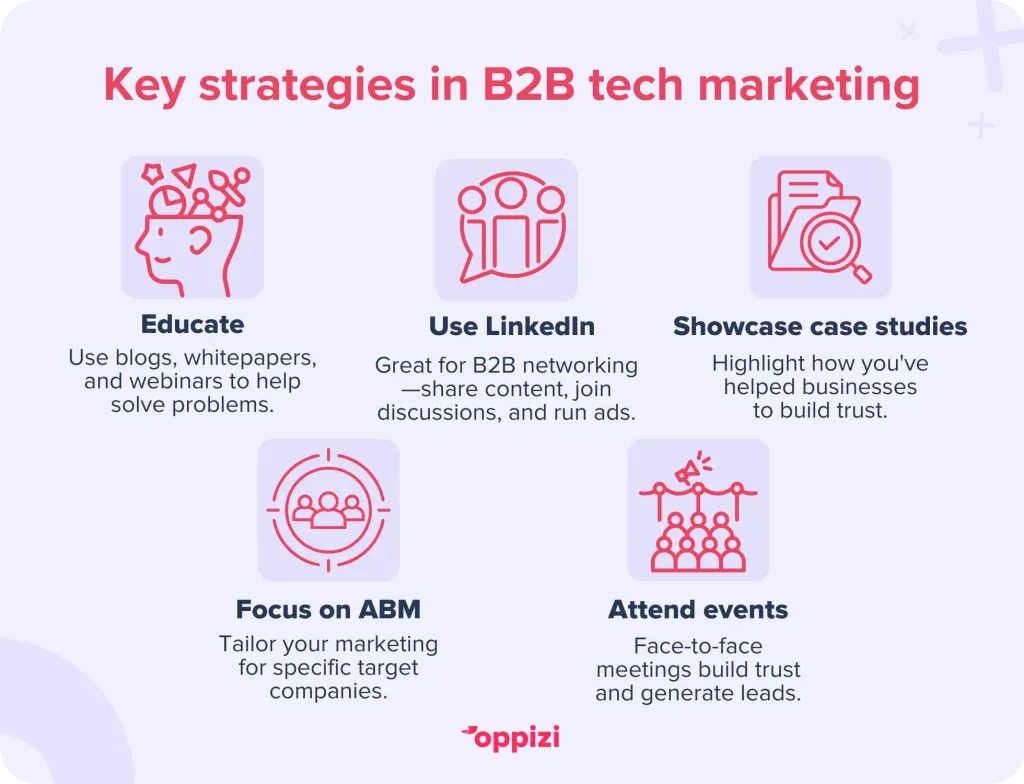
Key strategies for B2B tech marketing:
- Educate, don’t just sell. Decision-makers want to know how your services solve their problems. Use blog posts, whitepapers, and webinars to share insights.
- Leverage LinkedIn. This platform is perfect for B2B networking. Share expert content, join discussions, and run targeted ads.
- Use case studies and testimonials. Show real examples of how your services have helped other businesses. Success stories build credibility.
- Focus on account-based marketing (ABM). Instead of broad campaigns, tailor your marketing to specific companies that fit your ideal client profile.
- Attend industry events and trade shows. Meeting face-to-face helps build trust and generate quality leads.
B2B sales cycles can be longer, so consistency is essential. Provide valuable content, maintain strong relationships, and follow up effectively to turn potential clients into long-term customers.
FAQs: Marketing for IT companies
What is marketing in the IT industry?
Marketing in the IT industry means promoting tech products or services to businesses or consumers. It includes online strategies like SEO, content marketing, social media, and paid ads, as well as offline methods like networking and direct outreach. Since IT solutions can be complex, effective marketing focuses on educating potential clients and showing value in simple terms.
How do you market an IT company?
To market an IT company, you need a mix of online and offline strategies. Here are some key steps:
- Build a strong online presence with a professional website and SEO-friendly content.
- Use content marketing to educate potential clients through blogs, webinars, and whitepapers.
- Leverage paid advertising like Google Ads and LinkedIn to reach decision-makers.
- Network and partner with complementary businesses to expand your reach.
- Use offline marketing to engage with potential clients in specific locations.
What is the 3-3-3 rule in marketing?
The 3-3-3 rule helps structure your marketing efforts. It suggests:
- 3 seconds to grab a prospect’s attention.
- 3 minutes to engage them with relevant content.
- 3 days to follow up before they lose interest.
This rule helps IT businesses stay clear and engaging.
What is the marketing strategy of IT?
An effective IT marketing strategy includes:
- Identifying your target audience, like startups or non-tech businesses.
- Creating educational content that addresses common IT challenges.
- Building trust through reviews, testimonials, and case studies.
- Using a mix of digital and offline marketing to reach the right people.
- Tracking results with analytics tools to improve your efforts.
What are the 7 P's of marketing?
The 7 P's of marketing are important elements for success:
- Product: Your IT services or software solutions.
- Price: Competitive pricing that reflects value.
- Place: Online channels, direct sales, or local outreach.
- Promotion: Digital marketing, offline ads, and PR.
- People: Your team and customer service approach.
- Process: How you deliver services and onboard clients.
- Physical Evidence: Proof of expertise, like case studies and testimonials.
By aligning your marketing with these principles, your IT company can attract and keep more clients.
Conclusion
Marketing an IT company can be simple. The main things to focus on are understanding your audience, creating valuable content, using both digital and offline strategies, and building trust through networking.If you’re looking for an easy way to reach potential clients in specific areas, think about adding offline marketing to your plan.
With Oppizi, you can effortlessly connect with the right people. No guesswork, no wasted budget. Just results. Ready to grow? Let’s make it happen.