Last updated July 23, 2026
Ever wonder why some marketing campaigns work and others don’t? Or how small changes to an ad can make a huge difference? That’s where A/B testing comes in. You’ve probably heard about it, but now it’s time to see how it actually works.
It’s a simple way to figure out what your audience likes. You can test things like headlines, buttons, or layouts to see what works best. Top marketers use A/B testing all the time to fine-tune their campaigns and get better results.
In this guide, we’ll break it down for you, show you the ins and outs, and share tips to get started. By the end, you’ll know how to use A/B testing to improve your marketing and get the results you want.
What is A/B testing?
A/B testing, or split testing, is when you compare two versions of something to see which one works better. It’s an easy way to improve your marketing using real data.
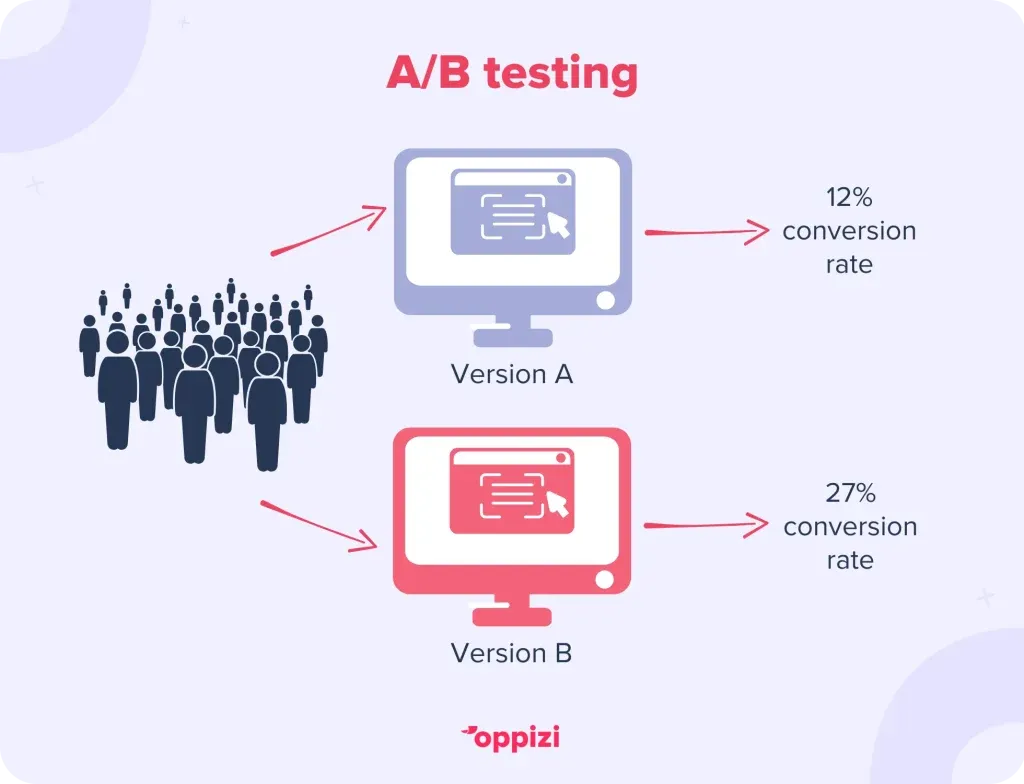
Let’s say you have two headlines for a webpage. You’re not sure which one your audience will like more. Instead of guessing, you show one headline to one group and the other headline to a different group. Then, you check the results.
Version A is the original, and Version B is the one you’ve changed. Each version is shown randomly, and you track how people interact with them. You might look at things like clicks or conversions to see which version performs better.
With A/B testing, you don’t have to rely on guesses or assumptions. It shows you what works based on what people actually do.
Examples of A/B testing
Here are just a few examples of common A/B tests that marketers may choose to conduct when looking to optimize performance.
- Email subject lines: Test two subject lines to see which one gets more people to open.
- CTA buttons: Compare “Sign Up Now” with “Get Started” to see which gets more clicks.
- Landing page headlines: Try different headlines to see which one leads to more conversions.
- Ad copy: Test two versions of an ad to find out which gets more engagement.
- Images in ads: Use two different visuals to see which grabs more attention.
- Product descriptions: Compare a short description with a longer one to see which sells better.
- Pricing pages: Test different layouts to find out which one gets more sign-ups.
- Button colors: Change the color of a button to see if it gets more clicks.
- Form length: Compare a short form with a longer one to see which more people complete.
- Navigation menus: Test different menu designs to see which helps users engage more.

How to do A/B testing
A/B testing works best when you follow clear steps. Here’s how to do it:
Step 1: Know your goal
Decide what you want to improve. Is it email open rates, clicks, or conversions? Pick one thing to focus on so you can measure success easily.
Step 2: Make a prediction
Think about what might work better. Choose one thing to test—like a headline, button, or call-to-action (CTA). For example, if you're testing a flyer, you could guess that changing the CTA from “Learn More” to “Get Your Free Sample” will get more responses.
Your hypothesis might be: “Using ‘Get Your Free Sample’ will bring in more responses than ‘Learn More.’”
Step 3: Create your test versions
Make two versions of what you want to test. Version A is the original, and Version B includes the change you’re testing.
Step 4: Split your audience
Divide your audience into two random groups. Keep them similar in behavior and demographics to get accurate results. Many tools can help you do this for websites, emails, or ads.
Step 5: Run your test
Show Version A to one group and Version B to the other at the same time. This keeps things fair since conditions like the time or day won’t affect the results.
Step 6: Gather your data
Track how people respond to each version. Look at metrics like clicks, conversions, or bounce rates—whatever fits your goal.
Step 7: Analyze the results
Look at how each version did. Check if one performed better than the other. This will help you choose which version to keep.
Step 8: Use the best version
Once you know which version worked better, go ahead and use it. This way, you can improve your campaign based on what you learned.
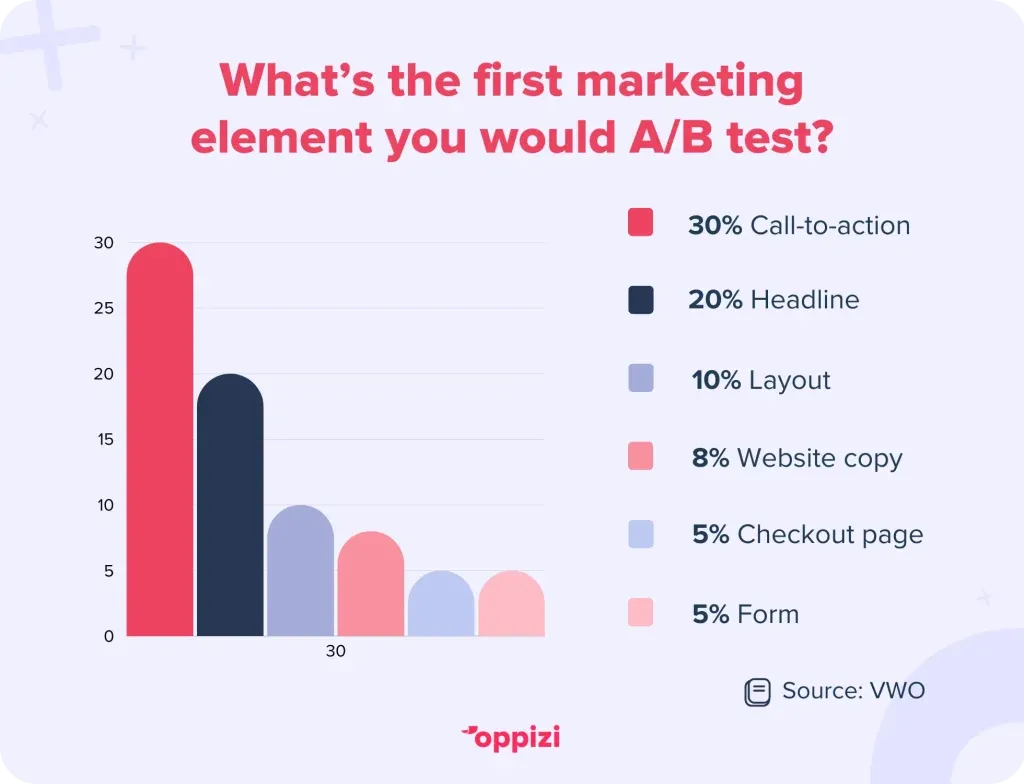
A recent survey shows most A/B tests focus on call-to-action buttons. Headlines come next (20%), followed by layout (10%) and website copy (8%). CTAs are tested the most because conversions often depend on them, but other elements can be tested too.
Why A/B testing is important
A/B testing can really boost your marketing results. Here’s how it can help you get ahead:
Better conversion rates
The biggest benefit of A/B testing is that it can improve your conversion rates. By trying out different versions of a landing page, email, or ad, you can see which parts get more people to take action. This means more leads and sales for you.
Better user experience
A/B testing shows you what your audience likes. It helps you create a better experience for them. Whether it’s a catchy headline or a nicer design, the insights from A/B testing can make your website and marketing materials easier to use.
Smart decisions based on data
A/B testing gives you real data on what works and what doesn’t. This is important for both online and offline marketing. It lowers the risk of making changes that might not work.
Keep Improving
A/B testing isn’t just something you do once. It’s an ongoing process. By continually testing and tweaking your marketing, you keep making things better. This helps you stay in tune with changing marketing trends and what your audience likes.
Boost Engagement
Understanding what your audience prefers can increase engagement. When you know what works, you can build stronger connections with your customers and raise brand awareness.
Better ROI
A big plus of A/B testing is that it helps improve your return on investment (ROI). When your marketing is more effective, you get more value from what you spend. This means every dollar goes further. In fact, successful A/B testing can boost revenue by 50% for online stores.

Tips for A/B testing
To get the most out of A/B testing, follow these simple tips:
Test one variable at a time
Choose one element to test, like a headline or a call-to-action button. This way, you can easily see how that change affects performance.
Have a clear goal
Before you start your test, decide what you want to learn. This means having a clear idea of what you expect to happen and setting goals you can measure. For example, you might think that changing the color of a call-to-action button will lead to more clicks.
Make sure your sample size is big enough
Make sure you have a large enough audience for your test. If your sample size is too small, you might not get clear results. A bigger group helps you see which version really works better.
Run your test long enough
Give your test enough time to collect useful data. User behavior can change on different days, so it's best to run your test for at least a week. This way, you’ll get a better idea of how each version performs.
Keep your groups similar
Make sure the groups in your test are similar. This means they should have comparable demographics and behaviors. When the groups are alike, any differences in results are more likely due to the changes you made, not other factors.
Look deep into the data
Don’t just look at the basic numbers. Dig deeper to understand why one version did better. Check how users interacted with each version, like how long they stayed on the page or how they navigated. This information helps you see what worked and why, guiding your future tests.
Document and learn
Keep good records of your tests. Write down your ideas, methods, results, and what you learned. This helps you spot patterns over time. Many testers, over 40%, create archives of past tests to look back on and learn from.
Use reliable tools
Choose dependable A/B testing tools that give you accurate data. Tools like Google Optimize, Optimizely, and VWO are great options for setting up your tests. When you use reliable tools, you can trust your results and make decisions based on real data.
Consider external factors
Be mindful of outside factors that might affect your test results. Things like seasons, market trends, and other types of marketing campaigns can change how users behave. Keep these in mind when you plan and analyze your tests.
A/B testing FAQs
What is an example of A/B testing?
A simple example of A/B testing is trying out two different buttons on a landing page to see which one gets more clicks. For instance, one group sees a button that says “Buy Now,” while another group sees “Shop Today.”
When to use A/B testing?
Use A/B testing when you want to improve parts of your marketing. It’s great for boosting conversion rates or getting more people to engage with your content. If you want to find out what works best, A/B testing can help you figure it out.
Why do companies use A/B testing?
Companies use A/B testing to make smart decisions based on data. By finding out what works best, they can get better results and make the most of their marketing efforts.
Is A/B testing quantitative or qualitative?
A/B testing is mainly quantitative. It focuses on numbers to see how different versions perform. You look at metrics like click-through rates and conversion rates to get clear insights based on data.
Final thoughts
A/B testing is a highly valuable tool for enhancing your marketing efforts. By testing variations and studying the outcomes, you replace guesswork with data-backed decisions that boost results.
Want to stretch your marketing efforts further? Launch a campaign with Oppizi today. Sign up is free, and our simple, effective tools are at your fingertips. Let our expertise connect you with your audience and drive real results for your business.