Last updated August 28, 2026
Data is crucial for direction in digital marketing. But with so many numbers at your fingertips, knowing which ones actually matter can feel overwhelming. This is where Key Performance Indicators (KPIs) come in. They can translate your strategy into measurable impact. However, the effectiveness of KPIs depends on whether they’re tied to the right goals.
In this article, you’ll learn how to define KPIs that are aligned with your business objectives, how to monitor them effectively, and which common mistakes to avoid, giving you a framework for building a KPI system that drives meaningful progress.
Why digital marketing KPIs matter
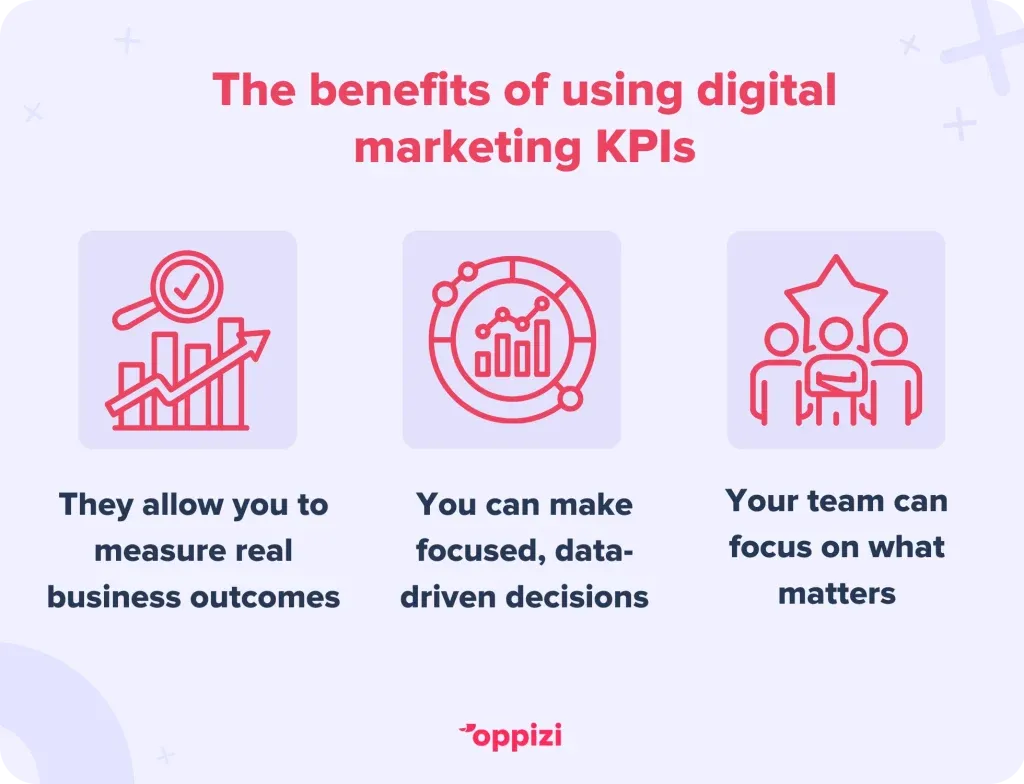
KPIs are the bridge between your marketing actions and business outcomes. They help you:
- Measure success beyond likes and shares.
- Make data-informed decisions.
- Keep teams aligned and focused on what matters.
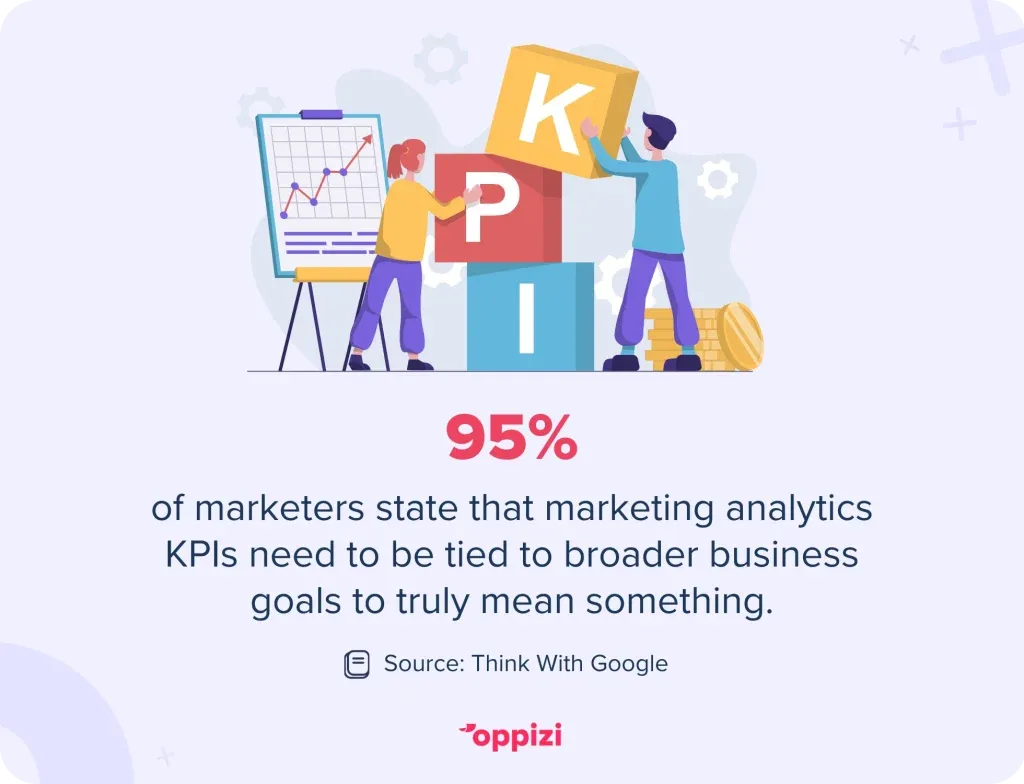
95% of marketers agree that marketing analytics KPIs must be tied to broader business goals to truly mean something. KPIs are essential for keeping your digital marketing strategy on track and ensuring that your efforts are producing results. Without them, you're simply experimenting blindly and hoping for success.
How to implement KPIs into your organization
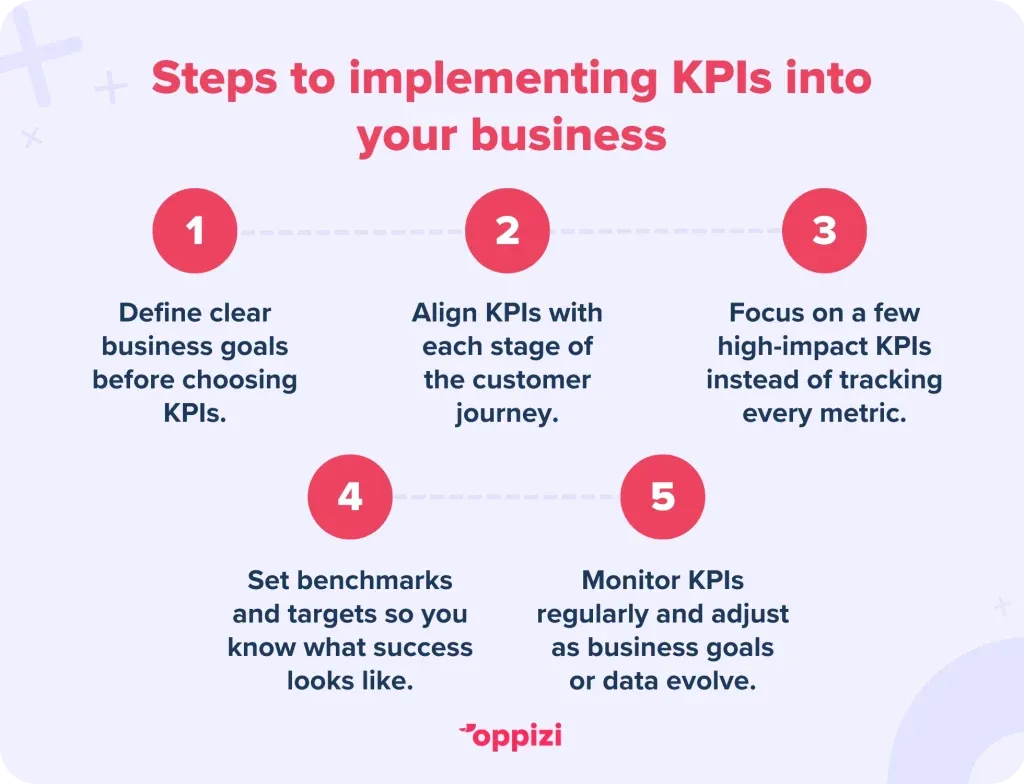
Step 1: Start by defining your business goals
The most common mistake businesses make is choosing KPIs before defining their goals. Instead, the process should start by asking: What is the business trying to accomplish?
Here are examples of clear and SMART business objectives:
- Increase e-commerce sales by 20% in Q3
- Grow newsletter subscriptions by 15% over the next six months
- Improve customer retention rate by 10% year-over-year
KPIs act as progress indicators for your goals. Once you have defined your goals, you should identify the KPIs that will measure your progress toward achieving them. For example, if increasing sales is your goal, some relevant KPIs to track would be conversion rate, cost per acquisition (CPA), and return on ad spend (ROAS).
Step 2: Match KPIs to the customer journey stage
Digital marketing touches every stage of the buyer journey. To create meaningful KPIs, you must align them with where your customer is in that journey.
In fact, 48% of marketers are prioritizing the improvement of their sales funnel, which makes it even more crucial to track performance at each stage with precision.
Top of Funnel (Awareness stage):
- Website traffic
- Social reach
- Video views
- Ad impressions
Middle of Funnel (Engagement & consideration stages):
- Email open rate
- Click-through rate (CTR)
- Webinar registrations
- Content downloads
Bottom of Funnel (Conversion stage):
- Lead-to-customer conversion rate
- Revenue generated
- ROAS
- CAC (Customer Acquisition Cost)

Step 3: Prioritize quality over quantity
It’s tempting to track everything measurable. But too many KPIs = no KPIs. It creates confusion, not clarity.
Here’s how to ensure you focus on the KPIs that matter:
- Prioritize metrics that demonstrate meaningful progress and genuine impact.
- Differentiate between lagging indicators (sales revenue, churn rate) and leading indicators (website visits, demo bookings).
- Choose 3-5 KPIs per goal. That’s usually enough to tell a story of how things are going.
Step 4: Benchmark and set targets
A KPI is only useful if you know what good looks like. Establish benchmarks to understand your current performance and set targets to measure future success.
- Use historical data to set realistic targets.
- Compare industry averages to see how you stack up.
- Consider context, such as seasonal trends or market conditions.
For instance:
- The average email CTR across industries is around 2.6% so a company might set their starting target around this figure.
Targets should be realistic but ambitious enough to drive performance improvement.
Step 5: Monitor KPI performance effectively
You can’t set KPIs and then simply forget about them. They require regular monitoring and adjustment to stay aligned with your evolving business environment.
Tools for monitoring:
- Google Analytics 4 for website traffic, conversions, user behavior.
- HubSpot or Salesforce for CRM-driven metrics like MQLs and deal velocity.
- Looker Studio / Power BI use dashboards for visualizing KPI trends.
Review frequency:
- Weekly for tactical checks (ads, content engagement).
- Monthly for strategic reflection (channel ROI, funnel performance).
- Quarterly for big-picture analysis (goal alignment, budget impact).
Effective monitoring turns KPIs into real-time performance feedback, not just end-of-quarter stats.
Common mistakes to avoid
Even with the right intentions, it’s easy to fall into traps when setting KPIs. Here are the most common:
1. Chasing vanity metrics
Metrics like likes, followers, or impressions can feel rewarding but often lack strategic depth. Always ask, “Does this metric help us make a better decision?”
2. Using the same KPIs for every campaign
Different channels and goals require different performance indicators. For instance, paid search and email marketing might both aim for conversions, but the user behavior behind each is very different. Paid ads typically target cold leads, so metrics like click-through rate and cost per acquisition are critical. Email campaigns, on the other hand, usually engage warmer leads who are already familiar with your business, making metrics like open rate and unsubscribe rate more relevant.
3. Setting KPIs without a baseline
You can’t measure improvement without knowing your starting point. Benchmarks are essential to gain an overview of how you are progressing.
4. Neglecting qualitative insights
Not all success is numeric. Additional context can be provided by gathering data beyond metrics, such as customer reviews, feedback, and Net Promoter Scores.

Final thoughts
Digital marketing KPIs should inspire strategy and fuel growth, not just track progress. KPIs become a powerful tool when they are aligned with business objectives and tailored to each customer journey stage.
Prioritizing the correct metrics, establishing well defined objectives, and consistently tracking progress while adapting as necessary are essential for achieving impactful marketing outcomes. This focused approach will not only allow you to measure success, but actively drive it.
So the next time you build a campaign, instead of asking "What should we track?", start by asking "What are we trying to achieve?" and the KPIs will naturally follow.
Interested in more marketing insights like this? Follow us on LinkedIn for more marketing tips and growth strategies!
Frequently asked questions
- How many KPIs should I track per campaign?
Focus on tracking 3-5 KPIs per campaign. This provides clarity without becoming overwhelming.
- What’s the difference between a KPI and a metric?
KPIs are the most critical metrics tied directly to strategic goals. They help you measure progress toward key business outcomes.
However, not all metrics are KPIs. A metric only becomes a KPI when it reflects performance against a specific objective. For example, if your goal is to increase online sales, conversion rate might be a KPI. Page views, while useful, would just be a supporting metric - unless your goal is specifically traffic growth.
- How often should I change my KPIs?
You should re-evaluate KPIs every quarter or when business goals shift significantly.
- Should I use the same KPIs across all marketing channels?
Not necessarily. Tailor KPIs to the objective and nature of each channel.