Last updated July 28, 2026
Direct mail marketing remains one of the most effective ways to engage with potential customers, even in the digital age. In fact, the open rate of direct mail can vary between 57.5% and 85%, significantly higher than email marketing. Whether your goal is to drive website traffic, generate leads, or boost sales, a well-designed direct mail flyer can make all the difference.
To help you create high-converting marketing materials, we’ve compiled 10 expert tips for designing a direct mail campaign that captures attention, drives action, and delivers measurable results.
Planning your direct mail campaign
1. Understand your audience
Knowing your target audience is the foundation of any successful marketing campaign. You may be offering a great deal, but if the direct mail lands on the doorstep of someone who doesn’t need it, it won’t work. Ask yourself:
- Who are my ideal customers?
- What are their pain points and interests?
- How do they prefer to engage with brands?
Personalization is key. This might mean using language and terminology that resonates with your target audience, addressing their pain points and concerns, or offering specific solutions that meet their needs. Studies show that 80% of consumers are more likely to do business with a company that offers a personalized experience. It can also help to segment your audience into different groups so that you can tailor your message accordingly.
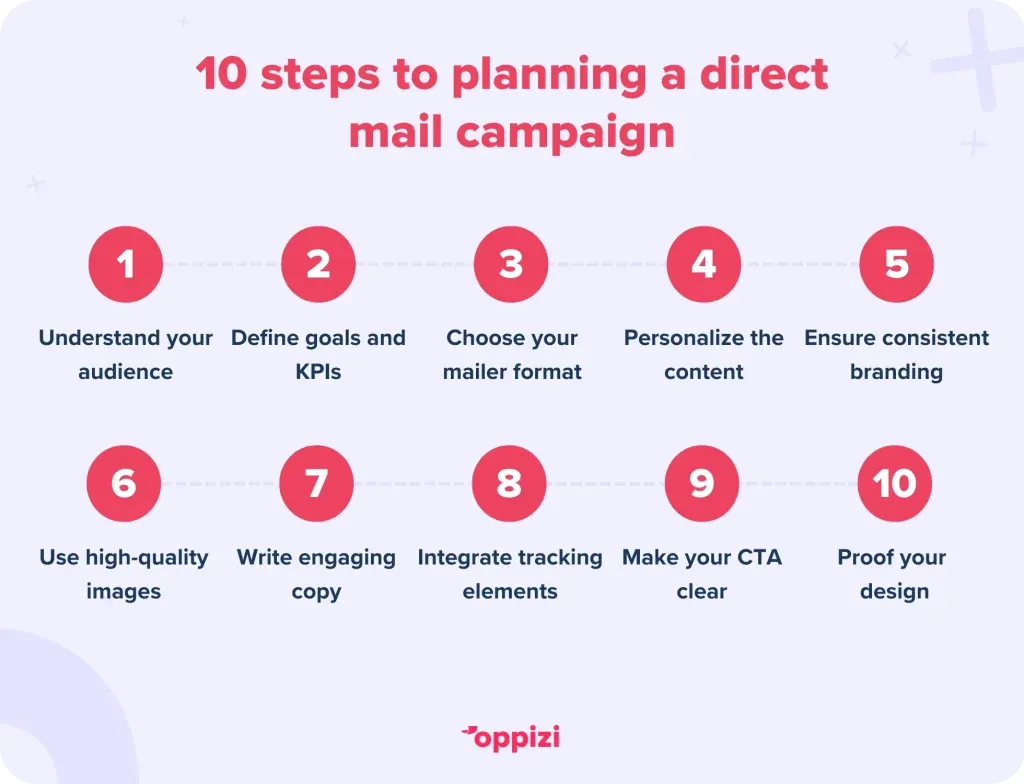
2. Define clear marketing goals and KPIs
Before designing your flyer, set SMART objectives and determine the key performance indicators (KPIs) that align with these goals. These could include:
- Website visits (trackable via a custom URL)
- QR code scans
- Phone inquiries
- Coupon redemptions
Ensure your goals are clear and attainable. For example, instead of simply aiming to "increase sales," set a goal to "generate 100 QR code scans and 50 coupon redemptions within four weeks." This approach helps you measure progress and optimize your campaigns effectively.
Using a reliable MarTech company like Oppizi to measure and track your campaign will help your business understand what went well, when people typically responded best, and how many people completed your call to action. Tracking these metrics ensures you can measure the effectiveness of your campaign and optimize future mailings.

3. Choose the right size and format
The next step in designing your direct mail campaign is to carefully consider the size of your mailers. When choosing a size for your direct mail campaign, it is essential to consider both your marketing objectives and the needs of your target audience. The most common types of mailer sizes include:
- Postcards (A6, DL, or A5) – cost-effective and great for quick messaging.
- Tri-fold brochures – ideal for storytelling or detailed product information.
- Custom-shaped mailers – unique formats can grab extra attention.
Select the format that best conveys your message to your target audience while staying within budget.
4. Make it personal
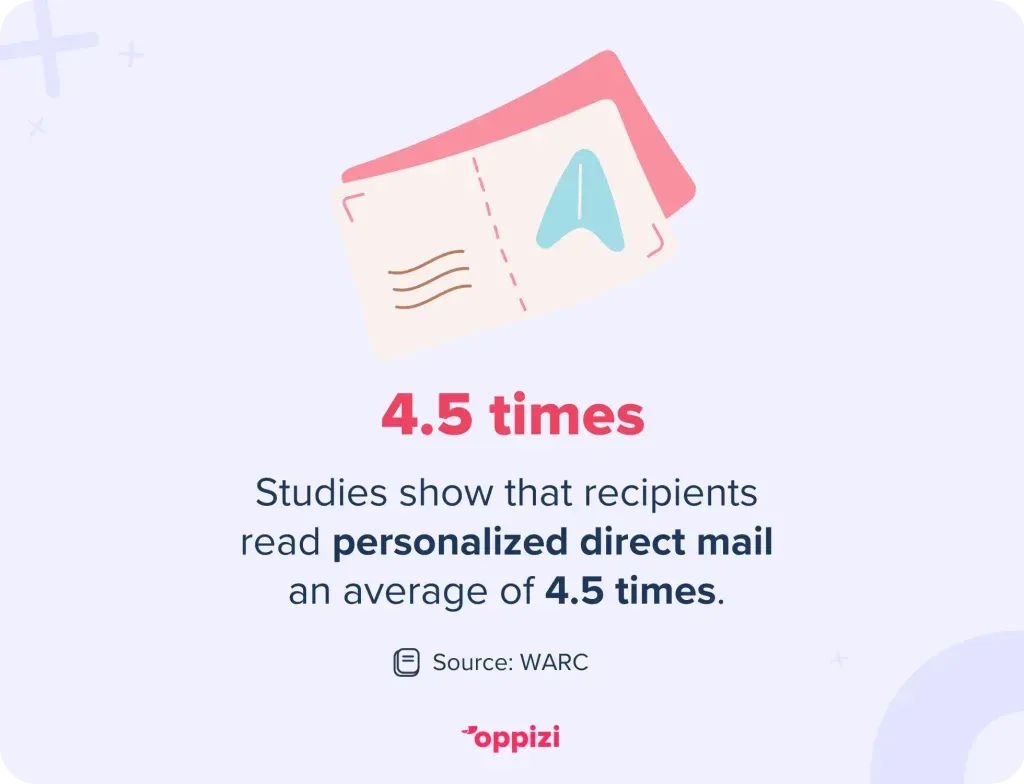
Direct mail personalization goes beyond just using the recipient’s name. Leverage data to include location-based offers, past purchase recommendations, or tailored discounts. Research shows that recipients read personalized direct mail an average of 4.5 times, significantly increasing the likelihood of them taking action.
Making things as personal and relevant as possible will help your overall conversions and make customers feel special. It engages with potential customers as well as existing ones.
5. Use brand colors and fonts consistently
Use your official colors, fonts, and logo placement to keep everything on-brand. This strengthens recognition and trust. Stick to light backgrounds with dark text for easy reading, and use white space wisely so your mailer doesn’t feel crowded and the reader’s attention goes exactly where you want it. Whether you’re designing brochures, flyers, or mailers, your colors, fonts, and overall style should stay consistent.
6. Incorporate high-quality images
Use clear, high-resolution images that align with your brand’s identity. Avoid stock images that feel too generic. Instead, showcase real products, happy customers, or behind-the-scenes shots to add authenticity and build trust.
Avoid using imagery for the sake of it; remember, white space is effective too! And try not to make your mailer too cluttered with images, as your readers may get distracted from the message you’re trying to convey.

7. Write engaging, concise copy
Often, less is more when it comes to words, and, as mailers aren’t that big, it’s essential to convey your message in a short and impactful way. Every word should serve a purpose. Focus on:
- A compelling headline
- Clear benefits and unique selling points
- A persuasive call to action (CTA)
For example, instead of “Check out our new collection”, try “Exclusive 20% Off – Shop Our New Collection Today!”
Ensure there are no spelling or grammatical errors, as mistakes can undermine your brand’s credibility and cause customers to lose trust.
8. Integrate QR codes and tracking links
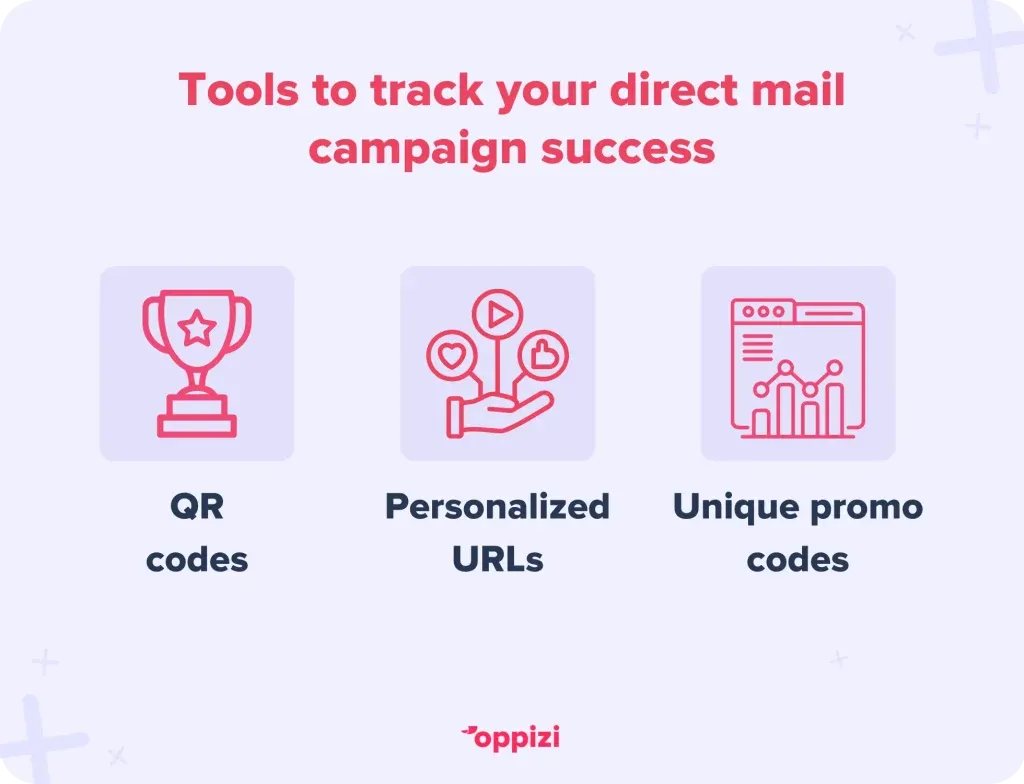
Even though direct mail is an offline channel, it can seamlessly connect with online platforms. There are several methods, including:
- QR codes that lead to a landing page or discount offer.
- Personalized URLs (e.g., www.yoursite.com/special-offer) to track responses.
- Unique promo codes to measure conversions directly.
These methods help to directly connect a customer to an online journey from an offline campaign.
Here at Oppizi, we rely on our unique QR code technology to help track and collate data from offline campaigns. By integrating QR codes, we're able to accurately collect data to the same level of detail as digital campaigns. Plus, with Oppizi's free QR code builder, you can generate custom QR codes quickly and easily to seamlessly integrate into your offline marketing campaigns.
9. Ensure your offer & CTA are clear
Another crucial part of a well-designed direct mail campaign is a solid call to action (CTA). Your CTA should be bold, direct, and easy to act on. Examples include:
- “Scan to claim your exclusive 15% discount”
- “Call now for a free consultation”
- “Visit our store and present this card for a free sample”
Your CTA should be a focal point of your mailer. Use contrasting colors and strategic positioning to naturally draw the reader's eye and encourage action.
10. Proof your design and choose a quality print finish
The final check of your mailer is arguably one of the most important steps in the entire direct mail design process. The more eyes on your draft version, the better, as sometimes the most simple errors are overlooked. Involve a third party to give their honest feedback, as we can often become blinkered by our content. Before printing, triple-check your mailer for:
- Spelling and grammar mistakes
- Misaligned elements
- Clarity of images and text
Finally, select the right paper finish to enhance your mailer's impact. Choose a matte finish for a premium, sophisticated look, a glossy finish to make vibrant colors pop, or an uncoated finish for a timeless, classic feel.
Final thoughts
Direct mail marketing remains one of the most cost-effective and high-impact offline marketing strategies. With careful planning, compelling design, and smart tracking, you can generate higher engagement and stronger brand connections than digital ads alone.
Oppizi makes it easy to design, track, and optimize your direct mail campaigns for maximum ROI.
Ready to launch a powerful direct mail campaign? Start your campaign with Oppizi today and connect with your audience offline!