Last updated July 23, 2026
QR codes, or “Quick Response” codes, have become increasingly common in recent years, appearing everywhere from restaurant menus to billboards. A QR code is a type of matrix barcode (or two-dimensional barcode) that was first designed in 1994 for the automotive industry in Japan.
More recently, QR codes have gained popularity globally for their efficiency in storing and transmitting data. This is because unlike traditional barcodes, which are one-dimensional and can hold up to 20 numerical digits, QR codes can store much more data, including alphanumeric characters, making them highly versatile across various industries.
But how exactly do QR codes work? In this guide, we’ll explore the diverse applications of QR codes, the future of QR code trends and technology, and their impact on various industries.
Basic components of a QR code
A QR code is composed of black squares arranged on a white background in a grid pattern. It consists of several key elements: alignment patterns that help scanners read the code accurately, timing patterns for synchronization, three finder patterns that determine orientation, and format information related to error correction.
Additionally, some data modules store information, encoded as binary data. The quiet zone surrounding the code is crucial for accurate scanning, ensuring no interference from the surrounding environment.
QR codes can store various types of data, including URLs, contact details, and product information. Because they can be quickly scanned using mobile devices, QR codes have transformed the way information is accessed.

How do QR codes work?
QR codes encode data into a matrix of black squares on a white background. When scanned with a QR code reader, typically through a smartphone camera, the embedded information is decoded and directs the user to a specific destination.
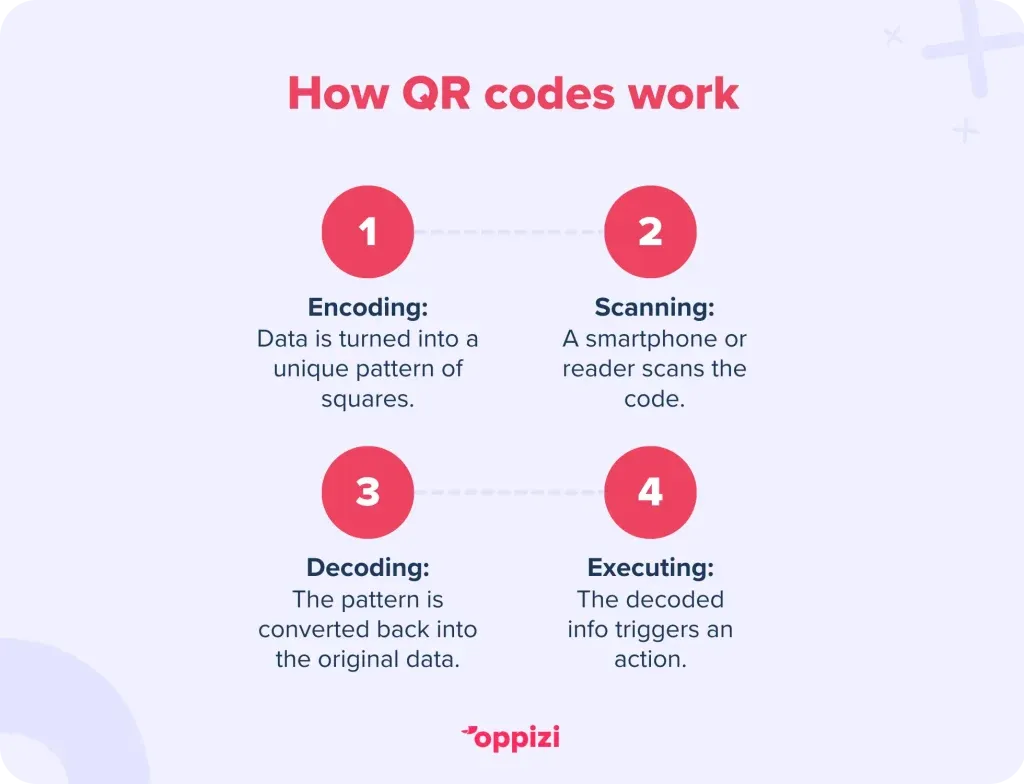
Here’s a step-by-step breakdown of how QR codes work:
1. Encoding information
The process begins by encoding data, such as a URL, text, or contact details, using a QR code generator. This data is then converted into a unique pattern of black-and-white squares.
2. Scanning the QR code
When a smartphone or QR code reader scans the code, it interprets the pattern of squares. Most modern smartphones have built-in QR code scanners in their camera apps, eliminating the need for extra software.
3. Decoding the information
The scanner decodes the pattern into the original data that was encoded. This could be a link to a website, a discount code, or even a digital business card. The process is quick, taking just a fraction of a second.
4. Executing the action
Once decoded, the information triggers a specific action. For instance, a URL might open in a browser, a discount code could be applied, or contact details may prompt the user to save them. Thanks to error correction capabilities, QR codes remain functional even if 30% of the code is damaged, ensuring reliable data retrieval.
Types of QR codes: Static vs. dynamic
QR codes come in two main types: static and dynamic.
- Static QR codes contain fixed information that cannot be changed after creation. They are ideal for simple, unchanging data like a website link or contact details.
- Dynamic QR codes are more flexible, allowing real-time tracking and updates even after being generated. This makes them perfect for marketing campaigns where information may need to be modified over time.
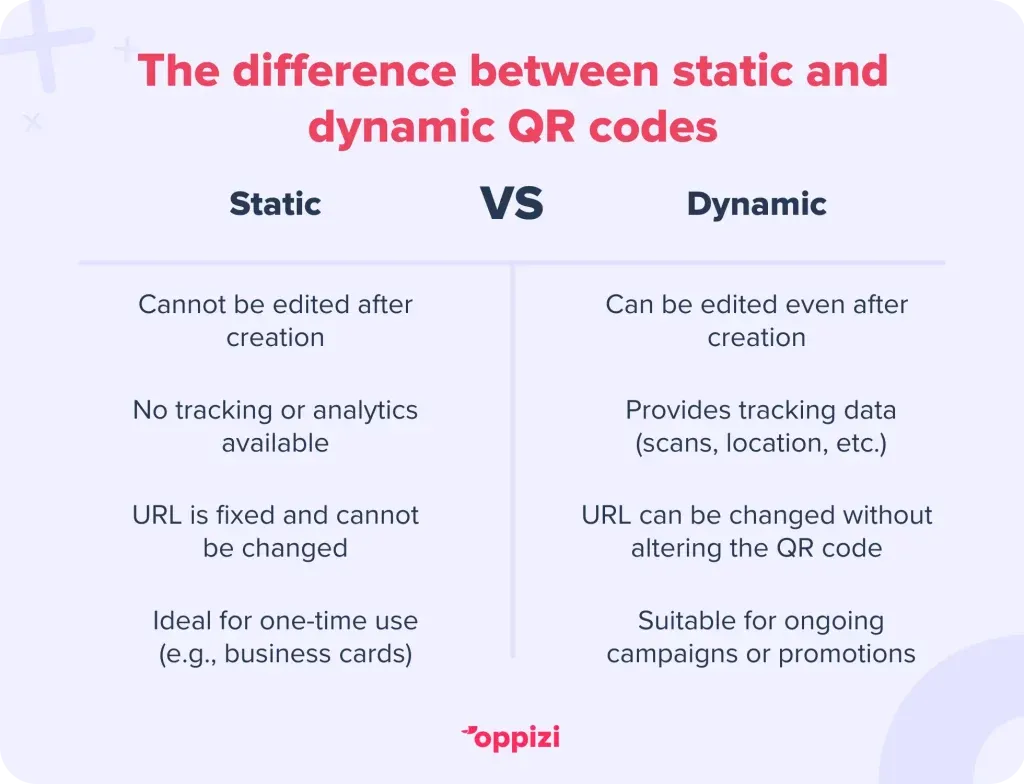
Choosing the right type depends on your specific needs, whether a permanent link or an adaptable, trackable solution.
5 practical applications of QR codes
QR codes are widely used across various industries, enhancing efficiency, convenience, and user engagement. Here are some key applications:
1. Retail & E-commerce
QR codes have become essential in retail and e-commerce, bridging the gap between physical products and digital information. They serve multiple purposes:
- Product information & promotions: Customers can scan QR codes on packaging to access product details, user guides, and exclusive discounts. Studies have found that the number of coupons accessed via QR codes reached 5.3 billion in 2022.
- Inventory management: Retailers use QR codes to track inventory and streamline supply chain operations.
- Seamless checkout & payments: E-commerce platforms integrate QR codes for secure, one-scan payment solutions.
- Marketing & advertising: Brands embed QR codes in advertisements, product packaging, and store displays to direct users to online stores or promotional campaigns, enhancing customer engagement.
2. Contactless payments
QR codes have revolutionized cashless transactions by providing a quick, secure, and convenient payment method. In fact, the QR code payment market is expected to grow to 35.07 billion dollars by 2030.
Below are some ways QR codes can be used for contactless payments:
- Users can complete payments by scanning a QR code with mobile payment apps like PayPal, Venmo, Apple Pay, and Google Pay. This method reduces reliance on physical cash and cards while minimizing security risks associated with traditional payment methods.
- Businesses, from retail stores to street vendors, benefit from QR-based payment solutions as they require minimal infrastructure and ensure faster transactions.
- QR codes also make donations quick and simple. NGOs can use them in marketing campaigns or on physical materials at fundraising events to streamline contributions.
3. Event ticketing & boarding passes
QR codes have streamlined access control in the event and travel industries, offering efficiency and convenience.
- Event ticketing: Digital tickets with QR codes simplify entry at concerts, sports events, and conferences, reducing the risk of fraud and eliminating the need for physical tickets.
- Airports & public transport: Airlines issue QR-coded boarding passes, allowing passengers to check in and board flights without printed documents. Public transport systems also use QR codes for ticketing, reducing congestion and wait times.
4. Networking & contact sharing
QR codes are becoming a powerful tool for networking and sharing contact information, enabling seamless connections.
- Business cards: QR codes can be embedded in business cards, making it easy for others to scan and instantly access contact details. This eliminates the need for manual entry of information and ensures that data is always up-to-date.
- VCard sharing: A QR code can lead directly to a virtual contact card (vCard), which contains all relevant contact details, such as name, phone number, email, and social media links. This allows for quick and effortless sharing, ideal for both professional and personal networking.
5. Marketing & advertisements
Marketers leverage QR codes to create interactive and engaging campaigns that connect customers with digital content.
- Interactive ads: Print ads, billboards, and product packaging feature QR codes that direct users to websites, videos, or special promotions.
- Enhanced customer experience: Businesses use QR codes for loyalty programs, customer feedback surveys, and augmented reality experiences.
- Bridging physical & digital marketing: QR codes help businesses track engagement metrics, offering insights into customer behavior and campaign performance.
However, QR codes are not limited to the applications listed above. They are also widely beneficial across various other industries such as real estate, education, and healthcare, where they can enhance efficiency, facilitate information sharing, and improve overall user experience.
Advantages of QR codes
Here are some of the key advantages of using QR codes for your business needs.
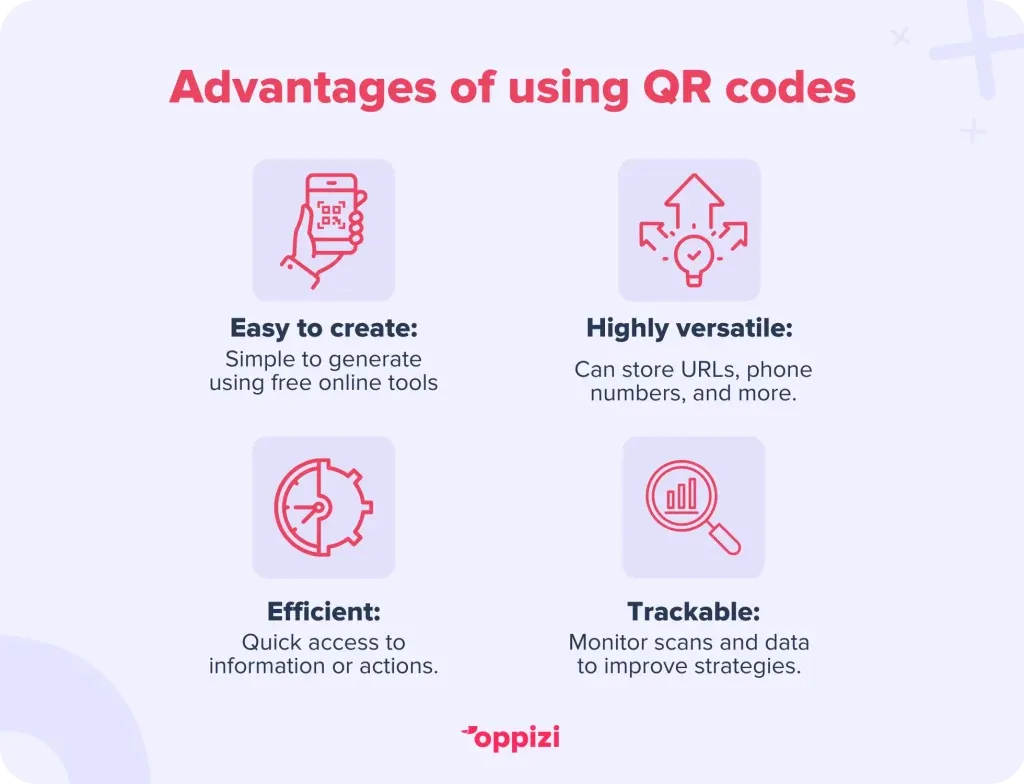
Easy to create
QR codes are easy to create and use. With online QR code tools like Oppizi’s free QR code generator, anyone can generate a QR code for their needs. For users, scanning a QR code is as simple as opening their camera app and pointing it at the code.
Highly versatile
QR codes can store various types of information, including URLs, text, emails, and phone numbers. This versatility makes them suitable for multiple applications. There are also plenty of ways to implement creative uses of QR codes that enable you to stand out from competitors.
Efficient
QR codes provide a quick and efficient way to access information or perform actions. This speed is particularly valuable in situations, such as emergency medical situations or fast-paced retail environments.
Trackable
Businesses can monitor QR code scans and gather user engagement data, making them a powerful tool for marketing analytics. This tracking capability helps brands refine their strategies and measure campaign effectiveness.
QR code insights
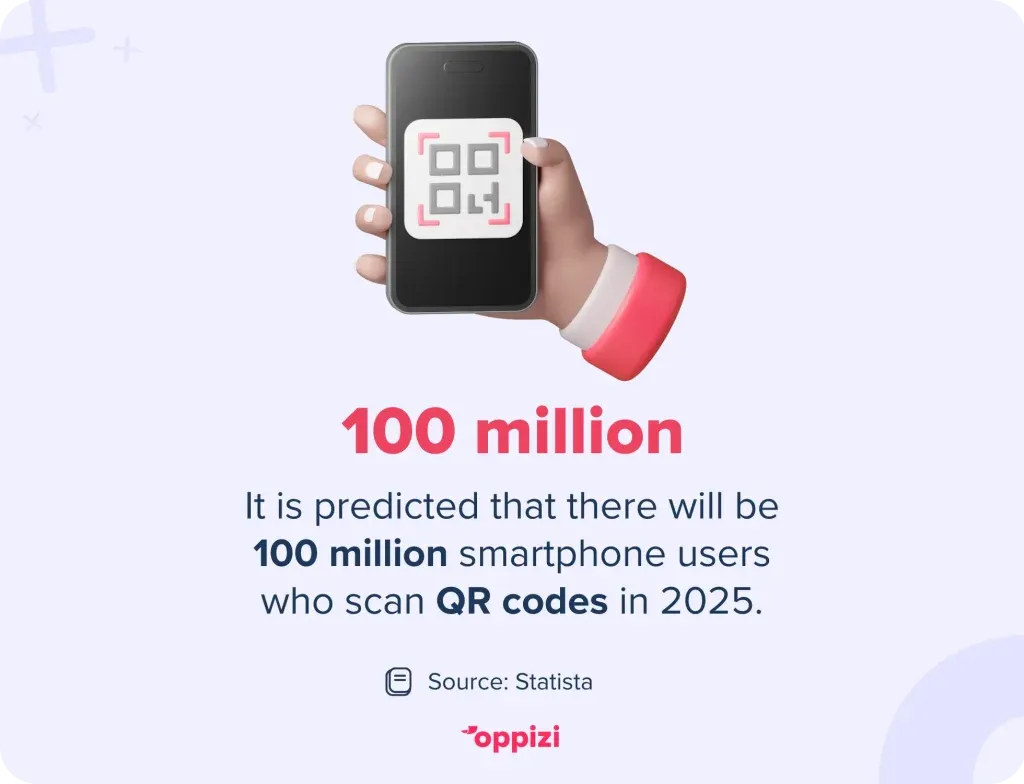
QR codes have become a go-to tool for sharing information and engaging with customers. In fact, a QR code industry report found that the U.S. led global QR code usage in 2023, accounting for 43.9% of all scans. With mobile QR code scanning projected to reach 100 million users in the U.S. in 2025, this trend shows no signs of slowing down.
QR codes have been used in everything from advertising campaigns to restaurant menus, and also played a role in contact tracing during the COVID-19 pandemic, as they enable seamless and contactless information exchange.
Security concerns with QR codes
While QR codes are highly efficient, they can also pose security risks. Potential vulnerabilities include:
- Malicious QR codes: Attackers can embed harmful links that redirect users to phishing websites or trigger malware downloads, compromising devices.
- Privacy risks: Some QR codes may link to personal data without encryption, raising concerns about unauthorized access.
- Phishing attacks: Cybercriminals can disguise fraudulent QR codes as legitimate ones, tricking users into sharing sensitive information.
To mitigate these risks, users should be cautious when scanning unfamiliar codes and ensure they have reliable QR code reader apps to detect any anomalies. It is crucial to stay informed about current threats and adhere to security protocols when using QR codes to prevent potential data breaches.
Best practices for safe QR code use
To minimize security risks, follow these four key guidelines when scanning QR codes:
- Scan only from trusted sources: Avoid scanning codes from unknown or unverified sources to prevent malware infections or phishing attempts.
- Verify the destination URL: Before scanning, check that the link is secure and legitimate to ensure it doesn’t lead to a malicious website.
- Use a secure QR code reader: Opt for a QR scanner with built-in security features that can detect suspicious links and warn against potential threats.
- Trust your instincts: If a QR code looks suspicious or unfamiliar, refrain from scanning it to protect your personal data and privacy.
By following these best practices, you can safely enjoy the convenience of QR codes while minimizing security risks.
Frequently asked questions about QR codes
How do I generate my own QR code?
You can create a QR code using online tools like Oppizi’s free QR code generator. Simply select the QR code type, enter the required information, customize the design, and download the generated QR code for use.
Can QR codes store personal data securely?
Yes, QR codes can store personal data securely if encryption is used. Implementing encryption techniques helps protect sensitive information from unauthorized access. Following secure QR code practices further enhances privacy and reduces the risk of data breaches.
What are the limitations of QR codes?
QR codes have limitations such as limited data capacity, dependency on smartphones for scanning, and potential security risks like malicious code injection. Integrating them with IoT devices can also pose privacy concerns. Understanding these limitations is crucial for safe and effective QR code usage.
Final thoughts
QR codes have transformed the way we access and share information. Their simplicity, versatility, and efficiency make them a powerful tool across various industries.
Whether you're a business seeking to enhance your marketing strategy or an individual looking for a quick way to share information, understanding how QR codes work, and their potential applications, can help you make the most of this technology.Ready to create your own QR code? Try Oppizi’s free QR code generator now and take your marketing to the next level!