Last updated July 23, 2026
With so much competition, those working in the real estate industry must seek innovative ways to connect with potential buyers and streamline the property purchasing process. One advancement that has gained significant traction is the use of QR codes. These simple yet powerful tools bridge the gap between offline and online marketing, offering a seamless experience for both real estate agents and clients.
The rise of QR codes in real estate
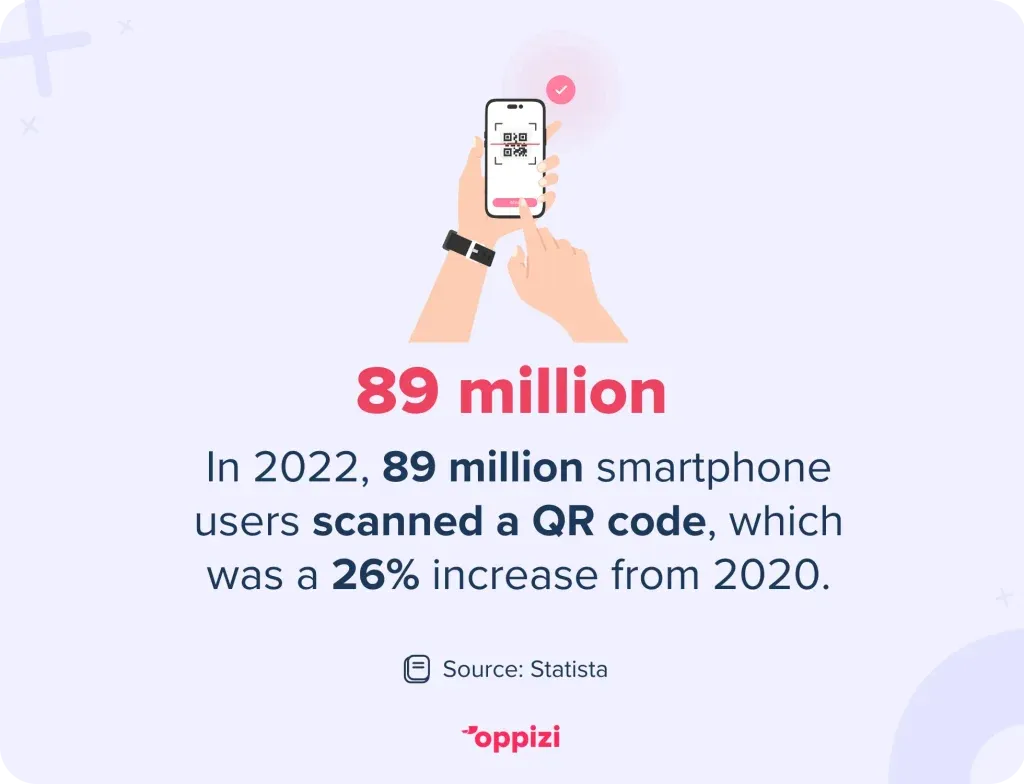
QR codes are two-dimensional barcodes that, when scanned with a smartphone, direct users to specific digital content. Their versatility and ease of use have made them increasingly popular across various industries, including real estate. In fact, in 2022, 89 million smartphone users scanned a QR code, a 26% increase from 2020, highlighting their growing acceptance and utility.
Innovative applications of QR codes in real estate
Property listings and virtual tours
Incorporating QR codes into property listings, whether on flyers or in real estate office windows, allows agents to provide potential buyers with instant access to detailed information. When scanned, these codes can lead to virtual tours, high-resolution images, floor plans, and comprehensive property details, offering a richer and more immersive experience. In fact, studies have shown that property listings with a virtual tour get 40% more clicks. This immersive approach not only enhances the buyer's experience but also can also increase the likelihood of engagement.
Having said that, using a QR code that links to text information can be especially helpful, too. It provides a simple, easy-to-access format for people who prefer reading details at their own pace.
Lead generation and contact information
With 50% of businesses stating that lead generation is their top marketing priority, it’s important to seek innovative ways to collect quality leads. QR codes can be strategically placed on offline marketing materials such as flyers, business cards, and signage to capture leads efficiently.
By directing potential clients to a lead capture form or a personalized landing page, agents can gather valuable contact information and preferences, facilitating targeted follow-ups. This method streamlines the lead generation process, making it more efficient and effective.
Scheduling property viewings
Simplifying the process of scheduling property visits can significantly enhance client satisfaction. By scanning a QR code, potential buyers can access a scheduling tool to set up viewings at their convenience, reducing tedious back-and-forth communication. This level of convenience can be a deciding factor for clients when choosing an agent to work with.
Benefits of integrating QR codes into real estate marketing
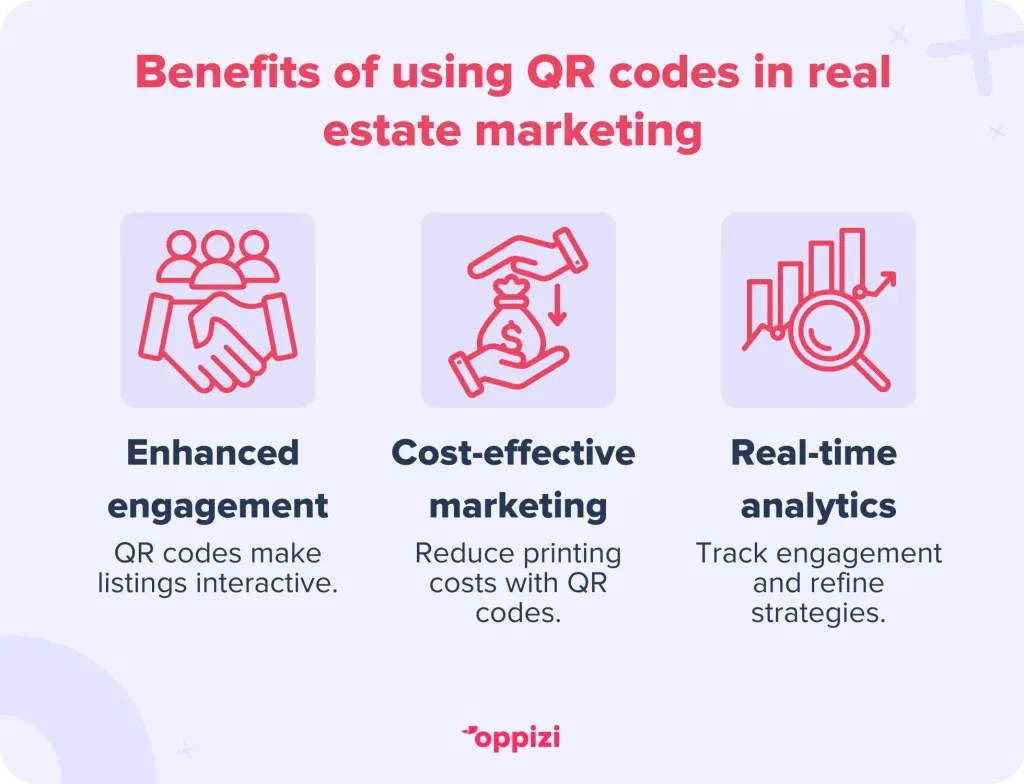
Enhanced engagement
QR codes offer an interactive element to real estate offline marketing materials, encouraging potential buyers to engage with the content actively. This isn’t limited to your website. You can also create an Instagram QR code that lets users instantly view the content on your Instagram channel. The same idea works for other social platforms too.
Cost-effective marketing
Implementing QR codes is a cost-effective strategy that leverages existing marketing materials to provide additional value. By directing users to digital content, agents can reduce printing costs associated with extensive brochures and catalogs.
Real-time analytics
Dynamic QR codes allow agents to track user engagement, providing insights into which properties generate the most interest. This data-driven approach enables agents to refine their marketing strategies and focus their efforts on high-performing listings.

Best practices for implementing QR codes
Here you can find some tips for creating and implementing QR codes into real estate marketing materials.
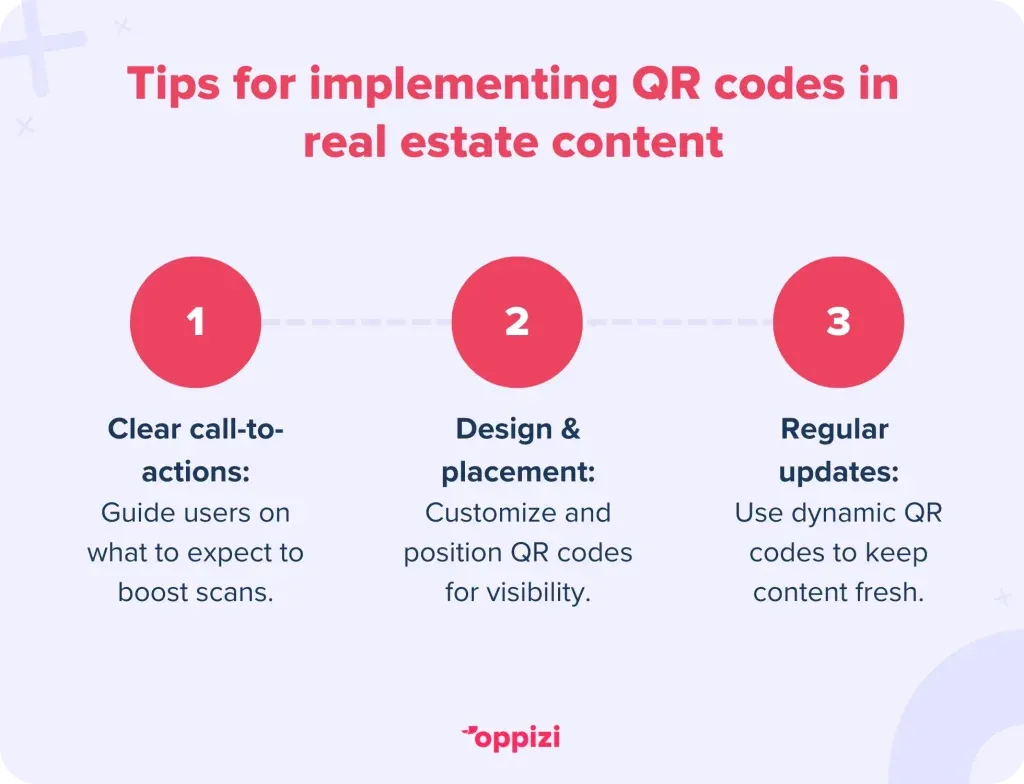
1. Clear call-to-actions
Ensure that each QR code is accompanied by a clear call-to-action, guiding users on what to expect upon scanning. This clarity can significantly increase scan rates and user engagement.
2. Design and placement
Incorporate QR codes into your marketing materials in a way that aligns with your branding. Customization options, such as adding logos or changing colors, can make the codes more appealing and recognizable. Additionally, place them in high-visibility areas to maximize exposure.
3. Regular updates
Utilize dynamic QR codes that allow you to update the linked content without changing the code itself. This flexibility ensures that your audience always has access to the most current information.
Frequently asked questions (FAQs)
1. Can I track how many people scan my QR codes?
Absolutely. By using dynamic QR codes, you can access analytics that provide data on scan frequency, user locations, and device types, helping you gauge the effectiveness of your marketing efforts.
2. Do QR codes expire?
Static QR codes do not expire and remain valid as long as the linked content is accessible. Dynamic QR codes may have expiration dates depending on the service provider's terms, so it's essential to choose a reliable platform.
Conclusion
Integrating QR codes into your real estate marketing strategy can significantly enhance client engagement, streamline sharing information, and provide valuable insights through analytics. With the real estate market projected to grow by 2.69% annually, leveraging innovative tools like QR codes will help you stay competitive and responsive to client needs.
Ready to elevate your real estate marketing? Launch your offline campaign with Oppizi today and use our free QR code generator to create customized, trackable codes that engage your audience.