Last updated September 28, 2026
Every new customer has a price. The question is: Are you paying too much? A lot of business owners focus on growth without looking at what they’re spending to make it happen. That spend is called your customer acquisition cost, or CAC. If it’s too high, your profits take a hit.
In this guide, we’ll explain what CAC is, how to work it out, why it matters, and how to keep it low without cutting corners.
What is customer acquisition cost?
Customer acquisition cost is the total amount you spend to get someone to buy from you. It includes:
- Ads (online or offline)
- Marketing tools or software
- Team salaries
- Content creation and design
- Printing and distribution for physical campaigns
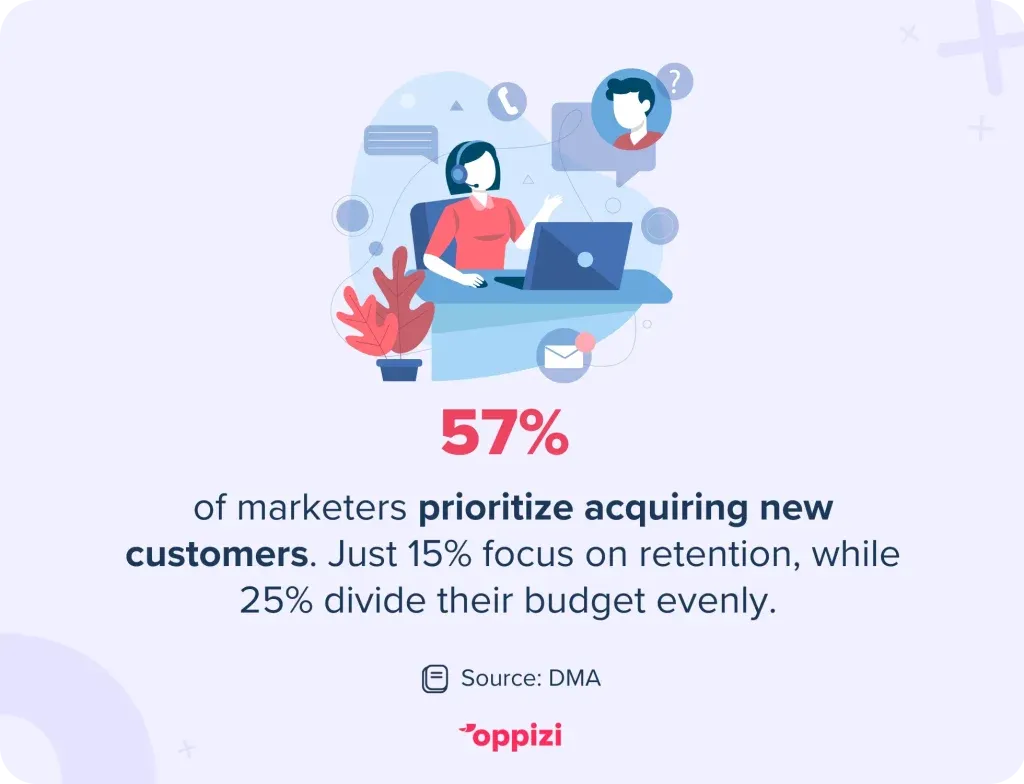
A study from the DMA found that 57% of marketers say acquiring new customers is their top spending priority. Only 15% focus more on keeping existing customers, while 25% split their budget evenly between the two. Knowing your CAC shows if that spend is paying off.
Why CAC matters
Here’s why CAC is important:
- Profit: If you’re spending more to get a customer than they spend with you, you’re losing money.
- Budget: Knowing your CAC helps you decide where to spend your marketing money.
- Growth: If you want more customers, CAC tells you how much it will cost.
It also shows you which marketing channels bring results and which ones don’t.
How to calculate customer acquisition cost
The formula is simple:
CAC = Total marketing and sales costs ÷ Number of new customers
Let’s say you spend $10,000 in one month and get 100 new customers. Your CAC is $10,000 ÷ 100 = $100 per customer.
To get the full picture, include:
- Paid ads
- Staff salaries
- Agency fees
- Software or tools
- Printing and flyer distribution (for offline campaigns)
That’s your real cost to win one new customer.
What’s a good CAC?
There’s no one-size-fits-all number. But here’s an easy rule to follow: Your customer’s lifetime value should be at least three times what you spend to get them.
So, if it costs you $100 to bring in a customer, that customer should bring in at least $300 in return (after subtracting product or service costs). That means your marketing is working. Here’s what average CAC looks like in different industries:
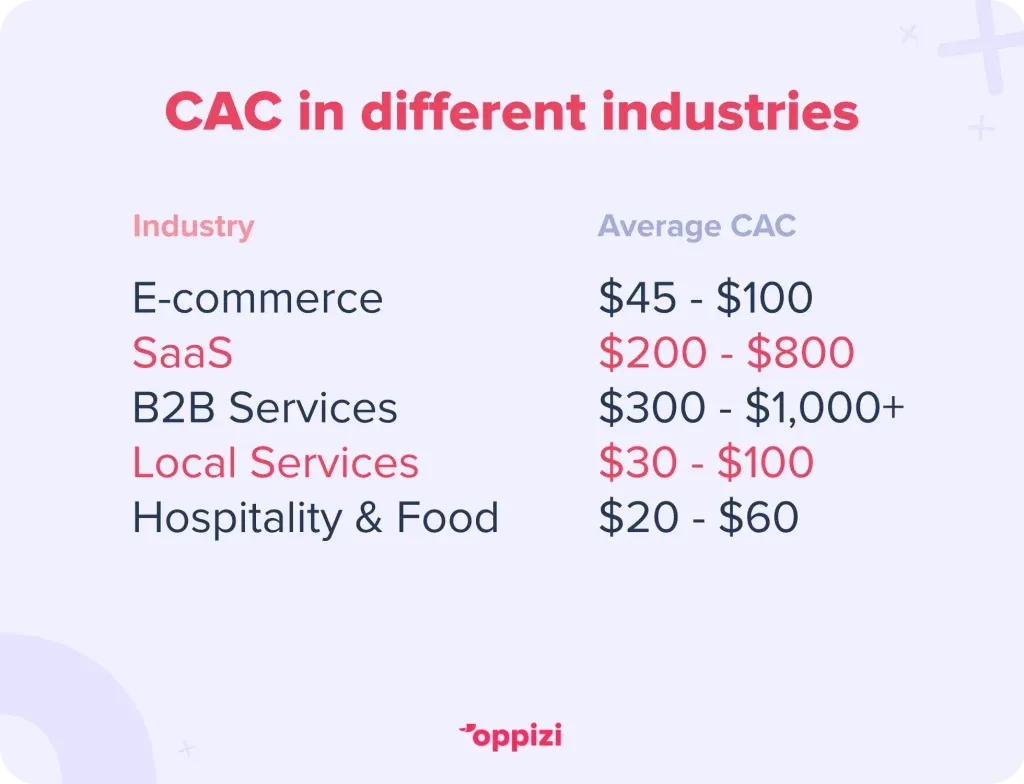
What’s “good” also depends on where your business is. If you’re just starting out, your CAC might be higher while you build awareness. If your brand is already known, your CAC is likely lower thanks to word of mouth and trust.
If your CAC is getting close to your customer’s lifetime value, or even higher, it’s a sign something’s off. You may need to rethink your message, change your marketing channels, or try more cost-effective options like flyer campaigns.
What affects your CAC?
Several things can push your CAC up or down. Here are a few key ones:
- Marketing channel: Some cost more than others. For example, pay-per-click ads can be pricey. Flyer distribution is often cheaper and just as effective.
- Audience: If your audience is hard to reach or convince, it takes more effort (and money) to win them over.
- Sales cycle: A long buying process means more touchpoints, which means more cost.
- Brand awareness: Strong brands don’t have to work as hard. People already trust them, so they convert faster and cheaper.
Want help keeping your CAC low with smart offline marketing? Oppizi can make that part easy. Let us handle the printing, tracking, and distribution so you can focus on results.
How to reduce customer acquisition costs
Lowering CAC doesn’t mean cutting corners. It means being smart about how you spend. Here are some simple ways to do it without losing quality:
1. Pick cost-effective channels
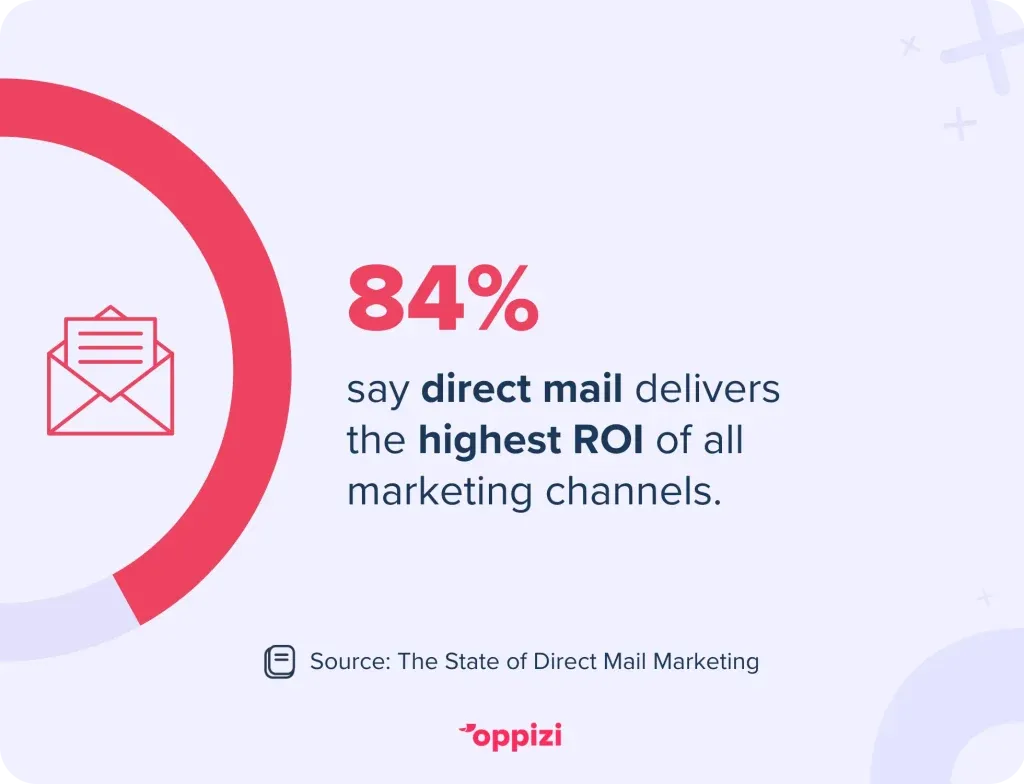
Some marketing channels cost more than others. Online ads can get expensive fast, especially in crowded markets. Offline tools like flyer distribution or direct mail are often cheaper. In fact, 84% of marketers say direct mail gives them the best return on investment of all the channels they use.
At Oppizi, we’ve seen many businesses reach local customers more easily with flyer campaigns than with online ads. It’s a smart way to get noticed without overspending.
2. Focus on the right people
Targeting the right audience helps you avoid wasting money. Don’t try to reach everyone. Focus on the people who are most likely to become customers. Oppizi helps you target by location, age, behavior, and more. Your flyers or mailers go straight to the right hands.
3. Test and track everything
Don’t guess. Try different ads, messages, and channels to see what works. Use A/B tests to compare results.
Always track your campaigns. Whether it’s online or offline, you need to know what’s working. Oppizi’s platform tracks your flyer and mail campaigns from start to finish, so you can make better choices next time.
4. Make your message clear
A clear message helps people say yes faster. If your words connect with your audience, they won’t need as much convincing. Try different headlines or calls to action. Small changes can make a big difference.
5. Fix any funnel problems
If your buying process is too long or confusing, people leave. Keep things simple. Make sure your website, landing page, or flyer makes it easy to go from “interested” to “customer.”
6. Keep your customers happy
Getting a customer takes effort. Keeping them is cheaper. Happy customers come back. They also tell others. That means fewer ads and more word-of-mouth, which lowers CAC over time.
How to calculate CAC
Never calculated your customer acquisition cost before? It’s easier than you think. Here’s the formula:
CAC = Total cost to get new customers ÷ Number of new customers
Let’s break that down. Say you spent $2,500 on marketing last month. That included:
- $1,500 on online ads
- $500 on flyer printing and delivery
- $500 on tools or agency help
If you brought in 50 new customers, your CAC would be:
$2,500 ÷ 50 = $50 per customer
Make sure you include everything that helped you get those customers. That means ads, tools, printing, staff hours, and everything else. You can figure this out by month or by campaign. Just stay consistent, so you can track changes and improve your results over time.

CAC isn’t everything
CAC shows how much you pay to get a customer. But it doesn’t tell you how valuable that customer is. To get the full picture, look at these numbers too:
- Customer lifetime value (LTV): How much a customer spends over time. If CAC is $100 and LTV is $600, that’s great.
- Payback period: How long it takes to earn back your CAC. Shorter is better.
- Conversion rate: How many leads turn into paying customers. A low rate might mean your message isn’t working.
- Churn rate: How often customers leave. High churn can hurt your bottom line, even if CAC looks okay.
- ROAS (return on ad spend): How much revenue you make for every dollar you spend.
When you look at CAC along with these numbers, you’ll make smarter decisions. It’s not just about cost. It’s about getting value from your efforts.
Common CAC mistakes
New to tracking CAC? Here are a few things to avoid:
- Leaving out extra costs: It’s not just your ad spend. Include design, software, printing, staff time, and the rest.
- Mixing up time periods: Make sure your costs and customer numbers cover the same time range.
- Counting leads instead of customers: Only include people who actually bought from you.
- Ignoring churn: If you lose customers fast, your CAC might look fine, but your profits won’t.
- Averaging all campaigns together: Try to calculate CAC by campaign. That way, you know which channels work best.
Getting CAC right helps you plan, grow, and avoid surprises. Take your time, and check it often.
How Oppizi helps you manage CAC
Want to lower your customer acquisition costs without all the work? We offer offline marketing tools like flyer distribution and direct mail. They’re made to be:
- Cost-effective: Reach the right people without spending too much
- Targeted: Choose where and who gets your message
- Trackable: See how your campaign performs in real time
- Effortless: We handle everything from printing to delivery
With Oppizi, starting a campaign is simple. Pick your audience. We do the rest.

FAQ: customer acquisition costs
What’s an example of CAC?
Say you spend $500 on a flyer campaign and gain 25 new customers. Your CAC is $500 ÷ 25 = $20 per customer. That includes all the costs: design, printing, and delivery.
What counts as an acquisition cost?
If you run a Facebook ad for $1,000 and get 40 customers, your cost is $1,000 ÷ 40 = $25 per customer. CAC covers everything you spend to turn someone into a customer, not just ad costs.
What does customer cost per acquisition mean?
It’s just another way to say CAC. The formula is: CAC = Total marketing and sales costs ÷ Number of new customers.So if you spent $2,000 and got 50 customers, your CAC is $40.
What’s a good CAC percentage?
It depends. A good rule is to keep CAC around 20–30% of a customer’s lifetime value. So if someone usually brings in $500 over time, spending $100 to $150 to get them is a healthy range.
When is CAC too high?
If your CAC is more than what a customer brings in, you're losing money. For example, if you spend $200 to get someone who only brings in $180, it’s too much. High CAC might also mean:
- You're targeting the wrong people
- Your campaign isn't working well
- You’re spending too much on certain channels
If that happens, it may be time to test more affordable options like direct mail or flyers.
Wrap-up
Customer acquisition cost is a key number for your business. When you understand it, you can spend smarter and grow faster.
Offline tools like flyer campaigns can help you lower costs and reach more people, especially when you track what works. Want to give it a try? Oppizi makes it easy to run your next campaign and keep your CAC under control. Get started today.