Last updated July 23, 2026
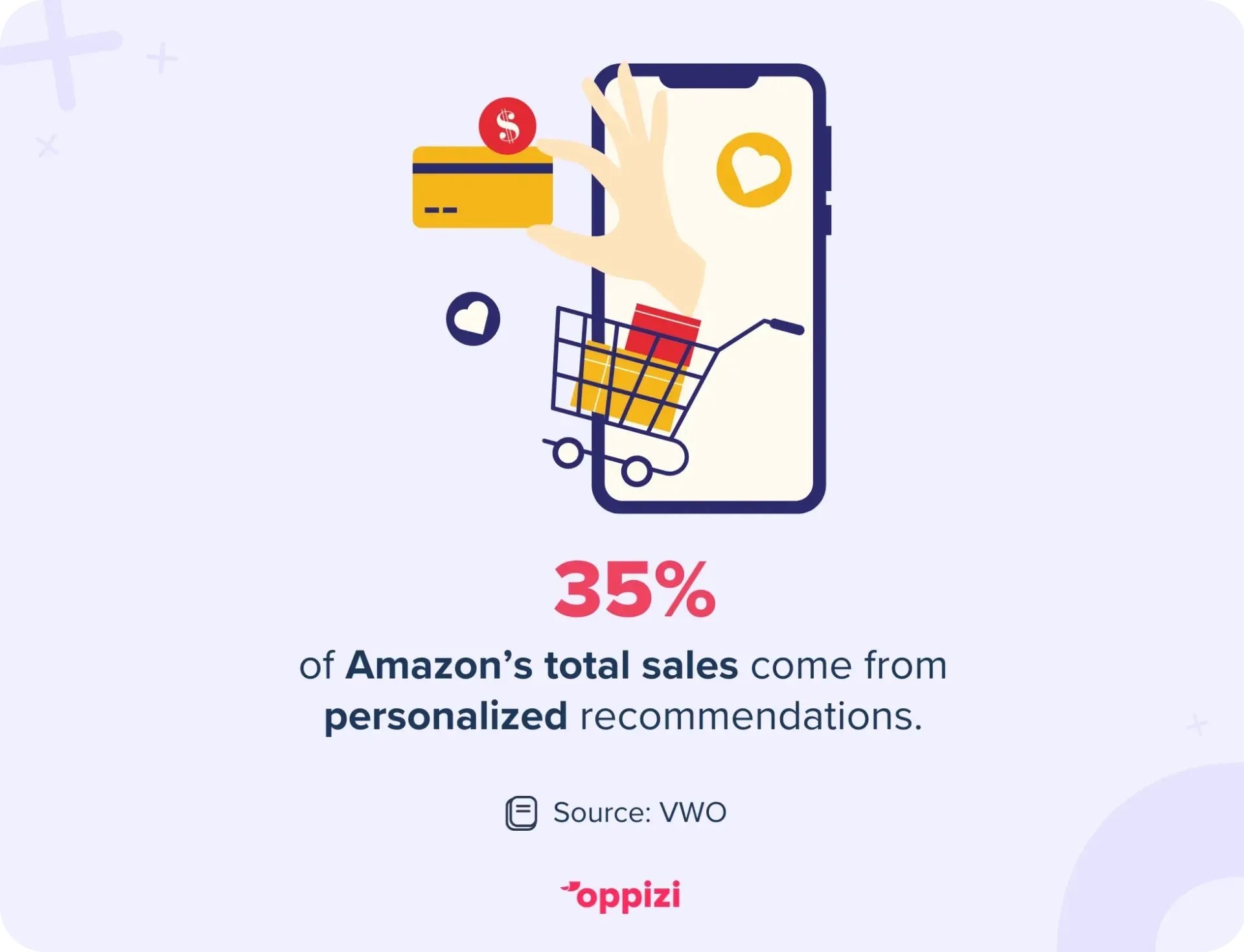
Amazon is one of the best when it comes to making online shopping feel personal. A big part of that comes down to how they upsell and cross-sell. These two strategies bring in about 35% of Amazon’s total revenue.
They do it by showing each shopper products that actually make sense based on what they’ve looked at or bought before. This helps grow the size of each order and makes people more likely to return. The best part? You don’t need a huge budget to do something similar.
This guide breaks down how Amazon does it and how you can use the same approach to boost your sales and average order value.
Why personalized suggestions matter
People expect a shopping experience that feels tailored to them. Whether it’s a useful add-on or a smart upgrade, timing matters. And when done right, personalization pays off. Here’s what it can do for your store:
- Help you sell more by showing the right products at the right time
- Make customers feel like you understand them
- Get more people to finish their purchase instead of abandoning their cart
One study found that 81% of shoppers prefer to have a personalized experience. But it only works if it feels helpful, not pushy. Relevance is everything.
What’s the difference between upselling and cross-selling?
People often mix these two up, but they do different things.
Upselling means suggesting a better version of the item someone is already thinking about.Example: A shopper adds a 64GB iPhone to their cart. You recommend the 128GB model because it has more storage.
Cross-selling means showing them items that go well with what they’re buying.Example: That same shopper sees a phone case or wireless charger that fits their iPhone.
Both strategies help increase the total order value and improve the shopping experience. The difference is simple:
- Upselling is about upgrades
- Cross-selling is about add-ons
Amazon often uses both at the same time to keep customers engaged and get more out of each visit.
How to do it
1. Home page personalization
When you open Amazon, you see sections like “Recommended for you.” These are based on things like:
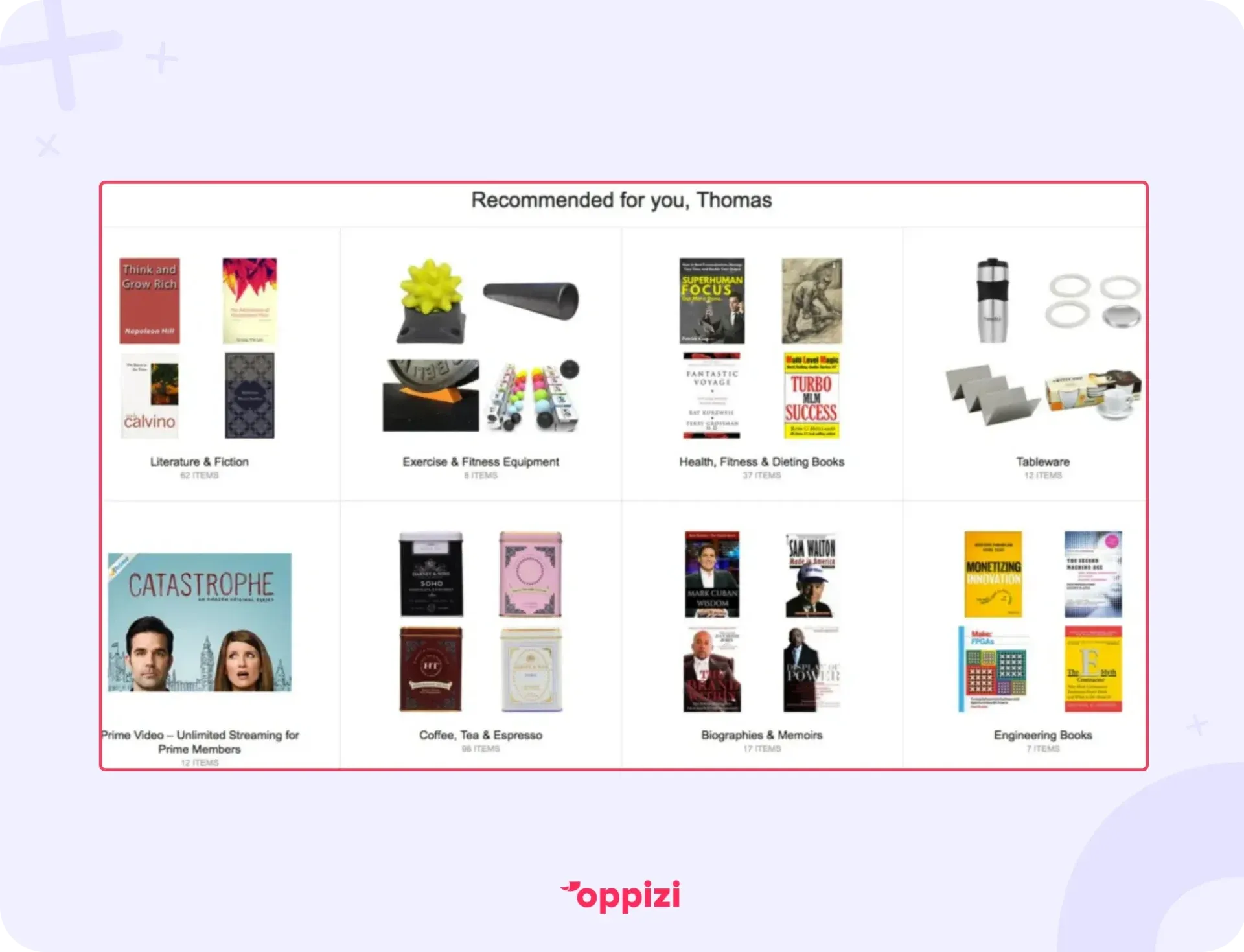
- What you bought before
- What you looked at recently
- How you browse
- What’s on your wish list
How to use this on your store:
- Show new products that match their interests
- Highlight items similar to what they just viewed
- Add widgets like "You might also like" or "Customers also bought"
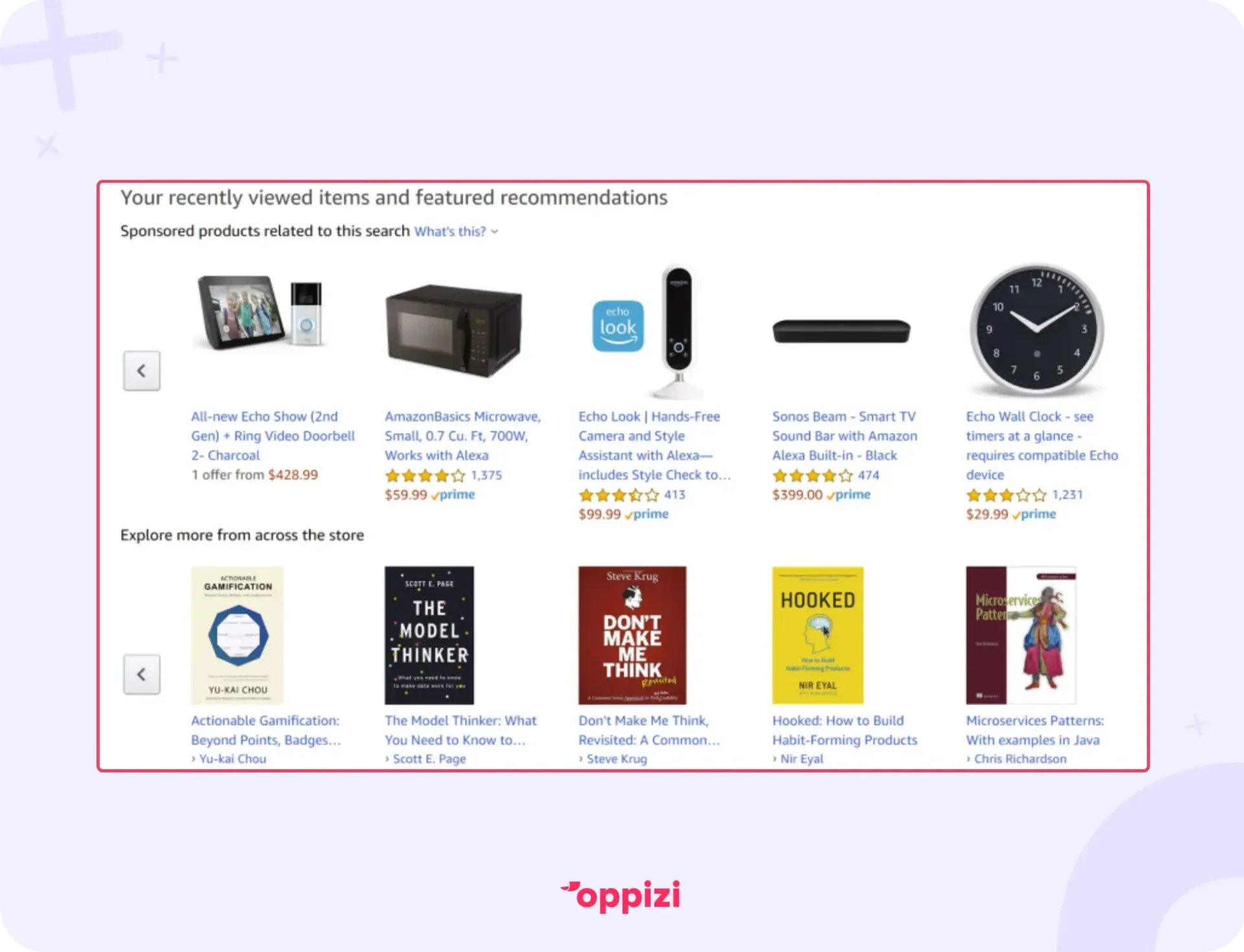
The goal is to make your homepage feel personal. This keeps shoppers around longer and more likely to buy.
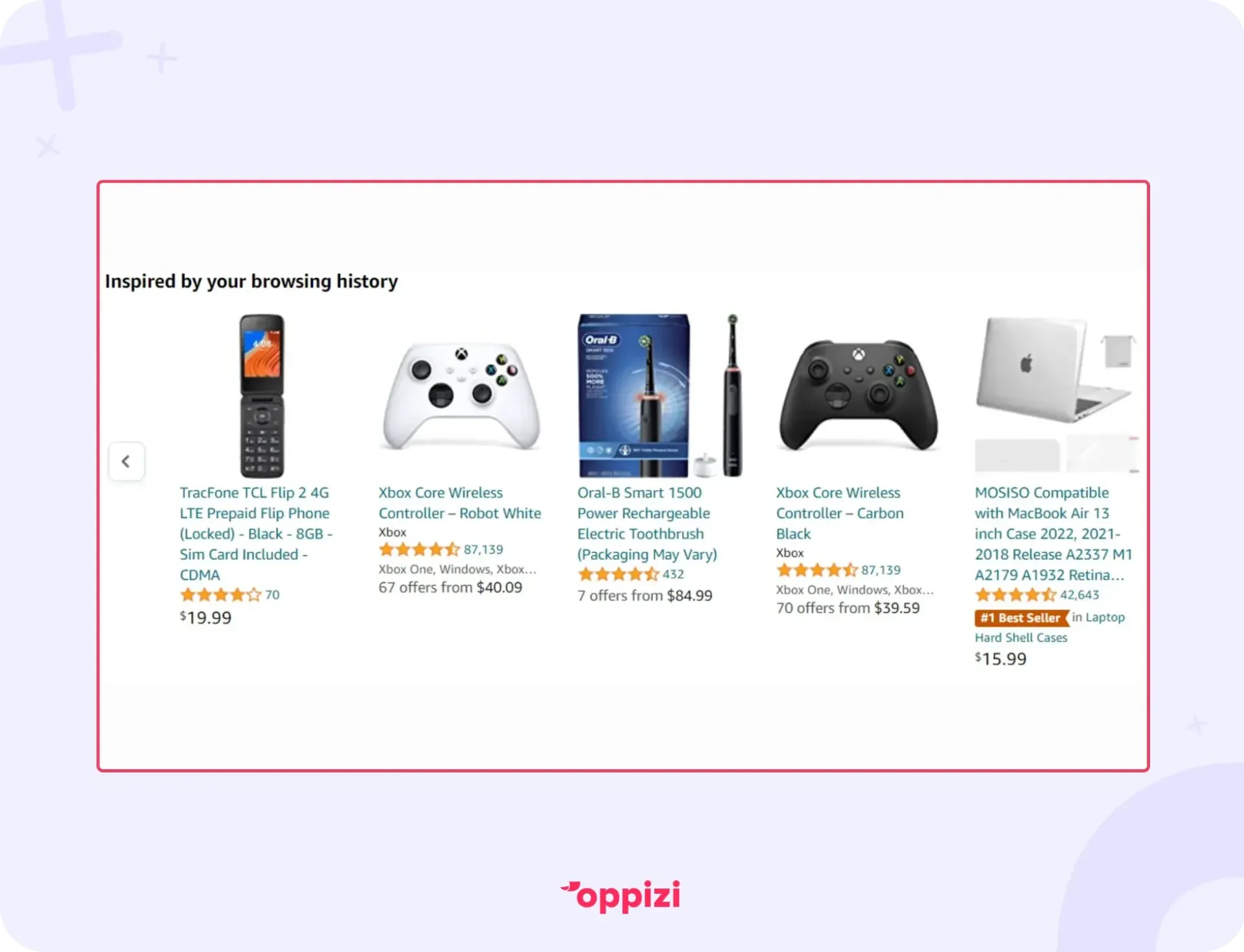
2. Product page recommendations
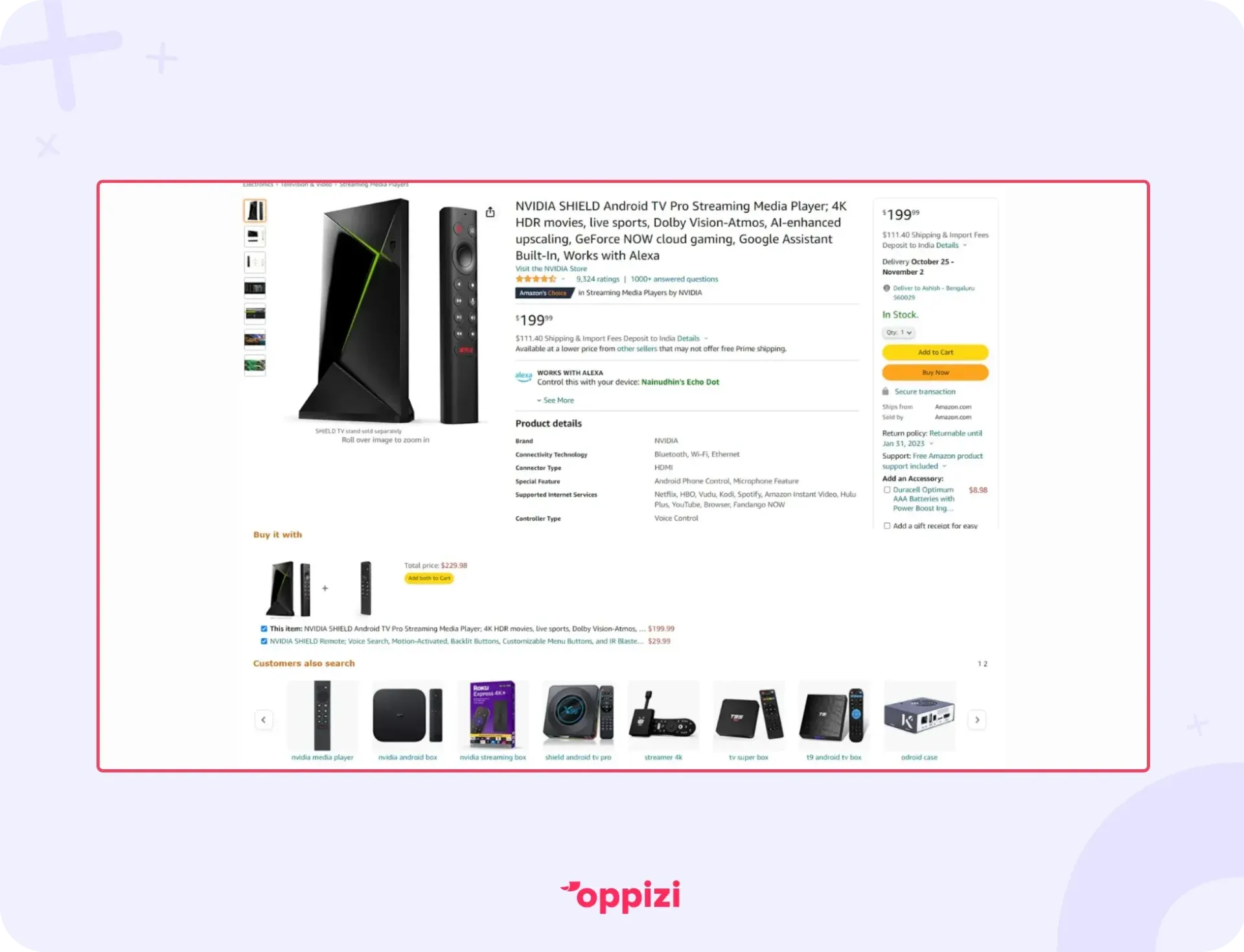
This is where people decide what to buy. If you only show the main product, you miss chances to sell more.
Amazon shows:
- “Frequently bought together”
- “Customers who viewed this also viewed”
- “Buy it with”
For your store:
- Suggest items that go well with the main product, like laces with shoes or filters with cameras
- Use simple rules or AI to show similar products if the shopper isn’t sure
- Place these suggestions below the product details or in a side panel
This keeps shoppers exploring and encourages them to add more to their cart.
3. Cart page personalization
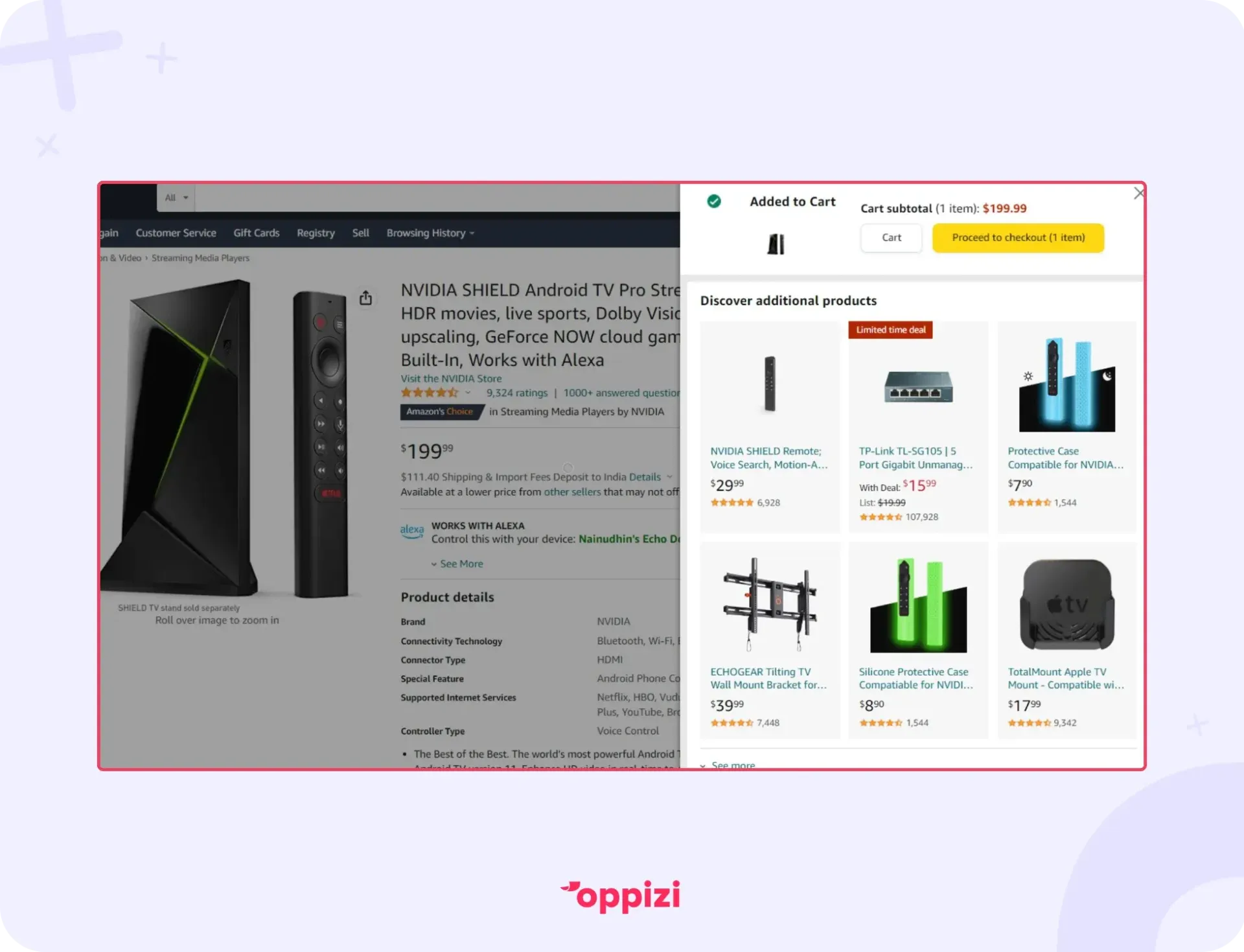
Many stores forget about the cart page, but it’s a great place to increase sales. Amazon suggests low-cost add-ons or bundles just before checkout. You can:
- Recommend items based on what’s already in the cart
- Keep it simple. Show only 2 or 3 good options
- Put suggestions just above or below the cart summary
These well-placed ideas feel helpful, not pushy, and often lead to quick extra buys.
4. Thank you page upsells
Your customer just made a purchase. That’s great! But you don’t have to stop there. Studies show it’s much easier to sell to existing customers. Amazon keeps offering related items even after checkout. Try this on your thank you page:
- Suggest products that go well with what they bought
- Offer a discount for their next purchase
- Recommend upgrades or accessories they missed
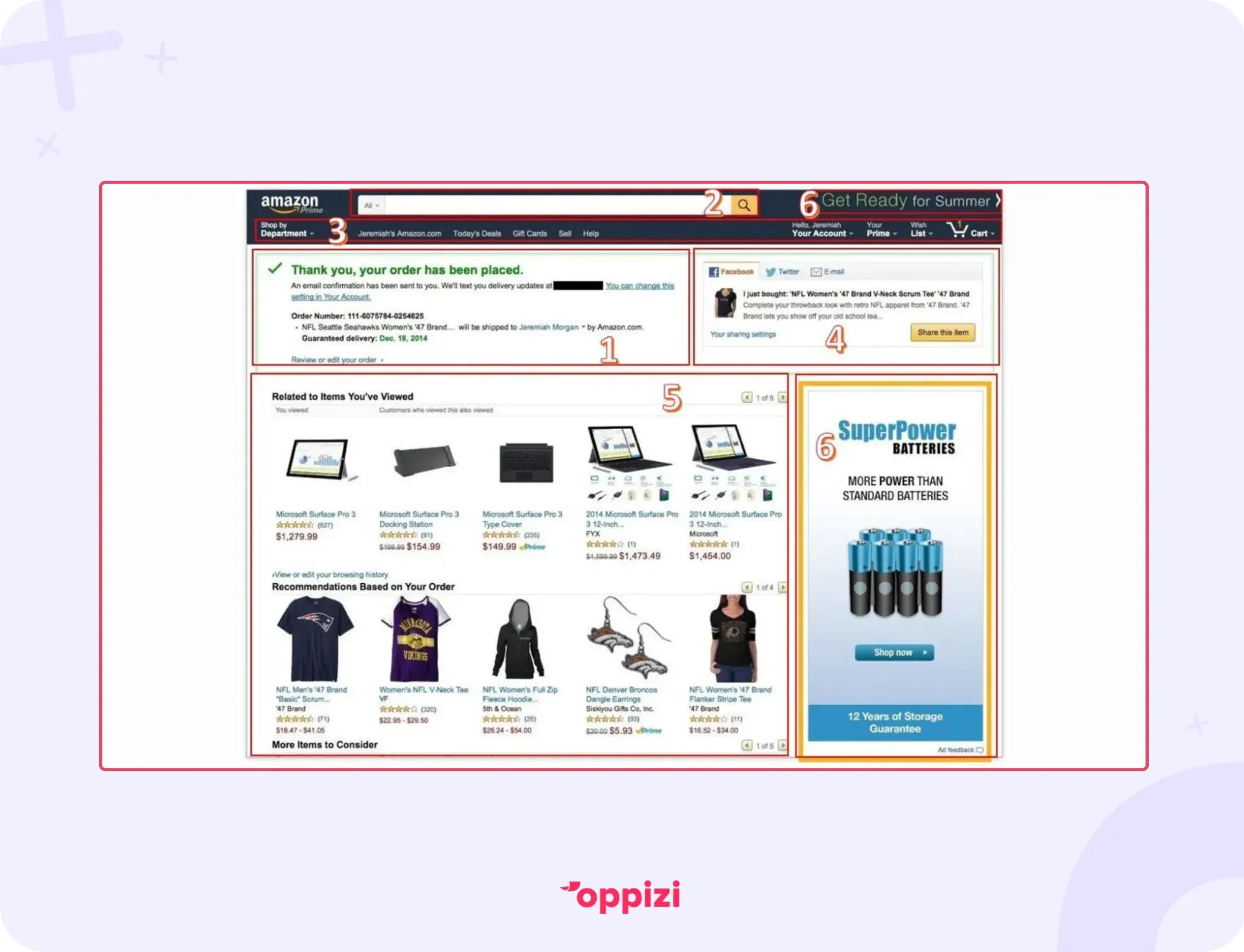
This is a gentle way to encourage another sale and keep customers coming back.
5. Personalized email marketing
Email still works really well, especially with personalization. Amazon sends emails with product ideas based on what people have browsed or bought. You can do the same by:
- Using customer data to split your email list into groups
- Personalizing subject lines and product suggestions
- Sending emails triggered by actions like abandoned carts or recent purchases
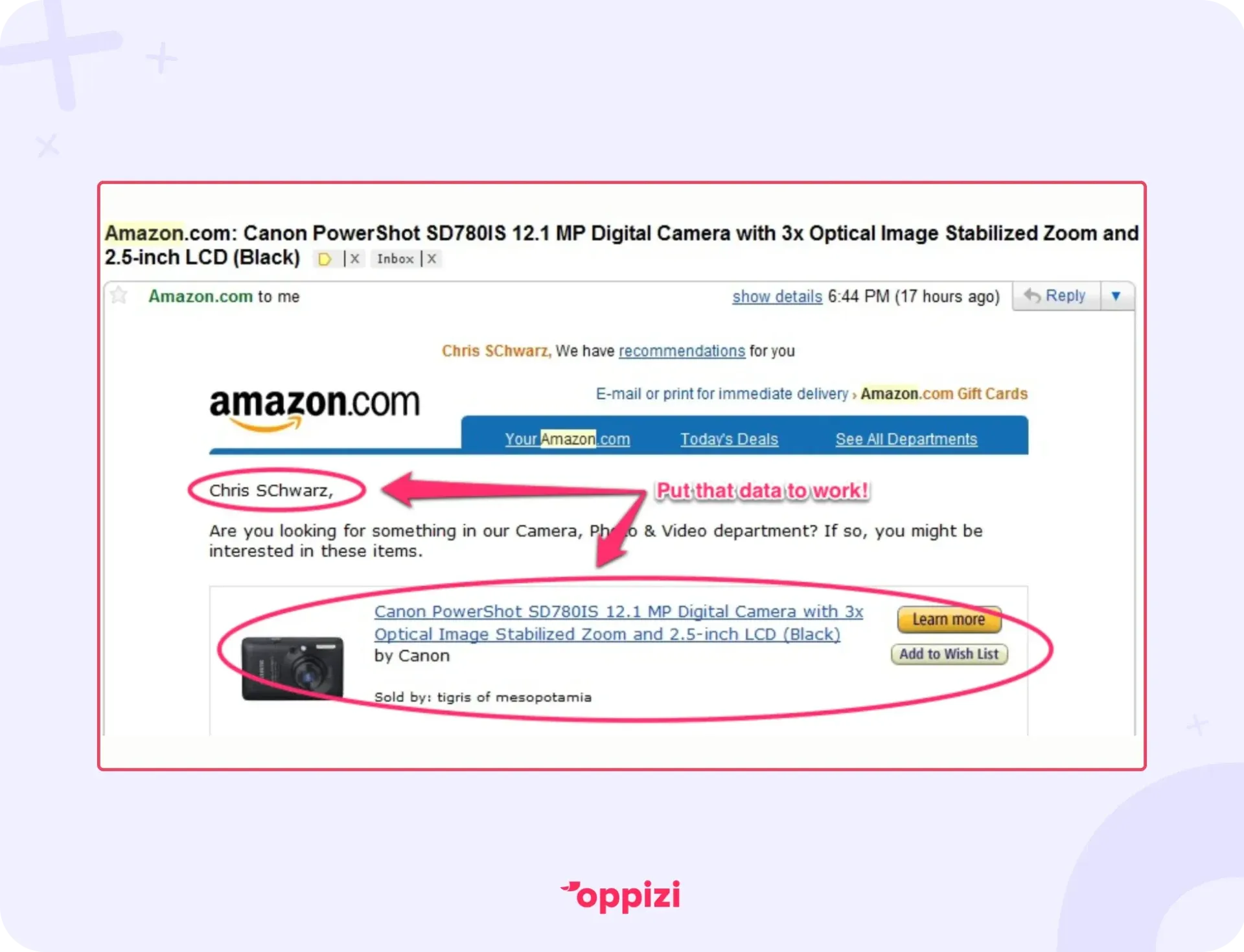
Here’s a tip: suggest upsells to repeat buyers and cross-sells to new shoppers.
6. Personalized web push notifications
Web push notifications are short messages that pop up on a shopper’s device, even if they’re not on your site. Amazon uses them carefully to bring people back with offers that fit their interests. How to use this well:
- Send notifications with product suggestions that match what they’re looking at
- Trigger messages when someone leaves items in their cart or checks a product
- Keep messages short, personal, and relevant
Example: “Still enjoying your new DSLR? Check out these tripod deals before they’re gone.”
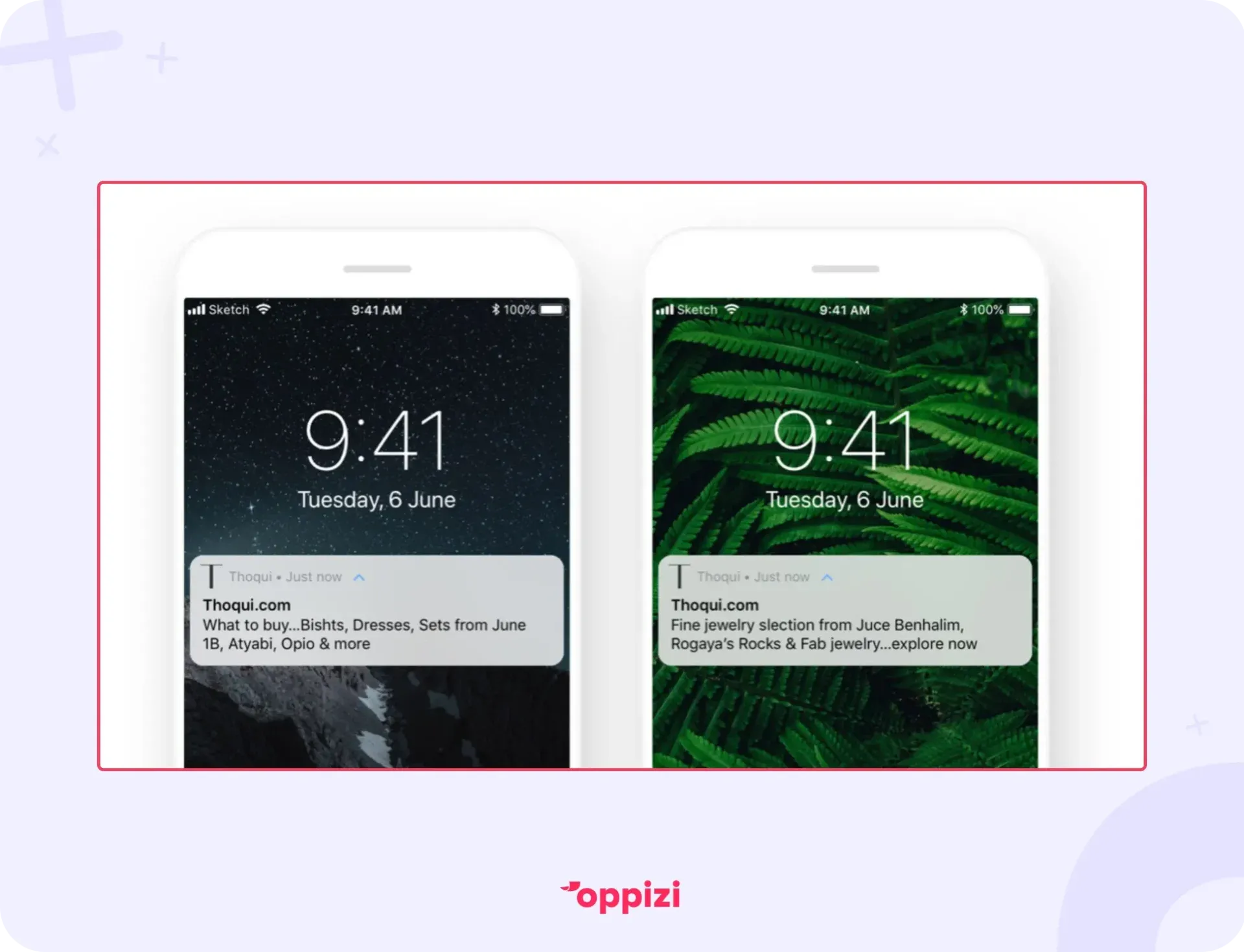
Used right, these messages are great for cross-selling.
7. SMS marketing for retargeting
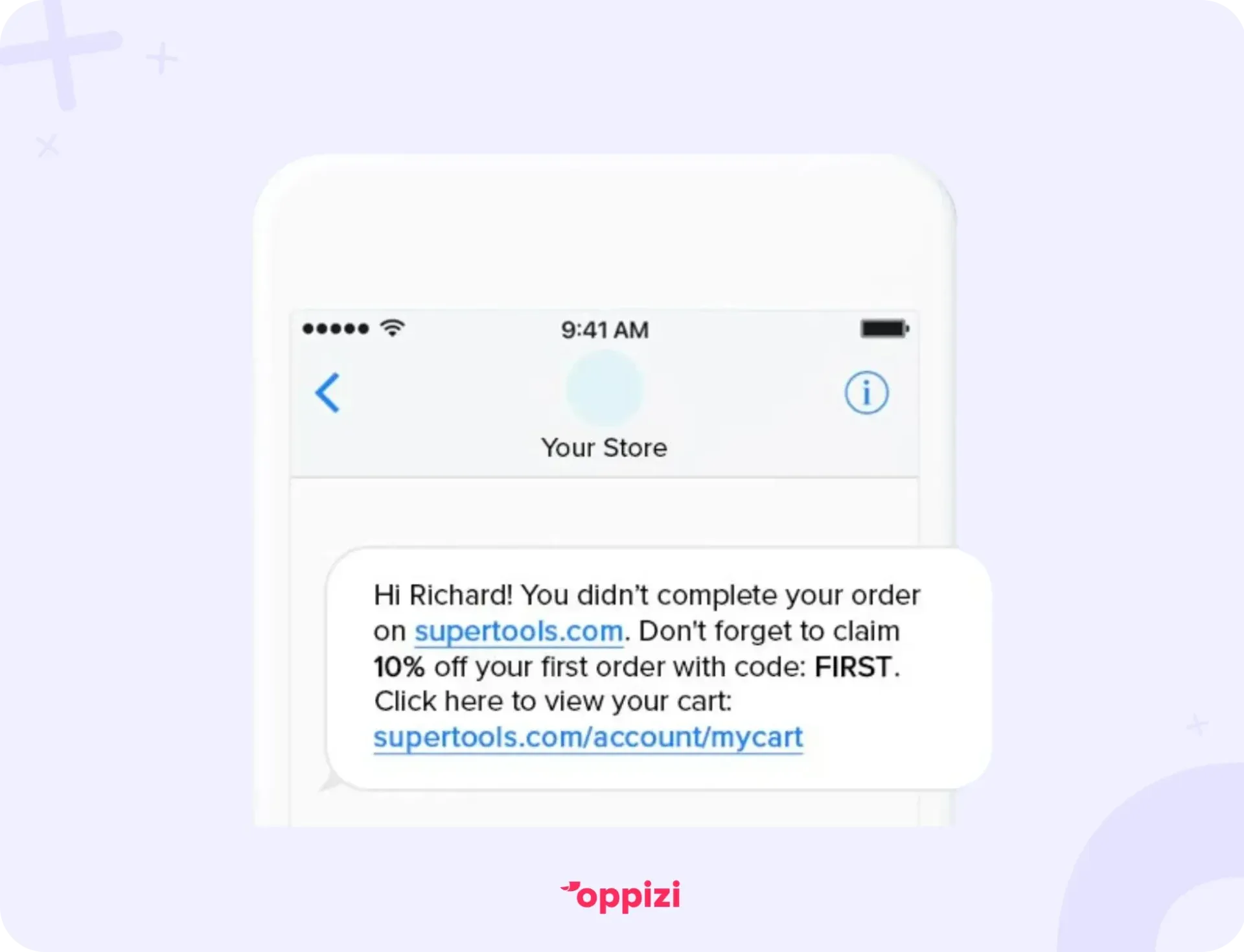
SMS messages get opened way more than emails or social posts. Use SMS to:
- Send personal reminders
- Suggest upgrades after a purchase
- Share quick deals on related products
Tips for success:
- Use the customer’s name and what they bought before
- Send messages when they’re most likely to read them
- Keep it short and focused on action
Example: “Hi Sarah, your skincare set is on its way! Need a moisturizer to go with it? See today’s top picks here.”
8. Retargeted ads for upsells and cross-sells
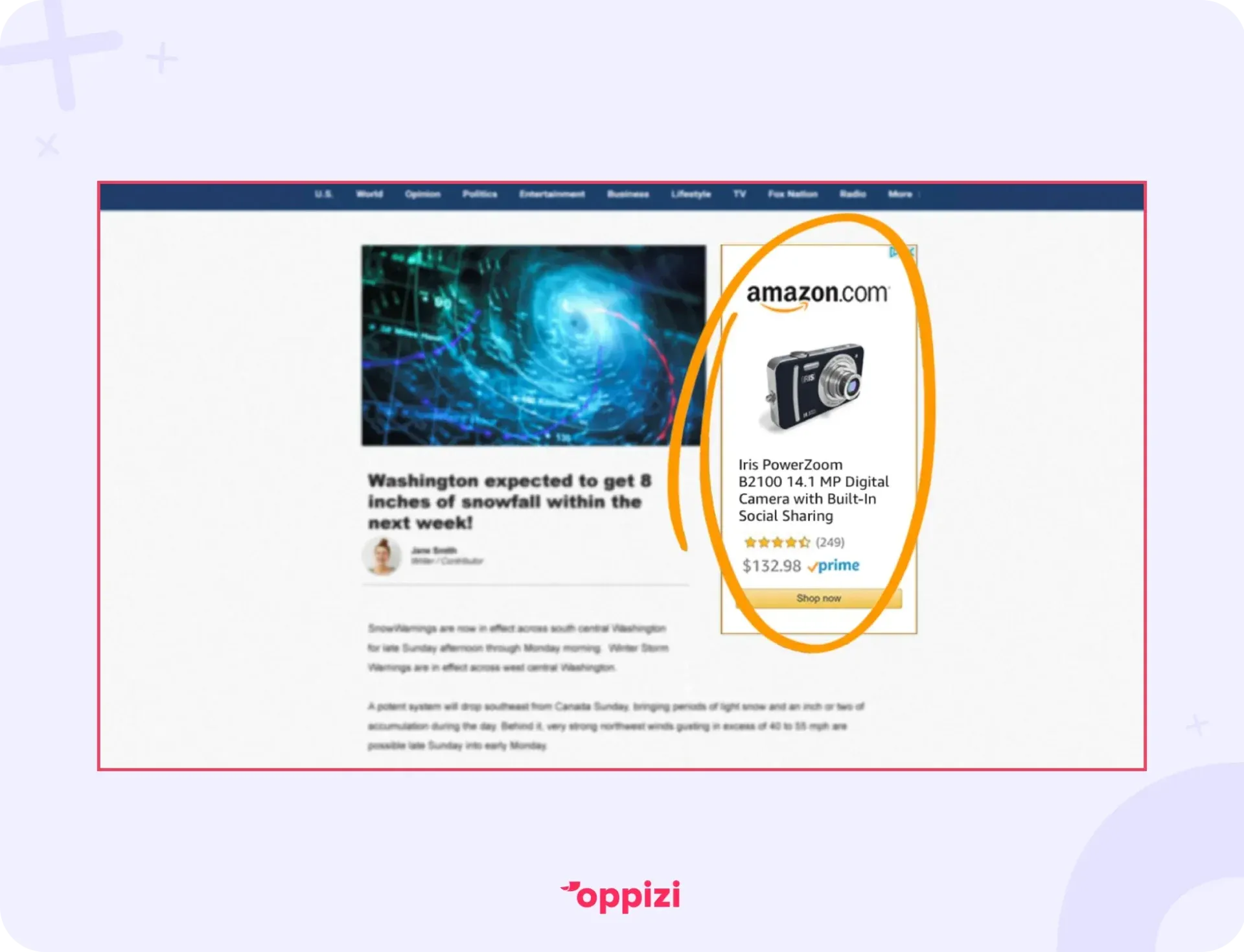
Amazon shows ads to shoppers as they browse other sites, reminding them of products they viewed or related items. You can do the same by:
- Setting up Facebook and Google retargeting campaigns
- Creating ads that show the exact products someone looked at
- Testing ads that promote more expensive versions (upsells) and complementary items (cross-sells)
These ads bring people back and encourage them to finish or upgrade their purchase.
9. On-site search personalization
When shoppers search, they’re already interested. Amazon uses past behavior to show better search results. This helps shoppers find what they want faster. You can:
- Tailor search results based on past buys or browsing
- Feature premium or upgraded versions at the top
- Use autocomplete to suggest related categories or bundles
Pro tip: Watch for searches that don’t get results. This shows you what products or content you might be missing.
10. User-generated content (UGC) for cross-sell inspiration
Amazon shows “Customers who bought this also bought” with real reviews and photos from shoppers. Try this:
- Show customer photos and reviews next to related products
- Highlight bundles that appear often in photos or reviews
- Let users shop product sets recommended by influencers
This builds trust and helps shoppers explore more than they planned.
11. Loyalty and rewards-based personalization
Amazon Prime is more than fast shipping. It’s a smart system that ties loyalty to personalized offers. You can do something similar by:
- Giving exclusive upsells or bundles to your loyalty members
- Personalizing product picks based on their membership level or behavior
- Offering bonus points or rewards to encourage cross-sells
This helps bring customers back and makes them feel appreciated.
12. A/B testing personalization tactics
To get personalization right, testing is key. Try testing things like:
- Where upsell or cross-sell offers appear on the page
- Bundling products vs. showing individual upsells
- Personalized emails vs. generic product suggestions
Use tools like Google Optimize, Optimizely, or Convert. Watch these numbers closely:
- Click-through rate (CTR)
- Average order value (AOV)
- Conversion rate
Amazon tests all the time. You should too.
13. Data privacy and trust in personalization
People don’t like “creepy” personalization. Amazon stays clear by being open and useful. Make sure you:
- Let users control what personalization they want
- Explain what data you collect and why
- Keep recommendations helpful, not pushy
This builds trust and helps you stay on the right side of privacy rules like GDPR and CCPA.

Tools and tech stack suggestions
To make personalization work, you need the right tools. Here are some that help with upselling and cross-selling:
- Recommendation engines like Nosto, Dynamic Yield, or Algolia. They show product suggestions based on what customers do.
- Email platforms such as Klaviyo, Mailchimp, or ActiveCampaign. They help you send personalized emails and automate campaigns.
- Push notification tools like OneSignal or PushEngage. These send short, tailored messages to shoppers’ devices.
- SMS tools like Postscript or Twilio. They let you send quick, targeted text messages.
- Retargeting ads on Facebook Ads and Google Ads. These show personalized ads to visitors who didn’t buy.
- A/B testing tools like Google Optimize, Optimizely, or VWO. Use these to find what works best for your offers.
- Analytics tools such as Google Analytics or Mixpanel. They track important data to see how your personalization is doing.
Choose tools based on your store size and goals. Start small and add more as you grow.
Performance metrics and KPIs
To know if your upsells and cross-sells are working, track the right numbers. Here’s what matters most:
- Average order value (AOV): Shows if your efforts are boosting cart size.Formula: Total revenue divided by number of orders.
- Conversion rate of upsell/cross-sell offers: Measures how often people say yes to your suggestions. Use this to test timing, placement, and price.
- Attach rate: The share of orders with at least one cross-sell item. It shows how often add-ons get picked.
- Customer lifetime value (CLV): If your strategy gets customers to come back or upgrade, this number grows over time.
- Cart abandonment rate: Too many or badly timed offers can push shoppers away. Watch this to make sure your offers help, not hurt.
Tracking these KPIs lets you improve your personalization, just like Amazon, so you grow sales without needing only new customers.
FAQs about personalization and Amazon’s strategy
How does Amazon do personalization?
Amazon uses data from your browsing, past purchases, searches, and cart to suggest products you might like. Their system learns what you want and makes recommendations that feel natural, not pushy.
What is an example of personalization?
A classic example is the “Frequently bought together” section. If you’re looking at a laptop, Amazon might suggest a mouse and a sleeve. These picks come from what similar shoppers have chosen.
How do you use personalization?
Here’s how to use personalization in your store:
- Track what customers do, what they look at, click, and buy
- Use tools to recommend products that fit their interests
- Send targeted emails with personalized offers
- Customize push notifications or SMS messages based on their behavior
- Add personalized sections to your homepage, product pages, cart, and thank-you pages
The key is to make the shopping experience better without overwhelming your customers.
What are the 5 key features of personalization?
A good personalization strategy includes:
- Real-time tracking of user behavior
- Grouping users by common traits
- Showing tailored content across different channels
- Keeping personalization consistent on your website, emails, SMS, and push messages
- Measuring results like average order value, click rates, and conversions to improve over time
What is product customization vs personalization?
Product customization lets customers change the product itself, like picking a color or adding a name to a mug.
Personalization means the store changes the shopping experience based on data, like showing mugs with designs you’ve liked before. Both make customers happier but work in different ways.
Final thoughts: Personalization is the secret to Amazon-level growth
Amazon’s success comes down to one thing: relevance. Every recommendation is based on data about what the customer has done. You can do the same by:
- Personalizing product suggestions on key pages
- Using email, SMS, and push notifications smartly
- Testing retargeting ads with upsells and cross-sells
The more personal the experience, the more likely customers are to buy again and spend more. Start using these personalization strategies now.
Start growing today
Reach your customers where it matters most: in the real world. Oppizi’s platform uses data-driven strategies to make every connection count. Ready to grow your sales? Join today and discover what we can do together.