Last updated September 28, 2026
Summary
- Sales lead management is the process of tracking potential customers who have shown interest, from first contact to close.
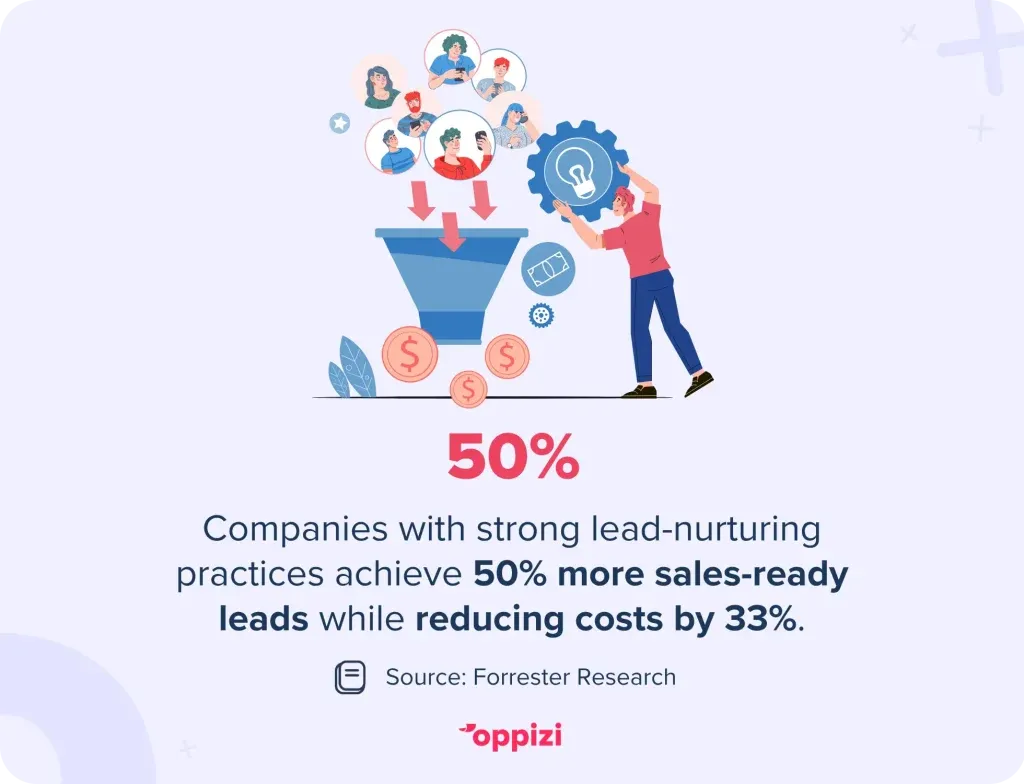
- It pays off directly: businesses that excel at lead nurturing generate 50% more sales-ready leads.
- Speed matters more than almost anything — responding within five minutes dramatically improves conversion.
- A defined process beats memory: capture details, score leads, assign an owner and set a follow-up.
- Without tracking, leads are lost not to competitors but to inattention.
Running a business is demanding, so it’s easy to let sales lead management fall off your list of priorities.
But when you’re not keeping tabs on your leads, you’re leaving potential revenue on the table. To stay organized and grow your sales, you need a clear, reliable system for managing leads.
In this guide, we’ll break down why sales lead tracking matters and share 10 practical tips to help you manage leads more effectively.
What is sales lead management?
Sales lead tracking is the process of monitoring potential customers who’ve shown interest in your product or service. It involves collecting their details, observing how they engage with your business, and following up at the right time. The aim? To move them smoothly through the sales funnel.
To do that effectively, you need to understand where each lead is in their buying journey. Are they just exploring? Actively comparing options? Or ready to make a decision?
By keeping accurate records of each lead’s status and behavior, you can tailor your communication to match their needs, boosting your chances of converting them into paying customers.
A strong tracking system isn’t optional - it’s essential. It ensures you’re not letting valuable opportunities slip through the cracks.
Plus, it helps build better relationships by allowing you to deliver a more personalized and relevant sales experience.
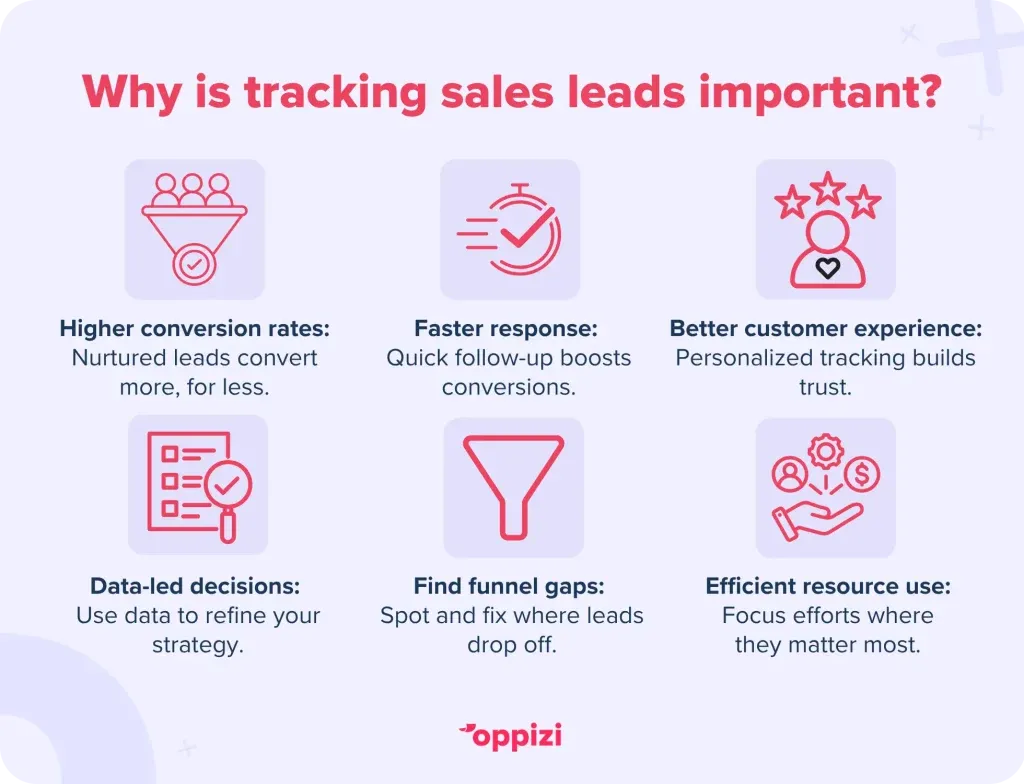
Why is tracking sales leads important?
Tracking sales leads is vital for several reasons:
- Improved conversion rates: Businesses that excel at lead nurturing generate 50% more sales-ready leads at a 33% lower cost.
- Faster response times: Responding to leads within five minutes can increase the chance of conversion by up to 400%.
- Enhanced customer experience: Personalized follow-ups based on tracked interactions lead to better customer relationships and increased satisfaction.
- Data-driven decisions: Tracking provides insights into which channels and strategies yield the best results, allowing for informed decision-making.
- Identifying bottlenecks: By monitoring each stage of the sales funnel, you can identify where leads drop off and take action to improve weak spots.
- Better resource allocation: With a clear view of your lead pipeline, you can assign sales and marketing efforts where they’ll have the most impact, boosting overall efficiency.

Tips for effective sales lead management
Implementing the following strategies can enhance your lead management process:
1. Use a CRM system
A CRM (Customer Relationship Management) system is essential for keeping your leads organized. It centralizes all lead data, tracks every interaction, and automates routine tasks.
Popular platforms like Salesforce, HubSpot, and Zoho CRM streamline the tracking process, letting you set reminders, assign tasks, and gain insights through detailed analytics.
CRMs aren’t just a “nice-to-have” for keeping your sales funnel organized. They’re essential. In fact, 97% of sales teams in the US and Canada say their CRM is vital for closing deals.
2. Segment your leads
Segment your leads based on key criteria like industry, company size, lead source, or buying behavior. This makes it much easier to tailor your messaging and improve targeting.
For instance, you’ll likely use different strategies for startups versus enterprise-level businesses. For example, if you're targeting startups, your messaging might focus on affordability and speed, since startups often value agility and quick wins.
On the other hand, if you're selling to enterprise-level businesses, your strategy should highlight scalability, security, long-term ROI, and how your solution integrates with complex systems. Enterprises typically have longer sales cycles and more stakeholders involved, so your outreach needs to be more consultative and tailored to different decision-makers.
Categorizing leads helps personalize your outreach, which increases the likelihood of conversion.
3. Set clear follow-up schedules
Don’t let leads fall through the cracks. Create a structured follow-up schedule, including touchpoints like initial contact, check-ins, and final attempts.
Use your CRM to automate reminders and follow-up emails. Timely, consistent communication keeps you top of mind and shows prospects you’re attentive and reliable.
4. Track communication history
Document every interaction, including emails, calls, meetings, and messages, in your CRM. This ensures a personalized and seamless experience for each lead.
With a complete communication history, your team can pick up where someone else left off, avoiding repeat conversations and tailoring follow-ups based on previous interactions.
5. Use lead scoring
Lead scoring helps prioritize the most promising opportunities. Assign points based on factors like engagement, company size, budget, and purchase intent.
This system helps your team focus their time and energy on leads that are most likely to convert, boosting productivity and efficiency.
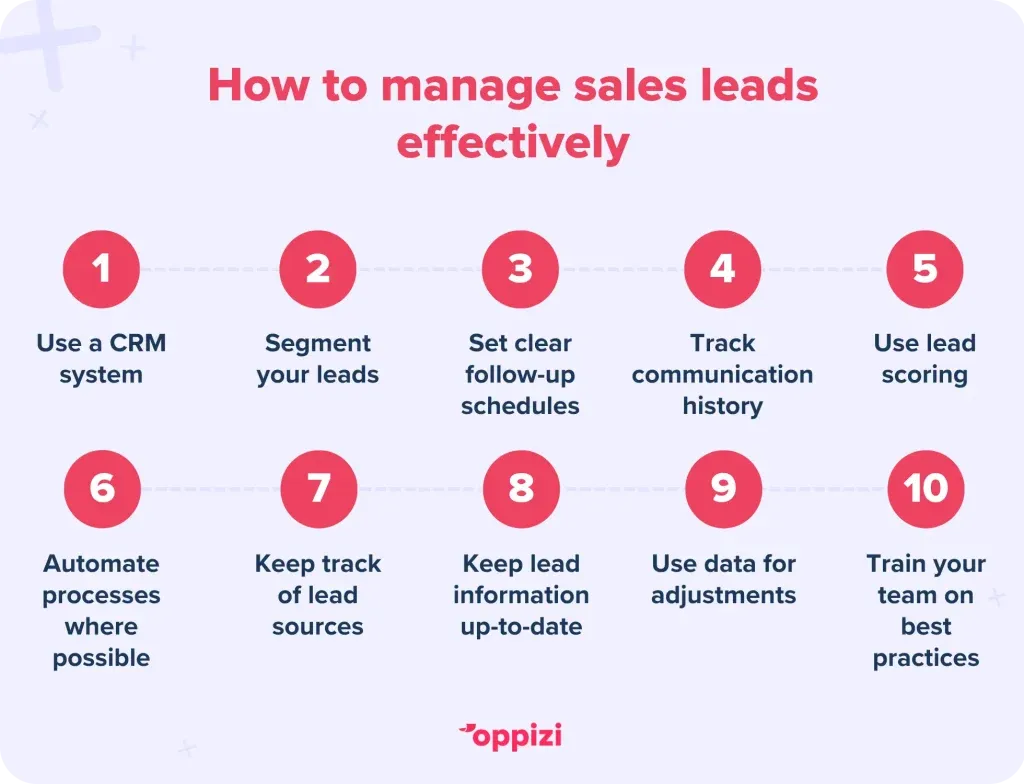
6. Automate where possible
Automation tools can handle repetitive tasks like sending follow-up emails, scheduling appointments, and updating lead details.
Many CRMs offer built-in automation to streamline workflows and reduce human error. This frees up your sales team to focus on relationship-building and closing deals.
In fact, 77% of marketers say they convert more leads using automation compared to those who don’t.
7. Monitor lead sources
Understanding where your leads come from helps you focus on the most effective marketing channels.
Track the performance of both online and offline campaigns, and identify which sources bring in high-quality leads.
For example, while online ads may drive volume, you may find that offline efforts like flyer campaigns or events produce more qualified leads. Integrating offline and online strategies can maximize your reach and ROI.
8. Regularly update lead information
Outdated lead data can lead to missed opportunities and poor communication. Make it a habit to update contact details, job roles, and company changes regularly.
Encourage your team to verify lead information during every interaction. Keeping your database up-to-date ensures relevance in your outreach and boosts your chances of conversion.
9. Analyze and adjust
Review your lead tracking data regularly to identify trends and opportunities for improvement.
Start by setting SMART goals, then track key metrics like response time, engagement rate, and conversion rate.
Use this insight to refine your strategy, plug performance gaps, and improve your lead-nurturing process. Continuous optimization keeps your sales process sharp and competitive.
10. Train your team
Consistent training ensures your team knows how to use your CRM effectively and follow best practices for managing leads.
Ongoing learning improves skills, boosts morale, and enhances team performance. A well-trained team handles leads more confidently and converts them more successfully.

Conclusion
Tracking sales leads effectively is a game-changer for any business aiming for growth. It not only improves conversion rates but also helps you build stronger, more personalized relationships with prospects.
Don’t let valuable leads fall through the cracks. Start implementing these strategies today to make every sales opportunity count.
Want to generate even more leads?
Boost your outreach with Oppizi’s offline marketing solutions from flyering to direct mail so that you can drive more qualified leads to your business.
Start an offline campaign with Oppizi today and get your message directly into the hands of your ideal customers.
Frequently asked questions
- What is the difference between a lead and a prospect?
A lead is an individual or organization that has shown interest in your product or service, while a prospect is a qualified lead that fits your target customer profile and has a higher likelihood of converting.
- How often should I follow up with leads?
The frequency depends on the lead's engagement level. However, a general rule is to follow up within 24-48 hours of initial contact and then at regular intervals.
- Why do many leads not convert into sales?
Common reasons include a lack of timely follow-up, poor lead nurturing, and misalignment between sales and marketing teams.
- How can I improve lead quality?
Implement targeted marketing campaigns, utilize lead scoring, and ensure alignment between sales and marketing to attract and identify high-quality leads.
- What are some popular CRM systems?
Some popular CRM systems include Salesforce, HubSpot, Zoho CRM, and Microsoft Dynamics 365.
- How do I know if my lead tracking strategy is working?
Regularly review your conversion rates, sales cycle length, and customer feedback. These insights can help you assess the effectiveness of your lead-tracking strategy.