Last updated September 28, 2026
Customer segmentation is a smart way to get more from your marketing. It means dividing your audience into smaller groups based on things they have in common, like age, location, or buying habits. When you understand these groups, you can speak to them in a way that actually clicks.
This guide explains what customer segmentation is, why it matters, and how to use it. We’ll also walk through some of the most common types and how to get started, even if you’ve never done it before.
What is customer segmentation?
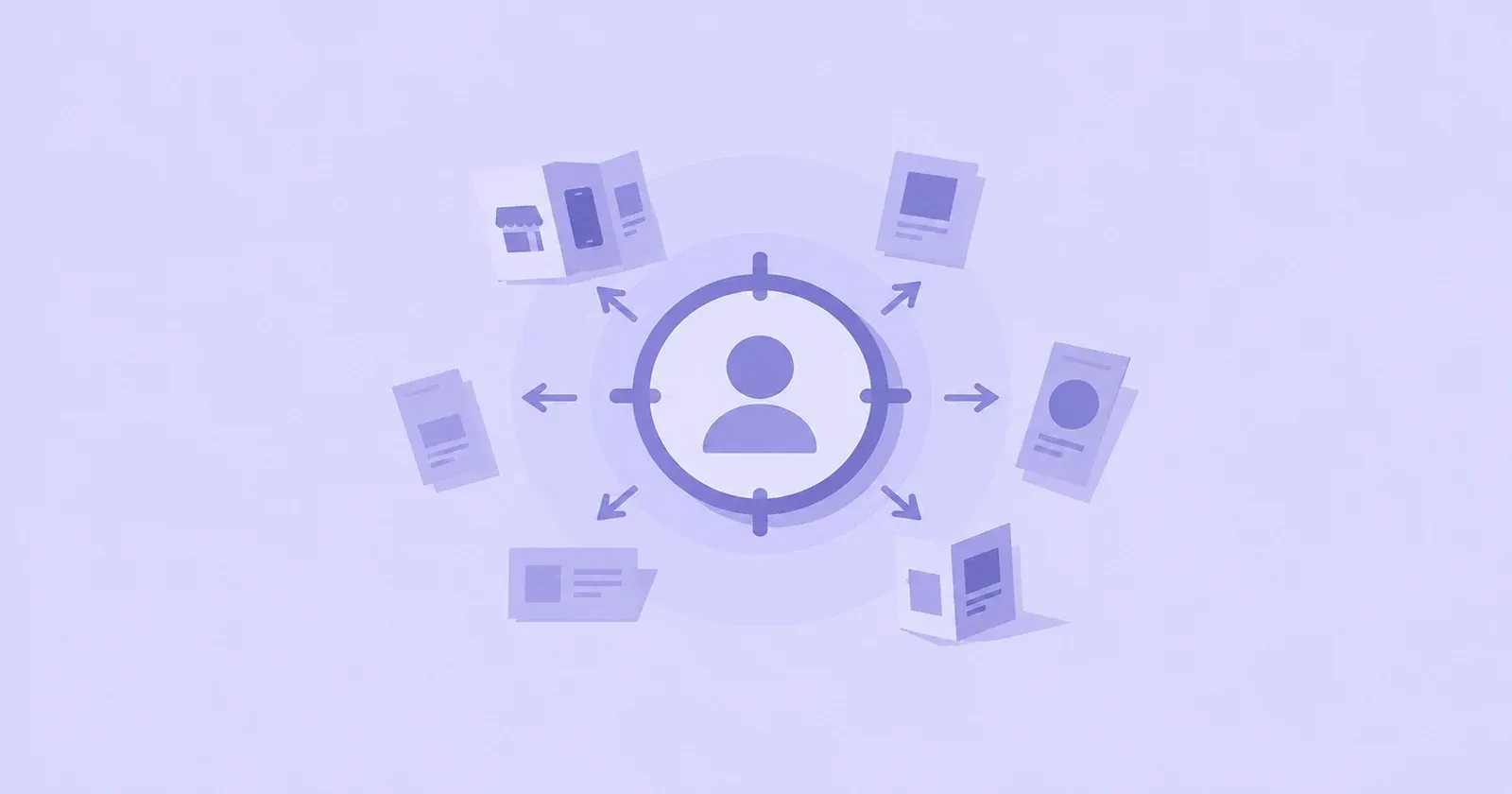
Customer segmentation is about sorting your customers into groups. Each group shares something, like age, income, interests, or how they shop.
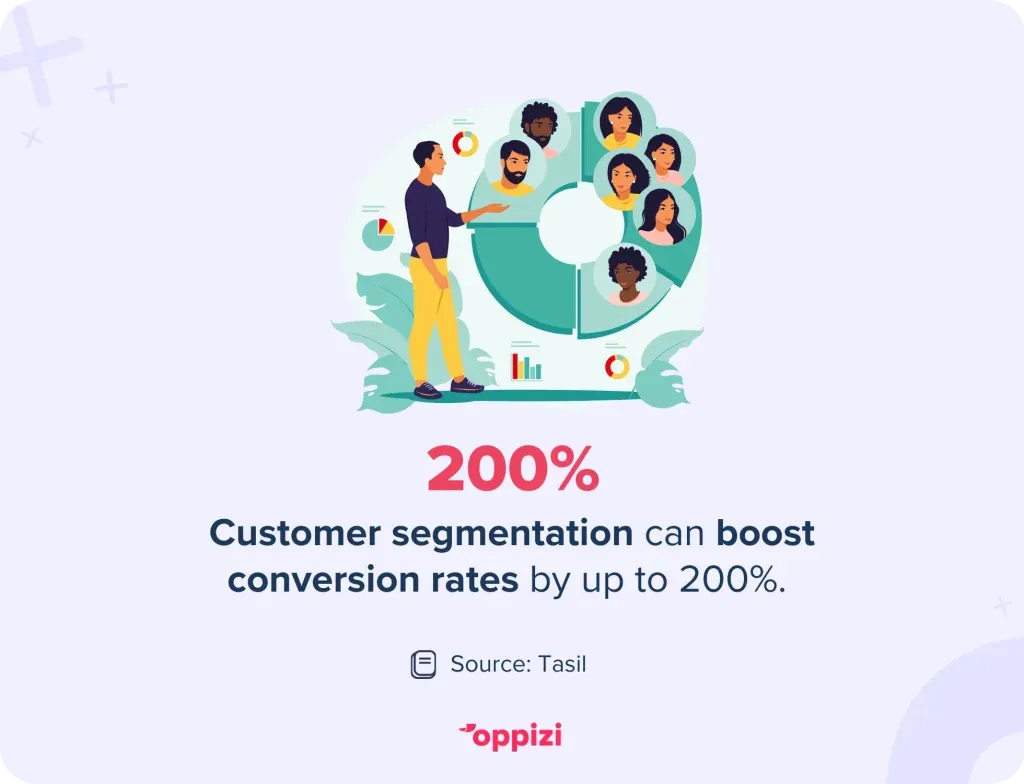
By doing this, you can better understand what each group wants. That makes it easier to create marketing that feels personal and relevant. In fact, research shows that companies that tailor their marketing to different customer groups can see up to 200% higher conversion rates.
Instead of sending the same message to everyone, you send the right message to the right people. That way, your marketing has a bigger impact and feels more human.
Why customer segmentation is important
Customer segmentation helps your marketing work harder and smarter. Here’s how:
- You can target better.Instead of guessing, you know what different people care about. That means you can focus your time and budget on the groups most likely to buy.
- It improves your results.When you talk to the right people in the right way, they’re more likely to act. That means better results and better value from every marketing dollar.
- It helps you keep customers.People are more likely to stick with you when they feel understood. Segmentation helps you offer what they really want, which builds loyalty.
- You stand out from the crowd.Personal, thoughtful marketing is rare. When you get it right, customers notice. It’s a simple way to stand out and build trust.
- It guides smarter decisions.When you know who your best customers are and what they do, you can make better choices about what to offer, where to advertise, and how to grow.
Customer segmentation models
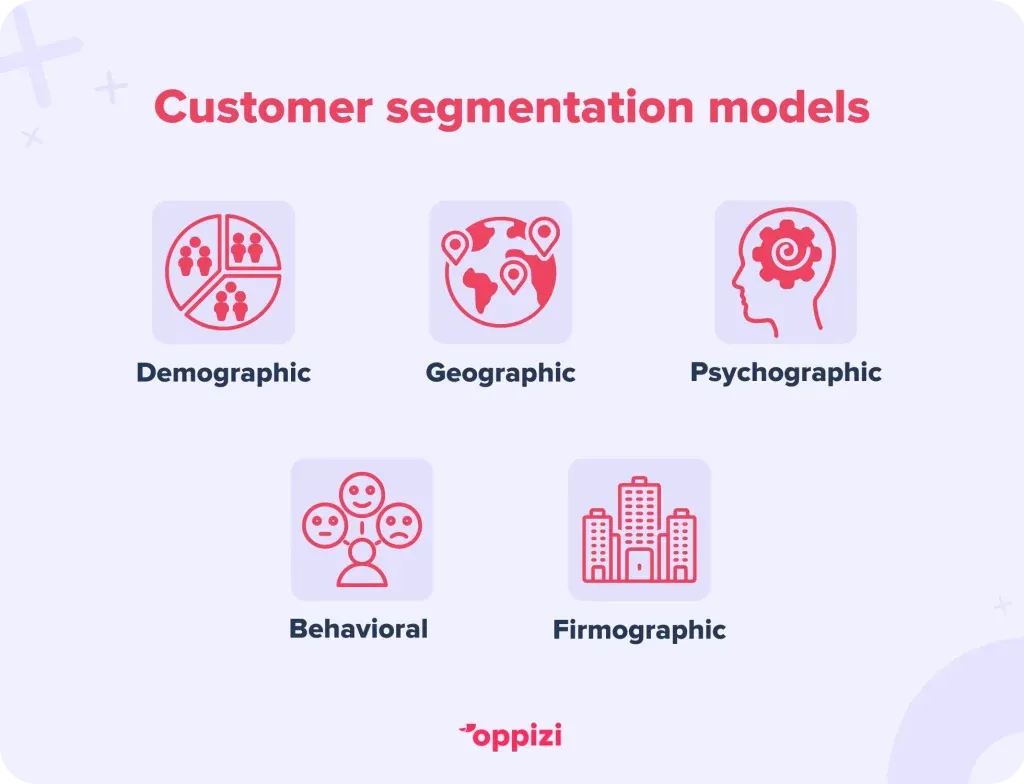
There are different ways to group your customers. The right one depends on what you sell, who you’re trying to reach, and what data you have.
Here are five of the most common models:
1. Demographic segmentation
This one’s simple. You group people by basic facts like:
- Age
- Gender
- Income
- Job
- Education
- Family size
It’s easy to do because this kind of data is everywhere. For example, if you sell high-end products, you might focus on people with higher incomes or certain professions.
2. Geographic segmentation
This model sorts people by where they live. You can go big or small, from country and region to city or even neighborhood.
It’s useful if your business is tied to a specific place or if your product only works in certain areas.
You can group by:
- Country
- Region
- City
- Urban, suburban, or rural areas
3. Psychographic segmentation
This one looks at what people care about. It’s more about lifestyle and mindset than facts.
You might group people by:
- Interests (like fitness or travel)
- Values (like being eco-friendly)
- Personality (like being adventurous or cautious)
- Lifestyle (like family-focused or career-driven)
This is helpful if your product fits a certain lifestyle, like a wellness brand that speaks to health-focused buyers.
4. Behavioral segmentation
Here, you group people based on what they do. You look at how they interact with your business.
Some common behaviors include:
- How often they buy
- If they’re a loyal customer or a new one
- How often they use your product
- If they buy for special events or holidays
This helps you understand habits and plan marketing based on real actions.
5. Firmographic segmentation (for B2B)
If you sell to other businesses, this one’s for you. It works like demographics, but for companies.
You might group businesses by:
- Industry
- Size (by number of employees or revenue)
- Location
- Type of business (startup vs. established company)
This helps you focus on the businesses most likely to benefit from what you offer.
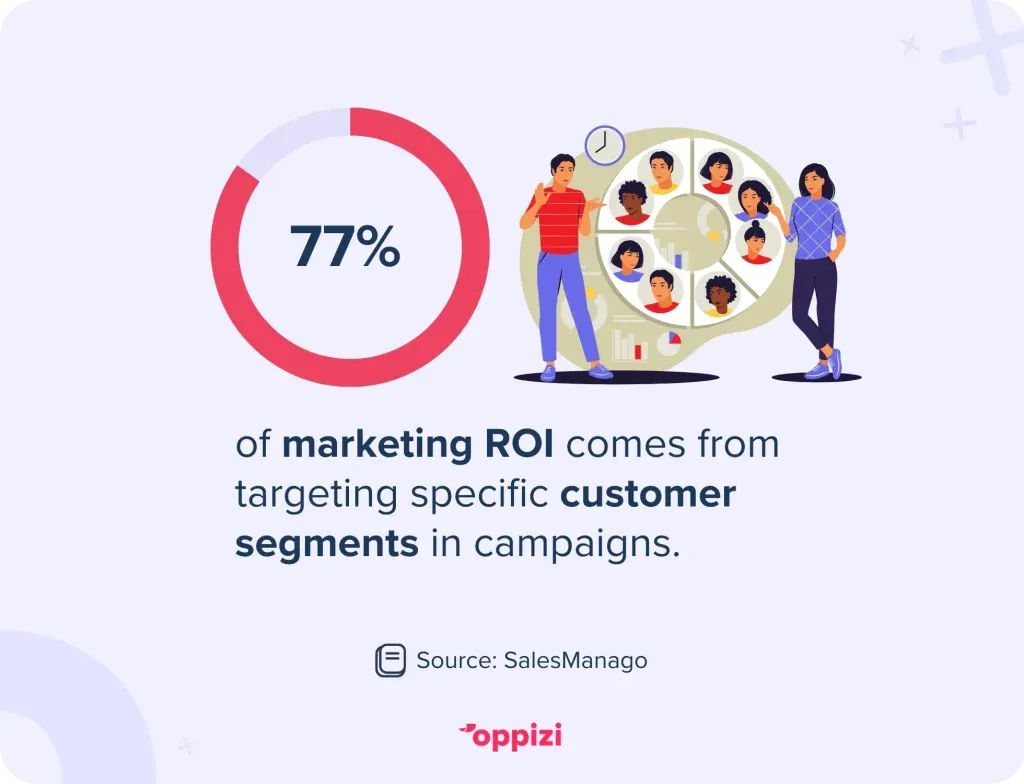
77% of marketing ROI comes from campaigns that target specific customer groups. When you try to communicate with a large audience made up of different groups, it’s harder to connect in a meaningful way. Segmentation helps you make people feel recognized and understood.
How to do customer segmentation analysis
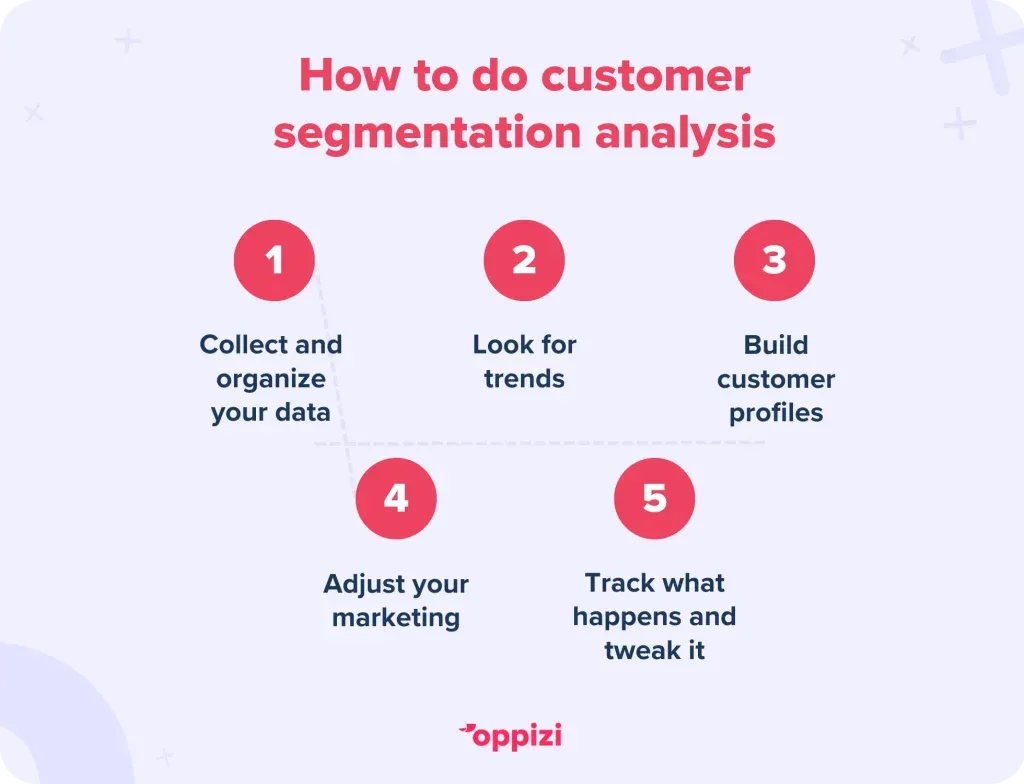
Once you’ve picked the right way to group your customers, it’s time to dig into the details. Here's a simple way to go through customer segmentation analysis step by step:
1. Collect and organize your data
Start by gathering what you already know about your customers. That might come from:
- Surveys
- Past purchases
- Social media activity
- Website visits
- CRM tools
- Customer service chats
Put everything in one place. Use a spreadsheet or a tool like a CRM to keep it neat. This makes it easier to spot patterns.
2. Look for trends
Now go through the data. See what stands out. Maybe younger customers are buying one type of product more than others. Or maybe people in a certain city are your top buyers. You’re looking for signs that help you group people who think or act in a similar way.
3. Build customer profiles
Once you see some clear groups, write a short profile for each one. Think of it like a mini bio that explains who they are and what they like.
Include things like:
- Age or income
- What they buy and how often
- Their problems or needs
- How they prefer to hear from you (email, social media, in-store)
4. Adjust your marketing
Now that you know your groups, make your marketing fit each one.
That could mean:
- Writing different messages for each group
- Creating campaigns just for them
- Using the right channels (social for young customers, email for professionals)
- Testing what works and what doesn’t
5. Track what happens and tweak it
Segmentation isn’t a one-time job. Keep an eye on what’s working and what isn’t.
Look at:
- Who’s buying more
- Who’s sticking around longer
- Which group spends the most
If something isn’t working, change it. Customer needs shift over time, and your strategy should too.
FAQ: Customer segmentation
1. What are the 4 types of customer segmentation?
There are four main ways to group customers:
- Demographic: Based on things like age, gender, income, or job.
- Geographic: Based on where people live—country, city, or even neighborhood.
- Psychographic: Based on lifestyle, values, and interests.
- Behavioral: Based on how people act—like what they buy, how often, or how loyal they are.
These types help you understand your customers better so you can talk to them in a way that matters to them.
2. What is meant by customer segmentation?
Customer segmentation means splitting your audience into smaller groups. You group people based on things they have in common, like habits, location, or interests.
It helps you send the right message to the right people instead of treating everyone the same. That makes your marketing clearer, more useful, and more likely to work.
3. What are the 7 steps in the segmentation process?
Here’s a simple breakdown:
- Know your market – Get clear on who you’re trying to reach.
- Gather data – Use tools like surveys, customer feedback, or website data.
- Find patterns – Look for common traits or behaviors.
- Create customer profiles – Write a short description for each group.
- Check each segment – See which groups are worth focusing on.
- Choose your target groups – Pick the ones that best match your goals.
- Launch and test – Market to each group and track what works.
4. Why is customer segmentation important?
It helps you get to know your customers. When you understand what different groups care about, you can talk to them in a way that feels personal. This makes your marketing more effective. You waste less money, get better results, and keep people coming back.
5. What is the customer segmentation theory?
The theory says that not all customers are the same. People have different needs and preferences.
So instead of sending one message to everyone, businesses should break their audience into smaller groups. Then they can give each group what it wants. This makes marketing work better and keeps customers happier.

Conclusion
Customer segmentation helps you speak to the right people in the right way. Instead of treating all your customers the same, you group them based on things like age, location, interests, or habits. That way, your message feels more personal and more useful.
It doesn’t matter which model you use. What matters is understanding what your customers care about. When you do that, your marketing works better. You keep customers longer, build stronger relationships, and grow your business.
Start small. Pick one way to group your customers and try it out. You’ll be surprised at how much more effective your marketing becomes.
Grow the way easy way
Want to grow your business the smart way? Join Oppizi today for free and let us do the heavy lifting. We’ll put your message directly in your customers’ hands with our powerful offline marketing solutions.