Last updated July 28, 2026
Are your leads slipping away after showing initial interest?
This might be an indicator that you need to focus on mid-funnel marketing - a stage of the marketing funnel that’s crucial, but often overlooked.
By now, potential customers know who you are. They’ve visited your website and may have followed you on social media. But they’re still deciding if you’re the right fit.
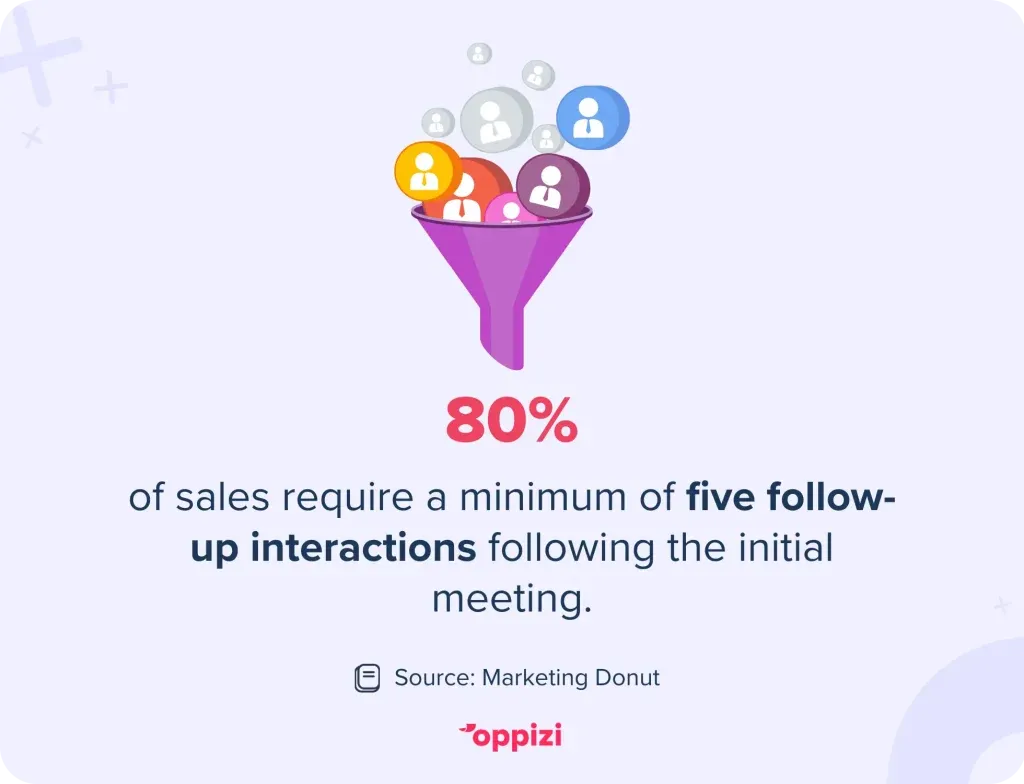
The reality is that 80% of sales require at least 5 follow-ups after the initial meeting. Don’t expect deals to close immediately - consistent nurtuting is key.
With the right mid-funnel marketing tactics, you can turn warm leads into loyal customers.
In this guide, we’ll explore why mid-funnel marketing matters and share proven strategies for nurturing your leads before they go cold.
What is middle-of-funnel marketing?
Middle-of-funnel marketing (MOFU) is the bridge between awareness and decision. Your audience knows about your brand, but they’re weighing their options.
MOFU is about nurturing your leads - giving them the information, confidence, and reassurance they need to move toward a purchase.
Why is middle-of-funnel marketing important?
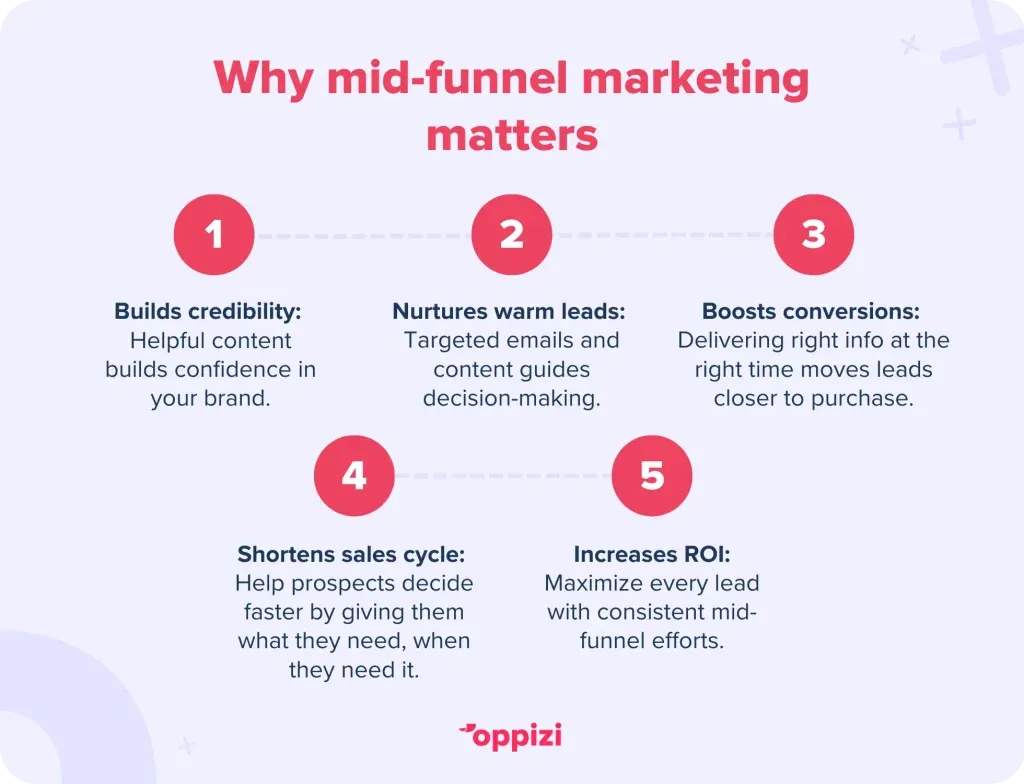
There are a few key reasons why you should focus on middle-of-funnel marketing. Here's why it's so important:
Builds trust and credibility
In the middle of the funnel, your leads are looking for more detailed information about your products or services. By providing relevant content, you build trust and credibility, making potential customers more comfortable with the idea of buying from you.
Nurtures leads
Not every lead is ready to buy immediately. Mid-funnel tactics like targeted content and personalized emails help you stay top-of-mind and move them through the decision-making journey.
Increases conversion rates
Guiding prospects through the middle of the funnel can significantly boost conversion rates. When leads receive the right information at the right time, they are more likely to move down the funnel toward making a purchase.
Reduces sales cycle length
Nurturing leads during the mid-funnel stage can speed up their decision-making process. Prospects are more likely to move through the sales funnel faster when they can access the information they need. This can reduce the overall length of the sales cycle.
Improves ROI
Investing in mid-funnel marketing can yield significant returns. It helps you increase conversions and maximize the value of each lead you generate.
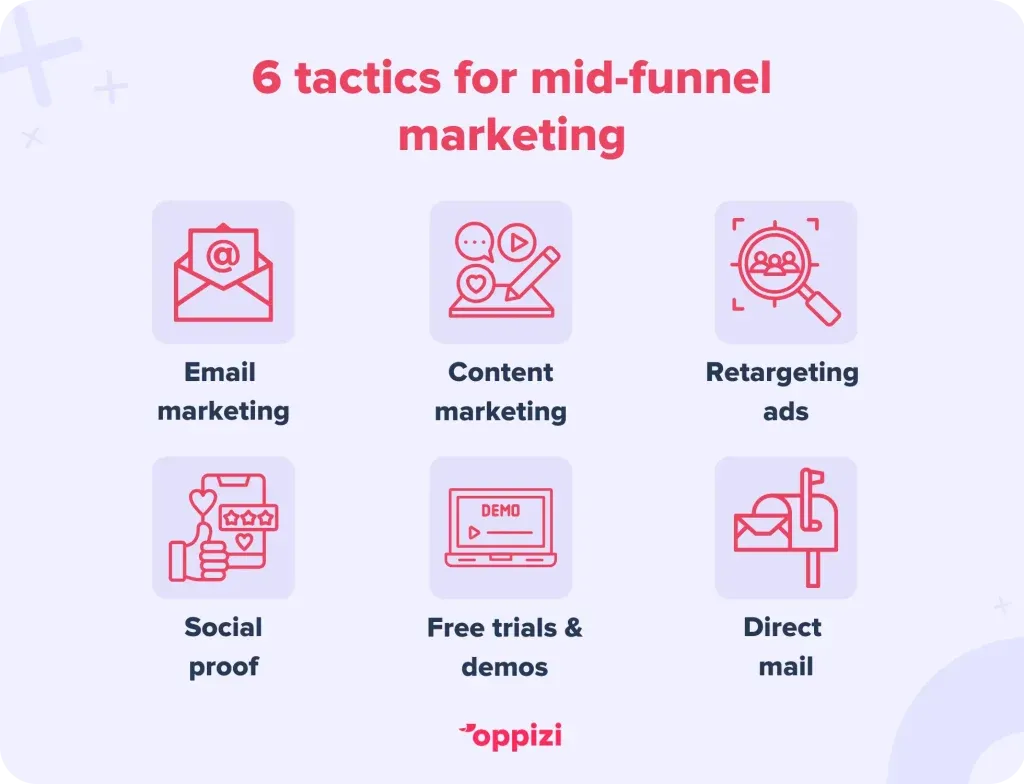
6 mid-funnel marketing tactics
The mid-funnel is all about nurturing leads that already aware of your brand. Your goal is to help them take the leap and make a purchase decision. Here are some effective tactics to help you achieve this:
1. Email marketing campaigns
Email marketing is a powerful tool for mid-funnel marketing. Design nurturing sequences that educate leads about your offering, showcase key features, and highlight success stories. Personalized, value-driven emails keep your brand top of mind.
Example:
You could build a series of automated emails to educate leads about your product or service. Start with an introductory email that outlines the basics of your offer. Follow up with emails that delve into specific features, benefits, and use cases. By the end of the series, your leads should comprehensively understand what you offer and how it can solve their problems.
2. Content marketing
47% of buyers consume three to five pieces of content before engaging with sales. Use in-depth guides, tutorials, and blog posts to answer questions, address pain points, and demonstrate how you solve real problems.
Example:
You could create how-to guides that show how your product or service can solve specific problems. For example, if you offer a CRM tool, you could write a guide titled "5 Ways to Save 5+ Hours a Week with CRM Automation.”
3. Retargeting ads
Retargeting ads can help you re-engage leads who have already interacted with your brand. When someone visits your website and leaves without taking action, retargeting ads can bring them back.
You can create ads for in-depth content related to what leads have already seen. This could include inviting them to a webinar or providing a case study.
In a 2020 case study, the Google Media Lab team achieved excellent results with mid-funnel YouTube ads. They reported a 31.5% incremental increase in phone sales from users who had watched the retargeting ads.
Example:
You could retarget visitors who viewed your pricing page but didn’t convert with a Facebook ad offering a live demo. Include a testimonial in the ad to increase trust and drive clicks.
4. Social proof
Nothing builds trust like proof from real customers. Use testimonials, reviews, and detailed case studies across your website, emails, and landing pages to reinforce credibility.
Example:
A short customer video testimonial could be embedded on your product page, followed by a quote and a mini case study. For example: "After switching to our online training software, this company cut its onboarding time by 40%."
5. Free trials and demos
First-hand experience can seal the deal. Offer easy-access free trials or personalized demos that show how your product solves specific problems. Remember: a simple, friction-free sign-up process boosts trial conversions.
Example:
You could offer businesses a free 14-day trial of your product. Follow up with an email series highlighting key features and how to use them to get results fast.
6. Direct mail
Direct mail still works, especially at the mid-funnel stage. A well-crafted mailer, flyer, or gift can make a lasting impression. Add a special offer or discount code for an extra nudge.
Example:
A business could send high-intent leads a branded notebook with a handwritten note and a QR code linking to a personalized demo page. Include a limited-time offer like “Get 15% off your first year if you sign up before the end of the month.”
How to measure middle-of-funnel marketing
Tracking your efforts ensures you’re investing time and resources in the right places. Here’s what to measure:
Lead scoring
Assign points based on lead actions like email opens, downloads, and website visits. High scores signal leads who are primed for sales engagement.
Conversion rates
Monitor how many leads move from consideration to action, like starting a trial or requesting a demo.
Engagement metrics
Watch email open rates, click-through rates, content downloads, and time-on-page to see what’s resonating with your audience.
Sales cycle length
Measure how long it takes leads to convert after engaging with mid-funnel content. A shorter cycle often means stronger nurturing.
Mid-funnel marketing FAQs
1. Which tactics are considered mid-funnel?
Email nurturing, content marketing, retargeting, and showcasing social proof are all effective tactics for mid-funnel marketing that are aimed at educating and building trust.
2. What is mid-funnel vs low-funnel marketing?
Mid-funnel refers to nurturing leads that still considering their options.Low-funnel refers to pushing ready-to-buy leads toward action with promotions, offers, and direct sales efforts.
Conclusion
Mid-funnel marketing is the key to turning awareness into action. It's where trust is built, doubts are eased, and purchasing decisions are made.
If you’re ready to strengthen your mid-funnel game, consider adding an offline campaign like direct mail to your strategy. Oppizi can help you reach and nurture your ideal leads, delivering a stronger pipeline and better results.
Start an offline campaign with Oppizi today and transform your leads into loyal customers!