Last updated July 28, 2026
Stealth marketing, also known as undercover marketing, is a subtle but highly effective strategy used by brands to promote their products or services without directly revealing the advertising nature of the message. Unlike traditional marketing methods that openly aim to attract attention, stealth marketing operates under the radar, blending seamlessly into everyday interactions or content.
This approach can create a buzz around a brand or product, engage audiences in a more authentic way, and often leads to stronger word-of-mouth promotion. In this article, we’ll explore what stealth marketing is, its key tactics, and how businesses can implement it to drive results while maintaining consumer trust.
What is stealth marketing?
Stealth marketing, a promotional strategy where businesses advertise their products or services without the audience's knowledge, uses disguised advertisements as authentic content, experiences, or recommendations. This includes indirect methods such as product placements, influencer endorsements without clear sponsorship tags, and viral marketing campaigns that feel organic rather than promotional.
The goal of stealth marketing is to engage consumers, especially Gen Z, who are skeptical of traditional advertising, by using product recommendations that feel organic or genuine. Since 83% of consumers trust recommendations from friends and family more than traditional advertising, stealth marketing can be an effective way to build brand affinity.
Stealth marketing vs. buzz marketing vs. undercover marketing
If you’ve heard the terms stealth marketing, buzz marketing, and undercover marketing before, you might be wondering how they differ. While all three aim to create brand awareness, they each take a unique approach.
- Stealth marketing subtly promotes a product without openly revealing the brand’s involvement, often using influencers or product placements.
- Buzz marketing creates excitement and conversation through word-of-mouth, social media, or viral content to generate organic interest.Undercover marketing involves brand reps engaging with customers through product demos or casual interactions without disclosing their affiliation upfront.
Types of stealth marketing
Stealth marketing comes in various forms, each with its own strategic advantages. Here are some of the most common types:
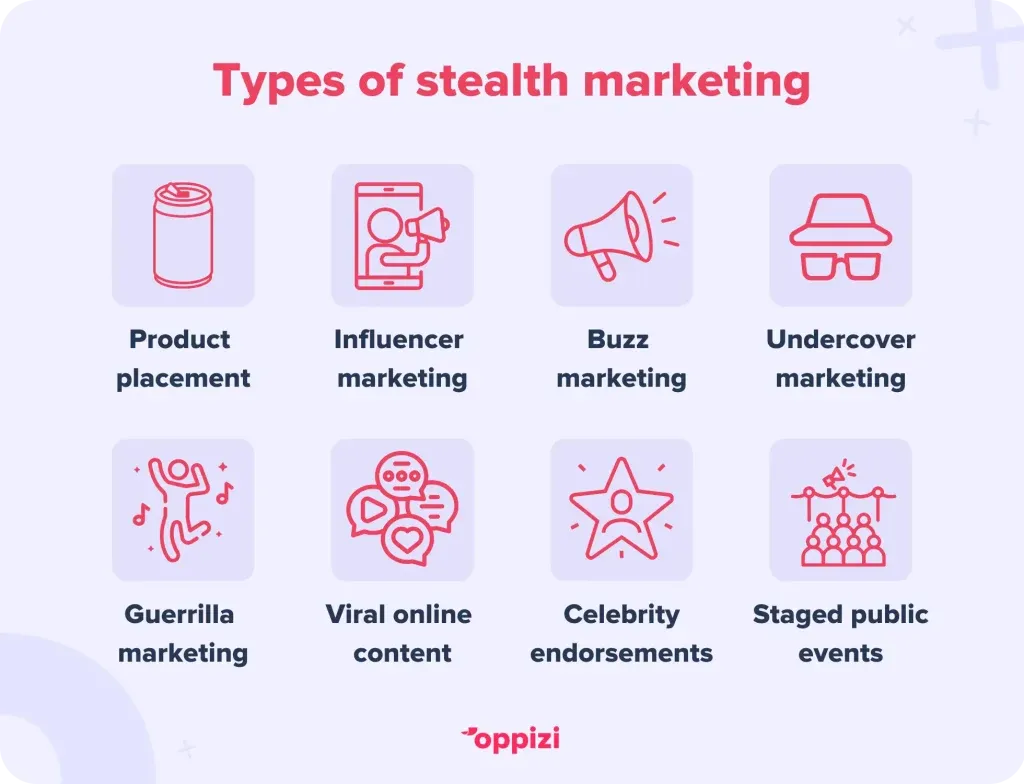
1. Product placement
This involves subtly integrating a brand or product into movies, TV shows, or social media content without direct promotion. Think of Coca-Cola cans appearing in popular TV series or Apple laptops being used by lead characters in films.
A famous example of this is when Reese’s Pieces appeared in the 1982 movie E.T. the Extra-Terrestrial, leading to an 85% increase in sales in the weeks following the movie’s release.
2. Influencer marketing without direct promotion
Influencer marketing is a modern tactic where brands collaborate with individuals who have significant social media followings to promote their products or services. These influencers, who can be celebrities, industry experts, or social media personalities, can influence their audience's buying choices.
In stealth marketing, influencer partnerships often involve subtle product mentions, unboxing videos, or using the product in everyday settings without making it the focal point of the content. This creates a sense of organic endorsement, where the product is naturally woven into the influencer’s lifestyle.
3. Buzz marketing & viral campaigns
Buzz marketing refers to when brands create intrigue by releasing content designed to spark curiosity and conversation. Sometimes, brands disguise themselves as part of a trend or a social movement to make their message more appealing to consumers.
The "Share a Coke" campaign, launched in 2011 by Coca-Cola, replaced the Coca-Cola logo on bottles with common first names across 70+ countries. This personalized marketing strategy boosted sales in the United States by 2% due to the way it transformed the act of purchasing a Coke into a personalized and sharable experience, resonating with consumers.
4. Undercover marketing
Undercover marketing involves hiring actors or employees to subtly promote products in real-world scenarios. A common example is people in public places using or talking about a product in a way that seems spontaneous.
5. Guerilla marketing
Guerrilla marketing is an unconventional and highly creative approach to advertising that aims to surprise and engage audiences in unexpected ways. This can include creative marketing tactics in public spaces, such as flash mobs or street art campaigns.
To build excitement for the final seasons of Game of Thrones, for example, Tourism Ireland partnered with HBO to create a mysterious and captivating atmosphere in Belfast, the filming location for much of the series. This campaign not only generated a buzz for the final seasons, but also aimed to position Northern Ireland as a top destination for screen tourism.
6. Viral online content
Viral online content is a stealth marketing strategy where brands create engaging, shareable material—such as videos, memes, or challenges—that quickly spread across social media platforms. It relies on social proof, as users are more likely to join in when they see others participating.
In 2025, this strategy is especially popular on TikTok, where brands leverage trending sounds and challenges to boost visibility and drive organic engagement.
7. Celebrity endorsements without direct advertising
In stealth marketing, celebrity endorsements take on a more subtle form, with the product being integrated into the celebrity’s lifestyle in a way that doesn’t feel like a traditional ad. Rather than an explicit advertisement, celebrities might casually mention or use the product in interviews, social media posts, or public appearances, making the endorsement appear more organic and, therefore, influencing fans to do the same.
8. Sponsored public events
Sponsored events are a form of stealth marketing where brands financially support or collaborate with events, festivals, or gatherings, subtly integrating their presence without overshadowing the main attraction. These events boost media coverage and encourage people to talk about the brand.
Take Red Bull for example—a brand that famously sponsors extreme sporting events, such as the Cliff Diving World Series and Target Jumping.
Benefits of stealth marketing
Here are some key benefits of stealth marketing that you should consider as a marketer:
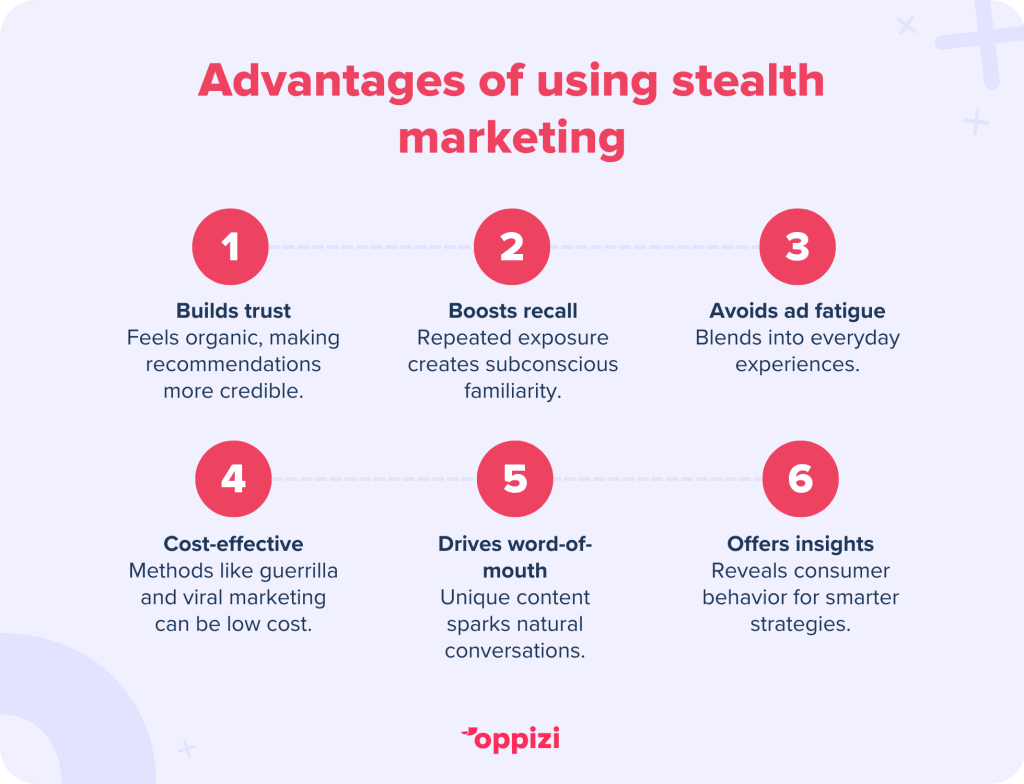
It builds authenticity and trust
Since stealth marketing doesn’t feel like a direct ad, it allows brands to engage with consumers naturally. People are more likely to trust recommendations that don’t seem forced or commercial.
Enhances brand recall
When consumers repeatedly see a brand in organic settings, they develop a subconscious familiarity with it, making them more likely to choose it later.
Avoids advertising fatigue
With people bombarded by thousands of digital ads daily and 75% of people saying that they pay less attention to online ads, stealth marketing bypasses the noise by blending into everyday experiences.
Cost-effective
Compared to traditional advertising methods, certain stealth marketing techniques, such as guerrilla marketing and viral content, can be more cost-effective. This allows brands to maximize their marketing budget and engage with a wider audience without overspending.
Increases word-of-mouth marketing
Consumers naturally talk about things they find interesting or unique, helping brands expand their reach without additional spending.
Valuable consumer insights
Many stealth marketing campaigns provide brands with a wealth of consumer insights. By analyzing how consumers interact with and respond to their campaigns, brands can gain valuable information to refine their future marketing strategies and product development.
The big question: Is stealth marketing ethical?
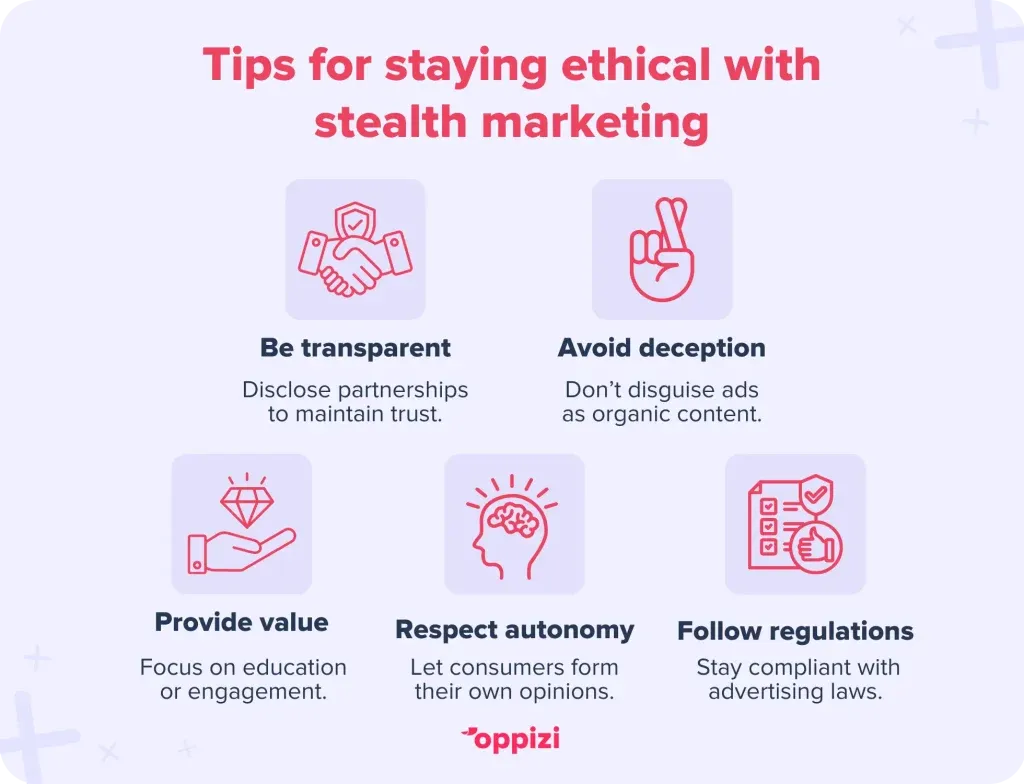
Stealth marketing can tread a fine line between creativity and deception. When done ethically, it can be a powerful tool without misleading consumers. Here’s how to keep it responsible:
- Be transparent when necessary: If influencers or brand representatives are involved under a contracted agreement, ensure they disclose partnerships to maintain trust.
- Avoid manipulation: Don’t trick consumers into believing an ad-free experience is entirely organic if it’s not.
- Provide value: Focus on entertainment, education, or engagement rather than simply pushing a sale. Creating an authentic experience that generates genuine conversation is more likely to reap rewards.
- Respect consumer autonomy: Let audiences form their own opinions rather than disguising marketing as unbiased information.
- Follow advertising regulations: Stay compliant with advertising guidelines to ensure your practices are ethical and legal.
By prioritizing honesty and consumer trust, brands can leverage stealth marketing without crossing ethical boundaries.
How to implement a stealth marketing strategy
Stealth marketing requires a delicate approach to ensure you blend your brand into everyday interactions without overtly advertising. If you want to leverage stealth marketing for your brand, follow these key steps:
Step 1: Identify your target audience
The first step in creating a stealth marketing campaign is identifying who it is you want to reach. Understanding your ideal customer is crucial. You should identify their demographics, the media they consume, and their online and offline behaviors. This allows you to develop marketing tactics that have maximum relevance and impact.
Step 2: Choose the right stealth marketing technique
Select the methods that best align with your target audience and objectives. This involves:
- Researching various stealth marketing tactics and their effectiveness in your industry.
- Evaluating each tactic’s alignment with your target audience and objectives.
- Selecting the most suitable tactics based on your research and evaluation.
For example, if you’re in the entertainment industry, you may find that product placements work best. For fashion or lifestyle brands, influencer marketing might be more effective.
Step 3: Develop engaging content
Make sure the content you create feels natural and not forced; whether it be through a social media trend, a viral challenge, or an organic influencer post. Your content should be relatable and sharable and provide entertainment or value to your audience, rather than simply pushing a sales message.
Step 4: Test and optimize
Start with small-scale tests to gauge effectiveness before investing heavily in your campaign. Monitor engagement metrics, brand mentions, and audience sentiment to refine your strategy.
Frequently asked questions about stealth marketing
How does stealth marketing compare to traditional advertising?
Traditional ads are direct and noticeable, while stealth marketing works subtly in the background, influencing consumers without overtly selling to them.
What industries benefit most from stealth marketing?
Stealth marketing is a highly effective form of marketing for entertainment, fashion, tech, food, and beverage industries - anywhere brand perception and lifestyle integration are crucial.
How do you measure the success of a stealth marketing campaign?
Track metrics such as brand mentions, organic social media engagement, and sales performance before and after the campaign to understand how it performed.
Conclusion
Stealth marketing is a powerful way to engage with audiences without being intrusive. By leveraging techniques like product placement, influencer marketing, and viral campaigns, brands can build trust, increase awareness, and drive sales.
If you’re looking for other innovative ways to subtly integrate your brand into the everyday lives of your target audience, Oppizi’s offline marketing solutions can help you achieve just that.
Whether it’s through strategic flyering, direct mail, or other creative campaigns, we offer the tools you need to engage your audience in a way that feels natural and authentic. Stealth marketing is all about seamless brand integration, and with Oppizi, you can easily reach your customers without them feeling like they’re being sold to. Ready to take the first step?
Create a campaign with Oppizi and see how our offline marketing solutions can elevate your brand’s visibility while keeping your strategy subtle and effective.