Last updated September 28, 2026
In the competitive food and beverage industry, effectively marketing your restaurant is not just an option - it's a necessity. With thousands of food establishments competing for customers' attention, standing out requires more than just offering great food. A well-executed marketing strategy can elevate your restaurant's visibility, attract new customers, and encourage loyalty from existing customers.
In this article, we'll explore why restaurant marketing is crucial for your business and provide tips for developing an effective strategy, along with best practices.
What is restaurant marketing?
Restaurant marketing involves promoting your establishment to attract new customers and keep existing ones coming back for more. It encompasses a range of online and offline strategies to build brand awareness, generate excitement, and drive sales. Effective restaurant marketing involves understanding your target audience and tailoring your messaging to resonate with them.
Why restaurant marketing is important
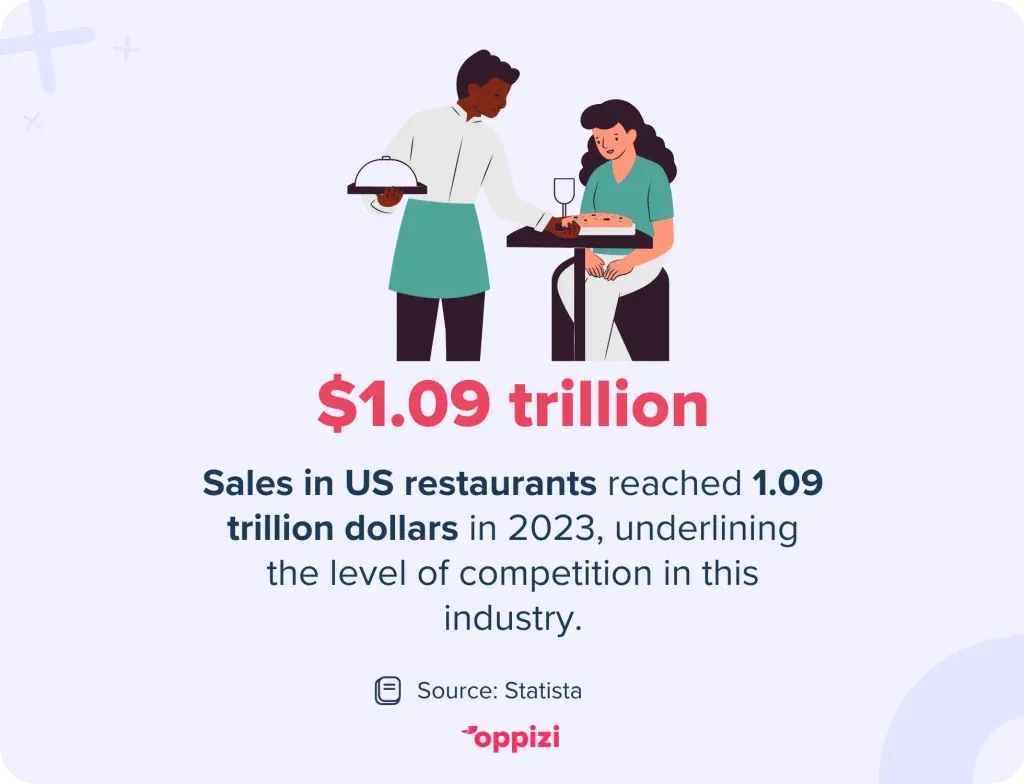
Without an effective marketing strategy, even the best culinary experiences may go unnoticed. Restaurant food and beverage sales in the US reached 1.09 trillion dollars in 2023, highlighting the level of competition in this industry.
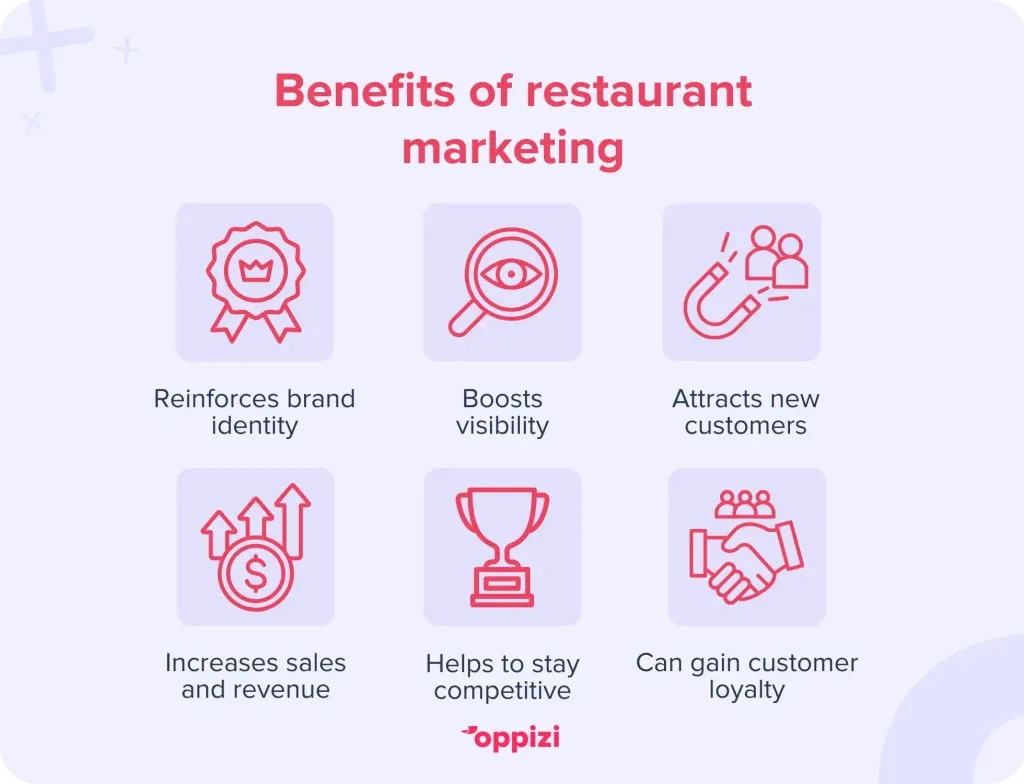
Here are some reasons why you need to market your restaurant:
- Brand identity: Marketing helps you reinforce your brand identity. A powerful brand identity differentiates your restaurant and makes it stick in customers' memories.
- Higher visibility: A good marketing strategy gets your restaurant on the radar. It takes effective marketing to notify potential customers of a restaurant's presence, especially in places they would otherwise not know.
- Attract new customers: Marketing allows you to zero in on demographics that align with your ideal customer. Targeted marketing will drive foot traffic of people most likely to enjoy your restaurant.
- Increase in sales and revenue: Promoting your best offerings and unique selling points will prompt customers to dine with you, driving sales.
- Gain customer loyalty: While it’s important to attract new customers, it's equally important to nurture relationships with existing ones. Loyalty programs, special offers, and customized communications can keep your restaurant top of mind and encourage customers to keep coming back.
- Stay ahead of the competition: Restaurant businesses keep evolving daily. A fresh marketing strategy will help you stay ahead of the trends, show how you’re different from the competition, and give you a competitive advantage.

Building a restaurant marketing strategy
Crafting a successful marketing strategy involves several key steps:
Define your brand identity
Establish a clear and compelling brand that reflects your restaurant's mission, values, and unique selling points. This identity should resonate through your logo, decor, menu, website, and customer interactions. A well-defined brand identity differentiates you from competitors and helps build a connection with your customers.
Understand your target audience
Conduct thorough market research to identify the demographics, preferences, and dining habits of your ideal customers. Do you want to cater to families, young professionals, tourists, or groups? Knowing your audience allows you to tailor your messaging, promotions, and menu offerings to their specific needs and preferences.
Conduct market research
Look at your competitors, assessing their strengths and weaknesses, pricing strategies, and management and marketing techniques. With proper market research, you can find many opportunities for differentiating your restaurant and making it stand out.
Set SMART marketing goals
Your marketing goals should be SMART: Specific, Measurable, Attainable, Relevant, and Time-bound. Instead of vague goals like "increase brand awareness," try to set goals like "increase website traffic by 20% within the next quarter." Setting SMART targets in your goals will give you a clear roadmap for measuring your marketing success.
Create a budget
Be honest about the resources you can commit to marketing. You don't need a lot of money to see great results. Know what to prioritize in your marketing strategy based on your budget and goals.
Choose your marketing channels.
Selecting the right marketing channels is crucial to reaching your ideal customers effectively. For instance, a small café might focus on local SEO and Instagram, while a high-end restaurant may prioritize influencer partnerships. In either case, using a mix of both online and offline strategies can help you reach a wider audience.
Implement and monitor
Execute your marketing plan across chosen channels, monitor performance metrics, and be prepared to adjust strategies based on results and feedback. Tracking KPIs like customer acquisition cost, return on ad spend, and customer retention rate can help refine your marketing efforts over time.
10 effective marketing techniques for restaurants
To thrive in today's market, consider integrating the following essential elements when marketing your restaurant:
1. Branding
A strong brand goes beyond a logo or color scheme - it’s your restaurant’s entire identity. Your menu concept to service style and social media tone all play a part in your brand. Keep these key elements in mind:
- Brand vision and mission: Define what sets your restaurant apart from competitors and reinforce this in your messaging.
- Brand personality: Establish the tone, voice, and visual aesthetic that resonates with your audience.
- Unique selling proposition (USP): Highlight what makes you unique. This could be your signature dishes, decor, an exclusive dining experience, or something else.
- Brand story: Share your restaurant’s story in a way that creates an emotional connection, whether it’s a family recipe or a commitment to local ingredients.
- Consistent branding: Maintain a uniform message across your website, social media, menus, and signage.
2. Website optimization
Your website is often the first impression customers get of your brand. Ensure it is:
- SEO-optimized: Use relevant keywords to improve rankings and attract local customers.
- Informative: Include key details - menu, location, hours, contact info, and reservation options.
- Mobile-friendly: With over 62% of web traffic from mobile devices, easy mobile navigation is crucial.
3. Leverage social media platforms
Engage with customers on social media platforms like Instagram, Facebook, and TikTok by sharing high-quality images and videos of your dishes, behind-the-scenes content, and promotions. Utilize Instagram Stories, live videos, and interactive polls to increase engagement. Social media is a powerful tool for building community and giving your brand a personality.
4. Optimize for local SEO
Ensure your restaurant appears in local search results by claiming your Google My Business listing, encouraging customer reviews, and using location-specific keywords on your website. This enhances visibility to nearby diners searching online. It’s also important that your Google My Business profile is complete with all of the relevant information, as studies show that customers are 70% more likely to visit a business with a complete profile.
5. Implement email marketing campaigns
Build an email marketing list to share newsletters, special offers, and event invitations. Personalized email campaigns can encourage repeat visits. Notably, 53% of restauranteurs use automated email marketing to communicate more efficiently with customers.
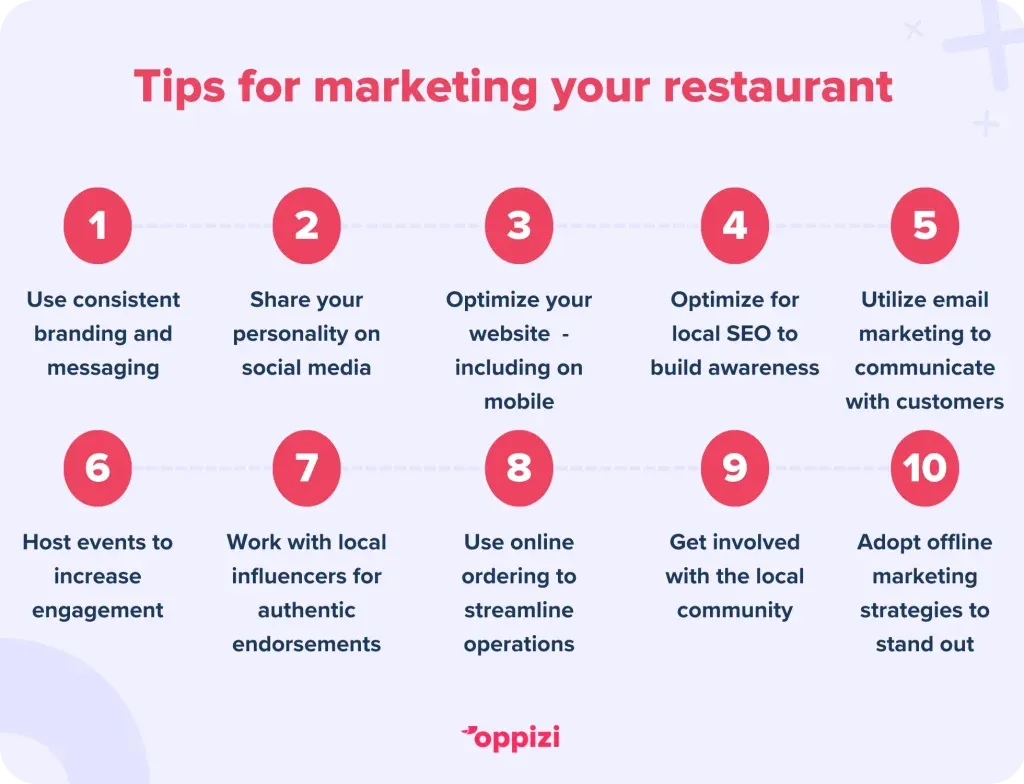
6. Host events and promotions
Organizing events like themed nights, live music, or cooking classes will create buzz and attract customers. Special promotions during holidays, local events, "happy hour" deals, or family discounts can drive traffic and encourage repeat visits.
7. Collaborate with influencers
Partnering with local food bloggers or social media influencers can help you reach broader audiences by tapping into their following. In fact, 63% of consumers say they’d buy a product endorsed by an influencer they trust, making authentic endorsements a powerful way to add credibility and attract new patrons.
8. Utilize online reservation and ordering systems
Offer convenient online booking and ordering options to meet modern diners' expectations. This not only improves customer experience but also streamlines operations, improving service efficiency.
9. Engage in community involvement
Participate in local events or sponsor community activities. By building a positive community presence, you can enhance your restaurant's reputation locally.
10. Offline marketing
While many marketers prioritize digital strategies, offline marketing shouldn’t be overlooked. Eye-catching signage and strategically distributed branded flyers can boost awareness and attract new customers. To track your offline efforts, incorporate QR codes, unique promo codes, or personalized URLs.

Best practices in restaurant marketing
To maximize the impact of your marketing efforts, adhere to these best practices:
- Consistency: Maintain a consistent brand voice and aesthetic across your different marketing channels to reinforce brand recognition.
- Authenticity: Be genuine in your messaging and interactions. Authenticity builds trust and a stronger connection with your audience.
- Adaptability: Stay on top of industry trends and be adaptable so that you can adjust your strategies to meet evolving consumer preferences and market conditions.
- Data-driven decisions: Use analytics to track the performance of your marketing efforts. Data insights enable informed decisions and strategy refinement.
- Customer feedback: Actively seek and respond to customer reviews and feedback. Demonstrating that you value input from your customers can increase trust and satisfaction.
Frequently asked questions about restaurant marketing
What is the best marketing strategy for restaurants?
The best strategy combines digital and offline marketing to attract and retain customers. A strong online presence boosts visibility and drives customer retention. Offline tactics like branded flyers, events, and community involvement further enhance awareness. A multi-channel approach ensures you achieve long-term success.
How often should restaurants post on social media?
Consistency is key when it comes to posting on social media. Post roughly 3-5 times per week on Instagram & TikTok, and Facebook, and 1-2 times on Google My Business to stay visible. Prioritize valuable content like high-quality photographs of food and behind-the-scenes clips to give your brand a personality and to build visibility.
Which social media platform is most effective for restaurant marketing?
Instagram is highly effective due to its visual nature, allowing you to showcase your dishes and ambiance through attractive images and reels. However, TikTok is also gaining a lot of traction, especially for viral marketing.
How can I encourage customers to leave reviews?
Politely request reviews from satisfied customers, offering incentives like discounts for feedback. Make the review process simple by providing a QR code they can scan with a direct link to platforms like Google and Yelp.
Conclusion
Effective restaurant marketing is crucial for attracting new customers, increasing sales, and fostering long-term loyalty. A balanced approach that combines online strategies like social media, SEO, and email marketing with offline tactics such as direct mail and flyering ensures maximum reach. By consistently analyzing results and refining your marketing efforts, your restaurant can grow in a competitive market.
Want to boost your restaurant’s visibility and drive more foot traffic? Oppizi’s offline marketing solutions can help you connect with local diners in a meaningful way. Start a campaign today and take your restaurant marketing to the next level!