Last updated July 28, 2026
You know that feeling of walking through a busy city and suddenly spotting a huge, eye-catching mural? Oftentimes, it’s not just art—it’s a clever ad that makes you stop and think. That’s guerrilla marketing. It’s bold, unexpected, and designed to spark conversations.
With so many ads everywhere, it’s hard for brands to stand out. People tune out traditional marketing. But guerrilla marketing does things differently. It uses creativity, surprise, and a little bit of risk to get noticed.
Whether it’s a street stunt, an interactive experience, or a viral moment, these campaigns leave a mark—online and in real life.
This guide breaks down everything you need to know about guerrilla marketing. You’ll learn what it is, why it works, and how to create your own campaign that people won’t forget.
What is guerrilla marketing?
Guerrilla marketing is an advertising strategy where a company uses surprise and unusual interactions to promote a product or service. It’s creative, unexpected, and gets people talking. Instead of buying expensive ads, brands use clever ideas and unique tactics to get attention.
The term comes from Jay Conrad Levinson, who compared it to guerrilla warfare—where small, smart strategies win over brute force. The same idea applies here. With the right approach, even a small brand can create something memorable.
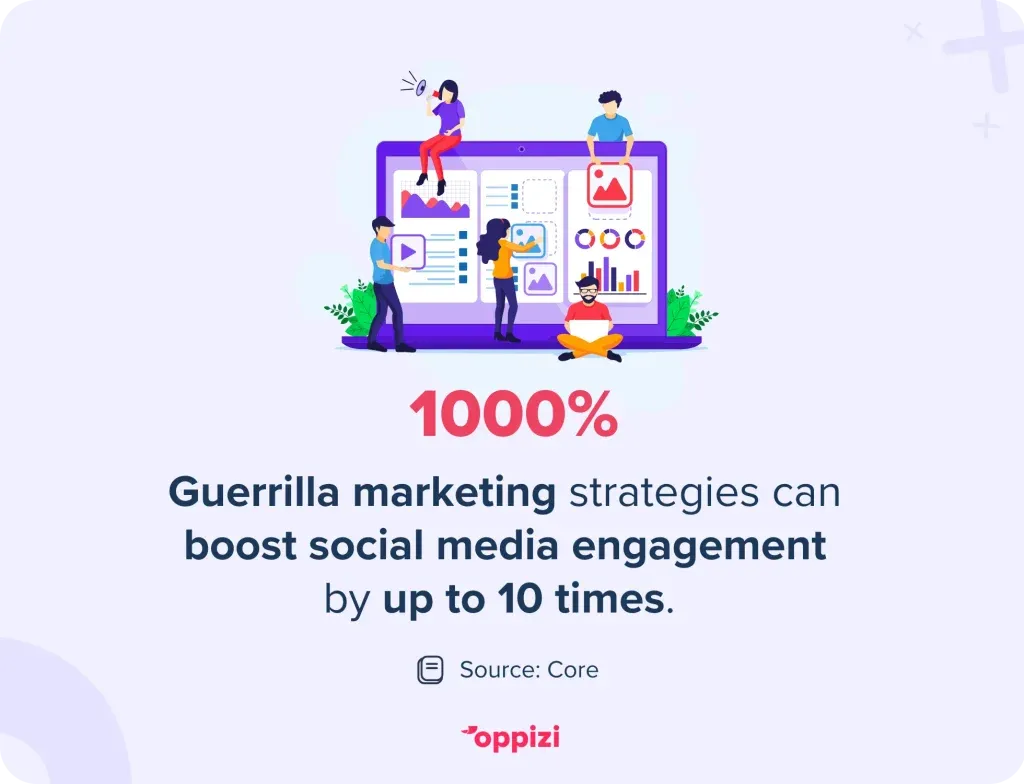
Traditional ads blend into the background. Guerrilla marketing cuts through the noise by surprising people and giving them something worth sharing. When done right, guerrilla marketing strategies can increase social media engagement by up to 1000%.
Examples of guerilla marketing
- Flash mob for a movie – A group of dancers bursts into a choreographed routine in a busy spot, promoting a new film. It’s a fun way to get attention and invite people to join in.
- Interactive art installation – A brand sets up a large canvas in a park for anyone to paint on. The final piece showcases community creativity and the brand’s support for art.
- Pop-up park – A brand turns a small city area into a temporary park with grass, seating, and free drinks. It gives people a place to relax and connect with the brand.
- Social media treasure hunt – A company hides branded items around the city and shares clues on social media. People search for the items and share their finds, making it a fun, engaging experience.
- Surprise freebie day – A coffee shop gives away free drinks to customers who come in their pajamas. It’s a fun way to promote the shop and create shareable moments.
These ideas highlight how creativity and surprise can help brands create memorable experiences and connect with their audiences.
Guerrilla marketing vs. traditional marketing: what makes them different?
Traditional marketing uses TV, radio, print, and online ads to reach people. It works, but it’s expensive and easy to ignore. With so many ads everywhere, people tune them out. Guerrilla marketing takes a different route:
- Unexpected tactics – Instead of big media buys, it uses creative, low-cost ideas to surprise people.
- More engagement – It creates memorable experiences that connect with people.
- Viral potential – When done right, it spreads fast on social media.
Take Coca-Cola’s “Happiness Machine.” In this campaign, a vending machine started handing out free drinks and surprises. People loved it, shared it, and the campaign took off—without a massive ad budget.
Why guerrilla marketing stands out
It grabs attention because it taps into how people think:
- Surprise – We notice things that break the routine.
- Emotion – Joy, curiosity, and excitement make campaigns more memorable.
- Social proof – When others join in, we want to be part of it too.
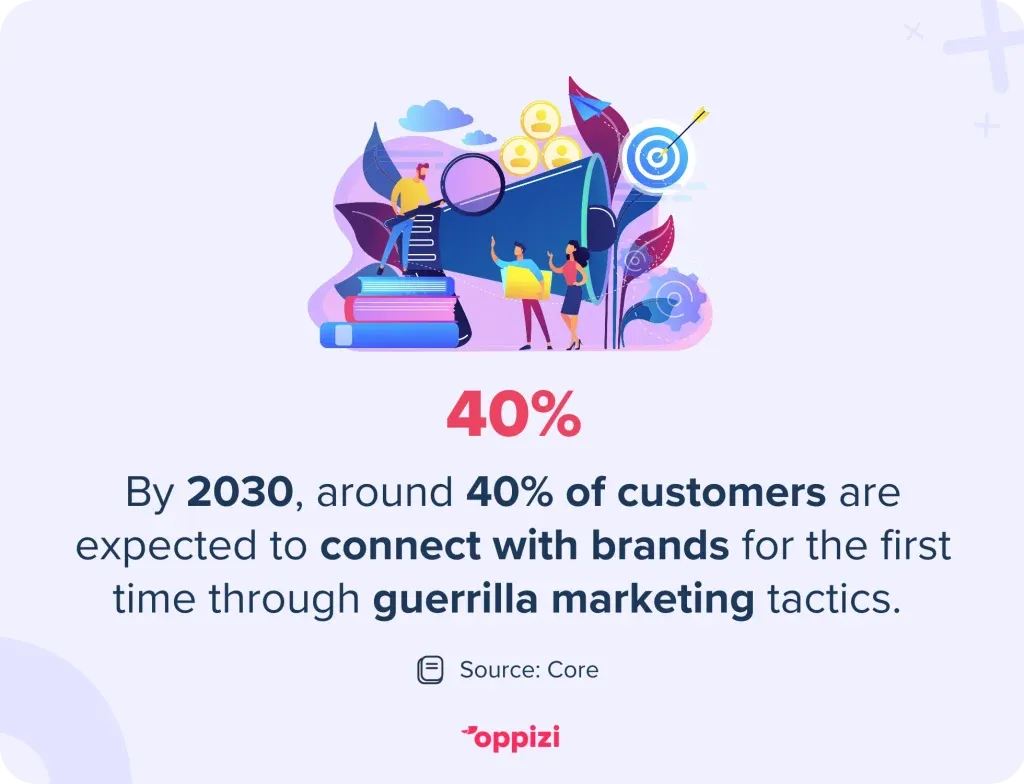
When a campaign makes people feel something, they remember it—and share it. What's more, such unconventional methods are predicted to grow. By 2030, approximately 40% of customers are expected to engage with brands for the first time through guerrilla marketing tactics.
Why it works
Guerrilla marketing is a smart choice for any business. Here’s why:
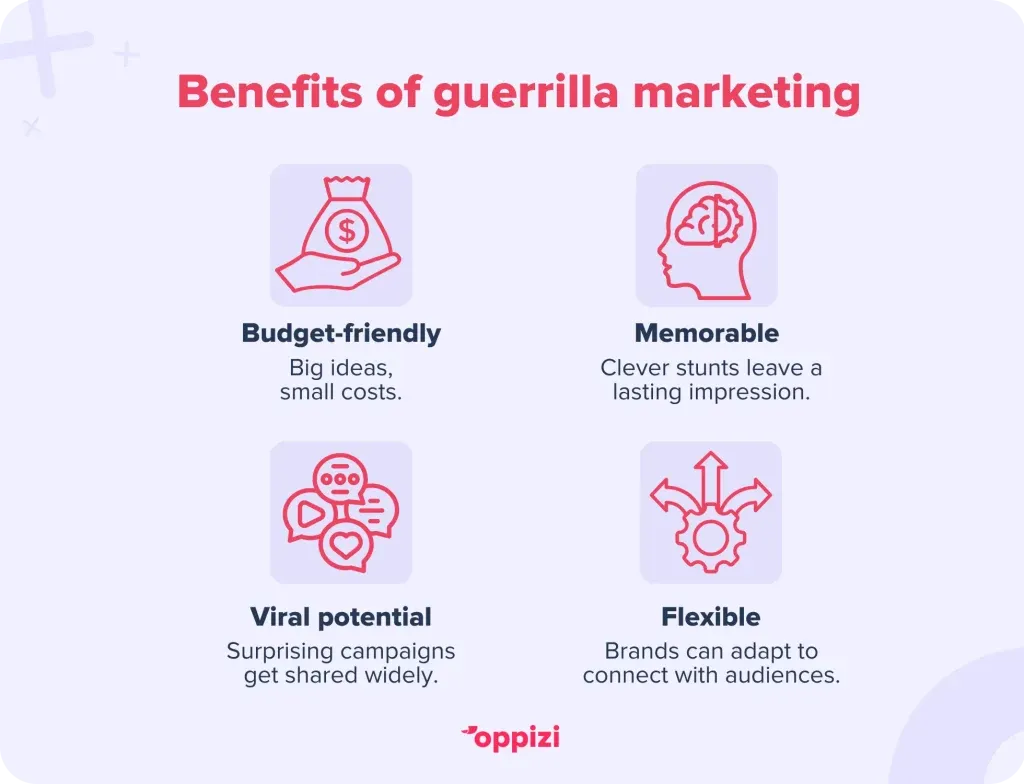
- It’s budget-friendly – Big ideas matter more than big budgets. With the right creativity, a small investment can make a big impact. That’s why it’s great for startups and small businesses.
- People remember it – A clever stunt or interactive experience sticks with people. It’s not just another ad—it’s something they talk about and remember.
- It spreads fast – If a campaign surprises or entertains people, they share it. Social media can take a local moment and turn it into something huge.
- It’s flexible – Guerrilla marketing isn’t stuck in one format. Brands can get creative, adapt to different places, and find fresh ways to connect with people.
Creative guerrilla marketing ideas
Looking for fresh ways to grab attention? Here are some simple, creative ideas to try:
1. Use public spaces
Turn everyday places into brand moments.
- Sidewalk chalk art – Draw something fun or clever where people walk.
- Bench ads – Add stickers or signs with a message or QR code.
- 3D street art – Use optical illusions to create something people want to share.
2. Make a surprise appearance
Get noticed where people least expect it.
- Street performances – Flash mobs or fun acts near big events.
- Sticker placements – Put branded stickers in smart spots.
- Branded costumes – Have brand ambassadors wear something eye-catching.
3. Create hands-on experiences
Let people interact with your brand.
- Pop-up shops – Set up a temporary store in a fun location.
- Virtual reality – Let people step into your brand’s world.
- Interactive displays – Make something people can touch, play with, or explore.
4. Use social media to spread the word
Get people talking and sharing.
- Hashtag campaigns – Give people a reason to post with a unique hashtag.
- Live streaming – Show your campaign in real time.
- Contests and giveaways – Get people to share their experience for a chance to win.
Simple ideas, big impact. That’s guerrilla marketing.
How technology is changing guerrilla marketing
Technology is making guerrilla marketing even more creative. Here’s how brands are using it:
- Augmented reality (AR) – Pepsi turned a simple bus shelter into an interactive AR experience that shocked and entertained people.
- QR codes – These connect real-world marketing with digital experiences, leading people to websites, videos, or special offers.
- Geofencing – Brands send location-based messages to people near their campaign, making it feel personal and relevant.
What to watch out for
Guerrilla marketing is bold, but it comes with risks. Here’s what to keep in mind:
- Legal issues – Using public spaces or copyrighted content without permission can cause trouble. Always get approval.
- Brand reputation – A campaign that feels intrusive or controversial can backfire. Make sure it fits your brand and connects with people in a positive way.
- Safety – If your campaign happens in a public place, it needs to be safe for everyone involved.
How to know if your campaign worked
Track your results to see if your campaign made an impact. Key things to measure:
- Social media buzz – Look at likes, shares, and comments.
- Website traffic – Check if more people are visiting your site.
- Brand mentions – See how people are talking about your campaign.
- Foot traffic and sales – Did more people visit your store or buy your product?
Tools like Google Analytics, social media trackers, and customer surveys can help you measure success.
How to combine guerrilla marketing with offline and digital strategies
Guerrilla marketing works best when it connects with other marketing efforts. Here’s how to make it even more powerful:
1. Start with a bold stunt
Grab attention with something unexpected. A pop-up event, street art, or flash mob can create buzz and curiosity.
2. Use offline marketing to keep the momentum going
Hand out flyers near the activation site or team up with local businesses to spread the word. Oppizi’s flyer distribution service can help get your message in front of the right people.
3. Share it online
Post videos and photos on social media. Encourage people to share their experience using a hashtag. Run online ads to reach even more people and drive them to your website.
4. Make it easy for people to take action
Add QR codes to flyers or installations so people can quickly visit your website. Follow up with emails to keep them engaged.
When you combine guerrilla marketing with offline and digital efforts, you create a campaign that works from every angle. More people see it, talk about it, and take action.
What’s next for guerrilla marketing?
Guerrilla marketing is always changing. Here’s where it’s headed:
- Eco-friendly campaigns – More brands will use recycled materials and promote sustainability.
- Personalized experiences – Data will help create campaigns that feel more personal and relevant.
- Immersive marketing – Expect to see more VR and AR experiences that pull people into the action.
As technology and consumer expectations shift, guerrilla marketing will keep finding new ways to surprise and engage people.
FAQ: Guerrilla Marketing Explained
1. What’s a good example of guerrilla marketing?
Coca-Cola’s “Happiness Machine” is a great one. They placed a vending machine that gave out free drinks, flowers, and even pizzas. It surprised people, made them smile, and quickly went viral—all without a huge budget.
2. Is guerrilla marketing legal?
Usually, yes—but it depends on how you do it. If you put up ads without permission or damage property, you could get fined. Always check local laws and get any permits you need.
3. How does Coca-Cola use guerrilla marketing?
They’re pros at it. Some of their best campaigns include:
- Personalized bottles – Printing names on Coke bottles so people want to find and share them.
- Interactive billboards – Digital ads that change based on the weather or respond to people nearby.
4. What are the 5 key rules of guerrilla marketing?
- Be creative – Do something unexpected.
- Keep it simple – Make your message clear and easy to remember.
- Think low-cost – Big impact doesn’t need a big budget.
- Make it shareable – Give people a reason to talk about it.
- Stay true to your brand – Your campaign should match your values and style.
5. Does guerrilla marketing really work?
Yes—if done right. It’s affordable, gets people talking, and can spread fast online. A great example is Red Bull’s Stratos space jump. Millions watched, and it made Red Bull even more famous. The key is to know your audience and create something they’ll love.
Make your brand unforgettable with guerrilla marketing
People see ads everywhere, all the time. Most get ignored. Guerrilla marketing helps you break through the clutter with creative, unexpected ideas that people remember.
It works for any business—whether you’re just starting out or want to shake things up. The right campaign can grab attention, spark conversations, and build real connections with your audience.
Want to reach people in the real world? Oppizi’s platform puts your message directly in their hands. Get started today and start growing your brand.