Last updated July 28, 2026
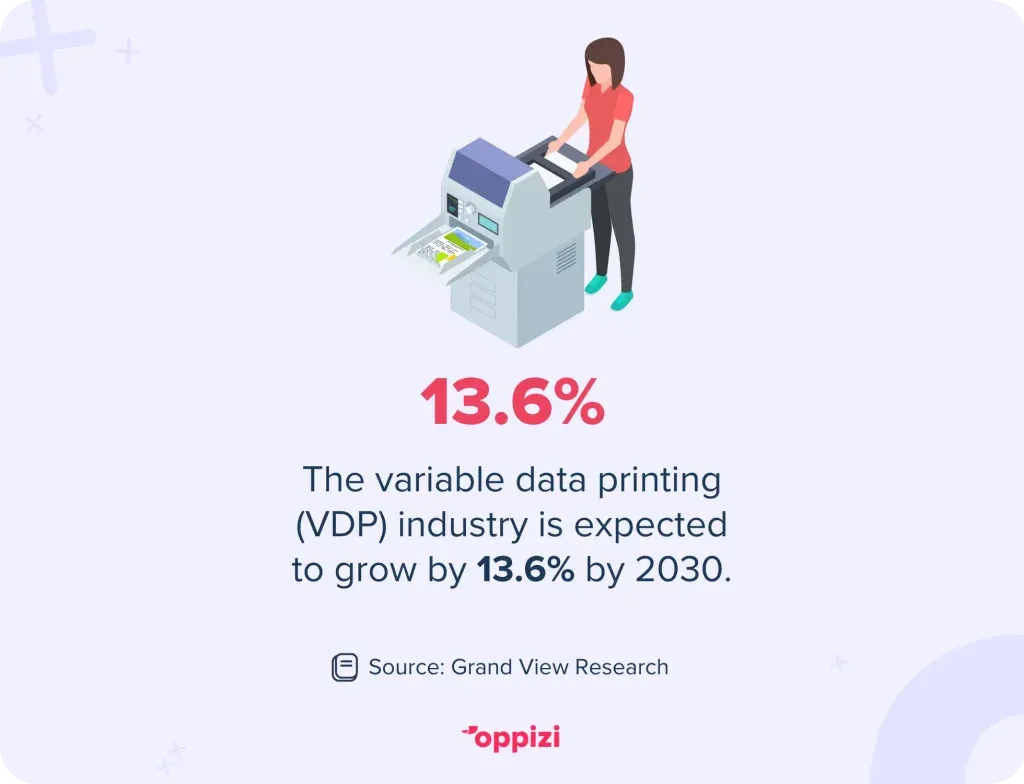
Direct mail marketing has reemerged as a powerful offline marketing tool, primarily due to its ability to connect with audiences on a personal level. One key innovation driving the success of modern direct mail campaigns is variable data printing (VDP), an industry that is expected to grow by 13.6% before 2030. This technology enables marketers to create personalized mailers that resonate with individual recipients, enhancing customer engagement.
In this article, we will explore variable data printing, how it works, its applications in direct mail, and the benefits it can bring to campaigns.
What is variable data printing?
Variable data printing is a digital printing technology that allows customized elements, such as text or images, to be altered from one printed piece to the next without interrupting the printing process. Unlike traditional printing, which creates identical copies of the same design, VDP personalizes each piece based on specific data.
For example, instead of sending 1,000 generic postcards, variable data printing enables businesses to include each recipient's name, address, a tailored message, or even a unique QR code. The result is a highly personalized and relevant direct mail piece that speaks directly to the recipient.
Check out our guide on how Oppizi handles variable data printing here.
How does variable data printing work?
Variable data printing is powered by data and digital printing technology. Here you can read further details about how it works:
1. Data collection and management
The process starts with a well-organized database of customer information. This data can include:
- Names
- Addresses
- Purchase history
- Demographic details
- Preferences or interests
Marketers typically gather and manage this information using Customer Relationship Management (CRM) systems or customer data lists. Accurate and up-to-date data is crucial for ensuring that personalization is relevant.
2. Integration with design software
Design software or specialized VDP tools integrate with the customer database to map variable elements to specific data fields when designing the direct mail piece. For instance, the software might:
- Replace variable placeholders (e.g., “[First Name]”) with actual names.
- Select different images or offers based on customer segments.
- Generate unique QR codes for each recipient.
3. Digital printing technology
Once the design and data are synchronized, the variable data printing process begins. Digital printers, such as inkjet or laser technology, can change the output for each piece without stopping or slowing down. This capability makes VDP ideal for efficiently producing large volumes of personalized direct mail.

Why is personalization important in direct mail?
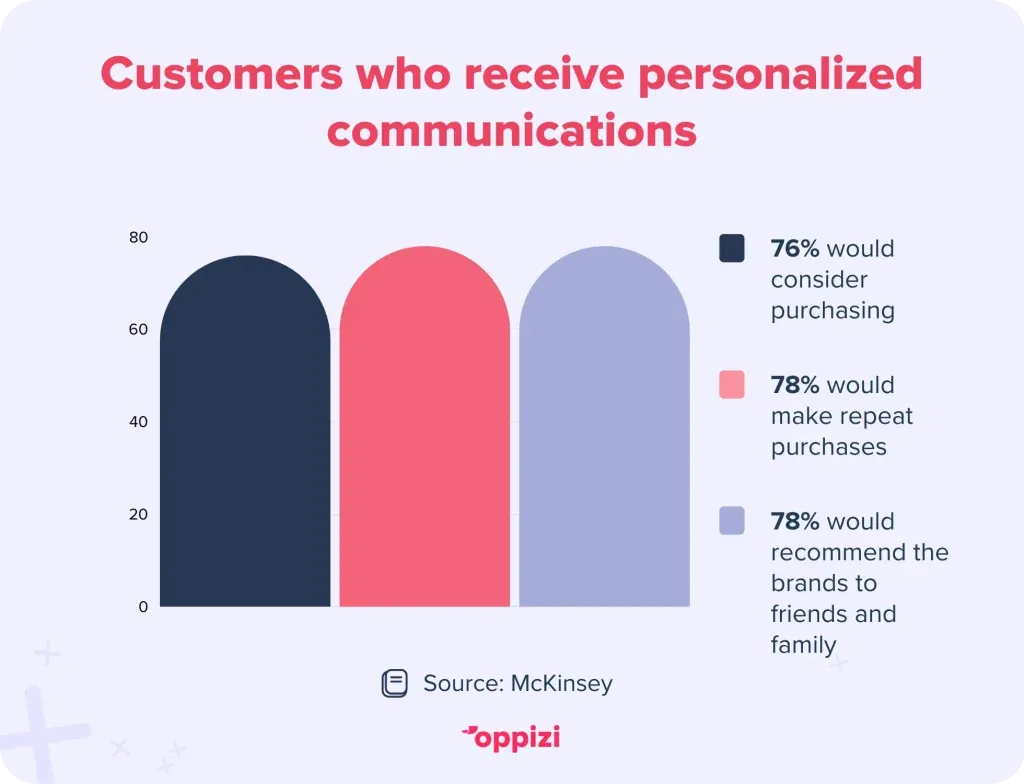
An important element of effective direct mail marketing is personalization, because it creates a deeper connection with recipients. Research shows that 76% of customers who receive personalized communications from brands are more likely to consider purchasing.
Moreover, 78% are inclined to make repeat purchases, and another 78% would recommend the company to friends and family. These statistics highlight how personalization drives immediate engagement and fosters long-term loyalty.
Direct mail campaigns can achieve higher response rates, stronger brand relationships, and increased customer retention simply by tailoring content to individuals.
Examples of variable data in direct mail
Variable data printing offers endless possibilities for customization. Some common examples include:
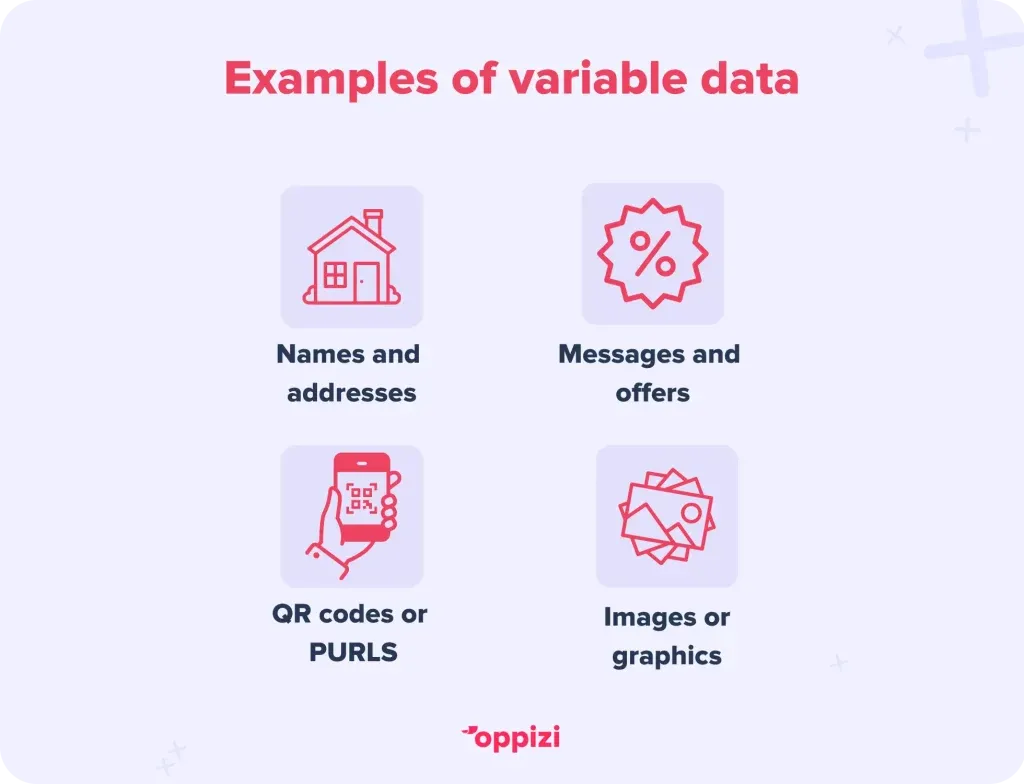
1. Names and addresses
The introduction can include each recipient’s name (starting with “Dear Sarah” instead of “Dear Customer”), and their address can be printed directly on the mailpiece.
2. Unique offers and messages
Offers can be tailored based on purchase history or preferences, such as “As a loyal customer, enjoy 20% off your next purchase!” or “Get 30% off when you repurchase (product name)!”
3. QR codes or Personalized URLs (PURLs)
Unique QR codes or PURLs can direct recipients to customized landing pages or track their engagement in specific campaigns.
4. Images and graphics
Images can be added to match the recipient’s interests. For example, sending travel brochures with destination photos relevant to the recipient’s preferences.
How to use variables in direct mail
Incorporating variable data into direct mail campaigns involves thoughtful planning and execution. Here are some ways to make the most of VDP:
1. Personalized greetings
Start by addressing recipients by name to capture their attention immediately. Personalization helps build rapport and increases the likelihood of engagement.
2. Targeted messaging
Use segmentation in your direct mail campaigns to tailor your messaging. For example:
- Send exclusive offers to VIP customers.
- Highlight products relevant to specific customer segments.
3. Localized content
Incorporate location-based details, such as local store addresses or events happening in the recipient’s area.
4. Call-to-Action (CTA)
Use variable data to create specific CTAs that feel personal and engaging. For example, direct recipients to a personalized web page with a clear action like “Sarah, sign up now!” or “Claim your offer today, Sarah.”
5. Enhanced visual appeal
Customize colors, images, or graphics to align with the recipient’s preferences or demographics.
Why use variable data printing in direct mail?
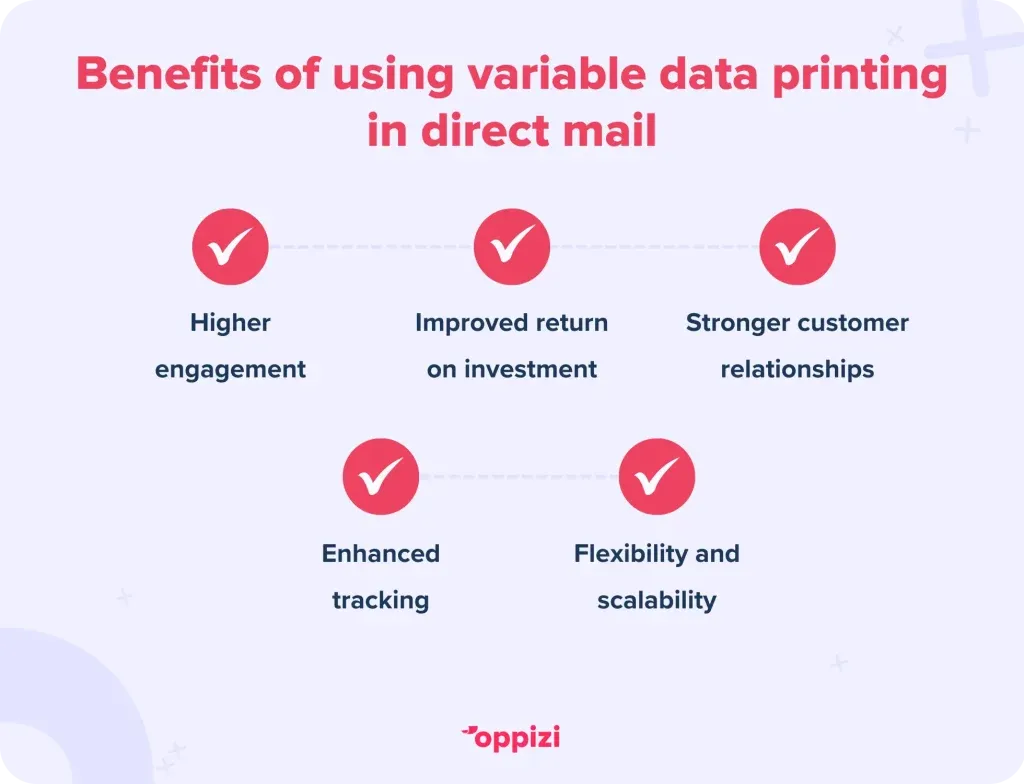
Variable data printing offers several compelling benefits for direct mail campaigns:
Higher engagement rates
Personalized mail captures attention and encourages interaction. Studies show that customized direct mail achieves higher response rates than generic mailers.
Improved ROI
Targeted campaigns reduce waste and focus on prospects with a higher likelihood of conversion, maximizing the return on investment. Studies have shown that companies that excel in personalization can earn up to 40% more revenue than their competitors.
Stronger customer relationships
Personalization fosters a sense of connection and loyalty, making customers feel valued and understood.
Enhanced tracking and insights
Using unique QR codes or PURLs allows you to track campaign performance and gather data on recipient behavior, enabling continuous improvement.
Flexibility and scalability
Variable data printing can accommodate campaigns of any size and complexity, from simple name personalization to intricate designs tailored to individual preferences.
Printing methods for variable data printing
Not all printing methods support variable data printing. Here are the main methods that do:
Digital printing
Digital printing is the go-to method for VDP. It includes:
- Inkjet printing: Ideal for high-speed production of personalized mailpieces.
- Laser printing: Offers sharp, high-quality output for text and graphics.
Hybrid printing
Combines traditional offset printing for static elements with digital printing for variable components. This method is cost-effective for large-scale campaigns.

FAQs about variable data printing in direct mail
1. What is an example of variable data printing?
A classic example is a campaign where each mailer includes the recipient’s name, address, a unique QR code, and an offer tailored to their purchase history.
2. What is the difference between static and variable data printing?
Static printing produces identical copies of the same design for all recipients. However, variable data printing customizes elements for each mailer based on specific data points.
3. Which printing process can handle variable data?
Digital printing processes, such as inkjet and laser printing, are best suited for variable-data printing. Hybrid printing can also handle variable data when combined with offset printing.
Conclusion
Variable data printing has revolutionized direct mail by enabling personalized, targeted, and highly effective campaigns. By leveraging customer data and advanced digital printing technology, marketers can deliver messages that resonate with individual recipients, driving engagement and conversions.
Whether you’re running a small campaign or scaling up for a larger audience, variable data printing can make your direct mail stand out in the crowd. With careful planning and execution, you can build stronger customer relationships and achieve measurable results.Ready to take your offline marketing to the next level with personalized direct mail pieces? Start a direct mail campaign with Oppizi and boost customer engagement with your business today.